Access Control Solutions for Dallas Multifamily Properties
Josh Harris | May 8, 2026
A single propped pedestrian gate at a Dallas apartment community can undo a six-figure access control investment in one weekend. That tension between expensive hardware and real human behavior is the practical reality of multifamily access control that Dallas operators face every day. The systems that hold up in DFW are layered, accessible, and built around how residents actually move through the property.
This guide covers access control across a Dallas multifamily portfolio: perimeter and vehicle entry, building and unit access, common areas, technology and staffing, ADA considerations, and how to hold the system together during move-in and move-out weeks.
Why Dallas Multifamily Access Control Has Unique Demands
Dallas-Fort Worth multifamily properties operate under specific pressures. Many communities sit on large parcels with two or more vehicle entrances, surface parking plus structured garages, and pedestrian access from sidewalks, dog parks, and pool decks. The perimeter is rarely one continuous fence; it is a patchwork that needs to function as a single controlled boundary.
Resident churn adds another layer. Class A and B properties in submarkets like Uptown, Las Colinas, Frisco, Plano, and Bishop Arts routinely turn 40 to 60 percent of units annually. Every move means credentials issued, credentials revoked, and new vendors on the property. A system that cannot keep up stops being access control and becomes access theater.
Delivery volume compounds the pressure. Couriers, food delivery, ride-share, dog walkers, cleaners, and contractors all need temporary or recurring access. Force everyone through the leasing office, and it becomes a bottleneck; control none of them, and the perimeter is open by default.
A Layered Access Control Model
The most resilient approach treats the property as a series of rings, each with its own purpose and failure mode.
- Perimeter. Fencing, landscaping, and lighting defining the controlled property. Continuous and observable, not hardened like a data center.
- Vehicle entry. Gates with credentialed resident entry, separate guest lanes or call boxes, clear after-hours logic.
- Pedestrian entry. Walk gates, lobby doors, amenity entrances. Pedestrian openings are where most policy failures first appear.
- Building entry. Lobby and breezeway doors, elevator floor restriction in mid-rise and high-rise stock, stairwell control.
- Unit doors. Smart locks or traditional hardware.
- Common areas. Fitness center, pool, business center, package room, garage levels, rooftop spaces.
The point is not to make every layer maximally hard. It is to ensure no single failure (a propped door, a lost fob, a tailgated car) breaks the whole system.
Technology Layer: Choosing the Right Credential Mix
The right access control choice depends less on what is newest and more on what fits the property's resident profile, staffing model, and existing infrastructure.
Key fobs versus mobile credentials
Fobs remain widely deployed because they are cheap, durable, and resident-friendly. The operational cost shows up later in replacing lost fobs, deactivating fobs from departed residents, and keeping accurate inventory across thousands of units.
Mobile credentials (smartphone-based access via Bluetooth, NFC, or app) shift the cost curve. Issuing or revoking is a click, with no physical hand-off needed. The tradeoff is dependency on resident phones, app updates, and a reliable network at the door. In a mid-rise with thick masonry or a garage with no cell signal, the credential must fail gracefully to a card reader or PIN pad.
Video intercom and LPR
For guest entry, video intercom at the gate or lobby is the workhorse. A resident answers a video call on their phone, sees the visitor, and grants entry remotely. License plate recognition speeds resident throughput at properties where the gate is a known 6 p.m. choke point. LPR does not eliminate the need for a backup credential, since plates change, rental cars come through, and weather affects reads.
Smart locks at the unit door
Unit-level smart locks deliver real value during turn: no rekey labor, no key handoff, and a clean audit trail of vendor entries. The operational discipline is battery management and a written plan for when a lock fails. Most multifamily-grade smart locks retain a mechanical override; the policy for that override needs to be documented, not improvised.
Staffing Layer: When to Add People
Technology does not replace staffing. It changes what staff does.
- Manned gate post. Useful at high-density communities with constant guest traffic or luxury properties where the gate is part of the brand experience.
- Roving patrol. A scheduled or randomized vehicle and foot patrol checking pedestrian gates, amenity doors, garage levels, and the back of the property. The highest-leverage staffing investment for most Dallas portfolios, because it catches propped doors before they become incidents. Cascadia's mobile patrols program is built for route-based multifamily coverage.
- Overnight concierge. Common in mid-rise and high-rise stock. Controls lobby access, manages after-hours deliveries, and handles resident requests.
- Off-duty law enforcement. Useful for short-term elevated presence, evictions, or recurring problem windows. Many DFW properties bring in off-duty officers for overnight coverage on Friday and Saturday near nightlife corridors.
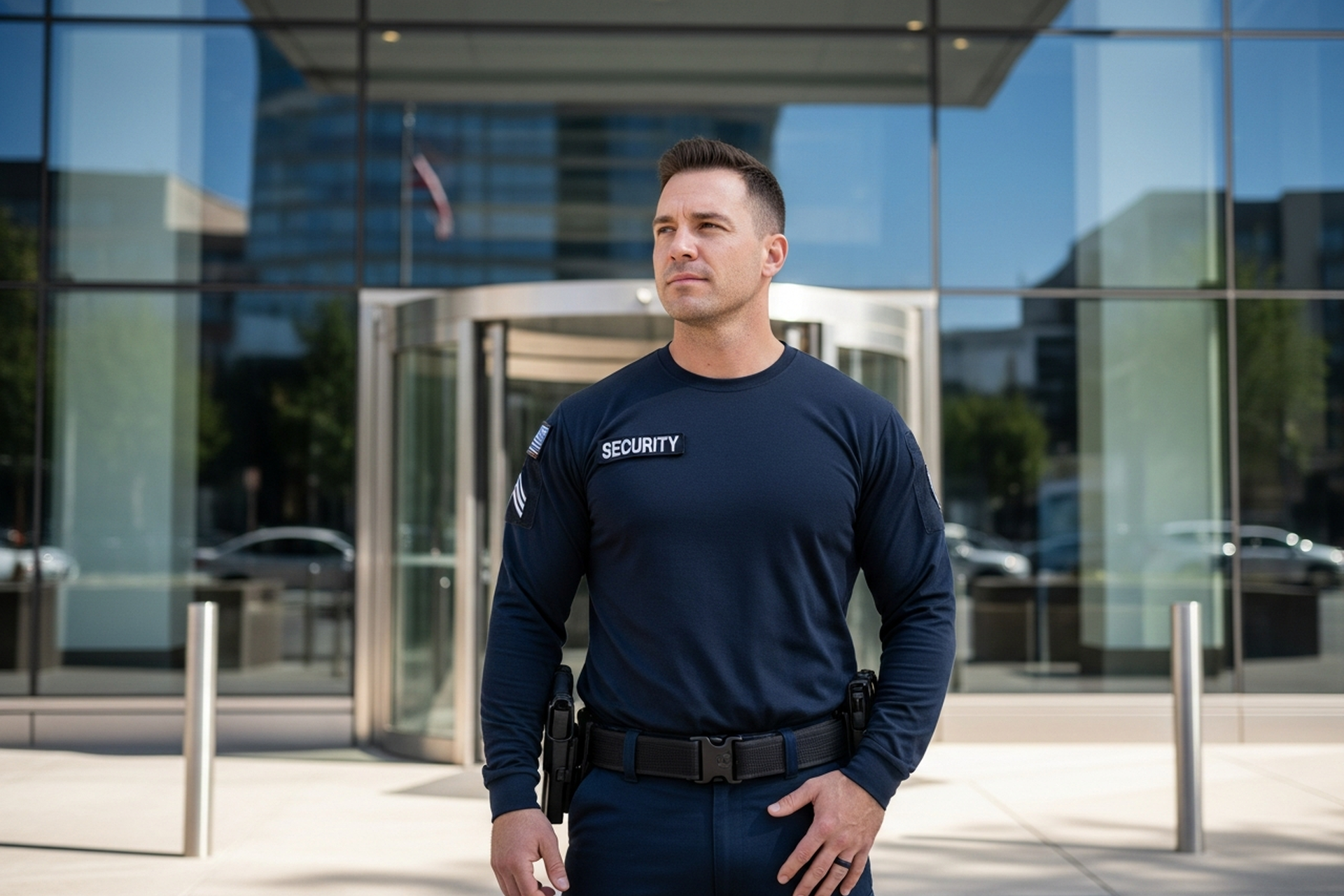
- Unarmed daytime presence. A uniformed, unarmed guard at the leasing office or amenity deck handles policy enforcement during peak hours.
A common DFW pattern is roving patrol at night, unarmed daytime presence at the leasing office, and a concierge model only where building geometry supports it.
Texas requires a licensing baseline for contracted security personnel, and the Texas DPS Private Security Bureau regulates non-commissioned (Level II) and commissioned (Level III) officers along with their employers. Confirm any security partner holds a current Class B license and that on-site officers carry the appropriate individual registrations.
ADA and Fair Housing Accessibility
Access control hardware sits squarely under federal accessibility law. Pedestrian gates, lobby doors, call boxes, and amenity entries all need to be operable by residents and guests with disabilities. Practical considerations:
- Call boxes and card readers must be reachable from a wheelchair, with clear floor space and operable parts within standard reach ranges.
- Visual indicators must accompany audible cues for residents who are deaf or hard of hearing.
- Intercoms should support text or video for residents who cannot use a voice-only call box.
- Service animal and personal care attendant access need a documented credentialing path.
- Vehicle gates must clear safely with a wheelchair or mobility-aid user crossing the threshold.
Any major retrofit benefits from a design review against current ADA and ABA Accessibility Guidelines before hardware is ordered.
Maintaining Control During Peak Resident Churn
The hardest weeks for any access control system are the move-in and move-out windows at month-end. A practical playbook:
- Issue time-bound mobile credentials for movers, painters, and cleaning services, expiring at the end of the work window.
- Maintain a propped-door alert policy routed to the on-site team during business hours and patrol or monitoring after hours.
- Audit credentials monthly. A 300-unit property at 40 percent annual turn cycles about 10 residents per month, and the platform should reflect that within 24 hours of move-out.
- Schedule extra patrol passes during the last weekend of the month and the first weekend of the next.
- Use the access log to spot patterns: which gate gets propped, which door fails to relock, which credential gets used at unusual hours.
Integration with Package and Amenity Management
Access control and package management overlap at the package room or parcel locker. The same credential that opens the lobby should also open the package room, with the audit log tied to a single resident identity. Smart parcel lockers, staffed package rooms, and courier-specific access codes are all viable; the decision comes down to volume and physical space.
Communication with residents matters as much as hardware. A community that announces a credential change a week ahead with a self-service enrollment path absorbs the change with almost no friction. One that surprises residents on a Tuesday morning floods the leasing office.
What This Means for Your Dallas Multifamily Portfolio
Access control on a Dallas multifamily property is not a hardware purchase. It is a system that needs hardware, software, staffing, written policy, and maintenance discipline. Properties that get this right share three habits: they layer controls so that no single failure can break the system, they staff for the gaps that technology cannot cover, and they audit credentials often enough to catch drift early.
The right question is rarely "do we need access control." It is "is our current system actually doing the work we think it is doing." A walking audit, a fresh look at the technology stack, and a frank assessment of staffing usually surface two or three high-leverage changes that pay back within a quarter.
Frequently Asked Questions
How much does multifamily access control cost in Dallas?
Costs vary with property size, technology, and integration scope. A 250-unit full retrofit (perimeter gates, lobby readers, video intercom, mobile credentials) typically falls in the six-figure range; targeted upgrades come in well below that. The right comparison is total cost of ownership over five years, including credential administration and maintenance.
Are key fobs or mobile credentials better for a DFW apartment community?
Both work. Mobile credentials reduce administrative overhead and improve resident experience, but they assume a smartphone-friendly resident base and a reliable network at the door. Many Dallas properties run a hybrid: mobile as default with fob or PIN as backup. The NMHC and Grace Hill Renter Preferences Survey is the industry reference point for renter interest in keyless and smart-lock features when scoping a credential mix.
Is a vehicle gate worth the investment?
For Dallas multifamily communities of 150 units or more, a vehicle gate with credentialed entry plus a video intercom guest lane delivers measurable benefits: tailgating reduction, faster throughput, and a clear audit trail. The investment rarely pays back on incident reduction alone, but combined with insurance credits and resident retention it tends to hold up.
How do we stay ADA compliant when upgrading access control?
Bring accessibility review into the design phase, not the punch list. Verify reach ranges, operable parts, visual and audible signal pairing, and clear floor space at every controlled opening. Document the policy for service animals, personal care attendants, and residents who cannot use a smartphone-based credential.
Can a new system integrate with our property management software?
Most modern multifamily access platforms integrate with the PM systems used across DFW. The integration that matters most is automatic credential provisioning on lease signing and automatic revocation on move-out. Confirm the platform exposes an API or supported direct integration before signing, and validate end-to-end with a test resident record.
Working With Cascadia in Dallas-Fort Worth
Cascadia Global Security supports Dallas-Fort Worth multifamily operators with the staffing layer on top of any access control system: roving patrols, gate posts, concierge coverage, and off-duty law enforcement support. Our team maps patrol routes against the actual failure points on the property and coordinates with the on-site team on credential audits, incident reporting, and after-hours response.
If you are evaluating access control for a Dallas multifamily property or rethinking staffing coverage around an existing system, request a quote at cascadiaglobalsecurity.com/get-a-quote or call (800) 939-1549.