Construction Security Guards: Protecting Job Sites, Equipment, and Personnel
Josh Harris | March 20, 2026
Construction sites are among the most vulnerable targets for theft, vandalism, and unauthorized access. With millions of dollars' worth of equipment, materials, and machinery exposed across sprawling work zones, the financial stakes are enormous. Industry data show that construction site theft costs American businesses between $400 million and $1.2 billion annually, with most incidents occurring during off-hours when sites are unattended. Protecting job sites, equipment, and personnel requires a strategic approach that combines trained security professionals with smart technology integration. The right security presence does more than deter criminals; it creates a controlled environment where work proceeds safely and efficiently. This guide breaks down exactly how professional construction security guards deliver value and what factors matter most when building your site protection strategy.
The Vital Role of Security in Modern Construction
Construction projects face unique security challenges that standard commercial properties simply don't encounter. Open perimeters, constantly changing layouts, rotating workforces, and high-value portable assets create a perfect storm for security vulnerabilities.
Mitigating Financial Loss from Theft and Vandalism
Heavy equipment theft
alone accounts for hundreds of millions in losses each year, with recovery rates hovering around just 25-30%. Thieves target excavators, generators, welding equipment, and copper wiring because these items are valuable, portable, and difficult to trace once stolen. Beyond direct theft, vandalism creates costly delays. Graffiti, damaged materials, and sabotaged equipment can push project timelines back by days or weeks.
A visible security presence dramatically reduces these incidents. Sites with professional guards report theft reduction rates of 50-70% compared to unguarded locations. The math is straightforward: a security investment that prevents even one major equipment theft pays for itself many times over.
Ensuring Compliance with Safety and Insurance Mandates
Many insurance policies now require documented security measures for construction site coverage. Without adequate protection, you may face higher premiums, reduced coverage limits, or claim denials after incidents. While OSHA does not specifically mandate security guards or access control systems, it requires employers to maintain safe workplaces and control hazards, which trained security personnel can support. Proper security documentation creates an audit trail that protects your business legally and financially.
Core Responsibilities of Construction Security Guards
Professional construction security involves far more than standing at a gate. Effective guards perform multiple overlapping functions that collectively provide comprehensive site protection.
Access Control and Perimeter Monitoring
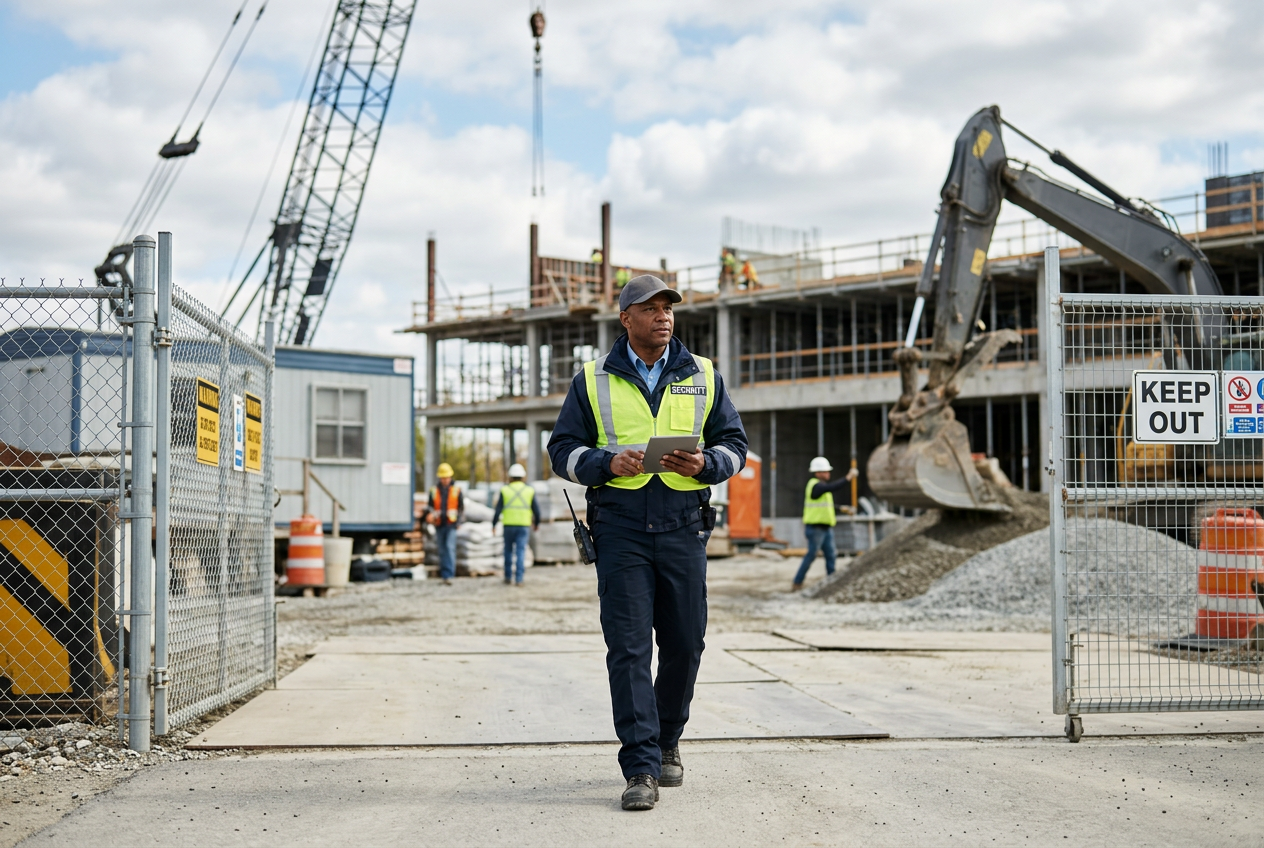
Every person entering a construction site needs to be verified and documented. Security guards maintain sign-in logs, verify contractor credentials, check delivery manifests, and ensure only authorized personnel have access to restricted areas. Perimeter monitoring involves regular checks of fencing, gates, and boundary areas to identify breaches or vulnerabilities before they become problems.
Cascadia Global Security provides trained personnel who understand construction-specific access protocols, including managing the complex flow of subcontractors, inspectors, and material deliveries that characterize active job sites.
Mobile Patrols and Equipment Surveillance
Static guard posts work for high-traffic entry points, but construction sites require mobile coverage. Patrol routes should cover:
- Equipment staging areas where valuable machinery sits overnight
- Material storage zones containing lumber, copper, and fixtures
- Temporary structures, including trailers and tool sheds
- Perimeter fence lines and access points
- Blind spots and areas with limited visibility
Effective patrol schedules vary timing and routes to prevent predictability. Criminals often observe sites before striking, and randomized patrols make their planning much harder.
Incident Reporting and Emergency Response
When incidents occur, professional guards know how to respond appropriately and document everything. Detailed incident reports protect your company legally and help identify patterns that inform future security improvements. Guards trained in emergency response can coordinate with first responders, manage evacuations, and provide critical information during crises.
Safeguarding Personnel and On-Site Safety
Construction sites are inherently dangerous environments. Security guards contribute to the overall safety culture in ways that extend beyond theft prevention.
Enforcing Workplace Health and Safety Protocols
Guards can monitor compliance with PPE requirements, verify safety certifications, and report unsafe conditions or behaviors. This creates accountability and reinforces that safety rules apply to everyone on site. When workers know someone is actively monitoring compliance, adherence improves naturally.
Managing Visitor and Contractor Check-ins
Visitor management on construction sites requires balancing security with operational efficiency. Guards must quickly process legitimate visitors while identifying potential risks. This includes verifying insurance certificates, confirming appointment schedules, and ensuring visitors receive proper safety briefings before entering work areas. Cascadia Global Security's personnel are trained in concierge-style visitor management that maintains professionalism while enforcing necessary protocols.
Integrating Technology with Physical Guarding
The most effective construction security combines human judgment with technological capabilities. Neither works optimally alone.
Utilizing CCTV and Remote Monitoring Systems
Cameras exponentially extend a guard's visual coverage. Strategic camera placement at entry points, equipment areas, and perimeter sections allows guards to monitor multiple locations simultaneously. Remote monitoring capabilities allow off-site security centers to review footage during overnight hours and alert on-site guards or emergency services when threats are detected.
Modern systems with motion detection and AI-powered analytics reduce false alarms while catching genuine threats faster. Guards who understand these systems can respond more effectively than those working without technological support.
GPS Tracking and Asset Management Support
GPS tracking on high-value equipment provides recovery options in the event of theft and deters criminals who know assets can be traced. Security guards can support asset management by verifying equipment locations during patrols, logging serial numbers, and maintaining equipment inventories. This documentation proves invaluable for insurance claims and theft investigations.
Developing a Custom Construction Security Plan
No two construction sites face identical risks. Effective security requires assessment, planning, and partnership with the right provider.
Assessing Site-Specific Risk Factors
A proper security assessment examines:
- Site location and surrounding neighborhood crime rates
- Project duration and phases
- Types of equipment and materials present
- Site layout and natural surveillance limitations
- Workforce size and subcontractor rotation
- Previous incidents at the location or similar projects
These factors determine appropriate staffing levels, patrol frequencies, and technology investments. A downtown high-rise project requires different security than a rural infrastructure job.
Selecting the Right Security Partner for Your Project
The security company you choose matters as much as the plan you implement. Look for providers with specific construction industry experience, not just general security backgrounds. Verify that guards receive construction-specific training covering safety protocols, equipment recognition, and industry terminology.
Cascadia Global Security offers scalable security programs with local management teams who understand regional construction practices and can adapt coverage as projects evolve through different phases.
Frequently Asked Questions
What qualifications should construction security guards have?
Guards should hold valid state security licenses and complete background checks. Ideal candidates have familiarity with the construction industry, emergency response training, and experience with access control systems. Basic first aid and CPR certification, compliant with current American Red Cross or American Heart Association standards, adds value given the inherent hazards of construction environments.
How many security guards does a construction site need?
Staffing depends on site size, layout complexity, and risk level. Small sites may need one guard during off-hours, while large projects might require multiple guards across shifts with overlapping coverage. A professional assessment determines appropriate staffing.
What's the difference between armed and unarmed construction security?
Most construction sites use unarmed guards who focus on access control, monitoring, and deterrence. Armed guards may be appropriate for high-risk locations or projects involving extremely valuable assets, but unarmed professionals handle the vast majority of construction security needs effectively.
Can security guards enforce safety rules on construction sites?
Guards can observe and report safety violations, remind workers of requirements, and deny site access to those without proper credentials or PPE. They typically don't have the authority to discipline workers, but their presence and documentation help project managers maintain safety standards.
How does construction security change during different project phases?
Early phases with site preparation need perimeter focus. Active construction requires heavy access management. Finishing phases with installed fixtures and systems demand interior monitoring. Good security partners adjust coverage as projects progress.
Building a Safer Job Site
Protecting construction sites demands a comprehensive approach that simultaneously addresses theft prevention, personnel safety, and regulatory compliance. Professional security guards deliver value that far exceeds their cost when properly deployed with appropriate technology support.
For projects requiring reliable, experienced security personnel, Cascadia Global Security offers veteran-owned security services with locally managed teams dedicated to protecting construction sites. Their scalable programs adapt to your project's specific needs and timeline. Contact them today to discuss your site security requirements.