Construction Security Services: Reducing Risk on Active Job Sites
Josh Harris | March 19, 2026
A single night of theft on an active construction site can wipe out weeks of progress and hundreds of thousands of dollars in equipment. The National Equipment Register (NER) and the National Insurance Crime Bureau (NICB) estimate that construction equipment theft costs the U.S. industry between $300 million and $1.2 billion annually as of 2025, with recovery rates hovering below 25%. Beyond stolen materials, project managers face vandalism, liability claims from unauthorized site access, and the cascading delays that follow security incidents. These aren't abstract risks: they're predictable threats that demand systematic prevention. Construction security services focused on reducing risk on active job sites have become essential for contractors who understand that prevention costs far less than recovery. The difference between a project that stays on schedule and one that hemorrhages money often comes down to whether security was treated as an afterthought or integrated from day one.
The Growing Need for Enhanced Construction Site Security
Rising Costs of Equipment Theft and Vandalism
Heavy equipment theft represents the most visible financial drain, but the full picture is worse. Excavators, generators, and power tools disappear regularly from poorly secured sites, yet replacement costs tell only part of the story. A stolen excavator worth $150,000 might delay foundation work by two weeks while awaiting a replacement, incurring labor costs, rental fees, and potential contract penalties. Vandalism compounds these losses. Graffiti on newly installed materials, cut wiring, and damaged fixtures require repair or replacement before inspections can proceed. Sites in urban areas or near high-traffic corridors face elevated exposure to opportunistic theft and malicious damage.
Impact of Project Delays on Stakeholder ROI
Every day
a project runs behind schedule erodes returns for developers, investors, and contractors. Security incidents trigger insurance claims, police reports, and documentation requirements, pulling project managers away from core responsibilities. Subcontractors may need to be rescheduled, and material deliveries might require adjustments. For projects with financing tied to completion milestones, delays can trigger penalty clauses or affect loan terms. Stakeholders increasingly recognize that professional security isn't overhead: it's risk mitigation that protects their investment timeline.
Comprehensive Physical Security Measures
On-Site Security Personnel and Mobile Patrols
Trained security officers provide the most direct deterrent against unauthorized access and criminal activity. A visible security presence signals that a site is monitored and protected, discouraging opportunistic criminals who prefer easy targets.
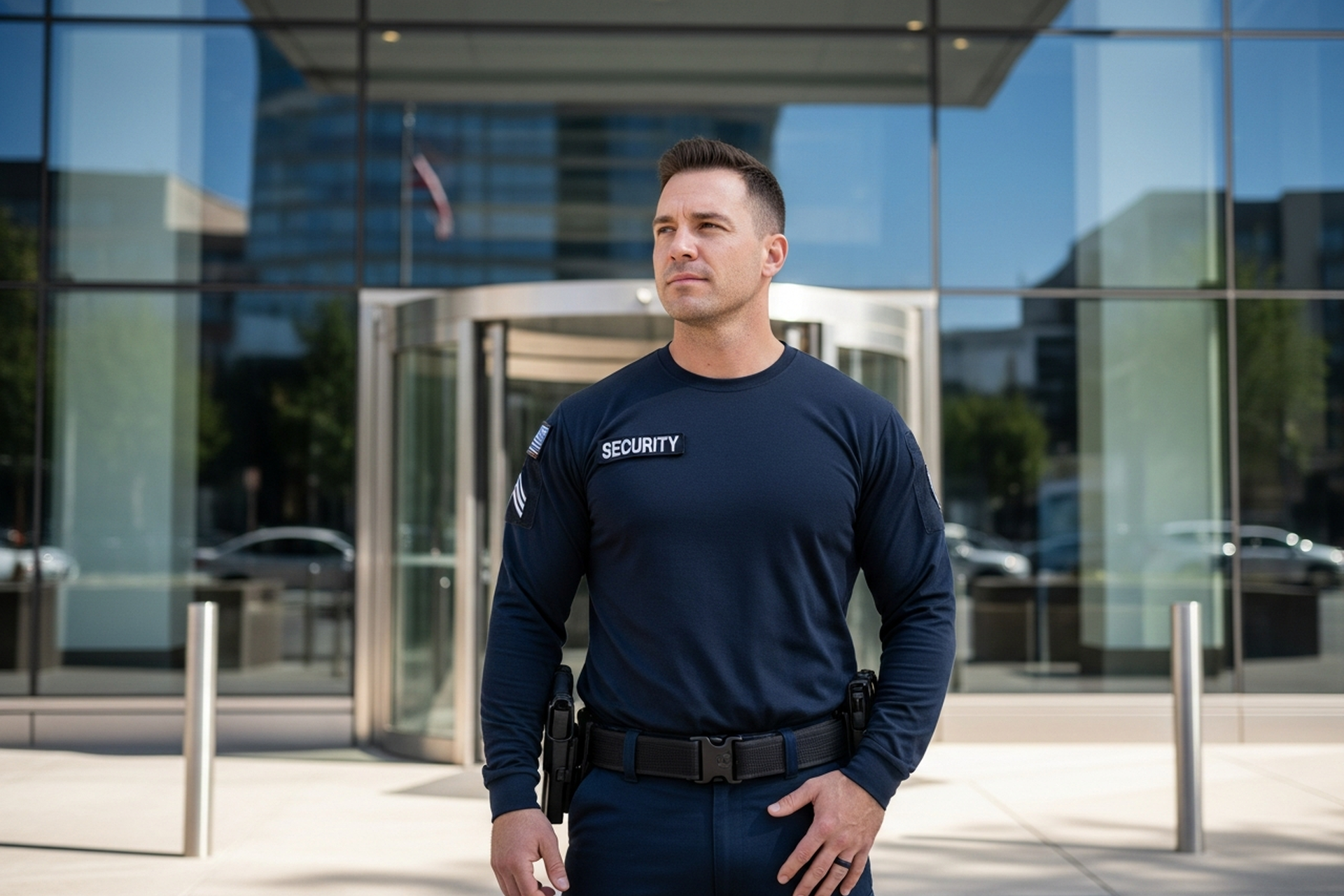
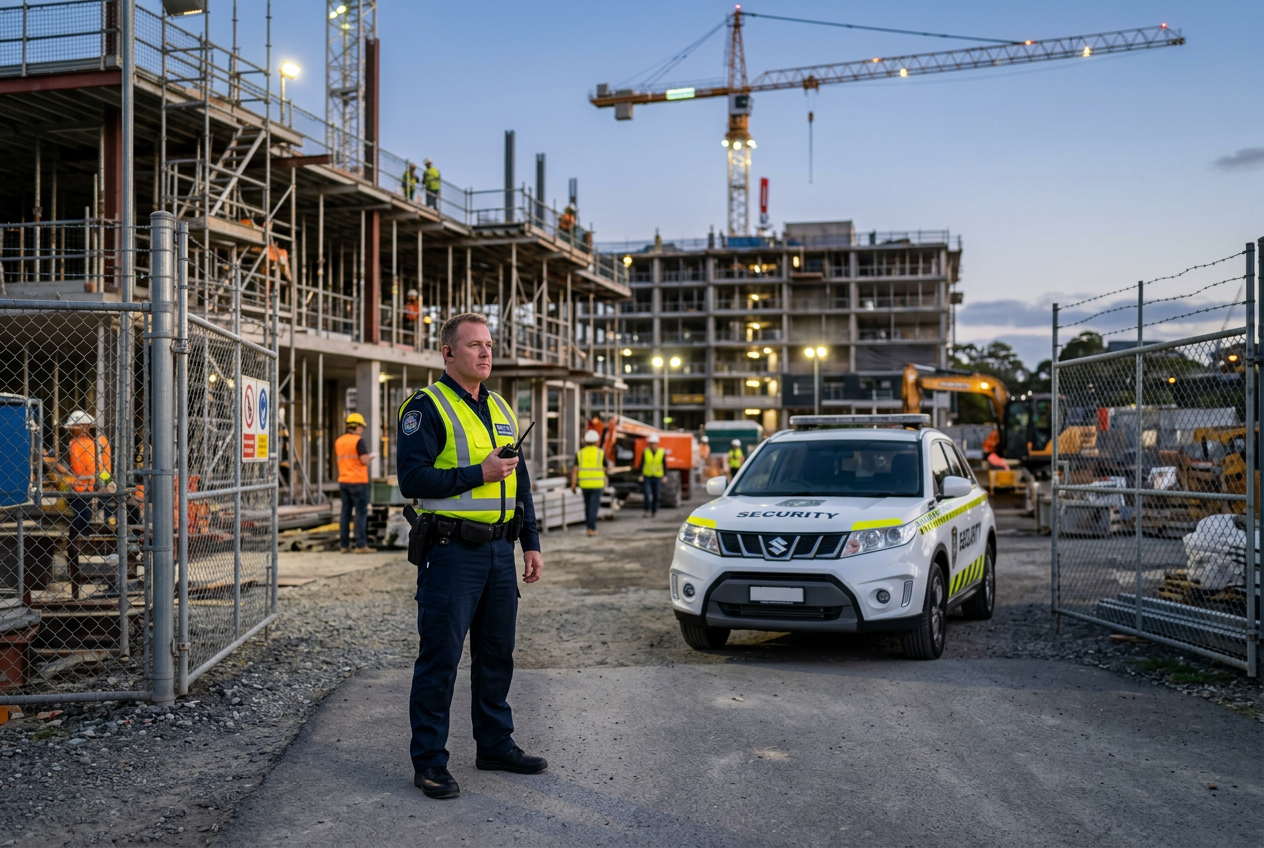
Cascadia Global Security deploys both stationary guards and mobile patrol units, depending on site requirements. Stationary officers manage access points during active work hours, verifying credentials and maintaining visitor logs. Mobile patrols cover larger sites or multiple locations, conducting randomized checks that prevent predictable security patterns that criminals might exploit. For high-value projects or sites in elevated-risk areas, armed security or off-duty law enforcement officers provide enhanced authority and response capability.
Access Control Systems and Perimeter Fencing
Physical barriers form the first line of defense. Chain-link fencing with privacy screening prevents visual reconnaissance while clearly marking site boundaries. Access control systems range from simple keycard readers to biometric scanners, depending on the project's sensitivity. Effective access management tracks who enters and exits the site, creating accountability and documentation useful for both security and compliance purposes. Gates should funnel all traffic through controlled entry points where credentials can be verified. Temporary fencing solutions allow perimeter adjustments as project phases progress and site boundaries shift.
Leveraging Technology for Real-Time Surveillance
AI-Powered Video Analytics and Motion Detection
Modern surveillance goes beyond passive recording. AI-powered cameras can distinguish between authorized workers, wildlife, and potential intruders, reducing false alarms while ensuring that genuine threats trigger an immediate response. Motion detection algorithms learn normal site patterns and flag anomalies: someone climbing a fence at 2 AM, a vehicle approaching a restricted area, or movement in a zone that should be empty. This intelligent filtering means security teams respond to real incidents rather than chasing shadows. Recorded footage provides evidence for insurance claims and law enforcement investigations when incidents do occur.
Remote Monitoring and Thermal Imaging Capabilities
Remote monitoring centers allow trained operators to watch multiple sites simultaneously, providing cost-effective coverage without requiring on-site personnel around the clock. When cameras detect activity, operators can assess the situation in real-time and dispatch a response as needed. Thermal imaging cameras detect heat signatures regardless of lighting conditions, identifying intruders in complete darkness or through visual obstructions like fog or smoke. This capability proves particularly valuable for large sites where traditional lighting would be impractical or cost-prohibitive.
Mitigating Liability and Ensuring Worker Safety
Preventing Unauthorized Entry and Accidents
Construction sites present serious hazards to untrained individuals. Open excavations, exposed electrical systems, and heavy machinery create conditions where unauthorized visitors can suffer severe injuries. When trespassers are injured on a job site, property owners and contractors may face liability claims in limited circumstances, depending on state premises liability laws and the individual's status (e.g., trespasser, licensee, or invitee), regardless of posted warnings. Effective security prevents these scenarios by stopping unauthorized access before it occurs. Professional guards can also monitor for safety violations among authorized workers, identifying situations where someone might be working without proper protective equipment or in restricted areas.
Compliance with Insurance and OSHA Requirements
Insurance carriers increasingly require documented security measures as a condition of coverage for construction projects. Demonstrating adherence to professional security protocols may reduce premiums and help ensure claims won't be denied due to inadequate protective measures. While OSHA does not mandate general site security personnel, it requires employers to control access to hazardous areas and to ensure safe working environments under 29 CFR 1926.
Cascadia Global Security helps ensure security programs meet regulatory requirements while addressing practical operational needs.
Developing a Custom Security Risk Mitigation Plan
Conducting Site-Specific Vulnerability Assessments
Cookie-cutter security approaches miss critical vulnerabilities unique to each project. A thorough assessment examines physical layout, surrounding environment, project timeline, materials on site, and historical crime data for the area. Assessments identify high-value targets, natural surveillance gaps, and access points that require enhanced monitoring. They also consider how security needs will evolve as construction progresses: a site's risk profile during foundation work differs substantially from that in the finishing phase, when valuable fixtures and materials accumulate.
Integrating Security with Daily Project Operations
Security that disrupts workflow creates friction and workarounds, undermining protection. Effective programs integrate with existing operations, establishing protocols that site personnel can follow without significant burden. This includes coordinating guard schedules with shift changes, establishing clear procedures for after-hours access, and creating communication channels between security and project management.
Cascadia Global Security works with construction teams to develop security protocols that protect assets without creating operational bottlenecks.
Frequently Asked Questions
How much do construction site security services typically cost?
Costs vary based on site size, location, risk level, and coverage hours. Basic mobile patrol services might run $25–35 per hour, while dedicated on-site officers range from $30–60 per hour, depending on armed status and experience level. Most providers offer customized quotes based on specific site assessments.
What qualifications should construction security guards have?
Guards should hold valid state security licenses and have training in access control, emergency response, and incident documentation. Experience with construction environments is valuable, as guards need to understand site hazards and normal operational patterns.
Can security services be scaled up or down during different project phases?
Yes. Professional security providers offer flexible staffing that adjusts to changing needs. Early site preparation might require minimal coverage, while phases with expensive equipment or materials on site warrant enhanced protection.
How quickly can security services be deployed for a new project?
Established providers can typically deploy initial coverage within 24-48 hours for urgent needs, with full customized programs implemented within one to two weeks after site assessment.
Do security guards handle emergencies beyond theft prevention?
Trained security personnel respond to medical emergencies, fires, and other incidents. They serve as trained emergency responders who can perform CPR, use automated external defibrillators (AEDs), and coordinate with emergency services until specialized help arrives.
Protecting Your Investment From Groundbreaking to Completion
Construction security isn't a line item to minimize: it's protection for everything else in your budget. The projects that finish on time and within budget typically share a common element: security planning that anticipates threats rather than reacting to them.
Cascadia Global Security, a veteran-owned firm, provides professional security-guard and off-duty law-enforcement services tailored to the construction industry's needs. Their locally managed teams understand the specific challenges active job sites present. Learn more about how comprehensive security services can protect your next project from preventable losses.