Construction Site Security Measures That Reduce Risk
Josh Harris | February 6, 2026
Construction sites lose an estimated $400 million to $1 billion annually to theft, vandalism, and unauthorized access. A single stolen excavator can set a project back weeks and cost hundreds of thousands in replacement and delays. The difference between sites that hemorrhage losses and those that don't comes down to systematic security measures that reduce risk at every vulnerability point. Effective construction site security isn't about installing cameras and hoping for the best. It requires layered defenses that address physical access, asset protection, personnel protocols, and technology integration. Sites that implement comprehensive security programs report up to 60%–70% fewer theft incidents and significantly reduced liability exposure. The strategies outlined here represent proven approaches used across commercial, industrial, and infrastructure projects where Cascadia Global Security has helped clients protect millions in equipment and materials.
Assessing Site Vulnerabilities and Risk Factors
Every construction site presents unique security challenges based on location, project phase, and asset profile. A downtown high-rise faces different threats than a rural pipeline project. Understanding your specific risk landscape determines which protective measures deliver the highest return.
Common Security Threats in Construction
Theft remains the primary concern, with copper wire, heavy equipment, and power tools topping the list of targeted items. Organized theft rings often conduct surveillance before striking, identifying patterns in guard rotations and delivery schedules.
- Equipment theft peaks during weekends and holidays when sites sit unattended
- Vandalism frequently targets completed work, requiring expensive rework
- Unauthorized access creates liability exposure for injuries and accidents
- Material theft of lumber, wiring, and fixtures adds up quickly across large projects
Conducting a Comprehensive Site Security Audit
A thorough audit examines physical perimeter integrity, lighting coverage, existing surveillance gaps, and personnel access patterns. Walk the entire boundary at different times of day. Note where shadows create blind spots after dark and where fencing meets natural terrain features that could facilitate entry.
Document every access point, including temporary openings created for deliveries. Review incident reports from similar projects in the area. Local law enforcement often shares crime pattern data that helps predict likely threat vectors.
Establishing a Robust Physical Perimeter
Physical barriers form your first line of defense. They slow intruders, channel access through controlled points, and create clear boundaries that support trespassing enforcement.
Fencing Solutions and Access Control Points
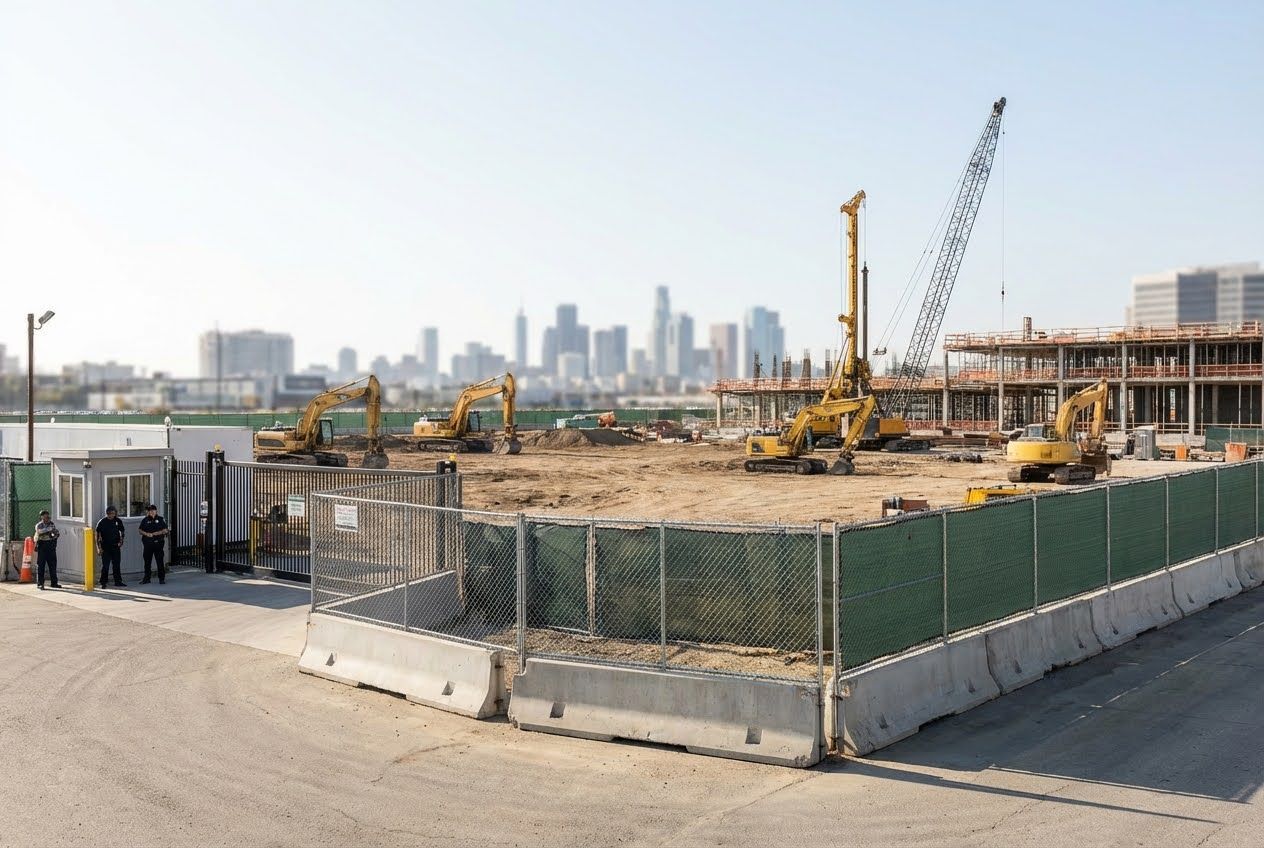
Chain-link fencing with privacy slats remains the industry standard for most sites. Height matters: eight-foot fencing with barbed wire or anti-climb additions deters casual opportunists. For high-value projects, consider welded mesh panels that resist cutting tools.
- Limit access points to the minimum necessary for operations
- Install vehicle barriers at entry gates to prevent ram-and-grab thefts
- Use badge readers or key codes rather than physical keys that can be copied
- Position guard stations with clear sightlines to all entry points
Strategic Lighting to Deter Intruders
Criminals avoid well-lit areas. Motion-activated lighting conserves energy while creating sudden illumination that startles intruders and alerts security personnel. Overlap lighting zones to eliminate dark pockets between fixtures.
Solar-powered options work well for sites without permanent electrical infrastructure. Position lights to illuminate fence lines, equipment storage areas, and building entry points. Avoid creating glare that blinds security cameras or guards.
Signage as a Deterrent and Liability Protection
Clear signage serves dual purposes: deterring potential intruders and establishing legal protection against liability claims. Post warnings about surveillance, guard dogs, and prosecution for trespassing at regular intervals along the perimeter.
Include emergency contact information and site identification for first responders. Multilingual signage may be necessary depending on your location and workforce demographics.
Leveraging Surveillance and Monitoring Technology
Technology extends your security team's reach and creates documentation that supports insurance claims and criminal prosecution.
Remote CCTV and AI-Powered Motion Detection
Modern surveillance systems use artificial intelligence to distinguish between legitimate activity and potential threats. This reduces false alarms from wildlife or weather while ensuring genuine intrusions trigger immediate response.
- Cloud-based storage preserves footage even if on-site equipment is damaged
- Thermal cameras detect body heat regardless of lighting conditions
- Two-way audio allows remote guards to challenge intruders verbally
- Integration with mobile apps enables real-time monitoring from any location
Drone Surveillance for Large-Scale Projects
For sprawling sites like highway construction or pipeline installation, drone patrols cover ground that would require hours on foot. Scheduled drone flights create predictable coverage patterns, while random deployments keep potential thieves uncertain about when surveillance will occur.
Drones must comply with FAA Part 107 regulations and local airspace restrictions when used for security monitoring. Drones equipped with thermal imaging detect unauthorized personnel hiding in structures or equipment. Recorded footage provides evidence and helps identify security gaps in your perimeter strategy.
Protecting High-Value Assets and Equipment
Equipment and materials represent your largest theft exposure. Targeted protection strategies focus resources where losses would hurt most.
GPS Tracking for Heavy Machinery
GPS trackers hidden on excavators, loaders, and other heavy equipment enable rapid recovery after theft. Many systems include geofencing alerts that notify you when equipment leaves designated areas, even during authorized transport.
Recovery rates for GPS-tracked equipment commonly range between 70% and 90%, compared to under 25% for untracked machinery. The investment typically pays for itself after preventing a single theft.
Secure Storage for Tools and Raw Materials
Lockable shipping containers provide cost-effective, secure storage for tools and high-value materials. Position containers in well-lit areas within camera coverage. Use hardened padlocks and consider adding tamper-detection alarm sensors.
- Inventory tools daily and secure them each night
- Store copper and other high-value materials in locked containers
- Remove keys from all vehicles and equipment when not in use
- Consider overnight removal of the most portable high-value items
Inventory Management and Asset Tagging
Detailed inventory records support insurance claims and help identify loss patterns. Asset tagging with unique identifiers makes stolen items easier to recover and harder to resell.
Modern inventory systems use barcode or RFID scanning to track items in and out of storage. This creates accountability and helps identify whether losses result from theft or misplacement.
Personnel Management and Security Protocols
People represent both your greatest security asset and a potential vulnerability. Clear protocols ensure everyone on site contributes to security rather than undermining it.
Visitor Logging and Identity Verification
Every person entering the site should be logged in and have identification verification. This includes delivery drivers, inspectors, subcontractors, and client representatives. Digital visitor management systems create searchable records and can flag individuals who've been banned from the site.
Require escorts for visitors in sensitive areas. Issue temporary badges that must be returned upon exit. Cascadia Global Security provides trained personnel who manage access control professionally while maintaining positive relationships with legitimate visitors.
Security Training for On-Site Workers
Your workforce sees everything that happens on site. Training workers to recognize and report suspicious activity multiplies your security coverage without additional cost.
- Establish clear reporting channels for security concerns
- Reward workers who identify vulnerabilities or report incidents
- Include security awareness in regular safety meetings
- Ensure all workers know emergency procedures and contact numbers
Frequently Asked Questions
How much does construction site security typically cost?
Costs vary based on site size, location, and threat level. Basic measures like fencing, lighting, and signage might run $7,000–$20,000. Adding surveillance systems and professional guards increases investment but typically delivers positive ROI through prevented losses.
What's the most commonly stolen item from construction sites?
Copper wire and piping top the list due to their high scrap value and ease of transport. Power tools, generators, and fuel also rank among frequent targets. Heavy equipment theft occurs less often but causes the largest financial impact per incident.
Should I hire security guards or rely solely on technology?
The most effective approach combines both. Technology provides continuous monitoring and documentation, while trained guards deliver immediate response capability and human judgment that cameras cannot replicate.
How often should I update my site security assessment?
Conduct formal assessments at each major project phase and whenever significant changes occur in site layout, asset inventory, or local crime patterns. Monthly walkthroughs catch deteriorating conditions before they create vulnerabilities.
What should I do immediately after discovering a theft?
Secure the scene without disturbing evidence. Contact law enforcement and your insurance carrier. Review surveillance footage and access logs. Document everything with photos and written descriptions before resuming normal operations.
Implementing a Sustainable Security Culture
Security measures only work when they become embedded in daily operations. The most sophisticated technology fails if workers prop open gates for convenience or share access codes freely.
Leadership must demonstrate commitment by following the same protocols expected of everyone else. Regular security audits identify where procedures have drifted from standards. Celebrate security wins and analyze near-misses to continuously improve your approach.
Construction site security measures that reduce risk require ongoing attention rather than one-time implementation. Threats evolve, project phases change access requirements, and personnel turnover demands continuous training.
For sites requiring professional security personnel, Cascadia Global Security offers trained guards and patrol services tailored to construction environments. Their veteran-led team understands the unique challenges of protecting active work sites while maintaining operational flow.