Evacuation Information: How Security Helps Guide Safe Exits
Josh Harris | March 19, 2026
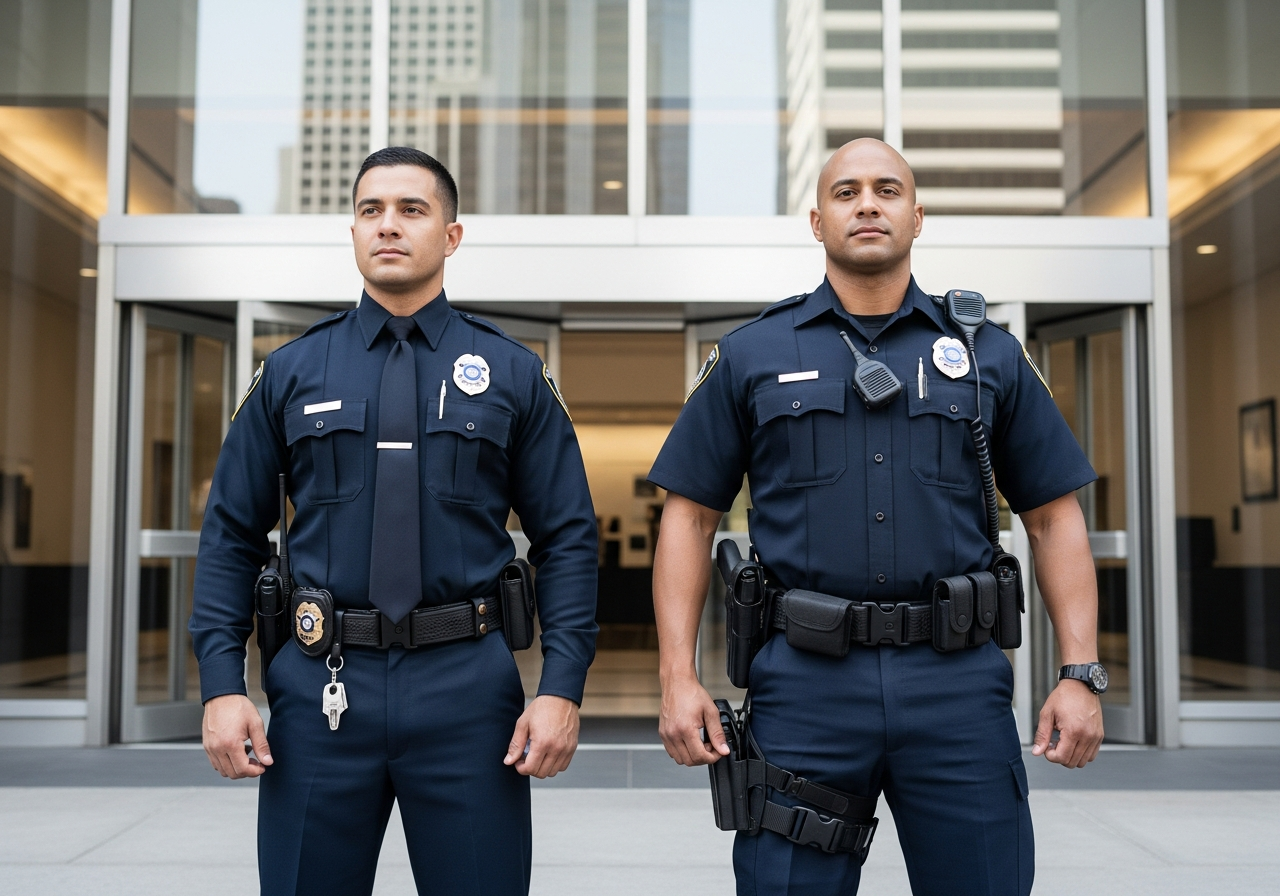
When alarms sound, and crowds surge toward exits, the difference between chaos and controlled evacuation often comes down to one factor: trained security personnel who know exactly what to do. Evacuation information flows through security teams like a nervous system, coordinating movement, calming panic, and ensuring every person reaches safety. Buildings don't evacuate themselves. People do, and they need guidance. Security professionals serve as the critical link between emergency plans on paper and successful execution under pressure. Whether responding to fire, active threats, or natural disasters, security teams transform theoretical routes into actual pathways to safety. The stakes couldn't be higher: a 2023 NFPA analysis found that facilities with trained on-site personnel achieved significantly faster and safer evacuations than those relying solely on automated alerts, though specific percentage figures vary by building type and drill conditions.
The Vital Role of Security Personnel in Emergency Planning
Security teams don't wait for emergencies to think about evacuation. Their work begins months before any alarm sounds, studying floor plans, identifying bottlenecks, and anticipating human behavior under stress.
Pre-Incident Risk Assessment and Route Planning
Effective evacuation starts with a thorough assessment. Security professionals walk every corridor, test every exit door, and time routes from the farthest occupied spaces. They identify primary and secondary egress paths, noting where congestion typically occurs during normal business hours.
Risk assessment also considers building-specific vulnerabilities. A high-rise office tower presents different challenges than a sprawling warehouse or a packed concert venue. Cascadia Global Security personnel conduct site-specific evaluations that account for occupancy patterns, construction materials, and the unique characteristics of each facility.
Coordinating with Local First Responders
Security teams serve as the bridge between building occupants and emergency services. This relationship requires ongoing communication, not just during incidents. Regular coordination meetings with fire departments and police establish shared protocols and clear handoff procedures.
When firefighters arrive at a scene, they need immediate intelligence: where the incident originated, which areas are cleared, and where people might still be trapped. Security personnel provide this critical information, reducing response time and enabling targeted rescue efforts.
Crowd Control and Panic Mitigation Strategies
Human behavior under stress follows predictable patterns, and trained security professionals use this knowledge to prevent dangerous crowd dynamics from developing.
Maintaining Order During High-Stress Exits
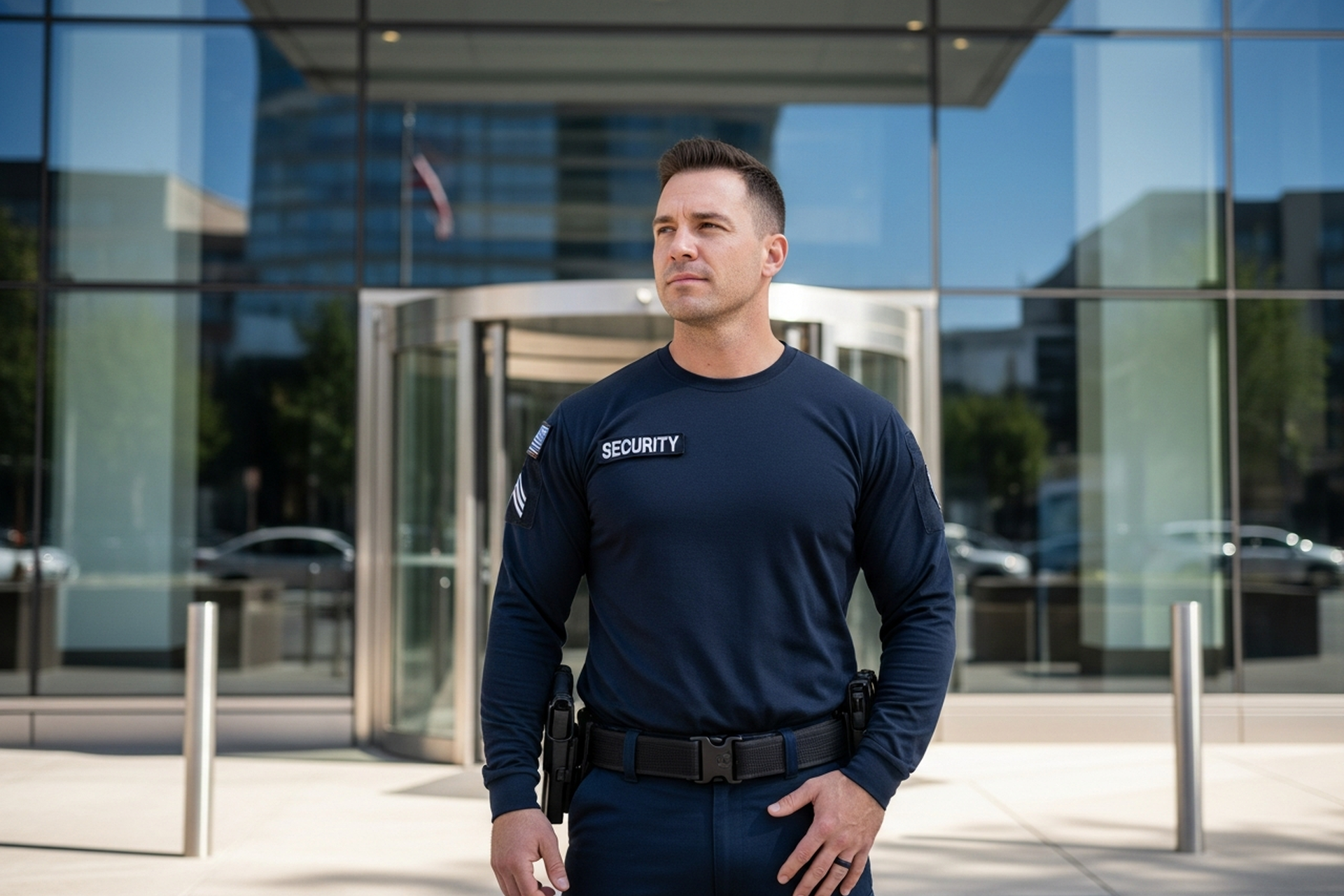
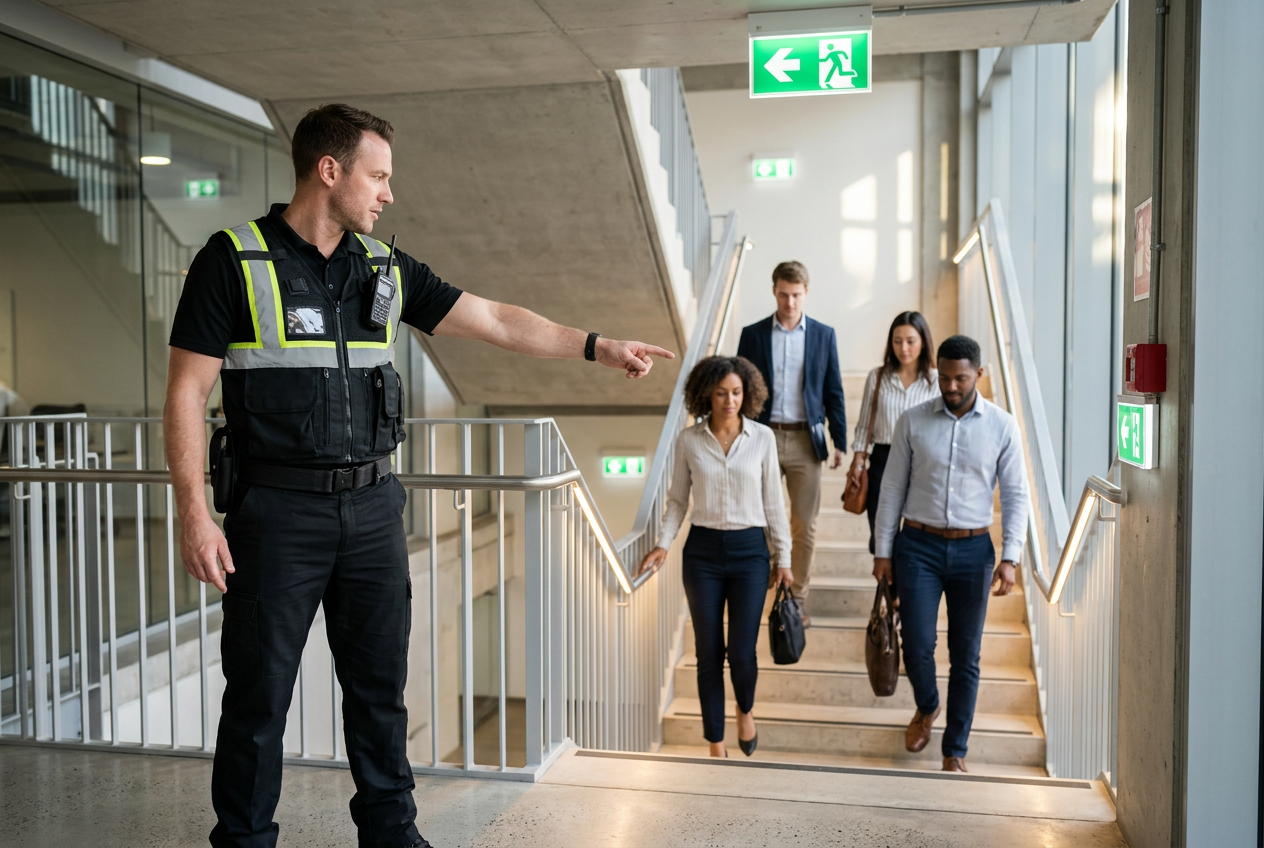
Panic spreads faster than fire. One person running triggers others to run. One person's push creates a cascade of pushes. Security personnel position themselves at strategic points to interrupt these patterns, maintaining visible calm that influences everyone around them.
Physical positioning matters enormously. Guards stationed at doorways can regulate flow, preventing the crush that occurs when too many people try to pass through a single point simultaneously. They create orderly queues from potential stampedes.
Verbal Communication and Clear Instructions
What security personnel say during evacuations matters as much as what they do. Clear, direct commands cut through confusion. Phrases like "Walk to your right" and "Follow the green signs" give people specific actions rather than vague directions.
Tone conveys as much as words. A calm, authoritative voice reassures evacuees that someone competent is managing the situation. Security teams train extensively on verbal de-escalation and crowd communication techniques that work under pressure.
Ensuring Accessibility for All Occupants
Evacuation plans must account for every person in a building, including those who cannot use stairs or need additional assistance to reach safety.
Assisting Individuals with Mobility Challenges
Standard evacuation routes often assume full mobility. Security personnel identify individuals who need assistance before emergencies occur, maintaining awareness of wheelchair users, people with visual impairments, and anyone who requires extra time or help.
Evacuation chairs, refuge areas, and alternative routes become critical for these occupants. Security teams train on proper assist techniques and know the location of every accessibility resource in their facility. They also communicate with first responders about anyone remaining in designated safe areas awaiting rescue.
Technology and Tools for Guided Evacuations
Modern evacuation systems combine human judgment with technological capabilities, creating layered safety nets that compensate for individual failures.
Utilizing Integrated Surveillance and Alarm Systems
Camera systems allow security personnel to monitor multiple areas simultaneously, identifying where evacuees are moving smoothly and where problems develop. This real-time visibility enables rapid redeployment of resources to trouble spots.
Integrated alarm systems do more than make noise. They unlock specific doors, activate emergency lighting, and trigger automated announcements. Security teams at Cascadia Global Security train on these systems until operations become automatic, freeing up mental bandwidth for decision-making during actual emergencies.
Real-Time Communication Via Mobile Security Units
Radio communication keeps security teams coordinated when they're spread across large facilities. Mobile patrol units can respond to developing situations faster than personnel on foot, and they provide eyes on parking areas and exterior assembly points.
Two-way radios also connect security personnel with building management and emergency services, creating a unified command structure. Information flows in both directions: conditions on the ground reach decision-makers while instructions reach those executing the evacuation.
Post-Evacuation Accountability and Assembly Points
Getting people out of a building is only half the task. Confirming everyone's safety and preventing re-entry requires systematic procedures that continue long after alarms stop sounding.
Headcounts and Secondary Sweeps
Assembly points must be far enough from the building to ensure safety while remaining close enough for practical accountability. Security personnel conduct headcounts using pre-established rosters, visitor logs, and contractor sign-in sheets.
When counts don't match, secondary sweeps begin. Security teams re-enter cleared areas to search for anyone who may have hidden, become injured, or been unable to evacuate. These sweeps follow specific patterns that ensure complete coverage without redundant effort.
Continuous Improvement Through Drills and Debriefs
Evacuation capabilities degrade without practice. Regular drills transform theoretical knowledge into muscle memory, revealing weaknesses that look fine on paper but fail under real conditions.
Effective drills should align with the latest 2024 NFPA 101 Life Safety Code and OSHA emergency action plan standards, incorporating both announced and unannounced exercises to assess real-world readiness. After each drill, security teams conduct detailed debriefs identifying what worked, what failed, and what needs modification. These lessons feed directly into updated procedures and additional training.
Cascadia Global Security emphasizes continuous improvement cycles that treat every drill and every actual incident as learning opportunities. Security personnel document observations, timing data, and occupant feedback to systematically refine evacuation protocols.
Frequently Asked Questions
How often should buildings conduct evacuation drills?
Many U.S. jurisdictions, following the 2024 International Fire Code, require at least one annual evacuation drill, though quarterly or semiannual drills are recommended for high-occupancy or high-risk facilities. Varying drill times and scenarios prevent complacency and test responses under different conditions.
What should security personnel do if someone refuses to evacuate?
Document their location and identity, communicate this information to first responders, and move on. Security personnel cannot physically force evacuation in most circumstances, but they can ensure rescue teams know exactly where to find anyone who remains behind.
How do security teams handle evacuations during power outages?
Battery-powered emergency lighting activates automatically, and security personnel carry flashlights as standard equipment. Radio communication continues on battery power, and pre-planned routes account for non-functioning elevators and electronic locks.
What training do security guards receive for evacuation procedures?
Professional security personnel complete training covering emergency communication, crowd psychology, first aid, and facility-specific protocols. Ongoing training includes regular drills, tabletop exercises, and refresher courses on updated procedures.
How can buildings improve evacuation times?
Clear signage, unobstructed pathways, and regular drills produce the most significant improvements. Security personnel conducting pre-incident assessments often identify simple changes, like relocating furniture or improving lighting, that dramatically reduce evacuation times.
Building Safer Exits Through Professional Security
Effective evacuation depends on preparation, training, and the steady presence of security professionals who guide people to safety when it matters most. Every element, from pre-incident planning through post-evacuation accountability, requires human judgment that technology alone cannot provide.
For organizations seeking to strengthen their evacuation capabilities, partnering with experienced security professionals can make the difference between plans that work on paper and those that work in practice. Cascadia Global Security offers veteran-owned, locally managed security services, including comprehensive emergency planning and trained personnel ready to guide safe exits. Learn more about building a security program that protects your people when seconds count.