Hospital Security Officers: Supporting Safety in Healthcare Facilities

Josh Harris | March 19, 2026

Healthcare facilities present one of the most complex security environments in any industry. Emergency departments see patients in crisis, pharmacies store controlled substances, and staff members work under intense pressure while caring for vulnerable populations. Hospital security officers serve as the critical link between clinical operations and physical safety, protecting patients, visitors, and healthcare workers while maintaining an environment conducive to healing. The role demands a unique combination of vigilance, empathy, and specialized training that goes far beyond traditional security work.


The Evolving Role of Security in Modern Healthcare


Hospital security has transformed dramatically over the past two decades. What once focused primarily on preventing theft and managing parking lots now encompasses threat assessment, behavioral intervention, and active collaboration with clinical teams. Security personnel in healthcare settings must understand medical protocols, recognize signs of patient distress, and respond to situations ranging from combative patients to active-shooter scenarios.


Balancing Patient Care with Physical Protection


Security officers in hospitals
walk a fine line between maintaining safety and preserving the therapeutic environment patients need. Aggressive posturing or overly visible security measures can increase anxiety among patients and families. Effective hospital security officers understand that their presence should reassure rather than intimidate. They position themselves strategically, intervene early when tensions rise, and know when to step back and let clinical staff take the lead.


De-escalation in High-Stress Medical Environments


Emergency rooms and psychiatric units see heightened emotions daily. Patients experiencing pain, fear, or mental health crises may become verbally aggressive or physically combative. Trained security personnel use verbal de-escalation techniques as their primary tool, reserving physical intervention for situations where safety is genuinely at risk. Hospitals implementing structured de-escalation programs experience approximately 30% fewer violent incidents requiring restraint compared to facilities without such training (IAHSS, 2024).


Core Responsibilities of Hospital Security Personnel


The scope of hospital security work extends across every department and every hour of operation. Officers must be prepared to shift from routine patrol to emergency response within seconds, all while maintaining awareness of the facility's unique vulnerabilities.


Access Control and Perimeter Monitoring


Controlling who enters a healthcare facility and where they go represents the foundation of hospital security. Officers manage visitor check-in systems, verify credentials for restricted areas, and monitor entrances during both normal operations and lockdown situations. Effective access control prevents unauthorized individuals from reaching patient care areas while ensuring legitimate visitors can navigate the facility efficiently.


Emergency Response and Crisis Management


When codes are called, security officers often arrive first. Code Silver is used in many U.S. hospitals for active shooter or weapons threats, Code Pink for infant abductions, and Code Gray (not Grey) for combative individuals, though exact codes vary by institution. Security teams work alongside clinical staff during these events, providing physical support while nurses and physicians focus on patient care. Regular drills ensure that everyone knows their role when seconds matter.


Protecting Sensitive Areas and Pharmacy Assets


Hospital pharmacies contain medications worth millions of dollars, including controlled substances with significant street value. Security officers conduct regular checks of pharmacy areas, monitor surveillance feeds for suspicious activity, and respond immediately to any breach attempts. Beyond pharmacies, officers also protect laboratories, data centers, and supply rooms that house expensive medical equipment.


Specialized Training for Healthcare Safety Officers


Generic security training falls short in healthcare settings. Officers need specialized education that addresses the unique challenges of protecting patients while respecting their rights and dignity.


Mental Health Crisis Intervention


Many hospitals now require security officers to complete Crisis Intervention Team training, the same program used by law enforcement for mental health calls. This training helps officers recognize symptoms of psychiatric emergencies, communicate effectively with individuals in crisis, and coordinate with clinical staff to ensure patients receive appropriate care rather than simply being removed from the facility.


Understanding HIPAA and Patient Privacy Laws


Security officers frequently encounter protected health information in the course of their duties. They may see patient names on whiteboards, overhear clinical discussions, or review surveillance footage that captures medical procedures. Proper training ensures officers understand their obligations under HIPAA, including what information they may share in the course of security incidents and how to document events without creating unnecessary privacy risks.


Collaborating with Clinical Staff and First Responders


Hospital security officers function as part of a larger team that includes nurses, physicians, administrators, and external emergency responders. Strong working relationships with each group improve outcomes when incidents occur. Officers who regularly communicate with nursing staff learn which patients may pose risks, allowing proactive positioning rather than reactive response. When police or EMS arrive at the facility, security officers serve as liaisons, guiding responders to the right locations and providing relevant information without disrupting patient care.

Cascadia Global Security trains its healthcare security personnel to integrate seamlessly with clinical teams, recognizing that effective protection requires collaboration rather than isolation.


Leveraging Technology to Enhance Facility Safety


Modern hospital security combines human judgment with technological tools that extend awareness and accelerate response times.


Integrated Surveillance and Biometric Systems


Camera systems in healthcare facilities have evolved beyond simple recording. Analytics software can detect unusual movement patterns, identify individuals flagged for past incidents, and alert officers to potential problems before they escalate. Biometric access controls ensure that only authorized personnel can enter sensitive areas, creating audit trails that support both security and compliance requirements.


Panic Alarms and Communication Infrastructure

Staff members in high-risk areas carry panic buttons that instantly alert security to their location. Modern systems integrate with facility maps, allowing officers to navigate directly to the person in distress. Two-way radios, mobile devices, and overhead paging systems ensure that security teams can communicate during any type of emergency, including situations where cellular networks may be overwhelmed.

Facilities working with Cascadia Global Security benefit from officers trained on the latest security technologies and communication protocols.
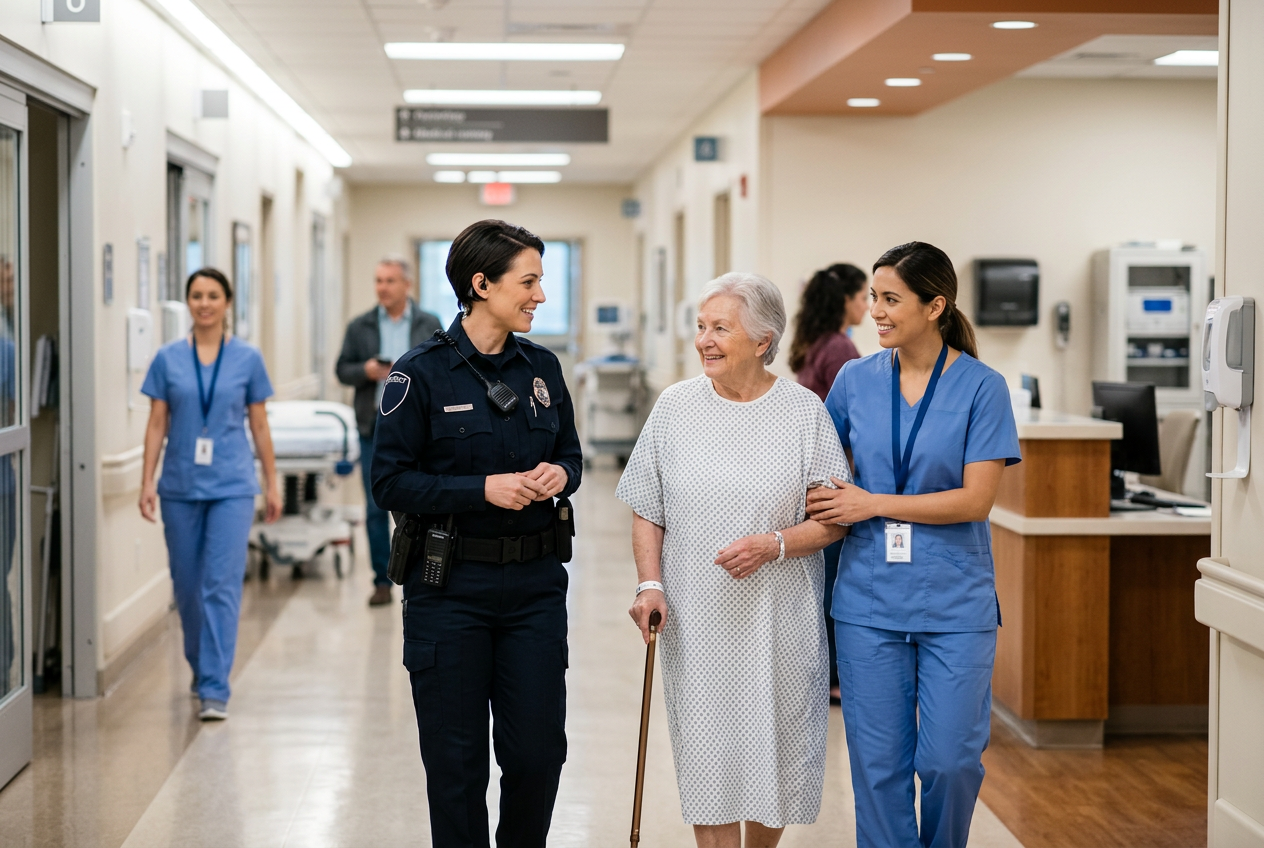
A smiling hospital security officer, nurse, and elderly patient with a cane walk down a bright hospital hallway

Frequently Asked Questions


What qualifications should hospital security officers have?


Hospital security officers should possess basic security certifications along with specialized healthcare training. This includes de-escalation techniques, HIPAA compliance education, and Crisis Intervention Team certification. Many facilities also require officers to complete training on patient rights and emergency medical protocols.


How do security officers handle violent patients without harming them?


Officers use a graduated response approach, starting with verbal de-escalation and progressing to physical intervention only when necessary. Techniques focus on controlling movement and preventing injury rather than causing pain. In some cases, medical staff may administer calming medication under a physician’s order while security ensures safety; security officers themselves do not administer medications.


What is the difference between hospital security and regular security guards?


Hospital security officers receive extensive training specific to healthcare environments, including mental health crisis response, compliance with privacy laws, and collaboration with clinical teams. They understand medical terminology, recognize signs of patient distress, and know how to support care rather than simply enforce rules.


How do hospitals handle security during emergencies, such as active shooter situations?


Hospitals maintain detailed emergency response plans with specific codes for different threats. Security officers coordinate lockdown procedures, guide law enforcement to the threat location, and help evacuate patients when necessary. Regular drills ensure all staff members know their roles during these events.


Can hospital security officers detain individuals?


Security officers can detain individuals in limited circumstances, typically when someone poses an immediate threat to safety or has committed a crime on hospital property. Officers must follow strict protocols and involve law enforcement as quickly as possible. Patient detention for medical reasons requires clinical authorization.


The Long-term Impact of Security on Patient Outcomes


Research consistently shows that patients recover better in environments where they feel safe. Hospitals with visible, professionally trained security teams reported higher staff perceptions of safety and improved patient satisfaction, though direct links to recovery rates remain under study. When nurses and physicians feel protected, they can focus entirely on patient care rather than worrying about their personal safety.

Investing in qualified security personnel pays dividends beyond incident prevention. Hospitals with strong security programs face fewer liability claims, maintain better relationships with their communities, and attract top clinical talent who want to work in safe environments. For healthcare organizations committed to both safety and patient experience, professional security officers are not an expense but an essential component of quality care.

For facilities seeking experienced healthcare security personnel, Cascadia Global Security offers trained officers who understand the unique demands of medical environments.

By Josh Harris March 20, 2026
A single shoplifting incident costs the average retailer $463, but the real damage extends far beyond the price tag. Staff trauma, operational disruption, and inventory write-offs compound quickly, turning what seems like a minor theft into a significant business problem. Protecting staff and inventory requires a coordinated approach that addresses vulnerabilities before criminals exploit them. The National Retail Federation reports that retail shrinkage reached $85 billion in 2022, with organized retail crime accounting for an increasing share. Yet many store owners still rely on outdated security measures or, worse, expect frontline employees to confront thieves without proper training or support. Effective retail shop security demands investment in technology, people, and processes working together. This isn't about turning your store into a fortress. The goal is to create an environment where legitimate customers feel welcome while potential offenders recognize that risks outweigh rewards. The stores that achieve this balance see measurable improvements in both shrinkage rates and employee retention. Assessing Modern Risks in Retail Environments Understanding your specific threat landscape is the foundation of any security program. Generic solutions fail because every retail environment faces unique challenges based on location, merchandise type, and customer demographics. Identifying Internal and External Theft Patterns External theft grabs headlines, but internal theft accounts for roughly 35% of retail shrinkage. Employee theft often involves manipulation of point-of-sale systems, "sweethearting" merchandise to friends, or exploiting gaps in inventory controls. These losses accumulate gradually, making them harder to detect than grab-and-run incidents. External threats have evolved significantly. Organized retail crime groups conduct reconnaissance, target specific high-value items, and sometimes employ distraction techniques involving multiple participants. Solo shoplifters remain common, but the sophistication of coordinated theft operations requires equally sophisticated countermeasures. Review your incident reports from the past 12 months. Look for patterns in timing, location within the store, and merchandise categories. This analysis reveals where your vulnerabilities concentrate. Evaluating Physical Store Vulnerabilities Walk your store with fresh eyes, or better yet, bring in an outside perspective. Cascadia Global Security provides professional assessments that identify blind spots store managers often overlook due to familiarity. Common vulnerabilities include poorly lit parking areas, obscured sightlines created by tall fixtures, inadequate back-door security, and insufficient coverage at fitting rooms. Loading docks present particular risks , as they provide access points that bypass customer-facing security measures. Document each vulnerability and prioritize based on risk level and remediation cost. Some fixes are immediate and inexpensive, while others require capital investment and planning. Implementing Advanced Surveillance and Deterrence Systems Technology amplifies human security efforts, but only when deployed strategically. Cameras and tags work best as components of an integrated system rather than standalone solutions. Strategic Placement of CCTV and Smart Cameras Camera placement should prioritize high-risk zones: entrances, exits, cash registers, and areas containing high-value merchandise. Modern IP cameras with analytics capabilities can detect unusual behavior patterns, such as loitering or repeated visits without purchases, and alert staff in real time. Visible cameras serve dual purposes: they capture evidence and deter potential offenders. However, placing all cameras in obvious locations creates blind spots that experienced thieves will exploit. Balance visible deterrent cameras with covert units positioned to capture activity in known problem areas. Storage and retrieval matter as much as capture quality. Cloud-based systems ensure footage survives even if on-site equipment is damaged or stolen. Establish clear retention policies that comply with state and federal privacy regulations, such as data retention limits under applicable consumer protection laws, while preserving evidence for potential prosecution. Electronic Article Surveillance (EAS) and RFID Tagging EAS gates at store exits remain effective deterrents despite their decades-long presence in retail. The key is consistent tagging protocols: when employees skip tagging certain items due to time pressure, those items become easy targets. RFID technology offers advantages beyond theft prevention. Real-time inventory visibility helps identify discrepancies immediately rather than waiting for periodic counts. When items disappear from the system without corresponding sales, you know to investigate. This dual benefit often justifies the higher per-tag cost compared to traditional EAS tags. Source tagging, where manufacturers apply security devices before shipping, eliminates the labor burden on store staff and ensures consistent protection across all merchandise. Empowering Staff Through Training and Safety Protocols Your employees are your first line of defense, but they need proper training and clear authority to act. Untrained staff either ignore suspicious behavior or respond inappropriately, creating liability risks. Conflict De-escalation and Shoplifting Response Staff should never physically confront suspected shoplifters. The risk of injury or legal liability far outweighs the value of recovered merchandise. Instead, train employees in customer-service-based deterrence: approaching suspicious individuals with offers of assistance signals awareness without escalating. Establish clear protocols for employees to follow when they observe theft in progress. Typically, this involves alerting management or security personnel while maintaining visual contact from a safe distance. Documentation of suspect descriptions and actions supports later investigation and potential prosecution. Role-playing exercises help employees practice these skills in low-stakes environments. Quarterly refresher training keeps protocols up to date and addresses emerging threat patterns. Emergency Procedures and Panic Button Integration Violent incidents, while relatively rare, require immediate response capabilities. Panic buttons connected to security monitoring services or local law enforcement provide employees with a discreet way to summon help when verbal communication isn't possible. Position panic buttons at registers, in back offices, and at customer service desks. Test them regularly to ensure functionality. Staff should know the exact locations of the buttons and understand when activation is appropriate. Develop and rehearse lockdown procedures for active threat situations. Employees should know evacuation routes, safe rooms, and communication protocols. Cascadia Global Security offers training programs that prepare retail teams for these scenarios. Inventory Control and Loss Prevention Strategies Shrinkage prevention extends beyond catching thieves. Strong inventory management practices close gaps that allow losses to go undetected. Optimizing Floor Layouts for Maximum Visibility Store design directly impacts security. Position registers near exits so staff naturally observe departing customers. Keep fixture heights below eye level throughout the sales floor to eliminate hiding spots. Place high-value merchandise in areas with maximum staff visibility rather than tucking it into corners. If certain items require secure display cases, position those cases where staff can monitor them during normal duties. Traffic flow matters too. Guide customers through predictable paths that pass multiple observation points. This doesn't mean creating maze-like layouts that frustrate shoppers, but rather designing natural flows that serve both customer experience and security needs. Inventory Auditing and Point-of-Sale Monitoring Cycle counting, in which you audit portions of inventory continuously rather than conducting annual full counts, catches discrepancies more quickly. Focus counting efforts on high-shrink categories and adjust frequency based on historical loss patterns. POS exception reporting identifies suspicious transaction patterns, such as excessive voids, unusual discount applications, or repeated no-sale drawer openings. Review these reports weekly and investigate anomalies promptly. Delayed investigation allows problems to compound and makes evidence gathering more difficult. Reconcile receiving records against purchase orders immediately upon delivery. Shortages discovered weeks later are nearly impossible to resolve with vendors. Securing the Perimeter and High-Value Assets Physical security measures create barriers that slow or prevent unauthorized access. Layered defenses mean that defeating one measure doesn't grant complete access. Access Control and Smart Lock Systems Limit back-of-house access to authorized personnel using electronic access control. Key-based systems create accountability problems when employees leave or when keys are duplicated. Card- or code-based systems allow immediate credential revocation and generate audit trails that show who accessed which areas when. Smart locks on storage rooms containing high-value inventory add another layer of security. Time-based restrictions can prevent after-hours access except by designated personnel. Integration with your alarm system ensures that unauthorized access attempts trigger immediate alerts. Don't neglect exterior doors. Receiving areas, emergency exits, and roof access points all require appropriate hardware and monitoring. Display Cases and Secure Storage Solutions Locked display cases protect high-value items while maintaining visibility. The inconvenience to customers is minimal compared to the loss prevention benefit. Train staff to retrieve items promptly so security measures don't frustrate legitimate purchasers. Safes for cash and high-value inventory should be rated appropriately for the risk level. A basic fire safe doesn't provide meaningful protection against theft. Consult with security professionals to select appropriate ratings and placement. Secure overnight storage for items that can't be locked in cases. Leaving merchandise on the sales floor after hours invites smash-and-grab incidents.
By Josh Harris March 20, 2026
Picture this: a busy office where employees move quickly, clients come and go, and sensitive information is handled daily. Now imagine a sudden security breach or accident that disrupts everything. It’s a nightmare no business wants to face. Safety in the workplace isn’t just about avoiding accidents; it’s about creating an environment where everyone feels secure and protected. Every business, big or small, needs to focus on specific safety topics to reduce risks and keep operations running smoothly. Ignoring these areas can lead to costly consequences, both financially and in trust. From physical security to emergency preparedness, there are key issues that every security-conscious company should tackle. This article explores essential workplace safety topics that help build a safer, more secure business. Whether you’re a manager, employee, or business owner, understanding these points can make a real difference. Let’s explore what matters most when it comes to protecting your workplace. Physical Security Measures To Protect Your Workplace Access Control Systems Controlling who enters your building is the first line of defense. Access control systems, like key cards, biometric scanners, or PIN codes, help keep unauthorized people out. These systems can track who comes and goes, adding an extra layer of security. It’s important to regularly update access permissions and deactivate lost or stolen cards promptly. Integrating access control with visitor management systems can streamline guest check-in while maintaining strict security protocols. This not only enhances safety but also improves the overall visitor experience, allowing for a more organized and efficient entry process. Surveillance Cameras And Monitoring Installing security cameras around your property can deter potential threats and provide valuable evidence in the event of an incident. Modern surveillance systems offer high-definition video and remote monitoring, enabling security teams to respond more quickly. Cameras should cover entrances, parking lots, and other vulnerable areas without invading employee privacy. Utilizing advanced technologies such as motion detection and analytics can enhance the effectiveness of your surveillance system. These features alert security personnel to unusual activities in real time, enabling swift responses and potentially preventing incidents from escalating. Security Personnel And Patrols Having trained security personnel on-site adds a human touch to your safety efforts. Guards can spot unusual behavior, assist in emergencies, and provide a visible deterrent to criminals. Regular patrols, especially during off-hours, help maintain a secure environment and reassure employees that safety is a priority. Investing in ongoing training for security staff ensures they are well-equipped to handle a range of situations, from conflict resolution to emergency response. This proactive approach not only enhances the effectiveness of your security measures but also fosters a culture of safety within the workplace, encouraging employees to feel more secure and vigilant. Emergency Preparedness And Response Plans Fire Safety And Evacuation Procedures Fires can happen unexpectedly, so knowing how to respond is crucial. Businesses should have clear fire safety protocols, including regular drills, adequately maintained and accessible fire extinguishers inspected in accordance with OSHA standards, and clearly marked exit routes. Employees need training on how to evacuate safely and where to assemble outside the building. Medical Emergencies And First Aid Accidents or sudden illnesses require quick action. Having first aid kits stocked and easily accessible is a must. If emergency medical services are not readily accessible, at least one staff member must be trained in basic first aid and CPR, as required by OSHA. Even in low-risk workplaces, having trained personnel enhances response readiness. It’s also wise to have a plan for contacting emergency medical services and guiding responders to the correct location. Natural Disaster Preparedness Depending on your location, natural disasters like earthquakes, floods, or storms can pose serious risks. Develop a plan that specifies safe areas or evacuation routes based on the type of natural disaster, includes clear communication strategies, and outlines procedures for safely shutting down equipment when appropriate. Regularly review and update these plans to reflect any changes in your environment or staff. Workplace Violence Prevention And Response Recognizing Warning Signs Workplace violence can come from employees, customers, or outsiders. Learning to identify warning signs, such as aggressive behavior, threats, or sudden mood changes, helps prevent incidents from escalating. Encourage an open culture where employees feel comfortable reporting concerns. Conflict Resolution And De-Escalation Techniques Training staff to handle conflicts calmly can reduce the risk of violence. Techniques include active listening, staying calm, and knowing when to involve security personnel. A peaceful workplace benefits everyone and helps maintain productivity. Incident Reporting And Support Systems Having a straightforward incident-reporting process ensures problems are addressed promptly. Support systems, such as counseling or employee assistance programs, help victims recover and maintain morale. Transparency and follow-up demonstrate that employees' safety matters. Cybersecurity And Data Protection Protecting Sensitive Information Physical safety is only part of the picture. Cyber threats can compromise confidential data and disrupt operations. Use strong passwords, encryption, and regularly update software to guard against hacking. Limit access to sensitive files and educate employees about phishing scams and safe online behavior. Secure Network Infrastructure Investing in secure networks and firewalls helps reduce the risk of unauthorized access, especially when combined with regular audits and employee cybersecurity training. Regular audits and vulnerability assessments identify weak points before attackers do. Employee Training On Cyber Threats People are often the weakest link in cybersecurity. Training employees to recognize suspicious emails, avoid unsafe downloads, and report potential threats is essential. Ongoing education keeps everyone alert and reduces the risk of costly breaches. Health And Safety Compliance Understanding Legal Requirements Most businesses must comply with workplace safety laws and regulations, including OSHA standards where applicable, as well as any relevant state or local safety codes. Staying informed about these requirements helps avoid fines and legal trouble. It also shows a commitment to employee well-being. Regular Safety Audits And Inspections Routine checks of equipment, workspaces, and safety procedures catch hazards before they cause harm. Inspections should be documented, and any issues addressed promptly. Cascadia Global Security can assist with comprehensive safety audits to identify risks and recommend improvements. Promoting A Safety Culture Safety isn’t just about rules; it’s about mindset. Encourage employees to take responsibility for their own safety and that of their coworkers. Recognize safe behaviors and create open channels for reporting concerns without fear of retaliation.