Professional Security Guard Services in Dallas
Josh Harris | March 20, 2026
The Evolving Security Landscape in the Dallas-Fort Worth Metroplex
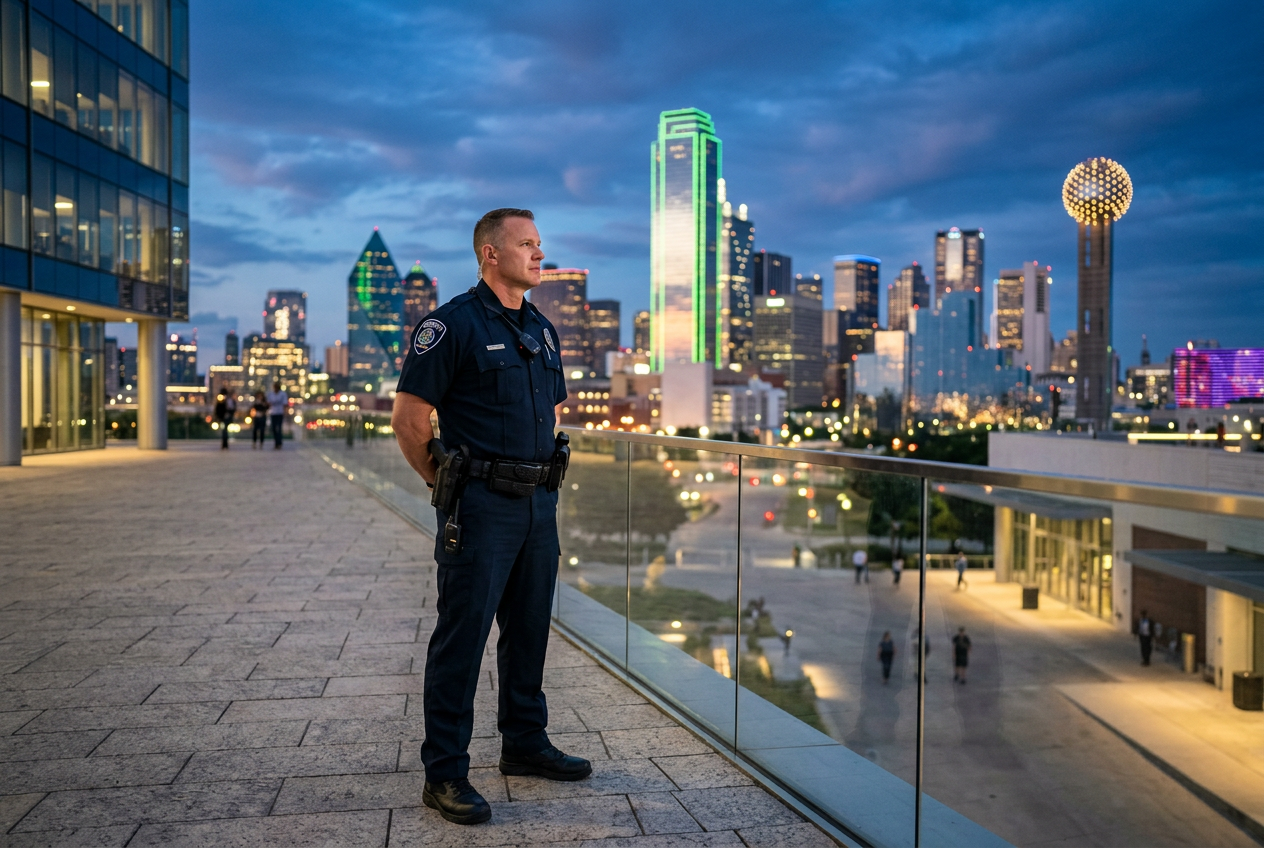
Dallas stands as one of America's fastest-growing metropolitan areas, with a population exceeding 7.9 million residents and an economy that rivals many small countries. This growth brings opportunity, but it also creates complex security challenges that generic solutions simply cannot address. Businesses across North Texas face a unique combination of urban crime patterns, rapid commercial expansion, and infrastructure demands that require professional security guard services in Dallas tailored to local conditions.
The stakes are significant. Property crime rates in Texas metropolitan areas, including Dallas-Fort Worth, have declined modestly since 2022 but remain slightly above the national average, while the sheer volume of commercial activity creates countless potential vulnerabilities. Companies that treat security as an afterthought often learn expensive lessons through theft, liability claims, or operational disruptions that proper protection would have prevented.
Addressing Local Crime Trends and Urban Safety
Dallas experiences distinct crime patterns shaped by its geography and demographics. Downtown corridors face different threats than suburban business parks, and industrial areas near major highways encounter unique challenges related to cargo theft and unauthorized access. Smart security planning accounts for these variations rather than applying one-size-fits-all approaches.
Retail theft has surged across North Texas, with organized retail crime rings targeting everything from electronics stores to pharmaceutical distributors. Vehicle break-ins remain persistent in parking structures, while commercial burglaries continue to fluctuate with economic conditions and law enforcement initiatives, rather than showing a consistent spike during overnight hours in areas with limited natural surveillance.
The Role of Private Security in Supporting Dallas Business Growth
As Dallas attracts corporate relocations and new development projects,
private security fills critical gaps that public law enforcement cannot address. Police departments respond to emergencies, but they lack resources for dedicated property protection, access control, or the proactive patrols that deter criminal activity before it occurs.
Businesses investing in professional guard services report measurable improvements in employee confidence, customer perception, and insurance outcomes. The presence of trained security personnel signals that a property takes safety seriously, which influences everything from tenant retention to customer foot traffic.
Specialized Security Solutions for Dallas Industries
Different business sectors face distinct security challenges, and effective protection requires industry-specific expertise rather than generic guard services.
Commercial Real Estate and High-Rise Protection
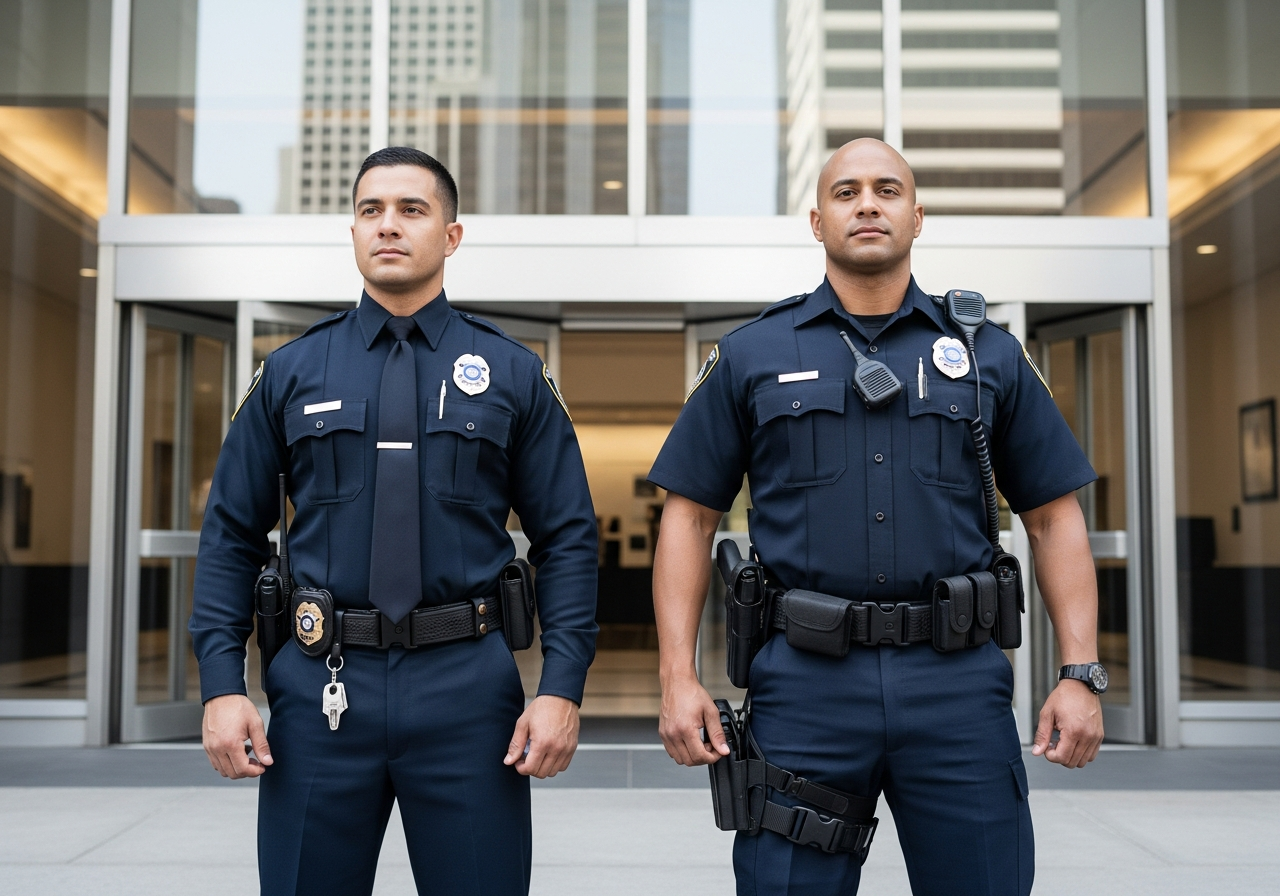
Dallas's skyline continues expanding, with Class A office towers and mixed-use developments reshaping neighborhoods from Uptown to the Design District. These properties require security teams who understand tenant relations, emergency evacuation protocols, and the complex access control needs of multi-tenant environments.
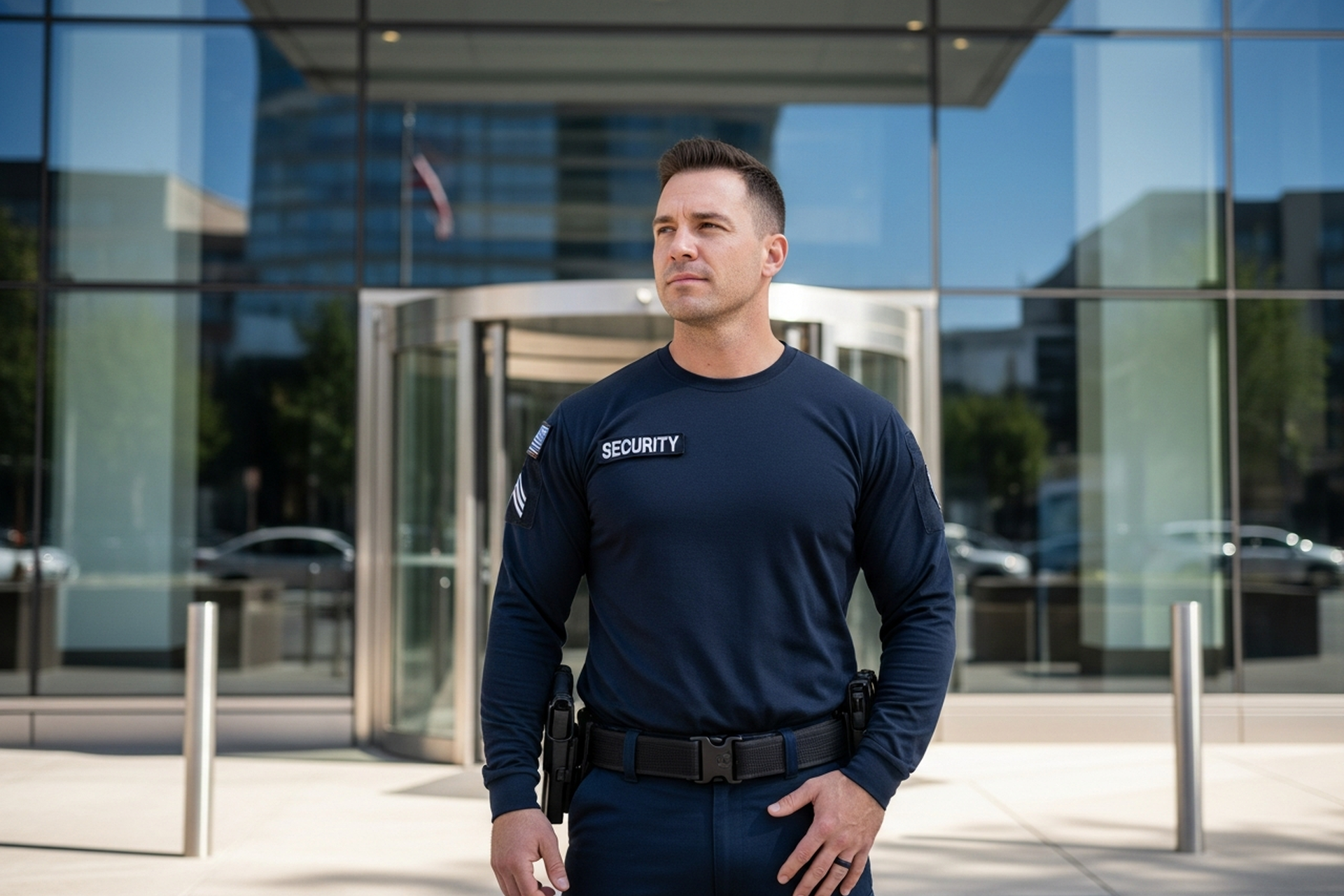
Lobby security serves as the first point of contact for visitors, requiring personnel with both vigilance and customer service skills. Loading dock monitoring prevents unauthorized deliveries and potential security breaches. After-hours patrols ensure vacant floors remain secure while maintaining rapid response capabilities for late-working tenants.
Retail Loss Prevention and Shopping Center Patrols
North Texas shopping centers, from NorthPark to Galleria Dallas, face ongoing challenges with shoplifting, vehicle crimes, and occasional violent incidents. Effective retail security combines visible deterrence with trained observation skills that identify suspicious behavior before losses occur.
Professional guards in retail environments must balance loss prevention with customer experience. Aggressive tactics drive away legitimate shoppers, while passive approaches invite theft. The best retail security teams understand this balance and adapt their approach based on time of day, crowd levels, and emerging situations.
Industrial and Logistics Security for North Texas Hubs
The Dallas-Fort Worth region serves as a major logistics hub, with distribution centers, manufacturing facilities, and intermodal terminals handling trillions of dollars in goods annually. These sites face threats ranging from employee theft to organized cargo crime targeting high-value shipments.
Industrial security requires an understanding of supply chain vulnerabilities, proper credential verification for drivers and visitors, and perimeter protection across large facilities. Cascadia Global Security provides specialized industrial protection services designed for the unique demands of warehouse and distribution environments.
Core Competencies of Professional Guard Personnel
The quality of security personnel determines whether a protection program succeeds or fails. Training, certification, and proper supervision separate professional services from budget alternatives that create liability without providing real security.
Armed vs. Unarmed Guard Services
Determining whether armed protection is appropriate depends on threat assessment, property type, and client preferences. Armed guards provide enhanced deterrence and response capability for high-risk environments, while unarmed personnel suit many commercial settings where visible presence and observation skills matter most.
Armed security in Texas requires additional licensing and training beyond standard guard certification. Personnel must demonstrate firearms proficiency, understand use-of-force protocols, and maintain ongoing qualification standards. For sensitive environments, some clients prefer off-duty or former law enforcement officers who bring additional training and experience rather than legal authority, as private guards do not have police powers under Texas law.
Texas DPS Certification and Training Standards
Texas requires security guards to obtain licensure through the Department of Public Safety, including background checks, classroom training, and ongoing continuing education. These baseline requirements establish minimum competency, but quality providers exceed state minimums with enhanced training programs.
Professional security guard services in Dallas should include training in customer service, report writing, emergency response, and site-specific protocols. Guards who simply meet minimum certification standards often lack the skills to handle real-world situations effectively.
Advanced Technology Integration in Local Security
Modern security programs combine trained personnel with technology systems that extend capabilities and improve accountability.
Real-Time Reporting and GPS Tracking
Digital reporting platforms have replaced handwritten logs, providing clients with immediate visibility into guard activities and incident documentation. Real-time reporting allows supervisors to verify patrol completion, review incident details, and identify patterns that inform security improvements.
GPS tracking ensures mobile patrol units follow designated routes and respond promptly to service calls. This accountability benefits both clients and security personnel by documenting proper coverage and identifying any gaps in protection.
Mobile Patrols and Remote Surveillance Monitoring
Mobile patrol services offer cost-effective coverage for properties that don't require continuous on-site presence. Patrol vehicles conduct scheduled checks, respond to alarm activations, and provide visible deterrence across multiple locations within a service area.
Integration with remote surveillance monitoring creates layered protection where camera systems provide constant observation while patrol units respond to detected threats. Cascadia Global Security combines these technologies with trained personnel to deliver comprehensive protection programs.
Selecting a Premier Security Partner in Dallas
Choosing the right security provider requires evaluating multiple factors beyond price alone. The lowest bid often indicates corners cut on training, supervision, or personnel quality.
Evaluating Licensing, Insurance, and Compliance
Verify that any security provider maintains current Texas DPS licensing, adequate liability insurance, and workers' compensation coverage. Request documentation rather than accepting verbal assurances. Companies that cannot produce these credentials expose their clients to significant liability.
Ask about supervision structures, quality control processes, and how the company handles personnel issues. Providers with local management teams respond faster to problems and maintain better oversight than companies managing Dallas operations from distant headquarters.
Customizing Security Plans for Specific Property Needs
Cookie-cutter security programs rarely address actual vulnerabilities. Quality providers conduct thorough site assessments, identify specific risks, and design protection programs tailored to each property's unique characteristics.
Discuss post orders, reporting requirements, and escalation procedures before signing contracts. Understand how the provider handles scheduling, fill-ins for absent guards, and communication during incidents. These operational details determine whether security services actually protect your property or simply provide the appearance of protection.
Frequently Asked Questions
What certifications should Dallas security guards have?
All security guards in Texas must hold valid DPS licensure, which requires background checks and completion of approved training programs. Armed guards need additional firearms certification. Quality providers exceed these minimums with enhanced training in customer service, emergency response, and site-specific protocols.
How much do professional security guard services cost in Dallas?
Rates vary based on service type, hours required, and whether armed or unarmed personnel are needed. Unarmed guards typically range from $20–32 per hour, while armed services command premium rates. Request detailed proposals that specify all costs rather than accepting vague estimates.
What's the difference between armed and unarmed security?
Armed guards carry firearms and receive additional training in weapons handling and use-of-force protocols. They're appropriate for high-risk environments or locations with significant assets. Unarmed guards provide observation, access control, and deterrence without lethal force capability.
How quickly can security services be deployed in Dallas?
Emergency security coverage can often be arranged within 12–48 hours for urgent situations. Permanent security programs typically require 1–2 weeks for proper site assessment, post-order development, and personnel assignment. Rush deployments may compromise quality.
Building a Safer Dallas Operation
Effective security requires partnership between property owners and professional providers who understand local conditions and industry-specific challenges. The investment in quality protection pays dividends through reduced losses, improved safety, and enhanced property reputation.
For businesses seeking professional security guard services in Dallas, Cascadia Global Security offers veteran-owned, locally managed protection programs designed for North Texas operations. Their team specializes in customized security solutions that address your specific vulnerabilities while maintaining the professionalism your property deserves.