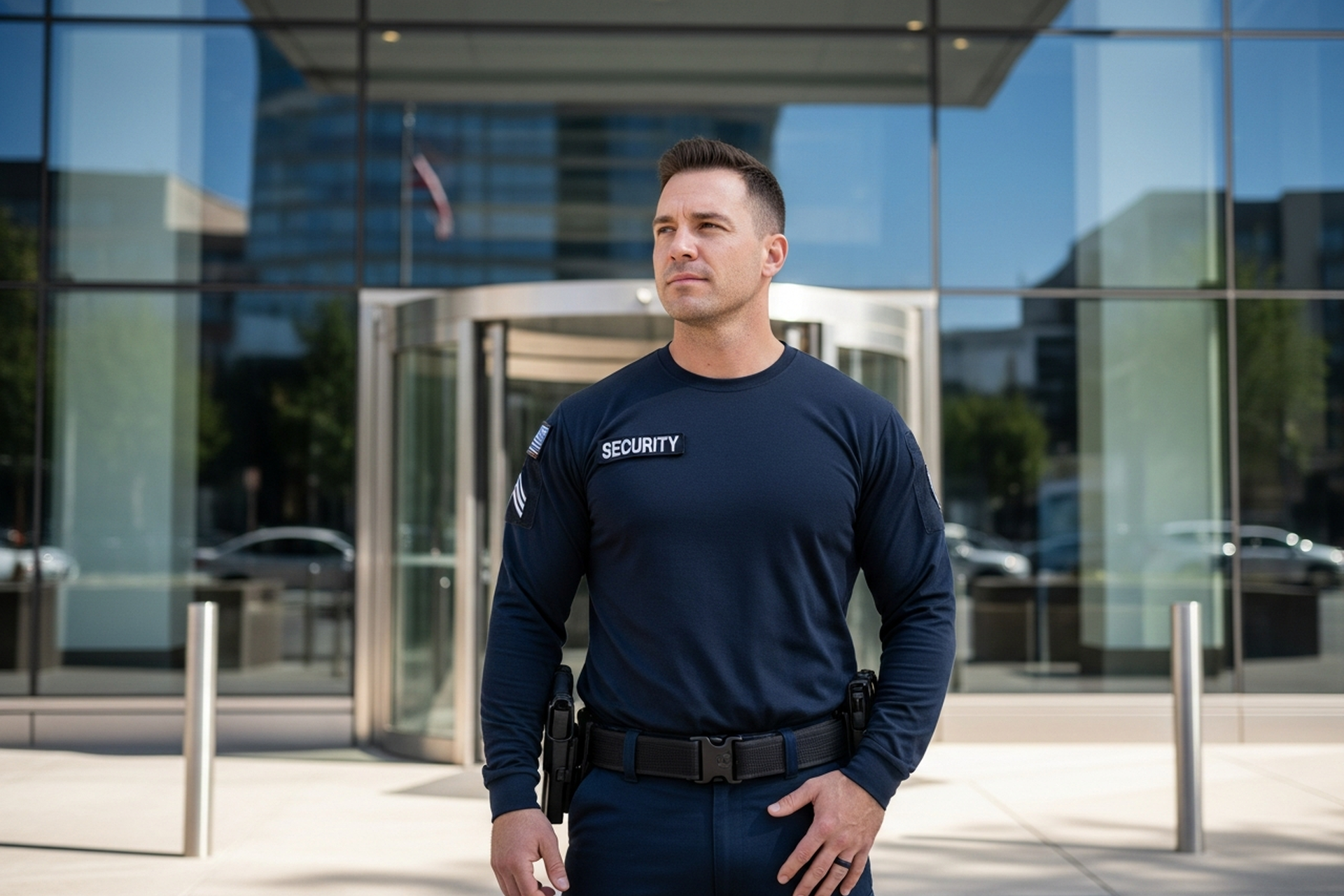
Security for Hire: When Professional Protection Is Needed
Josh Harris | February 7, 2026
A corporate executive receives a credible threat. A warehouse storing millions in inventory sits vulnerable overnight. A company must terminate a volatile employee with documented aggression issues. These scenarios share a common thread: the moment when internal resources prove insufficient and professional protection becomes essential.
Knowing when to hire security professionals separates organizations that prevent incidents from those that react to them. The decision involves more than placing guards at doors. It requires understanding threat levels, matching personnel capabilities to specific risks, and building protection strategies that scale with organizational needs. For businesses facing genuine security concerns, the question isn't whether professional protection makes sense, but rather what type of coverage their situation demands.
The Evolution of Private Security Needs
Transitioning from Public to Private Protection
Public law enforcement serves communities, not individual businesses. Police respond to crimes in progress or after they occur. They cannot provide dedicated surveillance, access control, or preventive presence for private property. This gap has driven organizations toward private security solutions that offer consistent, site-specific coverage.
The shift reflects a practical reality: businesses need protection tailored to their operations, schedules, and vulnerabilities. A distribution center operating 24/7 requires different coverage than a corporate headquarters with standard business hours. Private security fills these needs with:
- Dedicated personnel assigned to specific locations
- Customized patrol schedules matching operational patterns
- Immediate response protocols for site-specific scenarios
- Direct accountability to the client organization
Assessing Modern Threat Landscapes
Today's security challenges extend beyond traditional concerns like theft and trespassing. Organizations face workplace violence, corporate espionage, activist disruptions, and cyber-physical threats where digital breaches enable physical access. Threat assessment has become more complex, requiring professionals who understand both traditional security principles and emerging risk categories.
Effective assessment examines internal vulnerabilities, external threat actors, and their intersection. A retail location might prioritize shoplifting prevention, while a research facility focuses on intellectual property protection. Both require professional oversight, but the personnel, protocols, and technologies differ significantly.
High-Risk Scenarios Requiring Professional Oversight
Executive and VIP Close Protection
Executives, public figures, and high-net-worth individuals face risks that standard security measures cannot address. Close protection requires specialized training in threat recognition, defensive driving, advanced site surveys, and emergency medical response. The personnel providing this coverage operate differently from static security guards.
Close protection details typically include:
- Advance teams surveying venues before arrival
- Trained drivers with evasive maneuvering capabilities
- Real-time communication networks among team members
- Coordination with local law enforcement when appropriate
High-Value Asset and Logistics Security
Cargo theft costs U.S. businesses an estimated $1 billion to $2 billion annually, according to the FBI’s most recent estimates as of 2025. High-value shipments, whether electronics, pharmaceuticals, or luxury goods, attract organized criminal operations with sophisticated surveillance and interception capabilities.
Protecting these assets requires security personnel who understand supply chain vulnerabilities and can implement countermeasures during transit and storage.
Cascadia Global Security provides armed and unarmed personnel for warehouse protection, logistics security, and distribution center coverage where high-value inventory demands professional oversight.
Crisis Management and Hostile Terminations
Terminating employees with documented behavioral issues represents one of the highest-risk scenarios organizations face. HR departments often lack the training to assess genuine danger signals or implement protective measures during these interactions. Professional security personnel trained in crisis de-escalation can prevent situations from escalating into violence.
The presence of trained security during hostile terminations serves multiple functions: it deters aggressive behavior, provides immediate response capability if situations escalate, and documents the interaction for potential legal proceedings.
Corporate and Event Security Solutions
Crowd Control and Venue Safety Protocols
Large gatherings create unique security challenges. Crowd dynamics can shift rapidly, and minor incidents can escalate into dangerous situations within minutes. Professional event security involves more than positioning guards at entrances. It requires understanding crowd psychology, establishing communication protocols, and coordinating with emergency services.
Effective event security programs address:
- Entry point screening and access credential verification
- Emergency evacuation route management
- Medical emergency response coordination
- VIP protection within larger venue settings
Trade Secret and Intellectual Property Protection
Corporate espionage costs American businesses an estimated $300 billion to $600 billion annually, according to the
Commission on the Theft of American Intellectual Property’s 2024 update. Competitors, foreign actors, and disgruntled employees all represent potential threats to proprietary information. Physical security plays a critical role in protecting intellectual property, from controlling access to sensitive areas to monitoring visitor activities.
Security personnel trained in intellectual property protection understand information security principles alongside physical security fundamentals. They recognize social engineering attempts, suspicious photography, and unauthorized access patterns that might indicate espionage activity.
Evaluating Professional Security Personnel
Licensing, Certification, and Specialized Training
Not all security personnel possess equivalent qualifications. State licensing requirements vary significantly, and certifications indicate specialized training beyond minimum standards. Organizations hiring security services should verify:
- Current state licensing for all assigned personnel
- Background check procedures and standards
- Ongoing training requirements and schedules
- Specialized certifications relevant to the assignment type
Cascadia Global Security maintains rigorous vetting procedures and provides personnel with training matched to specific client environments, from corporate offices to construction sites.
Armed vs. Unarmed Security Considerations
The decision to deploy armed versus unarmed security depends on threat levels, legal considerations, and organizational risk tolerance. Armed personnel provide enhanced deterrence and response capability but introduce additional liability considerations. Unarmed security often proves appropriate for access control, monitoring, and deterrence in lower-risk environments.
Off-duty or former law enforcement officers operate under the same legal authority as private citizens unless acting in an official law enforcement capacity. They bring valuable training, judgment, and experience that benefit situations that may not require full-time armed security but benefit from personnel with law enforcement backgrounds.
The Cost-Benefit Analysis of Outsourced Security
Liability Reduction and Risk Mitigation
Professional security services transfer significant liability from client organizations to security providers. This includes workers' compensation, training compliance, and incident response accountability. Insurance carriers may offer reduced premiums when professional security measures demonstrably lower risk exposure, though this is evaluated on a case-by-case basis and not guaranteed.
The cost of a single serious incident, whether workplace violence, major theft, or premises liability claim, typically exceeds years of professional security investment. Risk mitigation calculations favor proactive protection over reactive response.
Scalability and Resource Allocation
Outsourced security provides flexibility that in-house programs cannot match. Organizations can:
- Scale coverage up during high-risk periods
- Reduce personnel during lower-threat seasons
- Add specialized capabilities without permanent hiring
- Access trained replacements during personnel absences
This scalability is particularly valuable for organizations with variable security needs, such as retail operations that face seasonal fluctuations or construction companies that move between project sites.

Frequently Asked Questions
What types of businesses benefit most from professional security services?
Organizations with high-value assets, public-facing operations, or elevated threat profiles see the greatest return from professional security. This includes warehouses, corporate headquarters, retail locations, construction sites, and any business handling sensitive information or valuable inventory.
How quickly can professional security personnel be deployed?
Reputable security providers maintain ready personnel for emergency and short-term deployments, often within 24-48 hours. Permanent placements typically require additional time for site assessment, personnel matching, and protocol development.
What's the difference between security guards and executive protection specialists?
Security guards typically provide static coverage at fixed locations, handling access control, monitoring, and deterrence. Executive protection specialists receive advanced training in threat assessment, close protection tactics, and emergency response for mobile protection assignments.
Should security personnel at my facility be armed or unarmed?
This depends on threat assessment, local regulations, insurance requirements, and organizational risk tolerance. Many organizations use unarmed personnel for routine coverage while maintaining access to armed response for specific high-risk situations.
How are professional security personnel vetted and trained?
Qualified providers conduct comprehensive background checks, verify licensing compliance, and provide ongoing training specific to assignment types. Look for providers who exceed minimum state requirements and maintain documented training programs.
Establishing a Long-Term Safety Strategy
Professional protection works best as part of a comprehensive security strategy rather than a reactive measure. Organizations benefit from security assessments that identify vulnerabilities, recommend appropriate coverage levels, and establish protocols for various threat scenarios.
Building relationships with security providers before emergencies occur ensures a faster response when situations demand immediate coverage. Cascadia Global Security offers locally managed teams that understand regional considerations while providing professional standards across all service areas. For organizations ready to evaluate their protection needs, connecting with experienced security professionals represents the first step toward comprehensive coverage.