Security Guard Services Supporting San Antonio, Texas

Josh Harris | March 20, 2026

San Antonio's rapid growth has created a complex security environment that demands professional attention. With a metropolitan population exceeding 2.7 million and a thriving economy anchored by military installations, healthcare systems, and tourism, the city faces security challenges that range from property crime in commercial districts to sophisticated threats targeting critical infrastructure. Professional security guard services supporting San Antonio businesses have become essential rather than optional, particularly as organizations recognize that reactive measures cost significantly more than proactive protection.

The city's unique position as a major tourism destination, healthcare hub, and military corridor creates overlapping security needs that generic solutions cannot address. Local businesses require security partners who understand San Antonio's specific dynamics, from the seasonal influx of River Walk visitors to the specialized requirements of medical research facilities. This understanding distinguishes effective security programs from those that merely deploy personnel on-site without a strategic purpose.


Addressing Local Crime Trends and Public Safety


San Antonio Police Department data reveals property crime remains the primary concern for commercial entities, with theft, burglary, and vandalism accounting for the majority of reported incidents. Retail locations along major corridors like Loop 410 and I-35 experience higher incident rates during evening hours, while industrial areas near port facilities face an entirely different threat profile.

The city's sprawling geography means response times from law enforcement can vary significantly by location. Areas outside the urban core may wait 10–15 minutes for police response to non-emergency calls, creating windows of vulnerability that private security personnel effectively close.


The Role of Private Security in the Alamo City


Private security
fills critical gaps that public law enforcement cannot address due to resource constraints. While SAPD focuses on emergency response and criminal investigation, security guards provide continuous presence, deterrence, and immediate intervention for property-level incidents.

Cascadia Global Security operates within this framework, providing trained personnel who serve as the first line of defense while maintaining direct communication channels with local law enforcement when escalation becomes necessary.


Specialized Security Solutions for San Antonio Industries


San Antonio's economic diversity requires security providers capable of adapting their approach across vastly different operational environments. A one-size-fits-all security program fails to address the specific vulnerabilities each industry presents.


Protecting Hospitality and Tourism in the River Walk Area


The River Walk attracts over 14 million visitors annually, creating a concentrated environment where crowd management, theft prevention, and guest safety intersect. Hotels, restaurants, and entertainment venues along this corridor need security personnel who balance visible deterrence with hospitality-appropriate demeanor.

Effective security in tourism zones requires personnel trained in de-escalation, crowd dynamics, and customer service. Guards who project authority while remaining approachable protect both assets and brand reputation.


Security for Healthcare Facilities and Research Parks


San Antonio's South Texas Medical Center represents one of the largest medical complexes in the nation, employing over 35,000 healthcare workers across numerous facilities. Security requirements here extend beyond access control to include patient safety, pharmaceutical protection, and compliance with HIPAA-related physical security mandates.

Research parks housing biotech firms and medical device manufacturers face additional considerations around intellectual property protection and regulatory compliance. Security personnel in these environments often require specialized training and background screening beyond standard industry requirements.


Retail and Commercial Property Protection Strategies


Retail theft costs Texas businesses billions annually, with organized retail crime rings increasingly targeting San Antonio locations. Effective retail security combines visible deterrence with loss-prevention techniques, including surveillance, access point control, and coordination with asset protection teams.

Commercial property managers overseeing office complexes and mixed-use developments require security programs addressing tenant safety, parking structure monitoring, and after-hours building access. These programs often integrate guard services with electronic access systems for comprehensive coverage.


Armed vs. Unarmed Guard Services


Selecting the appropriate level of security response requires an honest assessment of actual threat levels rather than assumptions about what "looks" secure.


Determining the Right Level of Deterrence


Unarmed security guards effectively address most commercial security needs. Access control, monitoring, customer assistance, and incident documentation rarely require armed response capability. For retail locations, corporate offices, and hospitality venues, unarmed personnel provide appropriate deterrence without creating an atmosphere that makes customers or employees uncomfortable.

Armed security becomes appropriate when threat assessments indicate elevated risk: high-value asset protection, locations with a documented history of violent incidents, or environments where law enforcement response times create unacceptable vulnerability windows. Financial institutions, jewelry stores, and certain industrial facilities often warrant armed personnel.


Texas DPS Licensing and Training Requirements


The Texas Department of Public Safety regulates private security through mandatory licensing, training, and background-check requirements. Level II certification covers unarmed guards and requires a minimum of six hours of training, while Level III certification for armed personnel requires at least forty-five hours of firearms and classroom instruction, including qualification under Texas Administrative Code Title 37, Part 1, Chapter 35.

Cascadia Global Security maintains rigorous compliance with Texas DPS requirements, ensuring all personnel carry current credentials and complete ongoing training beyond minimum state mandates.


Mobile Patrols and Rapid Response Capabilities


Fixed-post security works well for single locations, but organizations with multiple properties or large geographic footprints often benefit from mobile patrol services that provide coverage across dispersed assets.


Coverage for Large Residential and Industrial Complexes


Mobile patrols offer cost-effective security for apartment communities, HOA-managed neighborhoods, industrial parks, and warehouse districts where full-time stationed guards at every location would be prohibitively expensive. Patrol vehicles conduct scheduled and randomized rounds, creating an unpredictable security presence that deters opportunistic crime.

Industrial complexes along San Antonio's east side and warehouse districts near the port benefit particularly from mobile patrol programs. These areas contain high-value inventory but often lack the foot traffic that provides natural surveillance in more populated zones.


Integrating Technology with On-Site Personnel


Modern security programs combine human judgment with technological force multiplication. Neither element alone provides optimal protection.


Real-Time Reporting and GPS Tracking Systems


Digital reporting platforms have replaced paper-based incident logs, providing clients with immediate visibility into security activities. GPS tracking verifies patrol routes and response times, creating accountability while generating data for program optimization.

Guard tour systems using NFC checkpoints ensure personnel complete required rounds, with automatic alerts if checkpoints are missed. This technology supports rather than replaces professional guards, ensuring consistent execution of security protocols.


Surveillance Monitoring and Access Control Integration


Security guards increasingly work alongside video surveillance systems, electronic access control, and alarm monitoring platforms. Rather than simply watching monitors, trained personnel interpret alerts, verify incidents, and coordinate appropriate responses.

Integration between these systems allows guards to respond more effectively. When an access control system flags an unauthorized entry attempt, surveillance footage provides context that informs the response, whether that means investigating a potential breach or assisting a confused employee with badge issues.


Selecting a Local Security Partner in San Antonio


Choosing the right security provider requires evaluating operational capabilities, not just pricing proposals. Key considerations include local management presence, personnel screening standards, training programs, and communication protocols.

Providers with regional management teams respond more effectively to client needs than those operating from distant headquarters. Local supervisors can conduct site visits, address staffing issues quickly, and maintain relationships with area law enforcement.
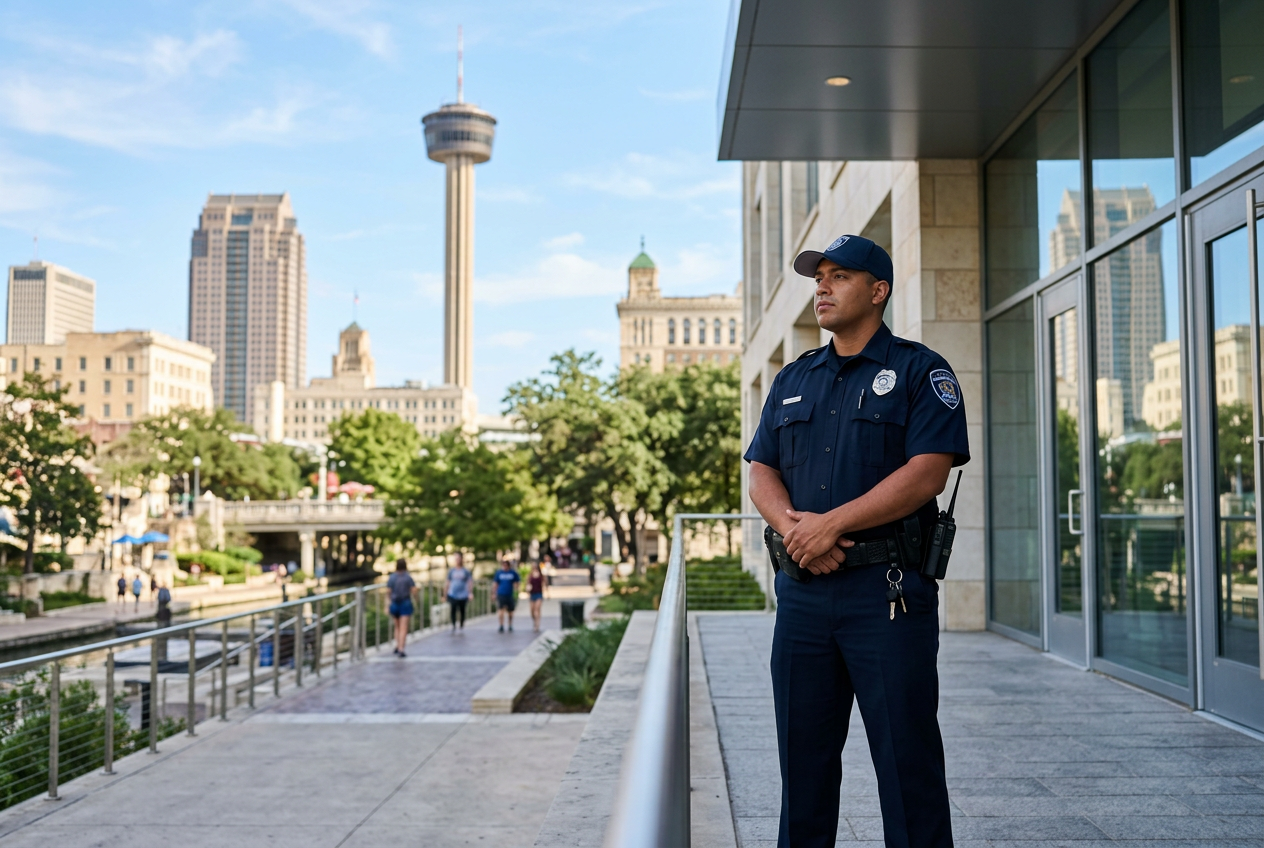

Security guard in uniform standing on a San Antonio Riverwalk patio with the Tower of the Americas in the background

Frequently Asked Questions


What licensing do security guards need in San Antonio?


Texas DPS requires Level II certification for unarmed guards and Level III for armed personnel. Both require background checks, training completion, and ongoing education. Verify that any security provider maintains current licensing for all deployed personnel.


How quickly can security services begin after contracting?


Most professional security providers can deploy personnel within 48–96 hours for standard requirements. Complex sites requiring specialized training or security clearances may need additional lead time for proper preparation.


What is the difference between mobile patrol and stationed guards?


Stationed guards maintain continuous presence at a single location, providing immediate response and consistent visibility. Mobile patrols cover multiple locations on scheduled routes, offering broader coverage at lower cost but with intermittent rather than constant presence.


Do security guards have arrest authority in Texas?


Security guards in Texas may detain individuals under the Texas Code of Criminal Procedure, Article 14.01(a), which permits private persons to make a citizen’s arrest for felonies or offenses against the public peace committed in their presence. They cannot conduct searches or use force beyond what is reasonably necessary to prevent harm or property damage. Professional guards are trained to document incidents and contact law enforcement rather than attempt enforcement actions.


How are security guard services priced?


Pricing typically follows hourly rates per guard, with variations based on armed versus unarmed status, specialized training requirements, and shift timing. Volume discounts often apply for multi-site contracts or extended coverage hours.


Finding the Right Security Solution for Your San Antonio Operation


San Antonio businesses face real security challenges that require thoughtful, professionally executed solutions. The combination of trained personnel, appropriate technology integration, and local operational knowledge creates security programs that protect assets while supporting business objectives.

For organizations seeking security guard services in San Antonio, Cascadia Global Security offers veteran-owned, locally managed security programs tailored to specific industry requirements. Their team provides both armed and unarmed personnel, mobile patrols, and integrated security solutions designed for Texas businesses. Learn more about how professional security services can address your organization's specific protection needs.


By Josh Harris March 20, 2026
A single shoplifting incident costs the average retailer $463, but the real damage extends far beyond the price tag. Staff trauma, operational disruption, and inventory write-offs compound quickly, turning what seems like a minor theft into a significant business problem. Protecting staff and inventory requires a coordinated approach that addresses vulnerabilities before criminals exploit them. The National Retail Federation reports that retail shrinkage reached $85 billion in 2022, with organized retail crime accounting for an increasing share. Yet many store owners still rely on outdated security measures or, worse, expect frontline employees to confront thieves without proper training or support. Effective retail shop security demands investment in technology, people, and processes working together. This isn't about turning your store into a fortress. The goal is to create an environment where legitimate customers feel welcome while potential offenders recognize that risks outweigh rewards. The stores that achieve this balance see measurable improvements in both shrinkage rates and employee retention. Assessing Modern Risks in Retail Environments Understanding your specific threat landscape is the foundation of any security program. Generic solutions fail because every retail environment faces unique challenges based on location, merchandise type, and customer demographics. Identifying Internal and External Theft Patterns External theft grabs headlines, but internal theft accounts for roughly 35% of retail shrinkage. Employee theft often involves manipulation of point-of-sale systems, "sweethearting" merchandise to friends, or exploiting gaps in inventory controls. These losses accumulate gradually, making them harder to detect than grab-and-run incidents. External threats have evolved significantly. Organized retail crime groups conduct reconnaissance, target specific high-value items, and sometimes employ distraction techniques involving multiple participants. Solo shoplifters remain common, but the sophistication of coordinated theft operations requires equally sophisticated countermeasures. Review your incident reports from the past 12 months. Look for patterns in timing, location within the store, and merchandise categories. This analysis reveals where your vulnerabilities concentrate. Evaluating Physical Store Vulnerabilities Walk your store with fresh eyes, or better yet, bring in an outside perspective. Cascadia Global Security provides professional assessments that identify blind spots store managers often overlook due to familiarity. Common vulnerabilities include poorly lit parking areas, obscured sightlines created by tall fixtures, inadequate back-door security, and insufficient coverage at fitting rooms. Loading docks present particular risks , as they provide access points that bypass customer-facing security measures. Document each vulnerability and prioritize based on risk level and remediation cost. Some fixes are immediate and inexpensive, while others require capital investment and planning. Implementing Advanced Surveillance and Deterrence Systems Technology amplifies human security efforts, but only when deployed strategically. Cameras and tags work best as components of an integrated system rather than standalone solutions. Strategic Placement of CCTV and Smart Cameras Camera placement should prioritize high-risk zones: entrances, exits, cash registers, and areas containing high-value merchandise. Modern IP cameras with analytics capabilities can detect unusual behavior patterns, such as loitering or repeated visits without purchases, and alert staff in real time. Visible cameras serve dual purposes: they capture evidence and deter potential offenders. However, placing all cameras in obvious locations creates blind spots that experienced thieves will exploit. Balance visible deterrent cameras with covert units positioned to capture activity in known problem areas. Storage and retrieval matter as much as capture quality. Cloud-based systems ensure footage survives even if on-site equipment is damaged or stolen. Establish clear retention policies that comply with state and federal privacy regulations, such as data retention limits under applicable consumer protection laws, while preserving evidence for potential prosecution. Electronic Article Surveillance (EAS) and RFID Tagging EAS gates at store exits remain effective deterrents despite their decades-long presence in retail. The key is consistent tagging protocols: when employees skip tagging certain items due to time pressure, those items become easy targets. RFID technology offers advantages beyond theft prevention. Real-time inventory visibility helps identify discrepancies immediately rather than waiting for periodic counts. When items disappear from the system without corresponding sales, you know to investigate. This dual benefit often justifies the higher per-tag cost compared to traditional EAS tags. Source tagging, where manufacturers apply security devices before shipping, eliminates the labor burden on store staff and ensures consistent protection across all merchandise. Empowering Staff Through Training and Safety Protocols Your employees are your first line of defense, but they need proper training and clear authority to act. Untrained staff either ignore suspicious behavior or respond inappropriately, creating liability risks. Conflict De-escalation and Shoplifting Response Staff should never physically confront suspected shoplifters. The risk of injury or legal liability far outweighs the value of recovered merchandise. Instead, train employees in customer-service-based deterrence: approaching suspicious individuals with offers of assistance signals awareness without escalating. Establish clear protocols for employees to follow when they observe theft in progress. Typically, this involves alerting management or security personnel while maintaining visual contact from a safe distance. Documentation of suspect descriptions and actions supports later investigation and potential prosecution. Role-playing exercises help employees practice these skills in low-stakes environments. Quarterly refresher training keeps protocols up to date and addresses emerging threat patterns. Emergency Procedures and Panic Button Integration Violent incidents, while relatively rare, require immediate response capabilities. Panic buttons connected to security monitoring services or local law enforcement provide employees with a discreet way to summon help when verbal communication isn't possible. Position panic buttons at registers, in back offices, and at customer service desks. Test them regularly to ensure functionality. Staff should know the exact locations of the buttons and understand when activation is appropriate. Develop and rehearse lockdown procedures for active threat situations. Employees should know evacuation routes, safe rooms, and communication protocols. Cascadia Global Security offers training programs that prepare retail teams for these scenarios. Inventory Control and Loss Prevention Strategies Shrinkage prevention extends beyond catching thieves. Strong inventory management practices close gaps that allow losses to go undetected. Optimizing Floor Layouts for Maximum Visibility Store design directly impacts security. Position registers near exits so staff naturally observe departing customers. Keep fixture heights below eye level throughout the sales floor to eliminate hiding spots. Place high-value merchandise in areas with maximum staff visibility rather than tucking it into corners. If certain items require secure display cases, position those cases where staff can monitor them during normal duties. Traffic flow matters too. Guide customers through predictable paths that pass multiple observation points. This doesn't mean creating maze-like layouts that frustrate shoppers, but rather designing natural flows that serve both customer experience and security needs. Inventory Auditing and Point-of-Sale Monitoring Cycle counting, in which you audit portions of inventory continuously rather than conducting annual full counts, catches discrepancies more quickly. Focus counting efforts on high-shrink categories and adjust frequency based on historical loss patterns. POS exception reporting identifies suspicious transaction patterns, such as excessive voids, unusual discount applications, or repeated no-sale drawer openings. Review these reports weekly and investigate anomalies promptly. Delayed investigation allows problems to compound and makes evidence gathering more difficult. Reconcile receiving records against purchase orders immediately upon delivery. Shortages discovered weeks later are nearly impossible to resolve with vendors. Securing the Perimeter and High-Value Assets Physical security measures create barriers that slow or prevent unauthorized access. Layered defenses mean that defeating one measure doesn't grant complete access. Access Control and Smart Lock Systems Limit back-of-house access to authorized personnel using electronic access control. Key-based systems create accountability problems when employees leave or when keys are duplicated. Card- or code-based systems allow immediate credential revocation and generate audit trails that show who accessed which areas when. Smart locks on storage rooms containing high-value inventory add another layer of security. Time-based restrictions can prevent after-hours access except by designated personnel. Integration with your alarm system ensures that unauthorized access attempts trigger immediate alerts. Don't neglect exterior doors. Receiving areas, emergency exits, and roof access points all require appropriate hardware and monitoring. Display Cases and Secure Storage Solutions Locked display cases protect high-value items while maintaining visibility. The inconvenience to customers is minimal compared to the loss prevention benefit. Train staff to retrieve items promptly so security measures don't frustrate legitimate purchasers. Safes for cash and high-value inventory should be rated appropriately for the risk level. A basic fire safe doesn't provide meaningful protection against theft. Consult with security professionals to select appropriate ratings and placement. Secure overnight storage for items that can't be locked in cases. Leaving merchandise on the sales floor after hours invites smash-and-grab incidents.
By Josh Harris March 20, 2026
Picture this: a busy office where employees move quickly, clients come and go, and sensitive information is handled daily. Now imagine a sudden security breach or accident that disrupts everything. It’s a nightmare no business wants to face. Safety in the workplace isn’t just about avoiding accidents; it’s about creating an environment where everyone feels secure and protected. Every business, big or small, needs to focus on specific safety topics to reduce risks and keep operations running smoothly. Ignoring these areas can lead to costly consequences, both financially and in trust. From physical security to emergency preparedness, there are key issues that every security-conscious company should tackle. This article explores essential workplace safety topics that help build a safer, more secure business. Whether you’re a manager, employee, or business owner, understanding these points can make a real difference. Let’s explore what matters most when it comes to protecting your workplace. Physical Security Measures To Protect Your Workplace Access Control Systems Controlling who enters your building is the first line of defense. Access control systems, like key cards, biometric scanners, or PIN codes, help keep unauthorized people out. These systems can track who comes and goes, adding an extra layer of security. It’s important to regularly update access permissions and deactivate lost or stolen cards promptly. Integrating access control with visitor management systems can streamline guest check-in while maintaining strict security protocols. This not only enhances safety but also improves the overall visitor experience, allowing for a more organized and efficient entry process. Surveillance Cameras And Monitoring Installing security cameras around your property can deter potential threats and provide valuable evidence in the event of an incident. Modern surveillance systems offer high-definition video and remote monitoring, enabling security teams to respond more quickly. Cameras should cover entrances, parking lots, and other vulnerable areas without invading employee privacy. Utilizing advanced technologies such as motion detection and analytics can enhance the effectiveness of your surveillance system. These features alert security personnel to unusual activities in real time, enabling swift responses and potentially preventing incidents from escalating. Security Personnel And Patrols Having trained security personnel on-site adds a human touch to your safety efforts. Guards can spot unusual behavior, assist in emergencies, and provide a visible deterrent to criminals. Regular patrols, especially during off-hours, help maintain a secure environment and reassure employees that safety is a priority. Investing in ongoing training for security staff ensures they are well-equipped to handle a range of situations, from conflict resolution to emergency response. This proactive approach not only enhances the effectiveness of your security measures but also fosters a culture of safety within the workplace, encouraging employees to feel more secure and vigilant. Emergency Preparedness And Response Plans Fire Safety And Evacuation Procedures Fires can happen unexpectedly, so knowing how to respond is crucial. Businesses should have clear fire safety protocols, including regular drills, adequately maintained and accessible fire extinguishers inspected in accordance with OSHA standards, and clearly marked exit routes. Employees need training on how to evacuate safely and where to assemble outside the building. Medical Emergencies And First Aid Accidents or sudden illnesses require quick action. Having first aid kits stocked and easily accessible is a must. If emergency medical services are not readily accessible, at least one staff member must be trained in basic first aid and CPR, as required by OSHA. Even in low-risk workplaces, having trained personnel enhances response readiness. It’s also wise to have a plan for contacting emergency medical services and guiding responders to the correct location. Natural Disaster Preparedness Depending on your location, natural disasters like earthquakes, floods, or storms can pose serious risks. Develop a plan that specifies safe areas or evacuation routes based on the type of natural disaster, includes clear communication strategies, and outlines procedures for safely shutting down equipment when appropriate. Regularly review and update these plans to reflect any changes in your environment or staff. Workplace Violence Prevention And Response Recognizing Warning Signs Workplace violence can come from employees, customers, or outsiders. Learning to identify warning signs, such as aggressive behavior, threats, or sudden mood changes, helps prevent incidents from escalating. Encourage an open culture where employees feel comfortable reporting concerns. Conflict Resolution And De-Escalation Techniques Training staff to handle conflicts calmly can reduce the risk of violence. Techniques include active listening, staying calm, and knowing when to involve security personnel. A peaceful workplace benefits everyone and helps maintain productivity. Incident Reporting And Support Systems Having a straightforward incident-reporting process ensures problems are addressed promptly. Support systems, such as counseling or employee assistance programs, help victims recover and maintain morale. Transparency and follow-up demonstrate that employees' safety matters. Cybersecurity And Data Protection Protecting Sensitive Information Physical safety is only part of the picture. Cyber threats can compromise confidential data and disrupt operations. Use strong passwords, encryption, and regularly update software to guard against hacking. Limit access to sensitive files and educate employees about phishing scams and safe online behavior. Secure Network Infrastructure Investing in secure networks and firewalls helps reduce the risk of unauthorized access, especially when combined with regular audits and employee cybersecurity training. Regular audits and vulnerability assessments identify weak points before attackers do. Employee Training On Cyber Threats People are often the weakest link in cybersecurity. Training employees to recognize suspicious emails, avoid unsafe downloads, and report potential threats is essential. Ongoing education keeps everyone alert and reduces the risk of costly breaches. Health And Safety Compliance Understanding Legal Requirements Most businesses must comply with workplace safety laws and regulations, including OSHA standards where applicable, as well as any relevant state or local safety codes. Staying informed about these requirements helps avoid fines and legal trouble. It also shows a commitment to employee well-being. Regular Safety Audits And Inspections Routine checks of equipment, workspaces, and safety procedures catch hazards before they cause harm. Inspections should be documented, and any issues addressed promptly. Cascadia Global Security can assist with comprehensive safety audits to identify risks and recommend improvements. Promoting A Safety Culture Safety isn’t just about rules; it’s about mindset. Encourage employees to take responsibility for their own safety and that of their coworkers. Recognize safe behaviors and create open channels for reporting concerns without fear of retaliation.