
Security Services Available Across Houston, Texas

Josh Harris • February 6, 2026

Houston's sprawling metropolitan area presents security challenges as diverse as its population. From the energy corridor's industrial complexes to the Museum District's cultural institutions, protecting people and property requires specialized expertise tailored to each environment. Security services available across Houston, Texas, range from armed guard details protecting oil refineries to concierge personnel managing high-rise residential lobbies. The city's position as a global business hub, combined with its hosting of major events and its extensive port operations, creates demand for security providers who understand both local conditions and industry-specific requirements. Whether you manage a retail chain concerned about shrinkage, oversee a manufacturing facility with hazardous materials, or coordinate protection for a Fortune 500 executive, Houston's security landscape offers solutions calibrated to your risk profile.


Overview of the Houston Security Landscape


Regional Safety Trends and Demand


Houston's crime statistics reflect the realities of a major metropolitan area. Property crimes, particularly vehicle theft and commercial burglaries, remain persistent concerns for businesses operating in high-traffic corridors. The energy sector's presence creates unique vulnerabilities, including theft of copper, equipment, and proprietary materials from remote sites.

  • As of 2025, property crime rates in Harris County are roughly 10% above national averages
  • Commercial burglaries spike during holiday seasons and economic downturns
  • Construction sites report equipment theft losses averaging approximately $50 million annually statewide

These patterns drive consistent demand for professional security personnel who can adapt coverage to evolving threat profiles.


Regulatory Standards for Texas Private Security


Texas regulates private security through the Department of Public Safety's Private Security Program. All security officers must complete state-mandated training, pass background checks, and maintain current licensing. Armed personnel must complete Level III training, including firearms qualification.

Companies operating in Houston must hold valid company licenses and ensure all deployed personnel carry proper credentials. Cascadia Global Security maintains full compliance with Texas licensing requirements, ensuring clients receive legally authorized protection services.


Commercial and Industrial Security Solutions


On-Site Guarding and Mobile Patrols


Fixed-post security officers provide a consistent presence at entry points, loading docks, and sensitive areas within commercial facilities. Mobile patrol units extend coverage across larger properties, conducting randomized checks that deter criminal activity through unpredictability.

Effective commercial security combines both approaches:

  • Standing posts at primary access points during business hours
  • Roving patrols covering parking structures and perimeter areas
  • Vehicle patrols for multi-building campuses and industrial parks
  • Emergency response protocols integrated with local law enforcement


Retail Loss Prevention and Asset Protection


Retail shrinkage costs Houston businesses millions annually. Professional loss prevention programs address both external theft and internal inventory control failures. Plainclothes officers blend with customers to identify shoplifting patterns, while uniformed presence deters opportunistic theft.

Asset protection extends beyond merchandise to include cash handling, receiving operations, and employee safety. Trained personnel recognize pre-incident indicators and intervene before losses occur.


Industrial Site and Energy Infrastructure Security


Houston's energy sector demands security personnel familiar with OSHA regulations, hazardous materials protocols, and critical infrastructure protection standards. Refineries, chemical plants, and pipeline facilities require officers who can manage access control while responding appropriately to industrial emergencies.

Key capabilities include:

  • Credential verification for contractors and delivery personnel
  • Perimeter monitoring using vehicle and foot patrols
  • Emergency evacuation support and accountability
  • Coordination with facility safety teams during incidents


Residential and Community Protection


Gated Community and HOA Security Services


Houston's master-planned communities rely on professional security to maintain property values and residents' peace of mind. Gate attendants verify credentials, log visitors, and coordinate with residents regarding expected guests. Patrol officers monitor common areas, enforce community rules, and respond to noise complaints or suspicious activity.

Effective HOA security balances visible deterrence with resident convenience. Nobody wants to wait fifteen minutes to enter their own neighborhood, but nobody wants unauthorized vehicles roaming their streets either.


Personal Executive Protection and Concierge Security


High-net-worth individuals and corporate executives face elevated risk profiles requiring specialized protection. Executive protection details provide discreet security during travel, public appearances, and daily routines. Protective intelligence identifies potential threats before they materialize.

Concierge security serves luxury residential properties, combining traditional security functions with hospitality-oriented service. Officers manage package deliveries, coordinate vendor access, and provide the professional presence residents expect in premium buildings.


Specialized Event and Venue Security


Crowd Management for Houston Festivals and Sports


Houston hosts major events year-round, from NRG Stadium football games to outdoor festivals drawing hundreds of thousands of attendees. Professional event security requires expertise in crowd dynamics, emergency evacuation procedures, and coordination with venue management.

Effective crowd management includes:

  • Access control at entry points with bag checks and screening
  • Roving teams monitoring for disturbances or medical emergencies
  • Coordination with local police and fire departments
  • Post-event crowd dispersal management


Corporate Event and Private Function Security


Corporate gatherings, product launches, and private celebrations require security that protects attendees without creating an oppressive atmosphere. Officers maintain a low profile while monitoring gate-crashers, managing parking logistics, and ensuring VIP areas remain secure.

Cascadia Global Security deploys personnel experienced in corporate environments who understand the balance between protection and hospitality.


Electronic Surveillance and Advanced Monitoring


CCTV Installation and Remote Video Auditing


Camera systems provide continuous documentation and enable remote monitoring of multiple locations from centralized command centers. Modern systems incorporate analytics that detect unusual activity patterns and alert security personnel to potential incidents.

Remote video auditing allows security managers to verify officer performance, investigate incidents, and maintain accountability across distributed operations. Recorded footage supports law enforcement investigations and liability protection.


Access Control Systems and Biometric Entry


Electronic access control replaces traditional keys with credentials that can be instantly modified, tracked, and revoked. Card readers, PIN pads, and biometric scanners restrict entry to authorized personnel while creating audit trails documenting every access attempt.

Integration between access control and video systems enables verification of credential use, identifying instances where cards are shared or stolen credentials are attempted.


Selecting the Right Security Partner in Houston


Choosing among security services in Houston, Texas requires evaluating providers against your specific operational requirements. Consider these factors:

  • Does the company hold a valid Texas license with no disciplinary actions?
  • Can they provide references from clients in your industry?
  • What training do officers receive beyond state minimums?
  • How do they handle scheduling, supervision, and quality control?
  • What technology platforms support their operations?

The right partner demonstrates understanding of your business, proposes solutions matched to your actual risks, and maintains transparent communication about performance and incidents.
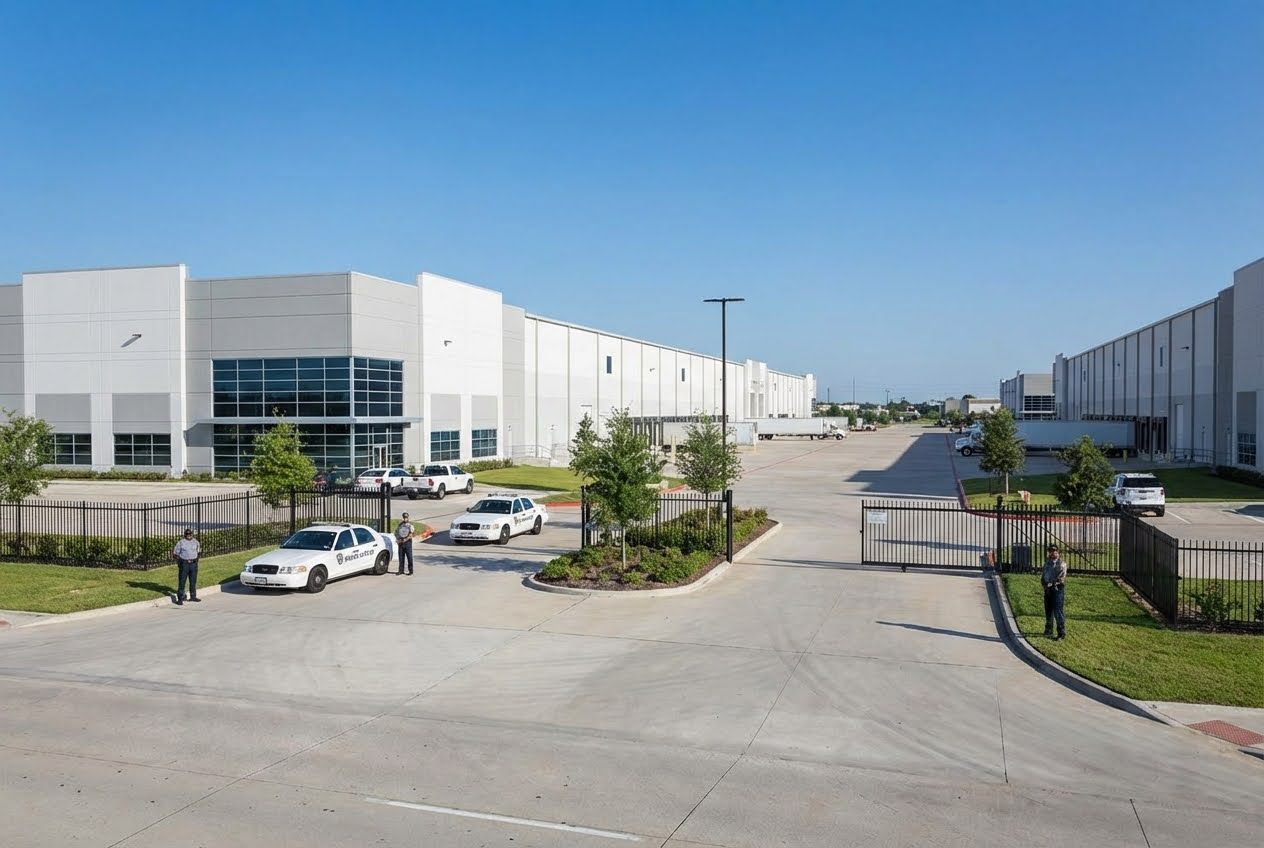

Security guards and patrol cars at the entrance of a large industrial complex with multiple warehouses under a clear blue sky.

Frequently Asked Questions


What licensing do security guards need in Texas?


All security officers in Texas must complete Level II training through a DPS-approved provider, pass criminal background checks, and maintain current registration with the Private Security Program. Armed officers require additional Level III certification and firearms qualification.


How much do security services cost in Houston?


Rates vary based on service type, officer qualifications, and coverage hours. As of 2026, unarmed guards typically range from $22–$32 per hour, while armed officers and off-duty law enforcement command higher rates. Volume contracts and long-term agreements often include reduced pricing.


Can security guards make arrests in Texas?


Texas law authorizes security
officers to detain individuals for offenses committed in their presence until law enforcement arrives. This authority mirrors citizens' arrest provisions and requires officers to act within legal boundaries.


What is the difference between armed and unarmed security?


Armed officers carry firearms and receive additional training in use-of-force decisions. They're appropriate for high-risk environments where violent confrontation is possible. Unarmed officers provide deterrence, observation, and access control without lethal force options.


How quickly can security services be deployed?


Emergency and temporary coverage can often be arranged within 24-48 hours. Permanent staffing requiring site-specific training typically takes one to two weeks for proper preparation and orientation.


Finding Your Security Solution


Houston's security requirements span every industry and risk level. Matching the right personnel, technology, and protocols to your specific situation determines whether your investment delivers genuine protection or merely creates an illusion of safety.

For businesses seeking professional security guard services and off-duty law enforcement solutions, Cascadia Global Security offers locally managed teams with centralized oversight. As a veteran-owned firm, they bring operational discipline to security programs across Texas and nationwide. Learn more about how their tailored approach addresses your facility's unique challenges.
By AJ Montgomery February 12, 2026
A code blue blares through the intercom, and clinical teams sprint toward a cardiac arrest. Moments later, a different kind of emergency unfolds in the emergency department lobby: an agitated visitor threatens staff, and security must intervene within seconds. Understanding what rapid response means in a hospital security context requires recognizing that healthcare facilities face dual emergencies constantly. Clinical crises demand medical intervention, while security incidents require trained personnel who can neutralize threats without disrupting patient care. The stakes are extraordinarily high. According to OSHA , healthcare workers experience workplace violence at rates five times higher than in other industries. Hospitals that fail to implement effective security rapid response protocols put patients, staff, and visitors at risk. The difference between a controlled incident and a catastrophic outcome often comes down to response time measured in seconds, not minutes. Defining Rapid Response in Healthcare Security Hospital security rapid response represents a coordinated system designed to address safety threats immediately. Unlike clinical emergencies, which focus on medical intervention, security responses target behavioral threats, unauthorized access, and criminal activity in healthcare environments. Core Objectives of Immediate Intervention Security rapid response teams pursue specific goals when activated: Contain the threat to prevent escalation or spread to other areas Protect patients, staff, and visitors from physical harm Preserve evidence for potential law enforcement involvement Restore normal operations as quickly as possible Document the incident thoroughly for analysis and legal purposes Cascadia Global Security understands that every second of delay increases risk exponentially. The Difference Between Clinical and Security Rapid Response Clinical rapid response teams handle medical deterioration: cardiac arrests, respiratory failure, and sepsis. Security rapid response addresses threats to human behavior. The distinction matters because protocols, personnel, and equipment differ entirely. A clinical team arrives with crash carts and medications. Security teams arrive with de-escalation training, restraint protocols, and communication equipment. Both systems must operate simultaneously without interference, which requires careful coordination and clear activation criteria. Critical Scenarios Requiring Urgent Security Action Healthcare facilities encounter specific threat categories that demand immediate security intervention. Each scenario requires distinct protocols and specialized training. Managing Workplace Violence and Patient Aggression Emergency departments report the highest violence rates, with psychiatric units close behind. Effective response requires: Immediate assessment of the aggressor's mental state and potential weapons Positioning that protects staff while maintaining communication Coordinated approach with clinical staff who may need to administer sedation Clear evacuation routes for nearby patients and visitors Security personnel must recognize the difference between a patient experiencing a psychiatric crisis and a visitor with criminal intent. The response tactics differ significantly. Infant Abduction and Missing Patient Protocols Infant abduction attempts, while rare, require immediate lockdown procedures. Hospitals implement Code Pink protocols that secure exits within approximately 90 seconds, depending on facility design and technology integration. Missing patient scenarios, particularly involving dementia patients or psychiatric holds, demand coordinated searches with real-time communication. Cascadia Global Security trains personnel in systematic search patterns that cover maximum area while maintaining perimeter integrity. Active Threat and Weapons Response Active shooter incidents in healthcare settings have increased, according to FBI and ASHE data. Security teams must coordinate with law enforcement while managing immediate threats. Response protocols include: Immediate notification through panic systems Lockdown of specific zones rather than entire facilities Coordination with clinical staff to protect vulnerable patients Communication with arriving law enforcement The Role of Technology in Accelerating Response Times Modern hospital security relies on integrated technology systems that reduce response times and improve situational awareness. Real-Time Location Systems (RTLS) and Panic Buttons RTLS technology allows security teams to locate personnel instantly during emergencies. Staff-worn panic buttons trigger immediate alerts with precise location data. These systems reduce response times by an average of 30-50% compared to traditional radio dispatch. Integration with building management systems enables automatic door and elevator lockout during emergencies. Integrated Surveillance and Smart Access Control Effective security operations require: AI-powered video analytics that detect aggressive behavior patterns Automated alerts when individuals enter restricted areas Integration between access control and surveillance systems Mobile viewing capabilities for responding officers Smart access control systems can automatically lock down specific zones during incidents while maintaining evacuation routes. This selective response prevents facility-wide disruption during localized threats. Training and Coordination for Security Personnel Technology means nothing without properly trained personnel. Hospital security officers require specialized skills beyond standard guard training. De-escalation Techniques and Physical Intervention Healthcare security demands a unique skill set: Verbal de-escalation techniques specific to psychiatric emergencies Understanding of patient rights and restraint regulations Physical intervention methods that minimize injury risk Recognition of medical conditions that mimic aggressive behavior Officers must distinguish between a diabetic experiencing hypoglycemia and an intoxicated individual. Both may present with aggression, but appropriate responses differ dramatically. Inter-departmental Drills and Communication Chains Effective rapid response requires regular practice. Quarterly drills should include: Tabletop exercises with nursing leadership and administration Full-scale simulations involving actual lockdowns Communication system tests across all shifts Joint training with local law enforcement Communication chains must account for shift changes, weekend staffing, and holiday coverage. Cascadia Global Security emphasizes local management teams that understand specific facility layouts and staff relationships. Measuring Success and Continuous Improvement Security programs require data-driven evaluation to identify weaknesses and validate improvements. Key Performance Indicators for Security Teams Measurable metrics include: Average response time from alert to arrival Incident containment rate without injury Staff satisfaction with security support Regulatory compliance scores during surveys Many hospitals target under two minutes for high-risk emergencies based on internal performance goals. Teams that consistently exceed 3 minutes require additional training or staffing adjustments. Post-Incident Debriefing and Process Optimization Every significant incident deserves a formal review. Debriefing sessions should occur within 48 hours while details remain fresh. Analysis should examine what worked, what failed, and what changes would improve future responses. This continuous improvement cycle transforms individual incidents into organizational learning opportunities. Building a Safer Healthcare Environment Hospital security rapid response represents the critical intersection of patient safety, staff protection, and operational continuity. Facilities that invest in trained personnel, integrated technology, and continuous improvement create environments where clinical staff can focus on patient care without fear. The organizations that excel treat security not as a cost center but as an essential component of quality healthcare delivery. For healthcare facilities seeking to strengthen their rapid response capabilities, partnering with experienced security providers makes the difference. Cascadia Global Security offers professional security guard services with specialized healthcare training. Learn more about building a comprehensive security program tailored to your facility's unique requirements.
By Josh Harris February 7, 2026
When alarms sound, and panic spreads, the difference between controlled evacuation and chaos often comes down to one factor: security personnel who know exactly what to do. Buildings empty in minutes during emergencies, but those minutes determine whether everyone reaches safety or whether bottlenecks, confusion, and secondary incidents claim lives. Effective evacuation planning assigns security teams a central role during emergencies, transforming guards from passive observers into active life-safety coordinators. Security officers positioned at critical points, trained in crowd psychology, and connected to real-time communication networks become force multipliers when seconds count. Understanding how security professionals contribute to emergency response reveals why their involvement must begin long before any alarm sounds. The Intersection of Physical Security and Life Safety Security and emergency management share a fundamental goal: protecting people and assets from harm. When these disciplines operate in silos, gaps emerge that cost lives during actual emergencies. Defining the Security Officer's Role in Crisis Management Security officers occupy a unique position during emergencies. They know the facility's layout intimately, recognize faces, and understand normal traffic patterns. This institutional knowledge proves invaluable when directing evacuees away from danger zones or identifying individuals who need assistance. Their responsibilities during crisis events typically include: Initial threat assessment and alarm verification Crowd direction at key decision points Access control to prevent re-entry into dangerous areas Communication relay between occupants and emergency responders Assistance coordination for individuals with mobility challenges Integrating Security Personnel into Emergency Action Plans (EAPs) Emergency action plans that treat security as an afterthought fail when tested. Cascadia Global Security emphasizes integrating guard services directly into client EAPs from the earliest stages of development. This means security officers participate in planning meetings, review evacuation routes, and provide input on potential obstacles. The result is a plan that accounts for real-world conditions rather than theoretical scenarios drawn on blueprints. Pre-Emergency Risk Assessment and Facility Hardening Effective emergency response begins months or years before any incident occurs. Security teams contribute critical ground-level intelligence during the assessment phase. Identifying Vulnerabilities in Egress Routes Security officers patrol facilities daily and notice problems that escape periodic inspections. Locked exit doors, blocked corridors, malfunctioning emergency lighting, and obstructed stairwells all create evacuation hazards. Regular vulnerability assessments should document: Exit door functionality and signage visibility Corridor widths and potential obstruction points Stairwell capacity and lighting conditions Assembly area accessibility and capacity Alternative routes when primary paths become compromised Strategic Placement of Security Assets and Wayfinding Where security officers position themselves during emergencies determines the efficiency of evacuations. Pre-planned posts at corridor intersections, stairwell entrances, and exit points ensure evacuees receive consistent direction. Wayfinding becomes critical when smoke, power outages, or unfamiliar visitors complicate navigation. Security personnel stationed at decision points prevent hesitation that can create dangerous crowding. Active Response: Crowd Control and Panic Mitigation The moment an emergency begins, security officers transition from monitoring to active intervention. Their visible presence and calm authority shape how evacuees behave. Directing Safe Movement and Preventing Bottlenecks Bottlenecks kill people during evacuations. Crowds compress at narrow points, creating crushing pressure that can cause injuries and block escape routes entirely. Security officers trained in crowd dynamics recognize early warning signs: slowing movement, increasing density, and rising noise levels. Effective interventions include: Redirecting flow to underutilized exits Maintaining spacing at merge points Physically positioning to prevent counterflow Using clear verbal commands that cut through ambient noise Research indicates that trained personnel can effectively influence nearby crowd behavior, though the effective distance varies based on environmental factors and acoustics. Managing Access Control During Mass Egress Normal access control protocols reverse during evacuations. Doors that typically require credentials must open freely for outbound traffic while preventing unauthorized re-entry. Security teams manage this transition by overriding electronic locks, propping doors appropriately, and stationing personnel to ensure one-way flow. The challenge intensifies when evacuations occur during active threats, requiring officers to balance rapid egress against the risk of admitting hostile actors. Communication Systems and Information Flow Information moves faster than people during emergencies. Security teams that control information flow can direct evacuations more effectively than those relying solely on physical presence. Security Operations Centers (SOC) as Information Hubs Centralized security operations centers aggregate data from cameras, access systems, fire panels, and field personnel into a unified picture. SOC operators track evacuation progress across multiple zones simultaneously, identifying areas where movement has stalled or where threats have emerged. This bird's-eye view enables: Real-time route adjustments based on developing conditions Resource reallocation to problem areas Accurate status reporting to emergency responders Documentation for post-incident analysis Liaising with First Responders and Law Enforcement When fire departments, police, or EMS arrive, security personnel serve as translators between institutional knowledge and external responses. Officers brief responders on building layout, occupant counts, hazard locations, and evacuation status. This handoff accelerates professional response and prevents duplication of effort. Cascadia Global Security trains personnel specifically in interagency communication protocols, ensuring smooth coordination when multiple organizations converge on an incident. Post-Evacuation Accountability and Site Security Evacuations don't end when occupants exit the building. The post-evacuation phase presents distinct security challenges that require continued vigilance. Assisting in Muster Point Verification Accountability determines whether rescue operations are necessary. Security officers assist department heads in verifying personnel at designated muster points, cross-referencing against access logs and visitor records. Missing persons trigger search protocols that put responders at risk, making accurate counts essential. Key accountability tasks include: Maintaining muster point perimeters to prevent wandering Recording arrivals and departure times Identifying individuals requiring medical attention Communicating headcount status to the incident command Securing the Perimeter Against Secondary Threats Empty buildings attract opportunistic threats. Looters, vandals, and individuals seeking shelter may attempt entry during the confusion following evacuations. Security teams establish perimeter control to protect assets and preserve the scene for investigation. This phase also involves preventing premature re-entry by employees eager to retrieve belongings or resume work before conditions are declared safe. Continuous Improvement Through Training and Drills Emergency response capabilities degrade without regular practice. Training transforms written procedures into reflexive actions that function under stress. Effective drill programs test specific capabilities rather than simply moving people outside. Scenario-based exercises might simulate blocked exits, injured evacuees, or communication failures to evaluate adaptive response. After-action reviews identify gaps between planned and actual performance, driving procedure updates, and targeted retraining. Organizations partnering with professional security providers like Cascadia Global Security benefit from personnel who arrive with baseline emergency response training and integrate quickly into site-specific protocols. Quarterly drills, annual full-scale exercises, and tabletop simulations each serve distinct purposes in maintaining readiness. The investment in training time pays dividends when real emergencies occur.