Security Services for San Francisco, California
Josh Harris | March 10, 2026
San Francisco presents a security environment unlike any other American city. The combination of dense urban corridors, high-value tech campuses, steep topography, and a transient population creates challenges that generic security approaches simply cannot address. Property crime rates in certain neighborhoods exceed the national average by significant margins, while the concentration of wealth in areas like Pacific Heights and the Financial District makes targeted crime a persistent concern. Organizations and residents seeking security services in San Francisco, California, must work with providers who understand these local dynamics intimately. From the fog-shrouded streets of the Sunset to the bustling corridors of SoMa, effective protection requires knowledge that only comes from operating in this specific environment day after day.
Overview of the San Francisco Security Landscape
Unique Urban Challenges and Crime Trends
San Francisco's geography shapes its security challenges in ways that surprise newcomers. The city's 47 square miles pack nearly 900,000 residents into neighborhoods with vastly different risk profiles. Vehicle break-ins have reached epidemic levels in tourist-heavy areas, while organized retail theft rings target Union Square retailers with military precision.
The city's role as a global tech hub adds another layer of complexity. Corporate espionage concerns run high among startups and established firms alike. Homeless encampments near commercial properties pose access-control challenges that require trained personnel rather than just technology solutions.
Regulatory Requirements for Private Security in California
California maintains some of the nation's strictest requirements for private security personnel.
The Bureau of Security and Investigative Services oversees licensing, requiring all guards to complete 8 hours of initial training before assignment and an additional 32 hours within the first six months.
Armed security officers face even more rigorous standards, including psychological evaluations, firearms qualification courses, and regular recertification. For San Francisco operations, security service providers are mandated to carry appropriate insurance, typically requiring over $1 million in general liability coverage per incident. These necessary regulations ensure that the personnel tasked with safeguarding your assets adhere to vital professional standards, which is crucial should an incident occur.
Commercial and Corporate Security Solutions
High-Rise Office and Financial District Protection
The Financial District's towering office buildings present vertical security challenges. Controlling access across multiple floors, managing visitor flow during peak hours, and coordinating with building management requires experienced personnel who understand commercial property operations.
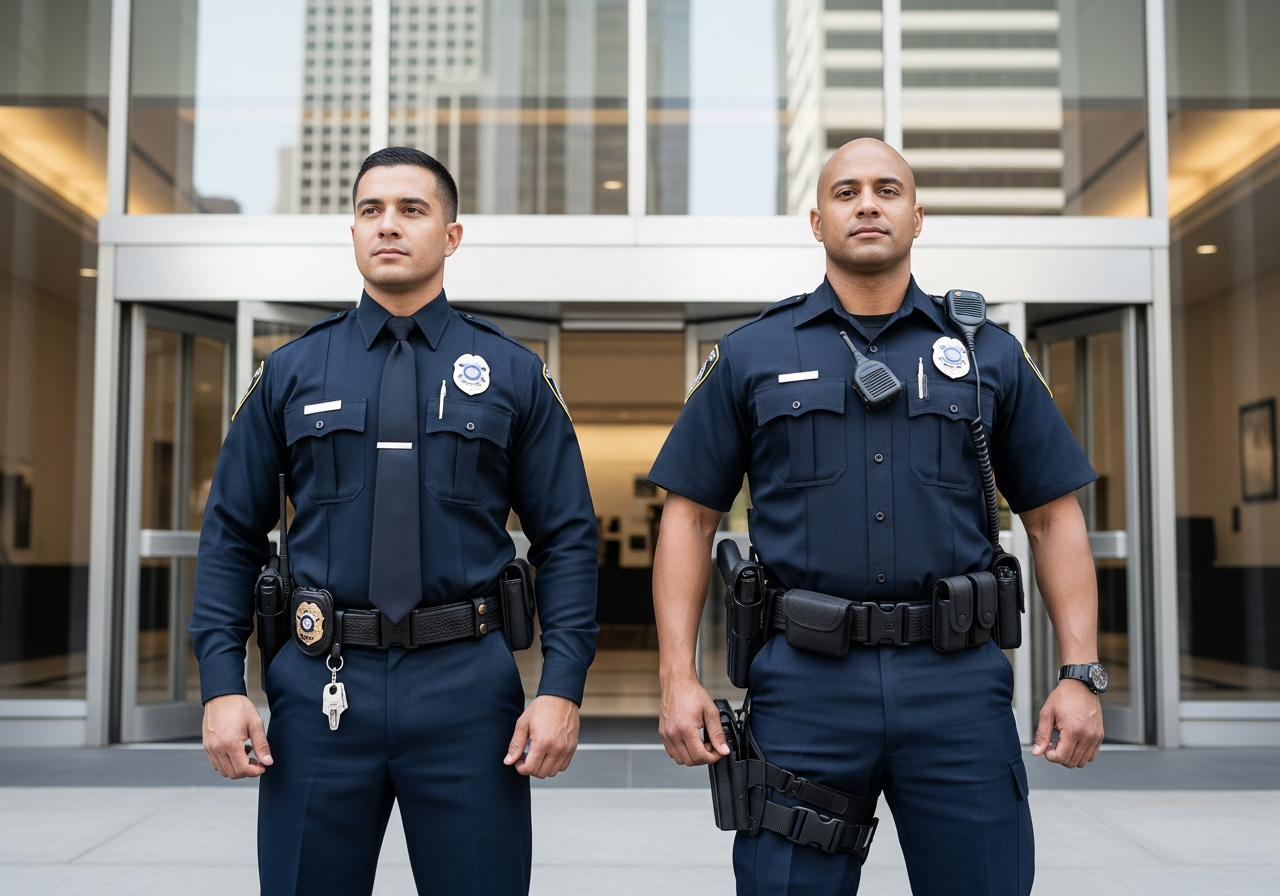
Effective high-rise security integrates lobby access control with elevator management systems. Guards must balance welcoming legitimate visitors while identifying potential threats, a skill that develops through proper training and real-world experience. Cascadia Global Security deploys trained personnel who specialize in corporate environments and understand the professional demeanor these settings demand.
Retail Loss Prevention for Union Square and Beyond
Union Square retailers face organized retail crime that costs the industry billions annually. Professional theft rings use sophisticated techniques, including distraction tactics, booster bags that defeat electronic article surveillance, and coordinated smash-and-grab operations.
Effective loss prevention goes beyond stationing guards at exits. It involves:
- Trained personnel who recognize pre-theft behaviors
- Coordination with neighboring businesses on suspect descriptions
- Proper documentation for prosecution support
- De-escalation skills to handle confrontations safely
The goal is deterrence first, intervention second, and documentation always.
Executive Protection for Tech Leadership
San Francisco's tech executives face unique risks. High public profiles, controversial business decisions, and concentrated wealth make them targets for everything from stalking to kidnapping threats. Executive protection in this environment requires discreet professionals who blend into corporate settings.
Effective programs combine advanced work, route planning, and close protection without creating the spectacle that attracts unwanted attention. The best executive protection feels invisible to everyone except the protected principal.
Residential Security for San Francisco Neighborhoods
Gated Community and Luxury Condo Patrols
Pacific Heights, Sea Cliff, and Presidio Heights contain some of the nation's most valuable residential real estate. These neighborhoods require security approaches that respect residents' privacy while maintaining vigilant protection.
Patrol services in these areas focus on identifying vehicles and individuals who don't belong. Guards develop familiarity with residents, their vehicles, and their routines, making anomalies immediately apparent. This human intelligence layer catches threats that cameras and sensors miss.
Smart Home Surveillance and Alarm Integration
Modern residential security combines human oversight with technological systems. Smart home platforms offer remote monitoring capabilities, but technology alone has limitations. Cameras capture footage; trained personnel respond to what cameras detect.
Integration matters more than individual components. When alarm systems connect to monitoring services staffed by professionals who can dispatch mobile patrols, response times shrink dramatically. Cascadia Global Security offers coordinated services that bring these elements together under a unified management structure.
Specialized Event and Venue Security
Crowd Management for Festivals and Conferences
San Francisco hosts hundreds of major events annually, from Outside Lands to Dreamforce. Each gathering presents distinct crowd management challenges based on venue, attendance, and event type.
Effective event security starts weeks before doors open. Site surveys identify potential bottlenecks, emergency egress routes, and areas requiring additional coverage. Staffing calculations must account for peak attendance periods, not just average crowd levels throughout the event.
Communication systems that connect all security personnel are essential when incidents develop. A medical emergency in one area affects crowd flow throughout the venue, requiring coordinated response across multiple posts.
VIP and Backstage Security Protocols
Backstage areas at concerts and conferences require access control that balances security with the operational needs of performers, speakers, and production crews. Credential systems must be sophisticated enough to prevent counterfeiting while simple enough for rapid verification.
VIP areas demand personnel who project professionalism while maintaining firm access standards. The ability to redirect unauthorized individuals without creating scenes separates trained security professionals from untrained staff.
Technological Advancements in Bay Area Security
AI-Driven Video Analytics and Monitoring
Artificial intelligence has transformed video surveillance from passive recording to active threat detection. Modern analytics can identify unusual behaviors, abandoned packages, and changes in crowd density that human monitors might miss during extended shifts.
These systems work best when they augment human decision-making rather than replace it. AI flags potential concerns; trained personnel evaluate and respond. This partnership between technology and human judgment delivers better outcomes than either approach alone.
Mobile Patrols and GPS-Tracked Guard Services
GPS tracking has revolutionized accountability in patrol services. Clients can verify that guards completed scheduled rounds, with timestamp and location data providing irrefutable documentation.
Mobile patrols cover more ground than static posts, making them cost-effective for properties requiring periodic rather than continuous presence. Route randomization prevents predictable patterns that criminals could exploit. Real-time tracking also enables rapid redeployment when situations require additional coverage at specific locations.
Selecting a Local Security Partner in the City
Choosing among security providers requires evaluating factors beyond hourly rates. The cheapest option often proves most expensive when incidents occur, and inadequate response creates liability exposure or property loss.
Key evaluation criteria include:
- California licensing compliance and insurance coverage
- Training programs that exceed state minimums
- Local management presence for rapid issue resolution
- Technology integration capabilities
- Client references from similar industries or property types
- Employee retention rates indicate workforce stability
Cascadia Global Security maintains local management teams who understand San Francisco's specific challenges, providing the responsive oversight that distinguishes professional security from warm-body staffing.
Frequently Asked Questions
What licensing do security guards need in San Francisco?
All security personnel must hold valid California Guard Cards issued by the Bureau of Security and Investigative Services. Armed guards require additional firearms permits with regular qualification testing. Reputable providers verify licensing status continuously, not just at the time of hire.
How quickly can security services deploy for emergency situations?
Established providers with local personnel can typically deploy within hours for emergency coverage. Cascadia Global Security maintains relationships that enable rapid response when clients face unexpected security needs, whether due to employee terminations, threats, or temporary coverage gaps.
What's the difference between armed and unarmed security?
Armed security suits high-risk environments where the threat of violence exists, such as financial institutions or locations with valuable inventory. Unarmed guards handle most commercial and residential applications where deterrence and observation are primary functions. California imposes significantly higher training and insurance requirements for armed personnel.
How do security companies handle liability for incidents?
Professional security firms typically carry general liability insurance, with coverage amounts often reaching $1 million or more per occurrence rather thanan aggregate total. Contracts should clearly define the scope of services and the allocation of liability. Reputable providers document all incidents thoroughly, creating records that protect both parties in the event of legal issues.
Can security services integrate with existing alarm systems?
Yes, most professional security providers coordinate with alarm monitoring services. When alarms trigger, monitoring centers can dispatch security personnel for physical response rather than relying solely on police, who may have longer response times for non-emergency calls.
Building a Safer San Francisco Operation
Effective security in San Francisco demands more than generic solutions applied to local problems. The city's unique combination of urban density, high-value targets, and specific crime patterns requires providers with genuine local expertise and properly trained personnel.
Whether protecting commercial properties, residential communities, or special events, the right security partner understands that their role extends beyond mere presence. They become an integrated part of your risk management strategy. For organizations seeking professional security services tailored to San Francisco's specific challenges, Cascadia Global Security offers veteran-owned expertise with locally managed teams. Learn more about how their approach addresses the protection needs that matter most to your operation.