Surveillance Cameras for Retail Stores and Guard Integration
Josh Harris | March 19, 2026
How Surveillance Cameras and Security Guards Work Together to Prevent Theft
Retail theftcosts businesses billions each year, and the gap between traditional security measures and increasingly sophisticated theft tactics continues to grow. Cameras alone capture footage that often goes unreviewed until after losses occur. Guards can monitor only a fraction of the store space at any given moment. The solution lies in combining these elements into a unified system in which surveillance cameras in retail stores work in concert with trained security personnel. This integration transforms passive recording into active threat prevention, creating a security ecosystem that responds to incidents in real time rather than documenting them for later review. Retailers who implement this approach report shrinkage reductions of 15-25% within the first year, alongside improved staff safety and customer confidence. Understanding how to build this integrated system requires examining both the technology and human elements that make it effective.
The Evolution of Retail Security Ecosystems
Transitioning from Passive Recording to Active Monitoring
The earliest retail surveillance systems served a single purpose: recording footage for post-incident review. Store managers would discover theft during inventory counts, then spend hours scrubbing through grainy video hoping to identify the culprit. This reactive approach meant losses were already realized before anyone knew a problem existed.
Modern systems flip this model entirely. Cameras now function as intelligent sensors that analyze behavior patterns, detect anomalies, and trigger immediate responses. When a camera identifies suspicious activity, it can instantly alert both on-site guards and remote monitoring centers. The shift from passive recording to active monitoring represents the most significant advancement in retail security over the past decade.
The Role of Surveillance in Loss Prevention Strategies
Effective loss prevention requires visibility into every transaction, every customer interaction, and every employee movement. Surveillance systems provide this visibility, but only when properly integrated with human oversight. Cameras capture data; trained security personnel interpret that data and take appropriate action.
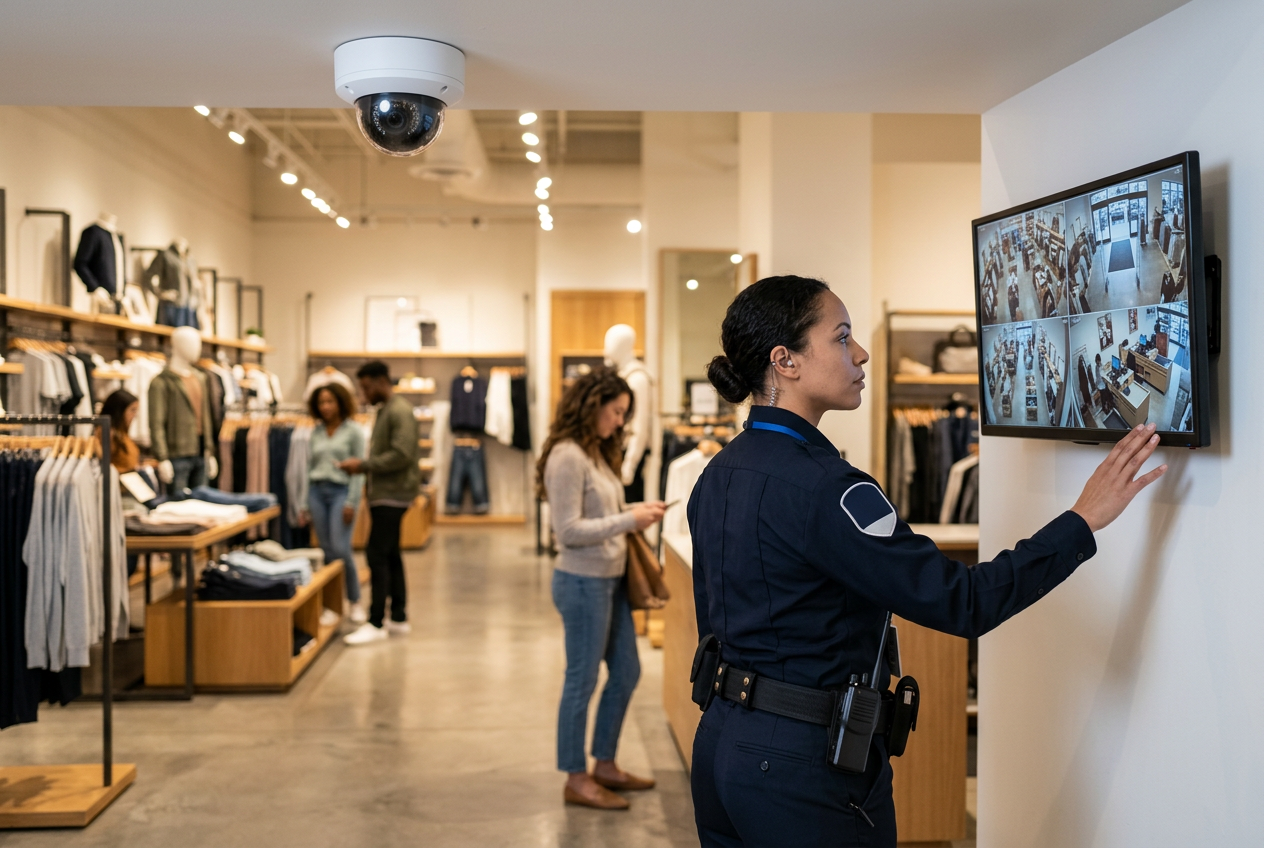
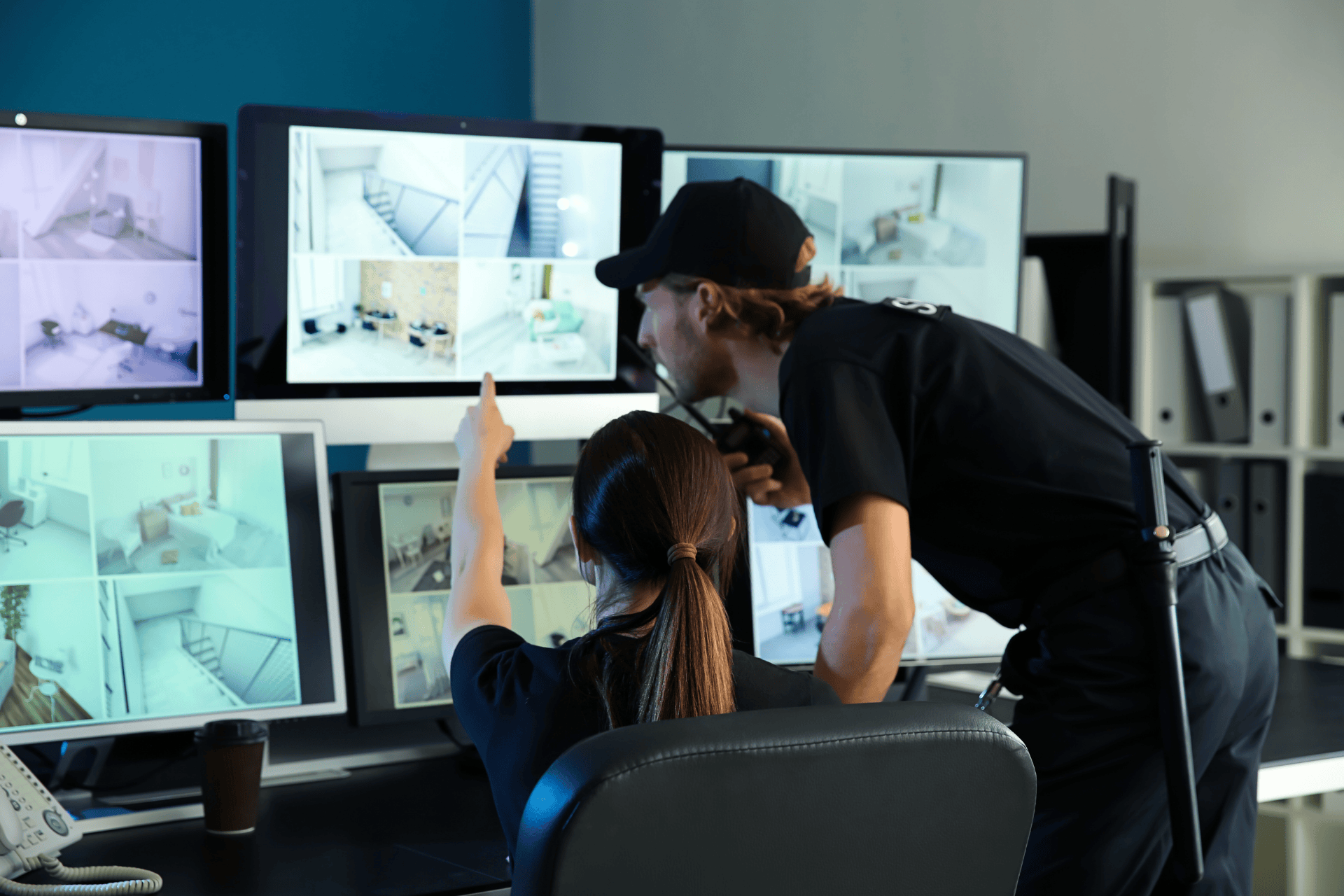
The most successful retailers treat their camera systems as force multipliers for their security teams. A single guard equipped with real-time video feeds can effectively monitor an entire store, responding to alerts and verifying legitimate concerns while ignoring false alarms.
Essential Camera Technologies for Modern Retailers
AI-Powered Analytics and Motion Detection
Artificial intelligence has transformed what cameras can accomplish independently. Modern AI analytics can distinguish between normal shopping behavior and potential theft indicators. The technology identifies patterns like merchandise concealment, ticket switching, and organized retail crime tactics.
Motion detection has evolved beyond simple movement triggers. Current systems differentiate between a customer browsing shelves and someone removing security tags. They recognize when individuals linger in high-value areas without making selections. These intelligent alerts mean guards receive actionable information rather than constant false alarms from every passing shopper.
High-Definition 360-Degree Panoramic Views
Panoramic cameras eliminate traditional blind spots that criminals exploit. A single 360-degree camera can replace three to five fixed units while providing complete coverage of open floor spaces. The high-definition resolution ensures that facial features and product details remain identifiable even when digitally zoomed.
These cameras prove particularly valuable in large retail environments where installing dozens of fixed units becomes cost-prohibitive. The panoramic view also allows guards to track individuals across the store without switching between multiple camera feeds.
Synergizing On-Site Guards with Video Intelligence
Real-Time Alerts and Guard Dispatch Protocols
The connection between camera systems and guard response determines whether surveillance investment translates into actual loss prevention. Cascadia Global Security implements dispatch protocols to ensure guards receive alerts within seconds of detecting suspicious activity.
Effective protocols specify response priorities, communication channels, and escalation procedures. When cameras detect potential shoplifting, guards receive mobile notifications with the suspect's location, physical description, and video clips showing the concerning behavior. This information allows guards to approach situations with full context rather than responding blindly.
Mobile Access for Patrol Officers
Guards conducting floor patrols need continuous access to camera feeds. Mobile applications provide this access via smartphones or tablets, allowing officers to monitor multiple areas while physically present in another area. This capability transforms patrol routes from predictable patterns into dynamic responses to real-time conditions.
Patrol officers can also use mobile access to verify that areas are cleared before moving to the next zone. If cameras show no activity in a section, guards can adjust their routes to focus attention where it matters most.
Strategic Placement for Maximum Coverage and Deterrence
Point-of-Sale Monitoring and Transaction Validation
Cash registers represent the highest-risk areas in retail environments. Employee theft, sweethearting, and return fraud all occur at checkout stations. Cameras positioned to capture transaction details provide evidence for investigating discrepancies and deter employees from attempting fraud.
Integration with POS systems allows cameras to overlay transaction data on video footage. Investigators can quickly match register activity with visual confirmation, identifying voided transactions, unauthorized discounts, and refund manipulation.
Securing Blind Spots and High-Value Inventory Zones
Every retail layout contains natural blind spots where standard camera placement fails to provide coverage. Fitting rooms, stockroom entrances, and corner displays create opportunities for concealment. Strategic camera positioning addresses these vulnerabilities without creating an oppressive surveillance atmosphere.
High-value inventory requires additional attention. Electronics, pharmaceuticals, and premium merchandise benefit from dedicated camera coverage with enhanced analytics. Some retailers implement virtual tripwires that alert guards whenever someone enters designated high-value zones.
Remote Guarding and Virtual Escorts
Reducing Overhead with Hybrid Security Models
Remote guarding combines off-site monitoring with on-site response capability. Trained operators at central monitoring facilities watch camera feeds from multiple locations simultaneously, dispatching local guards only when intervention becomes necessary. This model reduces staffing costs while maintaining rapid response capability.
Cascadia Global Security offers hybrid security models that balance remote monitoring with physical presence. Retailers can maintain visible deterrence through uniformed guards while extending coverage through virtual monitoring during off-peak hours.
Virtual escort services protect employees during opening and closing procedures. Remote operators watch via camera as staff members move through the building, providing an additional layer of safety without requiring extra on-site personnel.
Compliance and Privacy Considerations in Retail Surveillance
Surveillance systems must balance security effectiveness with customer privacy expectations and legal requirements. Signage requirements vary by jurisdiction, but transparent notification generally reduces liability concerns. Cameras in fitting rooms remain prohibited in all U.S. states, requiring alternative security measures for these high-risk areas.
Employee monitoring carries additional legal considerations. Clear policies communicated during onboarding protect retailers from claims of unauthorized surveillance. Data retention policies must address both security needs and privacy regulations, with most retailers maintaining footage for 14-90 days before automatic deletion.
Audio recording adds another layer of compliance, as many states require all-party consent for audio capture. Retailers should consult legal counsel before enabling audio features on surveillance systems.
Frequently Asked Questions
How many cameras does a typical retail store need?
Camera quantity depends on store layout, square footage, and risk profile. Most retailers require one camera for every 500-700 square feet of sales floor space, plus dedicated coverage of entry points, registers, and stockrooms. A professional security assessment identifies optimal placement for your specific environment.
Can existing camera systems integrate with guard operations?
Most modern camera systems support integration through standard protocols. Older analog systems may require upgrades to network-capable equipment. The integration process typically involves connecting cameras to a video management system that supports mobile alerts and remote access.
What training do guards need to use surveillance systems effectively?
Guards require training on the specific video management software, alert response protocols, and legal limitations on surveillance use. Most retailers provide 8-12 hours of system-specific training alongside general security procedures.
How quickly can integrated systems respond to theft in progress?
Well-designed systems detect suspicious behavior and alert guards within 5-10 seconds. Guard response time depends on store layout and staffing levels, but most incidents receive physical response within 30-60 seconds of initial detection.
What is the typical ROI timeline for integrated surveillance systems?
Retailers typically recover their investment within 18-24 months through reduced shrinkage, lower insurance premiums, and optimized guard staffing. Stores with significant theft problems often see positive ROI within the first year.
Building Your Integrated Security Program
Effective retail security requires more than purchasing cameras and hiring guards. The integration between these elements determines whether your investment prevents losses or simply documents them. Start by auditing current vulnerabilities, then design a system that addresses specific risks rather than applying generic solutions.
The combination of intelligent surveillance cameras for retail stores and guard integration creates a security ecosystem greater than the sum of its parts. Technology provides the eyes; trained personnel provide the judgment and response capability.
For retailers seeking professional guidance on implementing integrated security solutions, Cascadia Global Security provides comprehensive assessments and tailored security programs. As a veteran-owned firm with locally managed teams across the United States, they specialize in creating security solutions that address the unique challenges facing retail operations.