Warehouse Security Guards: Duties and Responsibilities
Josh Harris | March 19, 2026
Warehouses represent high-value targets for theft, vandalism, and unauthorized access. With millions of dollars in inventory moving through loading docks daily, the margin for error is razor-thin. A single security lapse can result in catastrophic losses, supply chain disruptions, and damaged client relationships. This reality explains why warehouse security guards serve as the frontline defense for distribution centers, fulfillment hubs, and storage facilities nationwide. Their duties extend far beyond standing at a gate or watching monitors. Professional security personnel manage complex access protocols, conduct systematic patrols, protect inventory integrity, and coordinate emergency responses. Understanding the full scope of warehouse security guard responsibilities helps facility managers build effective protection programs and ensures guards themselves recognize the critical nature of their role.
Core Functions of Warehouse Security Personnel
Warehouse security operates on multiple layers, with guards serving as the human element that ties technology, policy, and physical protection together. Their core functions create a security ecosystem that deters threats before they materialize.
Access Control and Perimeter Monitoring
Every person and vehicle entering a warehouse must be verified, documented, and tracked. Guards manage entry points by checking credentials, verifying delivery schedules, and ensuring only authorized personnel have access to restricted areas. This includes monitoring perimeter fencing for breaches, checking that gates and doors remain secured, and identifying any unusual activity along the facility's boundaries. Effective access control prevents unauthorized individuals from entering while maintaining smooth operational flow for legitimate traffic.
Surveillance and CCTV Management
Modern warehouses rely on extensive camera networks, but technology alone cannot replace trained observation. Guards monitor live feeds, identify suspicious behavior, and direct camera angles to capture developing situations. They recognize patterns that automated systems miss, such as employees repeatedly accessing areas outside their work zones or vehicles lingering near loading docks without a clear purpose. When incidents occur, guards preserve footage and document timestamps for investigation.
Mobile and Foot Patrol Protocols
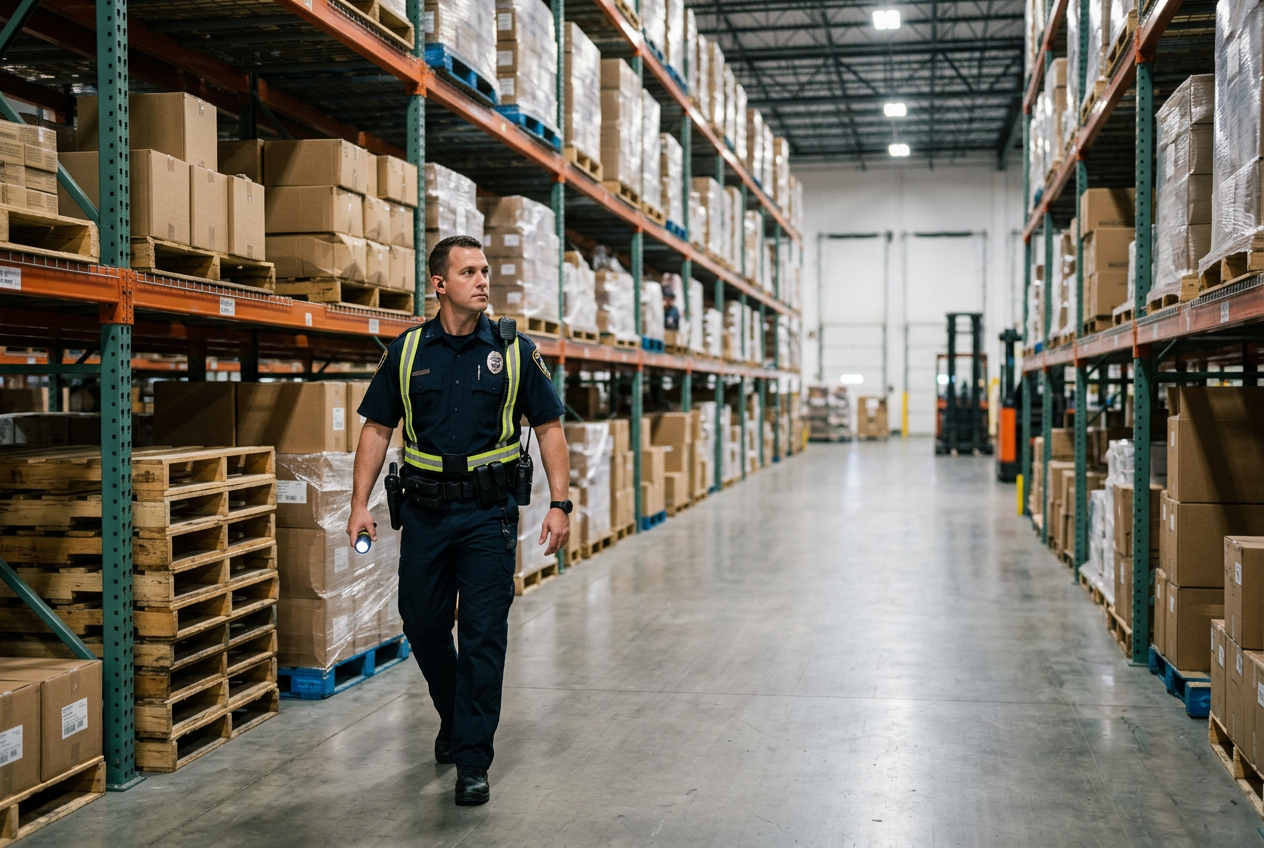
Static observation has limits. Regular patrols through aisles, storage areas, and exterior grounds ensure comprehensive coverage. Guards vary their routes and timing to prevent predictability, which criminals often exploit. During patrols, they check for unlocked doors, damaged fencing, safety hazards, and signs of tampering with inventory.Cascadia Global Security provides mobile patrol services that complement on-site personnel, creating layered protection for large facilities.
Inventory Protection and Loss Prevention
Inventory shrinkage costs businesses billions annually, with warehouses particularly vulnerable due to high product volumes and multiple access points. Guards play a central role in protecting assets from both external theft and internal pilferage.
Monitoring Loading Docks and Shipping Areas
Loading docks represent the highest-risk zones in any warehouse. Product constantly moves in and out, creating opportunities for diversion, short-shipping, and outright theft. Guards verify that shipments match documentation, observe loading procedures, and ensure drivers don't access areas beyond their designated zones. They watch for staging irregularities, such as products placed near exits without corresponding paperwork or pallets moved during off-hours.
Conducting Regular Stock Audits and Inspections
Guards support inventory management by conducting spot checks and participating in scheduled audits. They verify container seal integrity, check for signs of tampering, and report discrepancies between physical counts and system records. These inspections catch problems early, before small losses become significant patterns. Guards also inspect incoming shipments for damage and document any conditions that could affect claims or quality control.
Identifying and Reporting Internal Theft
Employee theft accounts for a substantial portion of warehouse losses. Guards observe behavioral indicators, such as workers arriving early or staying late without authorization, accessing areas outside their job functions, or developing unusual relationships with specific drivers. Reporting these observations to management allows investigation before losses mount. Professional guards understand the balance between vigilance and the maintenance of positive workplace relationships.
Safety Oversight and Emergency Response
Security responsibilities extend beyond theft prevention to encompass worker safety and emergency preparedness. Guards often serve as first responders and safety monitors throughout their shifts.
Fire Hazard Detection and Prevention
Warehouses contain combustible materials, electrical systems, and equipment that create fire risks. Guards identify hazards during patrols, including blocked fire exits, improperly stored flammable materials, and malfunctioning equipment. They verify that fire suppression systems remain operational and that emergency exits stay clear. When fires occur, guards initiate evacuation procedures, direct emergency services, and account for personnel.
First Aid and Incident Coordination
Injuries happen in warehouse environments. Guards trained in first aid provide immediate assistance while emergency medical services respond. They secure incident scenes, document what occurred, and coordinate with supervisors and safety personnel. In most U.S. states as of 2026, guards are not classified as medical first responders but are typically required to maintain current first aid and CPR certification to stabilize non-life-threatening situations until professional medical help arrives. This rapid-response capability reduces injury severity and demonstrates the organization's commitment to worker welfare.
Administrative Duties and Documentation
Effective security requires meticulous record-keeping. Documentation creates accountability, supports investigations, and demonstrates compliance with client requirements and regulations.
Maintaining Daily Activity Logs
Guards record all significant events during their shifts, including patrol observations, incidents, visitor arrivals, and any unusual circumstances. These logs create institutional memory that helps identify patterns over time. A series of minor observations might reveal a developing problem that no single entry would indicate. Quality documentation also protects both the security provider and the client during disputes or legal proceedings.
Visitor and Vehicle Registration
Every visitor and vehicle receives documentation upon entry. Guards record names, company affiliations, purposes of visit, arrival and departure times, and vehicle information. This creates an audit trail that proves invaluable during investigations.Cascadia Global Security trains personnel in comprehensive visitor management protocols that balance security requirements with professional hospitality.
Essential Skills and Qualifications for Modern Guards
Warehouse security demands specific competencies beyond basic guard training. Physical stamina matters, as guards patrol large facilities throughout their shifts. Observation skills separate effective guards from those who merely occupy space. Communication abilities ensure clear reporting and professional interactions with employees, visitors, and emergency responders.
Technical proficiency with access control systems, CCTV equipment, and documentation software has become essential. Guards must understand the basics of inventory management to recognize anomalies. Conflict resolution training helps manage confrontational situations without escalation. Many facilities prefer guards with prior warehouse or logistics experience who understand operational rhythms and can distinguish normal activity from suspicious behavior.
Frequently Asked Questions
What qualifications should warehouse security guards have?
Guards should possess state-required licenses, first-aid certification, and training in access control systems. As of 2026, most states require unarmed and armed guards to complete state-approved training programs that meet current Department of Public Safety or equivalent licensing standards. Experience in logistics or warehouse operations provides valuable context for recognizing unusual activity. Many employers prefer candidates with clean background checks and verifiable employment history.
How do security guards prevent internal theft in warehouses?
Guards observe employee behavior patterns, monitor high-risk areas such as loading docks, and report suspicious activity to management. Their visible presence deters opportunistic theft, while systematic documentation helps identify patterns that suggest organized pilferage.
What technology do warehouse security guards typically use?
Guards operate CCTV monitoring systems, electronic access control panels, two-way radios, and incident documentation software. By 2026, many warehouses will have also integrated AI-assisted video analytics, RFID tracking, and mobile reporting apps that enhance situational awareness and real-time communication with central command.
How often should security guards patrol a warehouse?
Patrol frequency depends on facility size, inventory value, and risk assessment. Industry best practices in 2026 recommend dynamic patrol scheduling, supported by sensor alerts and automation, rather than fixed hourly intervals, to ensure unpredictability and efficient coverage. High-value storage areas may warrant more frequent checks.
What should guards do during a warehouse emergency?
Guards initiate emergency protocols, contact appropriate responders, begin evacuation procedures if necessary, and secure the scene. They account for personnel, direct emergency services to the incident location, and document all actions taken during the response.
The Impact of Effective Security on Supply Chain Integrity
Warehouse security directly affects supply chain reliability. When inventory disappears, customers don't receive their orders. When safety incidents occur, operations halt for investigation. When unauthorized access occurs, product integrity is called into question. Professional security guards prevent these disruptions by maintaining consistent protection standards.
The responsibilities of warehouse security guards encompass access management, surveillance, patrol operations, inventory protection, safety oversight, and administrative documentation. Each function supports the others, creating comprehensive protection that no single measure could achieve on its own. Facilities that invest in qualified security personnel experience lower shrinkage rates, fewer safety incidents, and more reliable operations.
For organizations seeking professional warehouse security solutions, Cascadia Global Security offers trained personnel with the skills and experience modern distribution facilities require. As a veteran-owned security firm, they deliver locally managed teams committed to protecting client assets and maintaining operational continuity.