Building Site Security Cameras and On-Site Guarding
Josh Harris | February 17, 2026
The Evolving Landscape of Construction Site Security
A single night of theft can erase weeks of construction progress. Equipment disappears, materials vanish, and project timelines collapse under the weight of insurance claims and replacement delays. The combination of building site security cameras and on-site guarding has become the standard response for contractors who understand that prevention costs far less than recovery.
Construction sites present unique security challenges that differ from traditional commercial properties. They're dynamic environments with constantly shifting layouts, multiple access points, and high-value assets spread across open terrain. Heavy machinery valued at hundreds of thousands of dollars is left exposed overnight. Copper wiring, lumber, and specialty materials attract organized theft rings that know exactly what they're looking for and how to move it quickly.
The most effective security programs recognize that technology alone can't solve these problems. Cameras capture evidence, but they don't stop determined criminals in real time. Guards provide immediate response but can't monitor every corner of a sprawling jobsite simultaneously. The integration of both creates overlapping layers of protection that address vulnerabilities neither approach handles independently.
Common Security Risks: Theft, Vandalism, and Liability
Theft remains the primary concern, but it takes multiple forms. Opportunistic theft involves individuals grabbing whatever they can carry. Organized theft targets specific high-value items, using vehicles and equipment to transport stolen goods. Internal theft, often overlooked, accounts for a significant percentage of jobsite losses.
Vandalism creates different problems. Graffiti damages reputation and requires costly cleanup. Equipment sabotage can create safety hazards and project delays. Trespassing teenagers or homeless individuals seeking shelter introduce liability exposure that extends beyond simple property damage.
The Economic Impact of Jobsite Losses
The National Equipment Register and the National Insurance Crime Bureau estimate that annual construction theft losses in the United States exceeded $1 billion to $1.2 billion in 2024. Individual incidents average $20,000 to $40,000 when accounting for equipment value, project delays, and administrative costs. Insurance premiums increase after claims, creating ongoing financial consequences that extend years beyond the initial loss.
Project delays carry hidden costs that compound quickly. Subcontractors reschedule, penalties accumulate, and financing costs increase as completion dates slip. A $15,000 generator theft can easily generate $100,000 in total project impact.
Strategic Implementation of Site Security Cameras
Camera systems for construction sites require different specifications than permanent commercial installations. Temporary mounting solutions, wireless connectivity, and portable power sources become essential considerations. Choosing the wrong equipment leads to blind spots, unreliable footage, and wasted investment.
Fixed vs. Mobile Surveillance Units
Fixed cameras work well for established perimeters, entry points, and areas where high-value equipment remains stationary. They provide consistent coverage and typically offer higher resolution than mobile alternatives. Installation requires planning around construction phases to ensure cameras remain effective as the site evolves.
Mobile surveillance units offer flexibility that fixed systems can't match. Trailer-mounted camera towers can relocate as work progresses across different site areas. Solar-powered units eliminate the need for electrical infrastructure. These systems often include cellular connectivity for remote monitoring, making them ideal for sites without established internet service.
The decision between fixed and mobile typically depends on project duration. Short-term projects under six months often favor mobile units. Longer projects justify fixed infrastructure investments.
Essential Features: Night Vision, AI Analytics, and Remote Access
Modern construction site cameras need capabilities beyond basic video recording. Infrared night vision is non-negotiable since most theft occurs after dark. Look for cameras rated for at least 100 feet of night visibility in complete darkness.
AI-powered analytics transform passive recording into active monitoring. Motion detection with zone-based alerts reduces false alarms from wildlife or weather. Object recognition can distinguish between vehicles, people, and animals. Some systems identify specific behaviors like fence climbing or loitering.
Remote access allows project managers and security teams to monitor sites from anywhere. Mobile apps provide real-time viewing and alert notifications. Cloud storage ensures footage remains accessible even if on-site equipment is damaged or stolen.
The Role of Professional On-Site Guarding
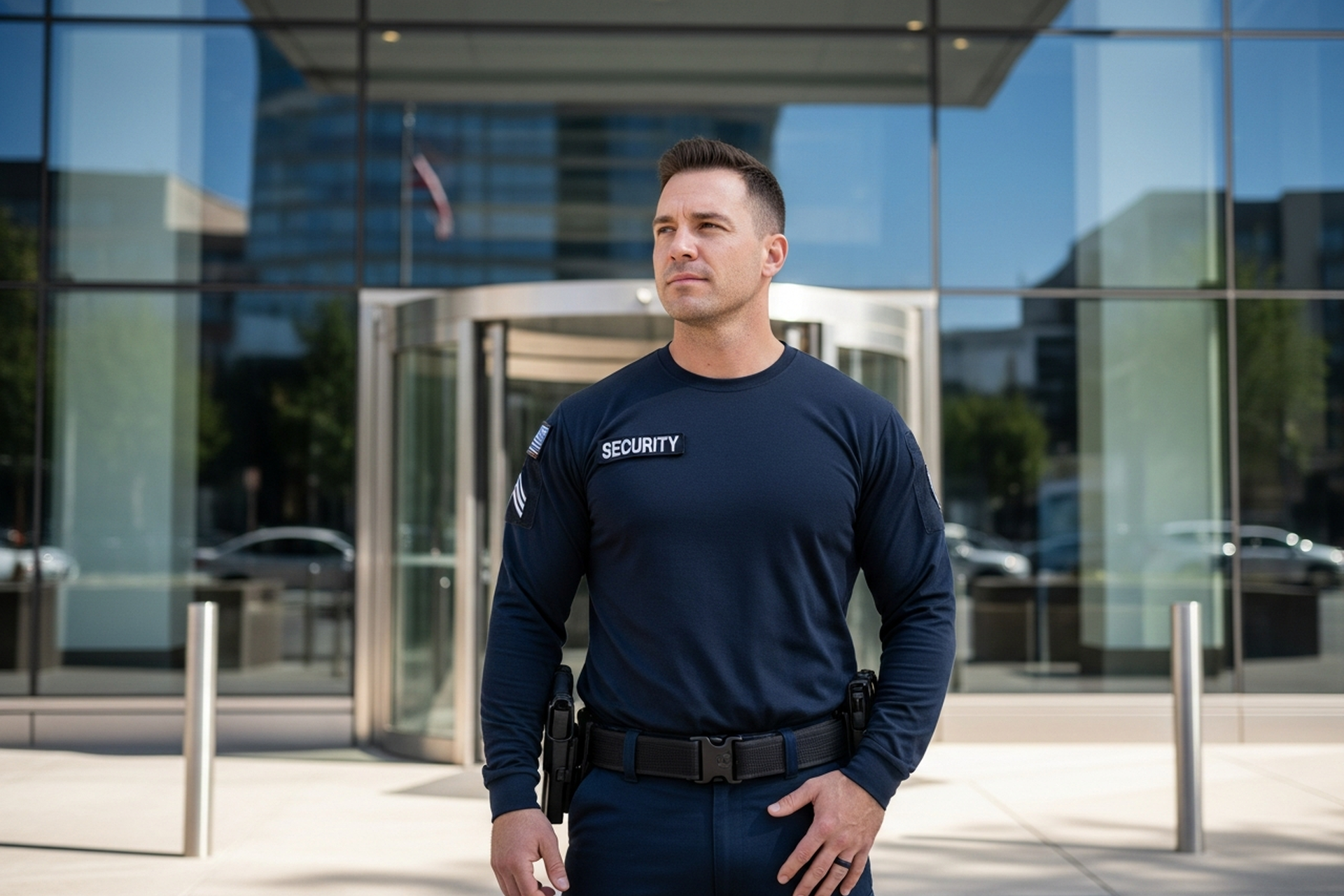
Security cameras document incidents. Guards prevent them. The physical presence of trained security personnel creates deterrence that technology cannot replicate. Criminals conduct surveillance before targeting sites, and visible security presence often redirects their attention elsewhere.
Cascadia Global Security provides professional guard services tailored to construction environments, where guards understand the unique challenges of securing active job sites with multiple contractors and constantly changing conditions.
Visual Deterrence and Immediate Incident Response
Marked security vehicles, uniformed personnel, and visible patrol patterns signal that a site is protected. This deterrence value is difficult to quantify but consistently appears in contractor surveys as a primary reason for maintaining guard services.
When incidents occur, guards provide immediate response capabilities that remote monitoring cannot match. They can confront trespassers, contact law enforcement with precise location details, and secure evidence before it's compromised. Response time often determines whether an incident becomes a minor interruption or a major loss.
Access Control and Visitor Management Protocols
Construction sites see dozens of deliveries, subcontractor crews, and inspectors daily. Guards manage this traffic flow, verify credentials, and maintain visitor logs that are invaluable when incidents occur. They ensure delivery drivers sign for materials and that unauthorized individuals don't slip through during busy periods.
Effective access control also supports compliance requirements.
OSHA regulations, insurance policies, and contract specifications often mandate documented access procedures. Professional guards maintain these records consistently.
Synergizing Technology and Human Presence
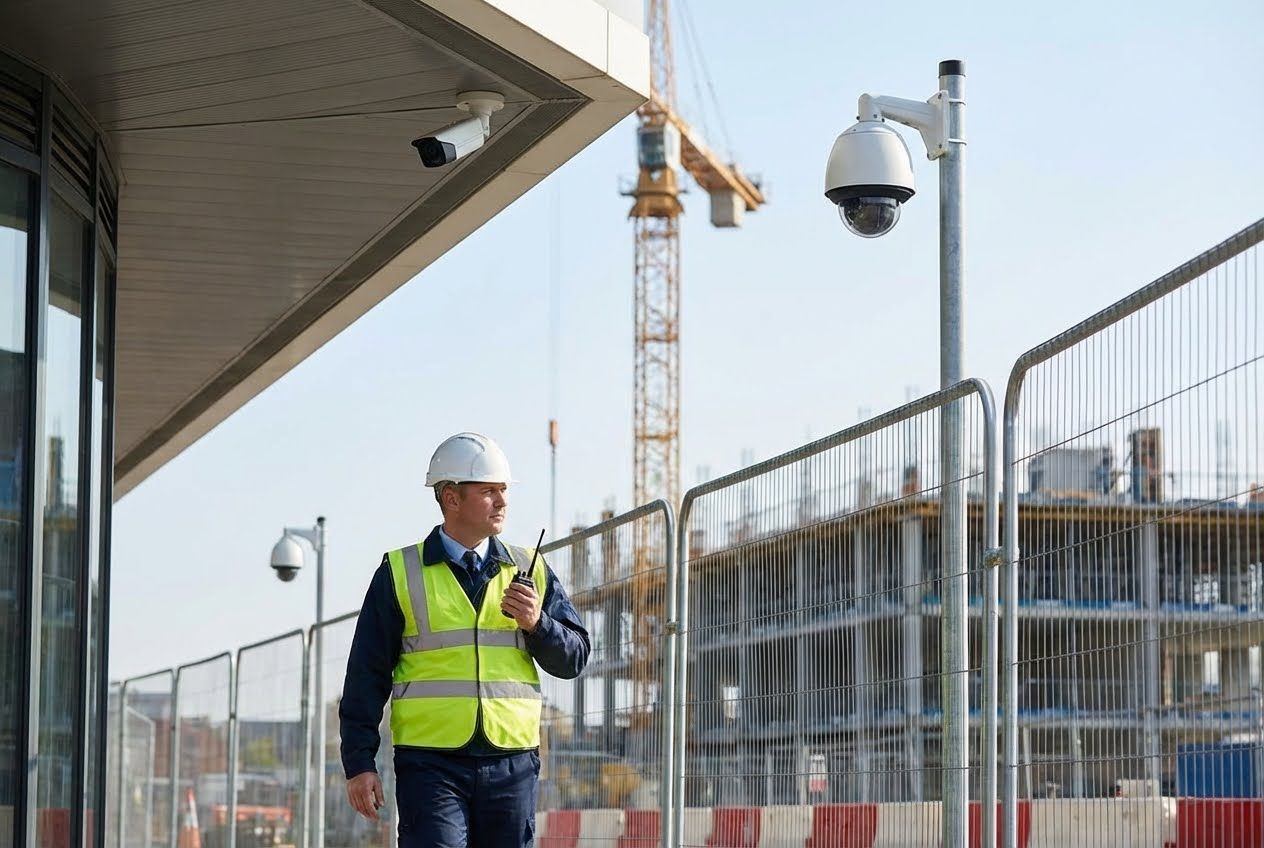
The real power of site security cameras and on-site guarding emerges when both systems work together. Cameras extend guard coverage across areas they can't physically patrol. Guards respond to alerts generated by cameras. This combination multiplies the effectiveness of each component.
Using Cameras to Augment Guard Patrols
A single guard can effectively monitor a much larger area when supported by camera systems. Instead of walking continuous perimeter patrols, guards can focus on high-risk zones while cameras cover secondary areas. Motion alerts direct their attention to developing situations.
Camera footage also provides guards with situational awareness before they approach incidents. They can assess the number of individuals involved, the vehicles present, and whether weapons are visible before making contact decisions.
Real-Time Communication Systems for Seamless Coordination
Integration requires a communication infrastructure. Radio systems, mobile apps, and connections to the monitoring center enable guards to receive camera alerts instantly. Some systems display camera feeds directly on guard devices, providing visual information during response.
Cascadia Global Security coordinates guard services with client camera systems, ensuring that technology investments translate into actionable security responses rather than unwatched footage.
Compliance, Legal Considerations, and Privacy
When placing security cameras, it is essential to comply with all applicable federal and state privacy legislation. This includes state-specific video surveillance statutes and, where relevant, biometric data laws, such as the Illinois Biometric Information Privacy Act (BIPA). Do not rely only on general jurisdictional differences; specific legal compliance is mandatory. Recording public areas is generally permitted, but cameras that capture neighboring properties or areas with privacy expectations create liability exposure. Signage requirements differ between states.
Guard authority has clear legal boundaries. Private security personnel can observe, report, and request that individuals leave private property. Security personnel are strictly limited in their ability to detain individuals, permitted only under lawful citizen's arrest, in accordance with state law. The use of force must be avoided unless strictly for self-defense or as expressly allowed by specific licensing regulations.
Documentation protects everyone involved. Incident reports, camera footage retention, and access logs demonstrate due diligence in the event of litigation. Many construction contracts specify security documentation requirements.
Developing a Custom Security Master Plan
Cookie-cutter security approaches fail because every construction site presents unique challenges. Geography, project type, surrounding neighborhood, and budget all influence the optimal security configuration.
Conducting a Comprehensive Site Risk Assessment
Effective security planning begins with honest vulnerability analysis. Walk the perimeter at different times of day. Identify natural surveillance blind spots. Assess lighting conditions. Document neighboring properties and their security status, since criminals often use adjacent areas for staging.
Consider the project timeline and how vulnerabilities will change. Early phases, with minimal structures, differ from later phases, when interior spaces require protection. Equipment delivery schedules create temporary concentrations of high-value targets.
Measuring ROI on Security Infrastructure Investments
Security spending should correlate with risk exposure and asset values. A site with $2 million in equipment justifies more investment than one with $200,000. Calculate potential loss scenarios and compare them against security costs.
Track incidents and near-misses to evaluate program effectiveness. Reduction in losses over time demonstrates value. Guard reports documenting deterred intrusion attempts provide evidence that prevention is working.
Frequently Asked Questions
How many security cameras does a typical construction site need?
Coverage requirements depend on site size and layout. Most sites need cameras at all entry points, equipment storage areas, and material staging zones. A one-acre site typically requires six to ten cameras for comprehensive coverage.
Should construction sites use armed or unarmed security guards?
Unarmed guards suit most construction environments. Armed security becomes appropriate for sites storing exceptionally valuable materials or located in high-crime areas.
Cascadia Global Security offers both options based on site-specific risk assessments and in compliance with applicable state licensing laws governing armed guard operations.
What happens when cameras detect motion after hours?
Quality monitoring systems alert security personnel immediately. Guards can view live feeds, assess the situation, and respond appropriately. False alarms from animals or weather are filtered by AI analytics before alerts are generated.
How quickly can temporary security systems be deployed?
Mobile surveillance units can typically be operational within 24 to 48 hours. Guard services can often begin the same day for urgent situations. Planning ahead allows for better system configuration.
Are wireless security cameras reliable for construction sites?
Modern 4G and 5G cellular-connected cameras provide reliable service in most areas with adequate signal coverage. Solar power eliminates electrical dependency. Redundant recording ensures footage is preserved even if connectivity is temporarily interrupted.
Building Protection That Lasts
Effective construction site security requires both technological capability and human judgment working in coordination. Cameras provide constant observation and documentation. Guards deliver deterrence and immediate response. Together, they create protection that neither achieves alone.
The investment pays dividends beyond prevented losses. Insurance premiums often decrease with documented security programs. Project financing terms may improve. Subcontractors and clients gain confidence in your operational professionalism.
For contractors ready to implement comprehensive security programs, Cascadia Global Security offers veteran-owned expertise in both guard services and security system integration.
Get started with a site assessment tailored to your specific project requirements.