Commercial Security Services Provided by Cascadia Global Security
Josh Harris | March 19, 2026
Key Components of Effective Commercial Security Protection
Businesses face
security threats that evolve constantly, from organized retail theft rings to sophisticated corporate espionage attempts. The difference between companies that suffer significant losses and those that maintain operational continuity often comes down to one factor: the quality of their security partnership. Commercial security services provided by Cascadia Global Security address this gap through a combination of trained personnel, customized protocols, and technology integration that adapts to each client's specific risk profile.
What separates effective commercial security from a uniformed presence that simply occupies space? The answer lies in operational expertise, local accountability, and the ability to scale protection based on real threat assessments rather than generic packages. For businesses evaluating their security posture, understanding the full scope of available services reveals opportunities to protect assets, employees, and reputation simultaneously.
The Cascadia Global Security Approach to Commercial Safety
Veteran-Owned and Operated Professionalism
Military veterans bring a distinct operational mindset to private security that civilian-trained guards often lack. Decision-making under pressure, situational awareness, and disciplined response protocols become second nature through military service. Cascadia Global Security channels this background into commercial applications, ensuring that personnel understand chain-of-command structures and maintain composure during high-stress incidents.
The veteran ownership model also influences hiring and training standards throughout the organization. Guards receive instruction that goes beyond basic post orders, incorporating threat recognition, de-escalation techniques, and emergency coordination with law enforcement.
Customized Risk Assessments for Business Facilities
Cookie-cutter security packages fail because every facility presents unique vulnerabilities. A distribution center faces different threats than a corporate headquarters, even when both operate within the same company. Effective commercial security begins with comprehensive site assessments that identify access points, traffic patterns, valuable assets, and potential blind spots.
These assessments inform staffing recommendations, patrol routes, and technology placement. The goal is matching security resources to actual risk rather than applying standardized solutions that leave gaps or waste budget on unnecessary coverage.
On-Site Physical Security Solutions
Armed and Unarmed Uniformed Security Guards
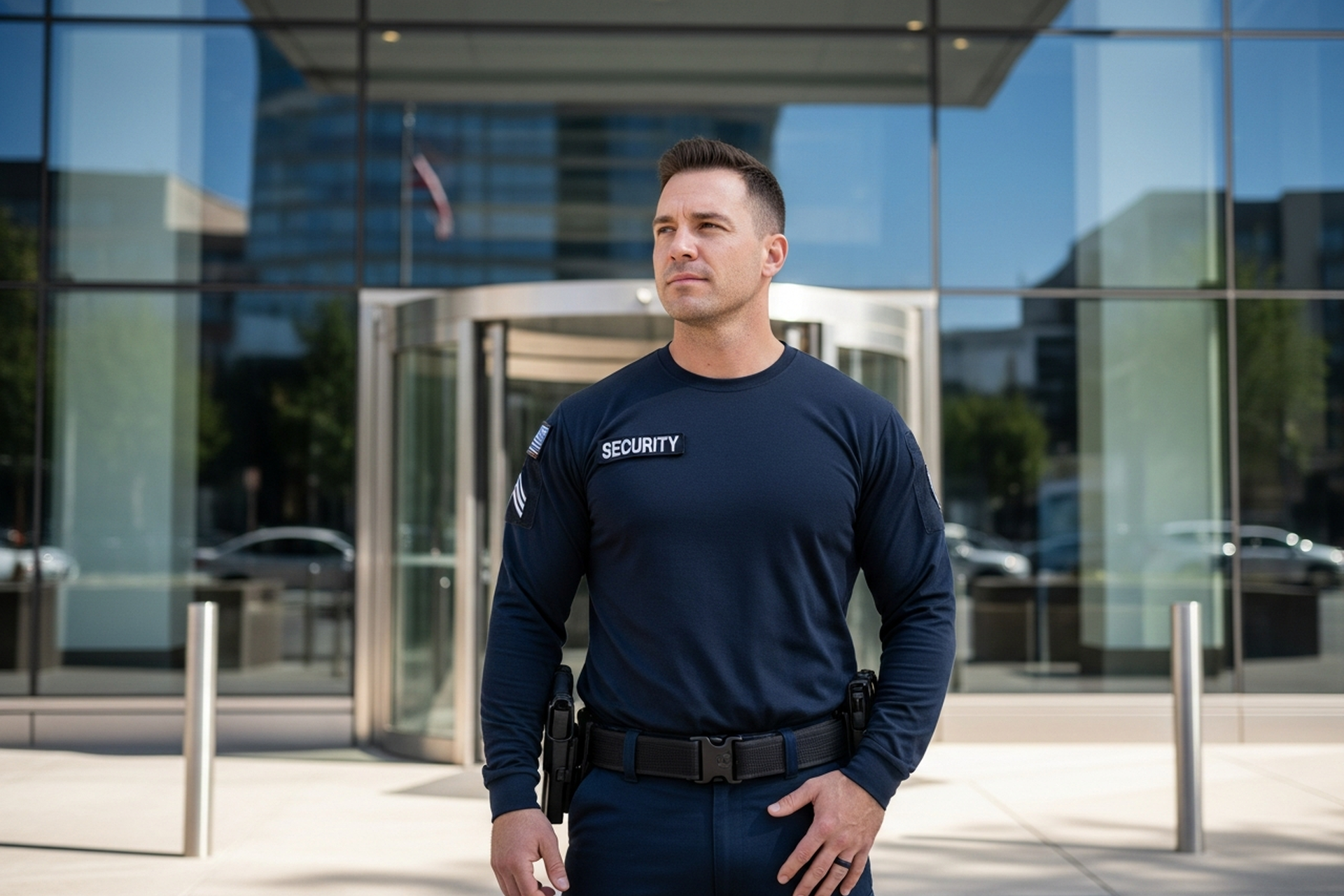
The decision between armed and unarmed security depends on facility type, asset value, and local regulations. High-value environments, financial institutions, and locations with elevated threat histories often warrant armed personnel. Retail locations, corporate offices, and lower-risk facilities typically function well with unarmed guards who focus on access control, monitoring, and visible deterrence.
Both categories require proper licensing, background verification, and ongoing training. Armed guards carry additional responsibilities, including weapons qualification, use-of-force protocols, and enhanced liability awareness.
Mobile Patrol Services and Perimeter Checks
Static guard posts cover fixed locations effectively but leave exterior areas and parking facilities vulnerable between scheduled rounds. Mobile patrol services fill this gap through vehicle-based coverage that maintains unpredictable presence across larger properties.
Patrol officers conduct perimeter checks, verify door and gate security, monitor parking areas for suspicious activity, and respond to alarms or incidents across multiple buildings. This approach proves particularly valuable for industrial complexes, multi-building campuses, and facilities with extensive outdoor areas.
Concierge and Front Desk Security Officers
First impressions matter, and the person greeting visitors often sets the tone for an entire facility experience. Concierge security officers blend professional hospitality with access control functions, managing visitor logs, issuing badges, and screening guests before they enter secure areas.
These positions require strong communication skills alongside security awareness. Officers must balance a welcoming demeanor with vigilance, identifying potential concerns without creating adversarial interactions with legitimate visitors.
Specialized Commercial Industry Expertise
Retail Loss Prevention and Asset Protection
Retail shrinkage costs American businesses billions each year, with employee theft and organized retail crime representing the largest contributors. Effective loss prevention combines visible deterrence with trained observation to identify suspicious behavior patterns before merchandise leaves the premises.
Loss prevention specialists understand shoplifting techniques, return fraud schemes, and indicators of internal theft. They work alongside store management to implement controls that reduce opportunities without creating hostile shopping environments.
Industrial and Manufacturing Site Surveillance
Manufacturing facilities present distinct security challenges: expensive equipment, raw materials, hazardous substances, and often 24-hour operations across multiple shifts. Security personnel must understand industrial safety protocols alongside traditional protection duties.
Access control becomes critical in these environments, ensuring only authorized personnel enter production areas, loading docks, and storage facilities. Guards also monitor for safety violations, equipment tampering, and unauthorized photography that could indicate corporate espionage.
Corporate Office and High-Rise Security Management
Corporate environments require security that operates seamlessly within professional settings. Guards manage lobby access, monitor elevator banks, coordinate with building management, and respond to incidents without disrupting business operations.
High-rise facilities add complexity through multiple tenants, shared common areas, and emergency evacuation considerations. Security teams must coordinate with property management while maintaining client-specific protocols for their designated floors and spaces.
Advanced Technology and Monitoring Integration
Real-Time Incident Reporting and GPS Tracking
Paper-based guard reports create delays between incidents and management awareness. Modern security operations use digital reporting platforms that capture incidents in real time, complete with timestamps, photographs, and GPS-verified guard locations during patrols.
This technology provides accountability and documentation that proves invaluable during insurance claims, legal proceedings, or internal investigations. Clients receive immediate notification of significant events rather than waiting for end-of-shift summaries.
Remote Camera Monitoring and Alarm Response
Physical guards and electronic surveillance work best as complementary systems rather than alternatives. Camera monitoring extends observation capabilities beyond what personnel can physically cover, while guards provide response capabilities that cameras lack.
Cascadia Global Security integrates with client alarm systems to provide a rapid response when sensors trigger. This combination ensures that electronic alerts receive immediate human investigation rather than sitting in a queue at a distant monitoring center.
Emergency Response and Crisis Management
Rapid Deployment for Short-Term Security Needs
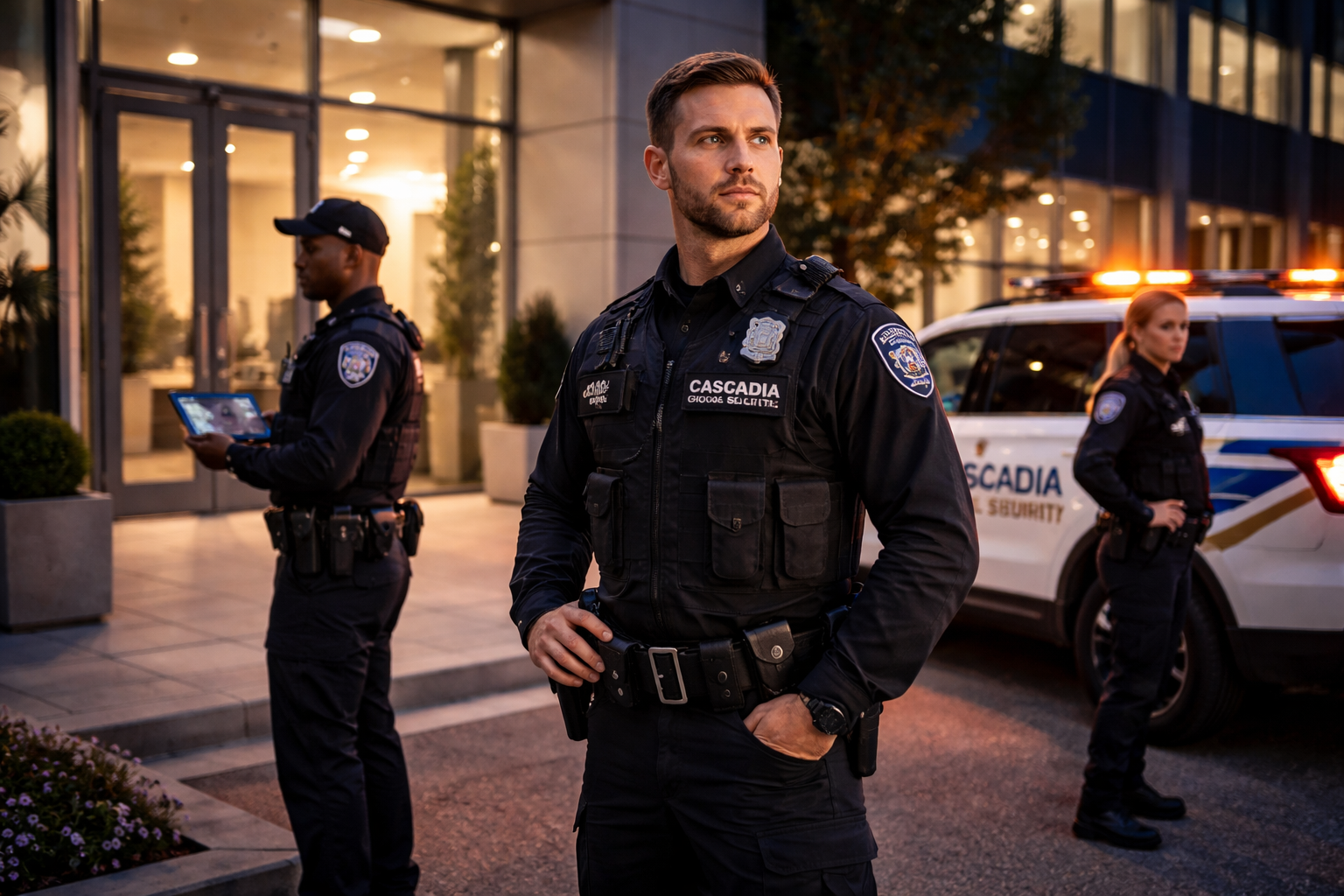
Security requirements don't always follow predictable schedules. Labor disputes, termination situations, special events, and unexpected threats create immediate needs that standard staffing cannot address. Rapid deployment capability allows businesses to scale protection within hours rather than days.
Short-term security also supports construction projects, seasonal retail peaks, and temporary facilities where permanent staffing is not economically viable. The ability to request qualified personnel on short notice provides flexibility that fixed contracts cannot match.
Disaster Recovery and Fire Watch Services
When fire suppression systems go offline for maintenance or damage, fire watch services become mandatory in many jurisdictions under local fire codes. These specialized assignments require guards trained in fire prevention, evacuation procedures, and emergency notification protocols.
Disaster recovery situations, whether from natural events, fires, or other emergencies, create security vulnerabilities during cleanup and reconstruction. Damaged facilities with compromised access controls need enhanced protection until normal operations resume.
Frequently Asked Questions
What industries does Cascadia Global Security serve?
Cascadia provides security services across corporate offices, retail locations, warehouses, distribution centers, construction sites, manufacturing facilities, and commercial properties. Their personnel receive industry-specific training to address the unique challenges each environment presents.
How quickly can security personnel be deployed for emergency situations?
Rapid deployment services enable personnel placement within hours for urgent situations such as labor disputes, security terminations, or unexpected threats. Standard staffing requests typically require 24 to 72 hours for proper vetting and briefing.
What is the difference between armed and unarmed security guards?
Armed guards carry firearms and receive additional training in weapons handling, use-of-force protocols, and enhanced liability awareness. Unarmed guards focus on access control, monitoring, and deterrence without lethal force options. The appropriate choice depends on facility type, asset value, and risk assessment.
Does Cascadia provide off-duty law enforcement officers?
Yes, off-duty and former law enforcement officers are available for assignments requiring enhanced authority and protection. These personnel bring law enforcement experience and coordination capabilities that standard security guards cannot provide.
What technology does Cascadia integrate with security services?
Services include real-time digital incident reporting, GPS tracking of patrol activities, remote camera monitoring integration, and alarm response coordination. These technologies provide accountability, documentation, and faster incident notification for clients.
Partnering with Cascadia for Long-Term Business Resilience
Security partnerships succeed when both parties commit to ongoing communication, performance measurement, and continuous improvement. The most effective arrangements involve regular site reviews, incident analysis, and protocol adjustments based on changing conditions.
Businesses that view security as a strategic investment rather than a necessary expense gain competitive advantages through reduced losses, improved employee confidence, and a protected reputation. The right security partner becomes an extension of your operations team, anticipating needs and solving problems before they escalate.
For organizations ready to evaluate their commercial security approach, Cascadia Global Security offers veteran-led professionalism and a local management structure that delivers consistent results. Their team works directly with clients to design programs that match specific facility requirements and budget parameters. Learn more about how their services can strengthen your security posture.