Retail Security Guards and Loss Prevention
Josh Harris | March 19, 2026
Combining Personnel and Technology for Effective Retail Security
Retail theft costs American businesses billions annually, a figure that continues to climb as organized retail crime becomes increasingly sophisticated. For store owners and operations managers, the question isn't whether to invest in loss prevention but how to do it effectively. Retail security guards remain the frontline defense against shrinkage, but their role has evolved far beyond simply watching for shoplifters. Today's security professionals balance customer service, technology integration, and legal compliance while protecting inventory and creating safe shopping environments. The most effective loss prevention programs combine trained personnel with strategic systems, turning security from a cost center into a profit protection investment. Understanding how these elements work together separates retailers who struggle with theft from those who minimize losses while maintaining positive customer experiences.
The Evolving Role of Security Guards in Modern Retail
Modern retail security demands professionals who can read situations, engage customers appropriately, and respond to incidents with precision. The days of intimidating guards standing silently at exits are over. Effective security personnel now serve multiple functions that directly impact both safety and sales.
Balancing Customer Service with Asset Protection
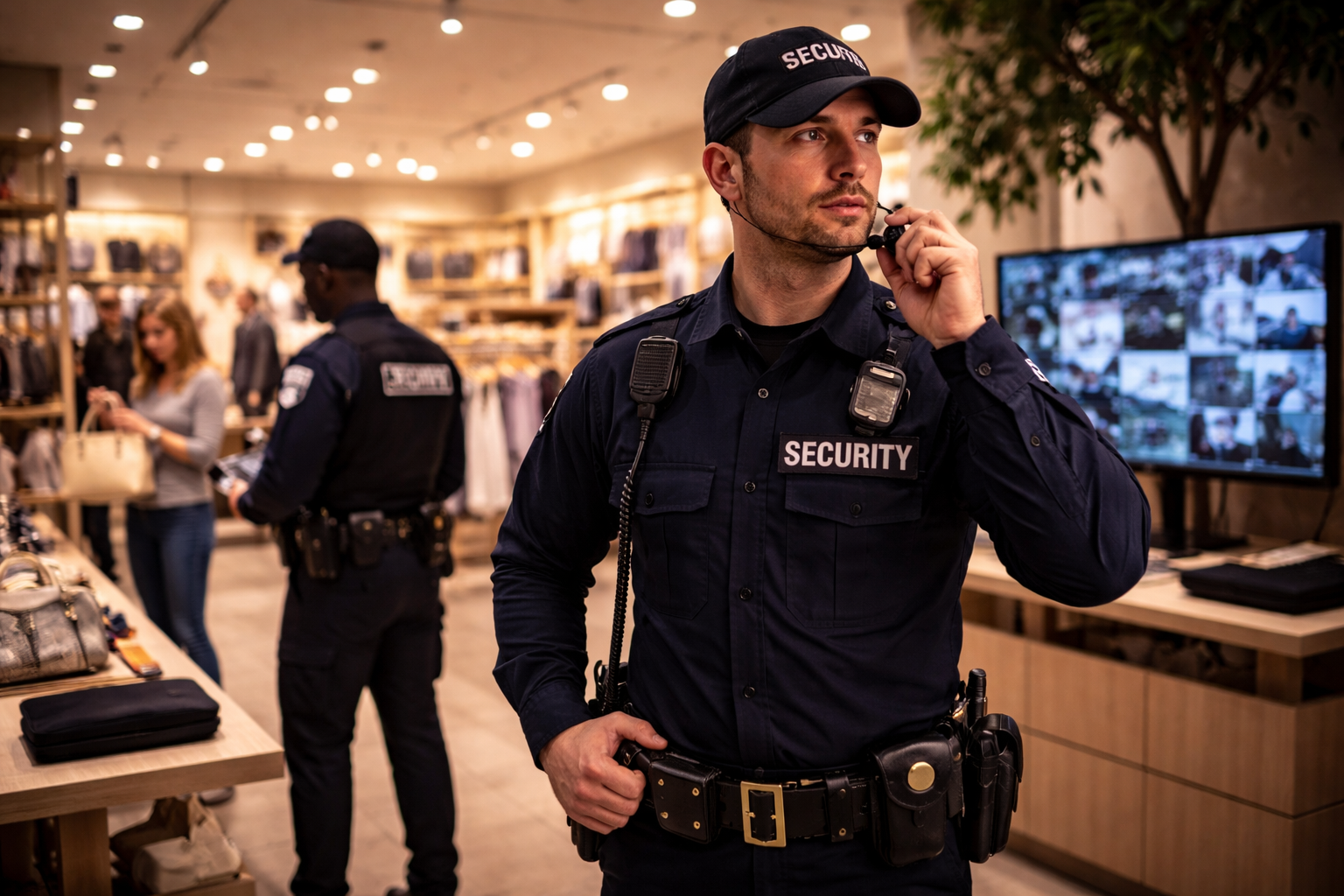
Security guards interact with every person entering a store, making them de facto brand ambassadors. A guard who greets customers warmly while maintaining vigilance creates an environment where legitimate shoppers feel welcome and potential thieves feel watched. This dual purpose requires specific training that many security providers overlook.
Cascadia Global Securitytrains personnel to engage customers naturally, offering directions or assistance while simultaneously assessing behavior patterns. This approach reduces theft without creating the hostile atmosphere that drives away paying customers.
Deterrence through Visible Presence
Studies consistently show that visible security presence reduces theft attempts by 30-40% in retail environments. Criminals prefer easy targets, and a uniformed guard signals that a store takes protection seriously. Strategic positioning matters: guards stationed near high-theft areas like electronics, cosmetics, or fitting rooms maximize their deterrent effect.
Rotating positions throughout shifts prevents predictability. Experienced thieves study guard patterns, so varying routines keep potential offenders uncertain about surveillance coverage.
Core Loss Prevention Strategies and Techniques
Effective retail security guards employ specific methodologies developed through industry experience and behavioral research. These techniques form the foundation of professional loss prevention work.
Identifying Suspicious Behavior and Shoplifting Indicators
Trained guards recognize behavioral cues that indicate potential theft. Nervous glancing toward exits, lingering in blind spots, carrying large bags or wearing bulky clothing in warm weather, and repeatedly handling merchandise without purchasing all warrant closer observation. Professional security personnel can distinguish between a cautious shopper and someone casing merchandise.
Body languagetells stories. Individuals who avoid eye contact with staff, move against normal traffic patterns, or exhibit unusual interest in security camera locations often require monitoring. Guards document these observations without making premature accusations.
Inventory Control and Internal Theft Prevention
Employee theft accounts for approximately 35% of retail shrinkage, complicating loss prevention efforts. Security guards support internal controls by monitoring employee-only areas, verifying trash removal procedures, and observing point-of-sale activities. Their presence reminds staff that accountability exists at all levels.
Effective programs include random bag checks, consistent enforcement of break policies, and monitoring of loading dock activities. Guards who build rapport with employees often receive tips about suspicious coworker behavior.
Implementing De-escalation Tactics
Confrontations in retail settings can escalate quickly, endangering staff, customers, and guards. Professional security personnel train extensively in verbal de-escalation, using calm tones, open body language, and specific phrases designed to reduce tension. The goal is always resolution without physical intervention.
When someone is caught stealing, the approach matters enormously. Guards who remain professional and offer face-saving options often recover merchandise without incident. Aggressive confrontation increases the likelihood of violence and potential lawsuits.
Integrating Human Intelligence with Security Technology
Technology amplifies human capability but cannot replace professional judgment. The most effective retail security programs combine both elements strategically.
CCTV Monitoring and Real-Time Coordination
Security cameras provide coverage that no guard can match, but footage means nothing without trained eyes watching. Guards coordinating with camera operators can track suspects across large retail spaces, communicate positions via radio, and respond to incidents before they escalate.
Modern systems allow guards to review footage immediately when incidents occur, supporting accurate reports and potential prosecution.
Cascadia Global Securitypersonnel receive training on common surveillance platforms, enabling seamless integration with existing retail technology infrastructure.
Electronic Article Surveillance (EAS) Management
Those security tags and sensors at store exits require human backup to function effectively. When alarms trigger, guards must respond quickly, professionally, and in accordance with store policy. False alarms happen frequently, so guards need protocols for checking receipts without offending innocent customers.
EAS systems also require maintenance monitoring. Guards who notice malfunctioning pedestals or improperly tagged merchandise report these issues before they create security gaps.
Legal Framework and Compliance for Retail Security
Retail security operates within strict legal boundaries that vary by state and municipality. Guards who exceed their authority expose retailers to significant liability.
Understanding Use of Force and Detention Rights
Most states allow shopkeepers' privilege, permitting brief detention of suspected shoplifters under specific conditions. Guards must witness the theft, maintain continuous observation, and have a reasonable belief that the merchandise is concealed. Detentions must occur on the premises and last only as long as necessary to conduct the investigation.
Physical force is generally limited to preventing escape or protecting safety. Guards who tackle fleeing suspects or use excessive restraint create legal exposure that far exceeds the value of recovered merchandise. Professional training emphasizes these boundaries repeatedly.
Documentation and Evidence Handling for Prosecution
Successful prosecutions require thorough documentation. Guards must record specific details: what was taken, where it was concealed, exact times, witness names, and the suspect's statements. Video evidence requires proper chain-of-custody procedures.
Many theft cases fail in court because security personnel cannot articulate their observations clearly. Written reports completed immediately after incidents provide the foundation for successful prosecution.
Measuring the ROI of Professional Security Personnel
Security represents an investment, not merely an expense. Quantifying returns requires tracking specific metrics over time.
Shrinkage Reduction and Profit Preservation
Retailers should measure shrinkage rates before and after implementing professional security programs. Industry benchmarks suggest that effective guard services reduce shrinkage by 20-35%, depending on baseline levels and implementation quality. For a retailer with $10 million in annual sales and 2% shrinkage, a 30% reduction saves $60,000 annually.
Beyond preventing direct theft, guards reduce fraudulent returns, vendor theft, and administrative errors that contribute to inventory loss.
Enhancing Brand Reputation and Shopper Safety
Customer surveys consistently show that visible security increases perceived safety, particularly in urban locations or evening hours. Shoppers who feel safe spend more time in stores and return more frequently. This indirect revenue impact, while harder to quantify, often exceeds direct loss prevention savings.
Staff retention also improves when employees feel protected. Turnover costs in retail run $4,500–$6,000 per position, so reduced anxiety among workers delivers measurable financial benefits.
Frequently Asked Questions
How many security guards does a retail store need?
Coverage requirements depend on store size, layout, operating hours, and theft history. Most retailers benefit from one guard per 8,000–12,000 square feet during peak hours, with reduced coverage during slower periods.
What qualifications should retail security guards have?
Look for guards with state-required licensing, loss-prevention training, and customer-service experience. Background checks and drug testing should be standard. Prior retail or law enforcement experience adds value.
Can security guards physically detain shoplifters?
Laws vary by state, but most jurisdictions allow brief detention when guards witness theft directly. Physical force is generally limited to preventing escape. Guards should receive specific training on local regulations.
How do security guards coordinate with local police?
Professional guards maintain relationships with local law enforcement, understanding response times and evidentiary requirements for prosecution. They prepare documentation that supports criminal charges and testify when cases proceed to court.
What's the difference between armed and unarmed retail security?
Most retail environments use unarmed guards to maintain a welcoming atmosphere. Armed security is typically reserved for high-value merchandise, cash-intensive operations, or locations with elevated crime rates.
Protecting Your Retail Investment
Effective loss prevention combines trained personnel, strategic technology, and consistent execution. Retailers who invest in professional security see measurable returns through reduced shrinkage, improved customer experience, and enhanced staff safety. For businesses seeking comprehensive protection, Cascadia Global Security offers tailored retail security programs backed by locally managed teams and veteran leadership. Contact them to discuss how professional security guards can protect your assets and support your business objectives.