Construction Site Security in Chicago: Protecting Urban Development Projects
Josh Harris | May 16, 2026
Active construction sites run on two things: schedule and margin. A theft event, a fire during the hot-work phase, or an unauthorized entry that shuts down work for a day costs money that is rarely recovered and time that almost never is. Construction site security in Chicago is not a line item you optimize away on a tight bid. It is the program that keeps your project moving when the site goes dark at the end of a shift.
The Chicago market is one of the most active urban construction environments in the country. High-rise residential and mixed-use development in the Loop, River North, and the West Loop moves enormous concentrations of equipment, materials, and copper to sites that remain physically open for months or years. That combination of high-value inventory and extended exposure creates a sustained problem of theft and vandalism that general contractors, owners, and their insurers have learned to take seriously.
Why Chicago Jobsites Are Targeted
Construction site theft is a national problem, but Chicagoland's development density, transit access, and active secondary markets for stolen equipment and materials concentrate the risk.
A few patterns drive most of the loss:
- Equipment theft. Excavators, skid steers, generators, and light towers left overnight without immobilizers, GPS tracking, or guard coverage are primary targets. The National Insurance Crime Bureau tracks specialized construction equipment theft across the country, and the data consistently identifies large metro areas with dense development activity among the hardest-hit markets.
- Material theft. Copper wire, copper pipe, and HVAC materials are stripped from sites at every phase of construction. Lumber, rebar, tools, and fuel from on-site tanks are also frequently targeted.
- Trailer intrusion. Jobsite trailers store project documents, computers, tools, and petty cash. An unprotected trailer is an open invitation for a break-in during off-hours.
- After-hours vandalism. Unfinished structures attract unauthorized entry, graffiti, and deliberate property damage, all of which create schedule impacts and insurance claims.
- Fuel theft. Diesel from generators and equipment tanks represents a recurring low-visibility loss that compounds across a long project duration.
The financial exposure goes well beyond the replacement cost of a stolen excavator or stripped wire. Equipment theft triggers police reports, insurance claims, sourcing replacements, and schedule slippage. On a phased high-rise build, even a 48-hour interruption cascades through subcontractor sequencing in ways that are expensive to unwind.
A Layered Security Model for Chicago Jobsites
No single control stops determined theft or vandalism. The job sites that hold up across long project windows build overlapping layers so that a gap in one control is caught by the next. For an active Chicago construction project, that model typically includes the following.
Perimeter, Lighting, and Signage
The perimeter is the first layer. Chain-link fencing with a secure top rail and locked access gates limits casual entry and creates a documented boundary. Adequate lighting across the site, including trailer areas, material staging zones, and equipment parks, is not optional. Dark corners produce incidents. Signage indicating active security monitoring adds deterrence and establishes the site's legal posture on trespassing.
Camera Coverage and Analytics
Fixed cameras at access points, material staging areas, trailer entries, and the perimeter fence line provide the evidentiary record that matters after an incident. Modern analytics, including license plate recognition (LPR) at vehicle access gates, turn passive camera systems into active detection tools. A camera that records everything but alerts to nothing leaves the monitoring burden on people who are not watching it at 3 a.m. Systems that generate anomaly alerts and tie to a monitored response are meaningfully different from standard recording installations.
On-Site Security Officers
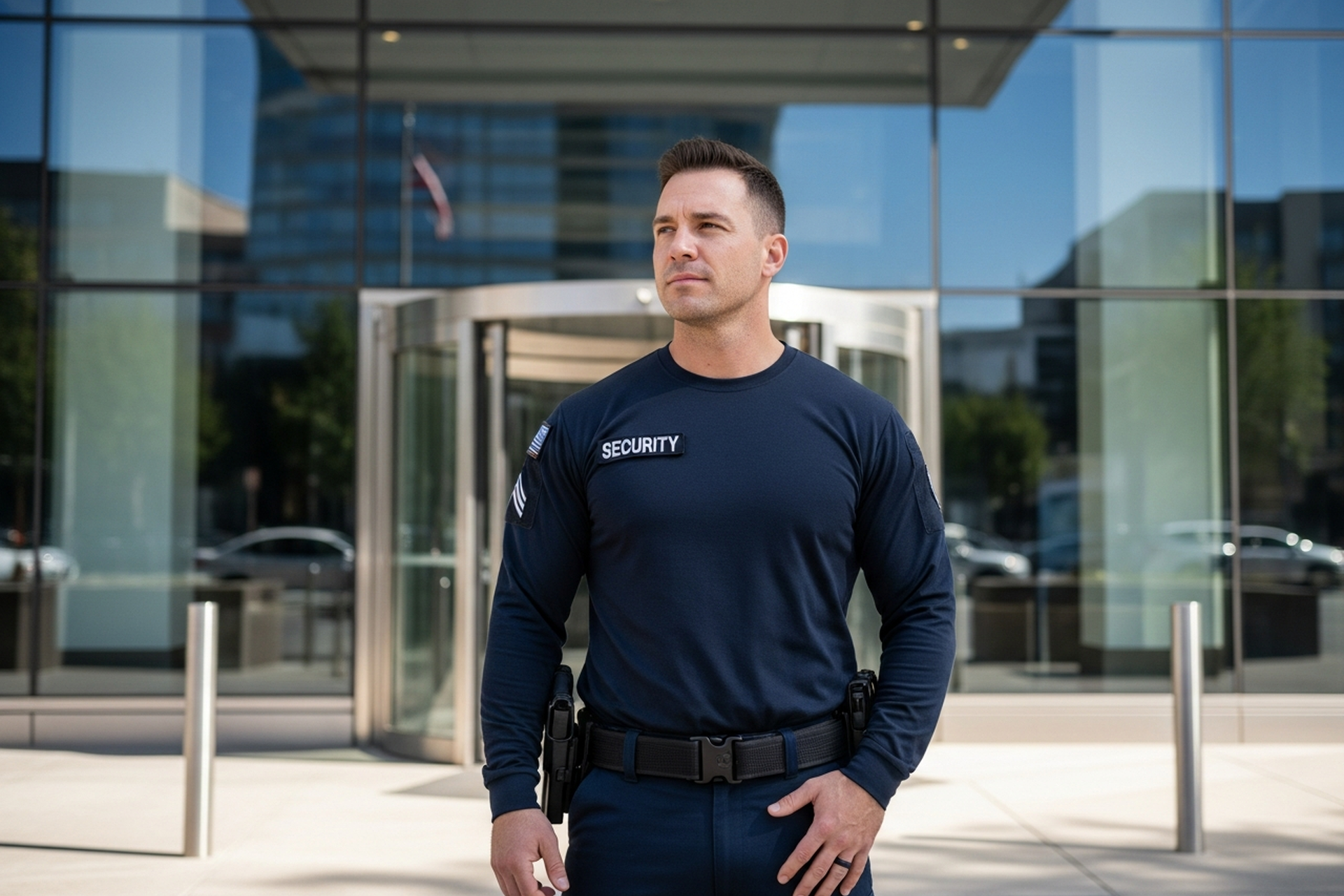
For active large-scale projects, a uniformed officer on-site during overnight and weekend hours immediately changes the threat calculus. Cascadia's unarmed guards at construction sites operate under site-specific post orders that cover access control, patrol routes, equipment checks, and incident reporting. Where a site's history or cargo value justifies elevated response capability, armed guards are an option, though the majority of Chicago construction sites operate effectively with trained, unarmed officers.
For high-risk phases, active investigations, or repeat-incident situations, off-duty law enforcement brings sworn-officer authority and deterrence that private security cannot replicate.
Mobile Patrol Coverage
Not every jobsite justifies a permanent overnight post. For smaller sites, multi-phase projects spanning blocks, or projects in transition between active construction phases, Cascadia's mobile patrols provide scheduled and randomized visits throughout the night. GPS-tracked patrol units log their routes, timestamps, and findings, giving the project team and insurer documented coverage without the cost of a full-time static post.
Mobile patrol is particularly effective for sites in River North, Fulton Market, and the West Loop, where multiple active projects sit within a few blocks of each other, and a single patrol unit can cover a cluster.
Trailer and Tool Crib Access Control
Jobsite trailers and tool cribs are high-value targets that are frequently overlooked in site security planning. A trailer with a combination padlock and no camera coverage is easier to enter than most people assume. Hardened locks, camera coverage oriented at trailer entries, and a log of who accessed the space and when close a gap that shows up repeatedly in post-incident reviews.
Technology-Extended Coverage
For large urban sites where static headcount cannot cover every area cost-effectively, drone patrols and robotic security extend coverage across difficult-to-monitor zones. Drone overflights during early morning or late evening hours provide a visibility layer that fixed cameras and ground patrols cannot match on a sprawling site footprint.
Fire Watch During the Construction Phase
Active construction introduces a fire risk not present in an occupied building. Hot work, such as welding, cutting, and grinding, creates ignition hazards. Fire suppression systems that are not yet installed or are temporarily offline during certain construction phases leave those areas unprotected.
NFPA 241, the standard for safeguarding construction, alteration, and demolition operations, establishes requirements for fire watch during construction phases. When hot work is active, or fire suppression systems are offline, a trained fire watch officer monitors for smoke and ignition, ensures suppression equipment is in place at the work area, and initiates emergency response if a fire starts.
Cascadia provides construction-phase fire watch coverage coordinated with your GC and the relevant trades. Fire watch is a code-driven requirement on most active-construction projects in Chicago, not an optional add-on. It is a topic that deserves its own planning conversation with your security and safety teams.
Coordination with the General Contractor, Subs, and CPD
Security does not operate independently of the project. An effective construction security program is integrated into the GC's management of site access, sub credentialing and tracking, and incident communication to the project owner and insurer.
Practical coordination points include:
- Access credentialing. Who is authorized on site, under what conditions, and how is that list maintained and updated as subs rotate in and out?
- Shift handoff. Security officers need a current list of authorized personnel and vehicles, any outstanding work orders that may require after-hours activity, and any recent incidents to brief them on.
- Incident reporting. A theft or vandalism incident that is logged, photographed, and reported within the same shift gives the project team, insurer, and CPD exactly what they need to act. A verbal report delivered the next morning, without documentation, is not a security program.
- CPD coordination. For sites with recurring incidents or elevated threats, documented communication with the relevant Chicago Police District is useful and sometimes expected by insurers. Cascadia's team is experienced in coordinating with local enforcement to establish appropriate notification protocols.
Illinois Licensing Baseline
Every security officer working at a Chicago construction site must comply with Illinois licensing requirements under the Private Detective, Private Alarm, Private Security, Fingerprint Vendor, and Locksmith Act of 2004, which is regulated by the Illinois Department of Financial and Professional Regulation. The essentials are a current Permanent Employee Registration Card (PERC) for unarmed officers, a Firearm Control Card (FCC), and a valid FOID for any armed personnel. The employing agency must hold an active agency license.
On a jobsite where dozens of contractors are moving through, insurance and liability questions come up fast. A licensed, documented security provider gives the GC and owner the compliance paper trail that protects the project in any post-incident review.
What to Ask a Construction Security Provider
When vetting security guard companies in Chicago for a construction project, the following questions separate operators who understand jobsite environments from generalists who will staff a post and go through the motions.
- What construction-specific post orders do you use, and how are they customized for our phase and site layout?
- How do your officers handle unauthorized entry? What is the documented protocol for calling CPD versus managing a situation?
- What does your patrol documentation look like? Can we see an example incident report from a construction site?
- How do you handle shift transitions on a multi-phase project where site conditions change weekly?
- Can you provide coverage for fire watch during hot-work phases or when suppression systems are offline?
A vendor that cannot answer those questions with specifics has probably not staffed many jobsites.
Working with Cascadia Global Security on Your Chicago Project
Cascadia Global Security supports construction site security programs across Chicagoland, from high-rise projects in the Loop to mid-rise residential development in Pilsen, Wicker Park, and the South Loop. Our Illinois-licensed officers bring site-specific post orders, documented patrol logs, and incident reporting that GCs, owners, and insurers can use.
Whether your project needs a full-time overnight post, mobile patrol coverage across multiple sites, fire watch coordination, or a layered program that combines all three, we scope the program to the project, not to a standard package.
Get a tailored proposal for your site at cascadiaglobalsecurity.com/get-a-quote, or call our team at (800) 939-1549 .
Frequently Asked Questions
What types of theft are most common on Chicago construction sites?
Equipment theft (excavators, generators, light towers), material theft (copper wire and pipe, lumber, rebar), fuel theft from on-site tanks, and trailer break-ins are the most frequently reported categories. After-hours access and vandalism are also common, particularly on projects with limited perimeter lighting and no overnight coverage.
Does a Chicago construction site need a full-time security guard overnight?
It depends on project size, phase, cargo value, and the surrounding neighborhood. Large active projects with high-value equipment and materials typically justify a static overnight post. Smaller sites or projects between active phases often operate effectively with scheduled mobile patrol visits from a GPS-tracked unit, which provides documented coverage at a lower cost than a permanent post.
What is fire watch and when is it required on a construction project?
Fire watch involves a trained officer monitoring an area for smoke and ignition during hot-work operations (welding, cutting, grinding) or during periods when a building's fire suppression system is offline. NFPA 241 establishes standards for fire watch during construction phases. Most active construction projects in Chicago require fire watch coordination during specific work periods as a code and insurance requirement.
What Illinois licenses should a construction site security officer have?
Every unarmed officer must hold a current Permanent Employee Registration Card (PERC), which requires a fingerprint background check and 20 hours of approved training. Armed officers must also hold a Firearm Control Card (FCC) and a valid Firearm Owner's Identification (FOID) card. The employing security agency must carry an active Private Security Contractor Agency license from the Illinois Department of Financial and Professional Regulation.
How does mobile patrol work for a construction site?
A GPS-tracked patrol vehicle makes scheduled and random visits to the site throughout the night or over a weekend. The officer checks perimeter fencing, access gates, trailer entry points, equipment parking areas, and any other specified zones, logs their findings in a written report, and alerts the on-call supervisor to any incident. Patrol units covering dense urban construction clusters can often provide more frequent visits than the same budget would buy from a static post at a single location.