Construction Site Theft Prevention Across the Puget Sound Region
Josh Harris | June 11, 2026
Construction theft is one of the most expensive and underreported problems in the building industry. Across the Puget Sound region, active development in Seattle, Bellevue, Tacoma, Everett, and dozens of surrounding communities has created a steady stream of high-value targets sitting in partially secured lots overnight and over weekends. When a site loses a skid steer, a trailer full of copper wire, or thousands of board feet of lumber, the financial damage reaches well beyond the replacement cost. Insurance claims, project delays, and subcontractor schedule disruptions compound quickly.
Construction theft prevention in the Puget Sound market is not a single solution. It is a layered approach that combines physical hardening, technology, staffing, documentation, and coordination with law enforcement across King County, Pierce County, and Snohomish County jurisdictions.
Why construction theft is acute across the Puget Sound region
The Puget Sound construction boom has made the region one of the most active job site environments in the country. Major projects in South Lake Union, the Eastside, and the Tacoma and Renton corridors run simultaneously, creating dozens of open perimeters at any given time. That volume attracts organized theft groups that specifically target construction sites as predictable sources of unattended high-value assets.
Several factors make Puget Sound sites particularly vulnerable. First, Pacific Northwest weather makes extended overnight exposure common. Projects run through rain and low-visibility conditions that reduce sightlines and make camera coverage less reliable without the right equipment. Second, the multi-county footprint means a stolen excavator can cross into a different jurisdiction within minutes, complicating law enforcement recovery. Third, subcontractor rotation on large commercial sites creates credential management challenges. Every new crew increases the number of people with site familiarity.
The National Insurance Crime Bureau(NICB) tracks construction equipment theft nationally and consistently identifies heavy equipment, power tools, and copper materials as top targets. Washington State sites have seen theft patterns that mirror national trends, with the added complication that recovery often requires cross-jurisdictional coordination between SPD, county sheriffs in King, Pierce, and Snohomish, and state patrol.
What gets stolen and when
Understanding theft patterns helps job site managers allocate prevention resources more precisely. The most commonly targeted items on Puget Sound construction sites include:
- Heavy and compact equipment (excavators, skid steers, mini-excavators, trenchers)
- GPS-trackable fleet vehicles left on site overnight
- Copper wire, plumbing materials, and HVAC components
- Lumber and engineered wood products, especially after major deliveries
- Fuel from machinery and generators
- Power tools left in storage containers or site trailers
- Catalytic converters on construction vehicles
Timing follows a consistent pattern. Nights and weekends account for the majority of theft incidents, particularly on sites that lack active security coverage after crews leave. Early mornings before the first shift arrives are another high-risk window, since a theft that occurred at 3 a.m. may not be discovered until 7 a.m. Sites at early and mid-construction stages are also more vulnerable than sites near completion, because perimeter controls tend to be less formalized before the building shell is closed.
Material deliveries create spikes in risk. A large lumber drop on a Thursday afternoon becomes a target Thursday night if no secure storage or overnight coverage is in place.
Layered prevention: the foundation before security staffing
Physical and procedural controls are the starting point for any effective theft prevention program. Before adding staffing, site managers should address the basics.
Site planning and perimeter control
Construction fencing should be treated as a security asset, not just a safety requirement. Chain-link perimeter fencing with privacy screening reduces the visual access thieves use to survey sites during drive-bys. Vehicle gates should be padlocked after each shift, and gate logs should capture every entry and exit. Trailer and equipment positioning matters too. High-value equipment stored near an unsecured perimeter is significantly easier to load and remove than equipment staged near the center of a site.
Lighting
Construction sites with strong perimeter lighting see fewer after-hours incidents. LED work lights mounted at entry points, equipment staging areas, and material storage zones eliminate the low-visibility conditions that make covert theft easier. Motion-activated lighting adds an additional deterrent layer, since sudden illumination disrupts the predictability thieves rely on.
GPS tracking on equipment
GPS fleet tracking has become one of the most effective tools for both deterrence and recovery. The Associated General Contractors of Washington, the leading commercial and general contracting trade association in the state, encourages member firms to deploy tracking technology on all mobile equipment as a baseline loss prevention measure. When equipment is stolen from a Puget Sound site, a live GPS signal allows law enforcement to initiate recovery before the asset crosses county lines or gets loaded onto a transport. Tracking units should be concealed and hardened against removal.
Secure storage and daily inventory
Materials and tools should be stored in locked conex containers or site trailers, not left staged in open work areas at shift end. High-value items warrant dedicated locked cages within the container. Daily inventory checks at the start and end of each shift allow site supervisors to identify missing items within hours, not days. Early discovery significantly increases the likelihood of police recovery and reduces the impact on project timelines.
The role of security staffing in construction theft prevention
Physical controls reduce exposure, but they do not eliminate it. Experienced thieves know how to defeat fencing, cut padlocks, and work around cameras. Human presence remains the most effective deterrent because it introduces unpredictability.
Overnight guard coverage
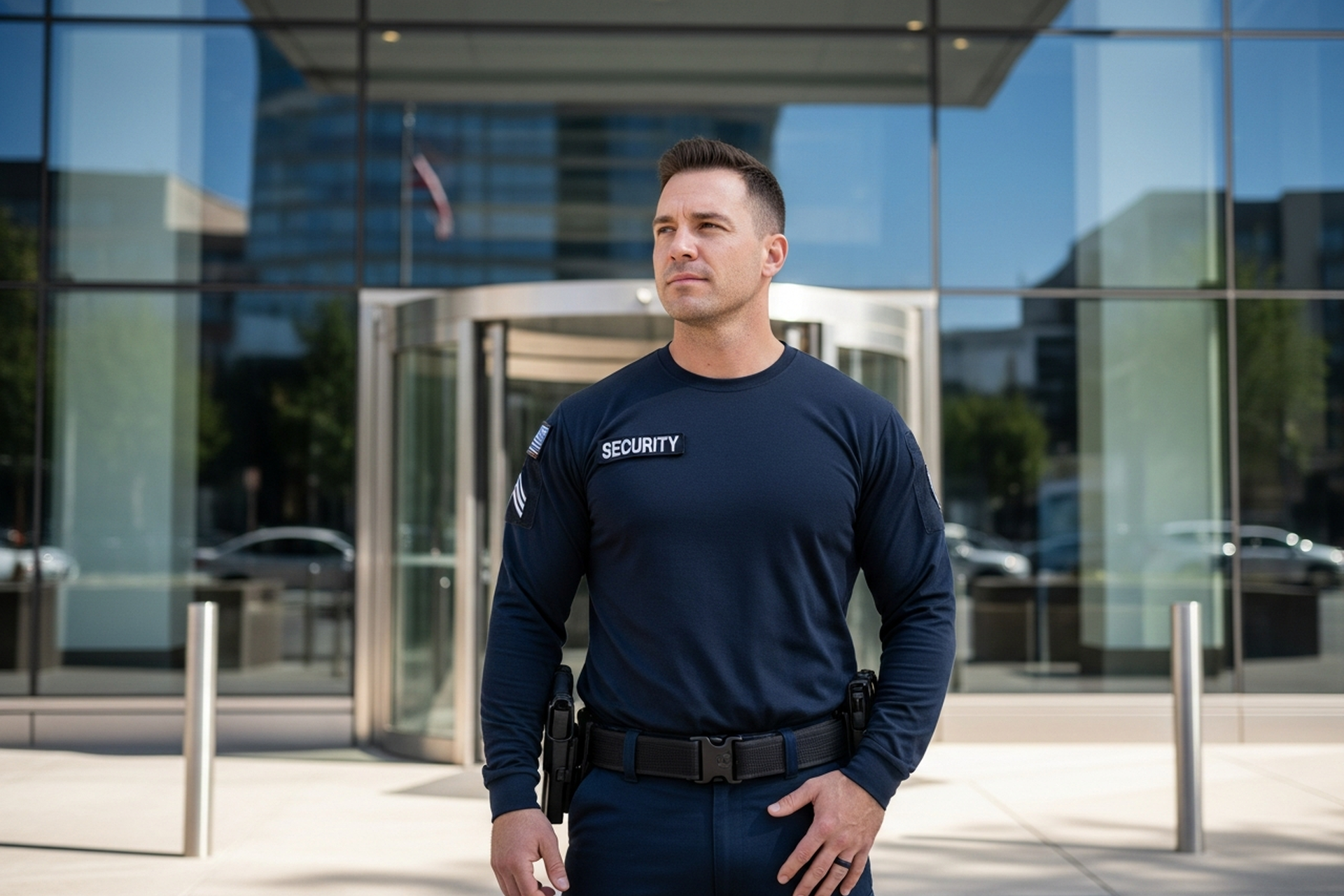
Overnight unarmed security guards provide a visible, human deterrent at a site's most vulnerable hours. A uniformed officer at the gate or conducting interior patrols changes the risk calculation for would-be thieves, who generally prefer unattended targets. For larger sites or those with a history of incidents, overnight coverage from end of shift to start of next shift closes the window completely.
Guards assigned to construction site detail should be familiar with the site layout, the names and descriptions of subcontractors' vehicles, and the locations of high-value assets. A guard who knows what belongs on a site can identify suspicious activity that cameras alone might miss.
Mobile patrol services
For sites that cannot justify a stationary overnight officer, scheduled mobile patrol visits provide documented deterrence at a fraction of the cost of full coverage. A marked patrol vehicle making multiple randomized stops at a site overnight creates uncertainty for anyone surveilling the property. Patrol officers log each visit, making those records available for insurance purposes when claims are filed.
Mobile patrols are also effective for construction firms managing multiple active sites across the Puget Sound region. A single patrol route can cover several sites in King County or the South Sound corridor during the overnight window.
Fire watch overlap
Many Puget Sound construction projects require fire watch coverage under NFPA 241 and local fire authority requirements when fire suppression systems are offline. Coordinating construction security and fire watch under the same staffing reduces administrative complexity and ensures consistent coverage. Security personnel and fire watch personnel on the same site should communicate shift handoffs clearly to avoid gaps.
Working with police across multiple jurisdictions
Puget Sound's multi-county geography means construction theft prevention requires coordination across SPD, the King County Sheriff, Pierce County Sheriff, Snohomish County Sheriff, and in some cases multiple municipal police departments simultaneously. Large sites near jurisdictional boundaries can complicate incident response and investigation.
Site managers and security teams benefit from establishing points of contact with the relevant law enforcement agencies before an incident occurs. Most sheriff's offices have commercial crime or property crime units that accept site information in advance. Providing those contacts with site addresses, equipment descriptions, serial numbers, and GPS tracking platform access gives investigators a head start if theft occurs.
Documentation habits matter. Maintaining a current equipment inventory with serial numbers, photographs, and GPS device identifiers allows claims to be filed quickly and recovery efforts to start immediately.
Insurance documentation and reporting
Construction equipment theft claims are frequently complicated by incomplete documentation. Before a theft occurs, site managers should confirm that their general liability and inland marine coverage addresses the types of equipment and materials on site. Equipment values change over the course of a project as new deliveries arrive, and coverage limits should be reviewed at project milestones.
After any incident, a police report should be filed immediately. Timely reporting gives law enforcement the best chance of recovery and protects the claim. Many insurers require a report to be filed within 24 hours. Internal incident reports, gate logs, camera footage, and guard reports should all be preserved and provided to the claims adjuster.
Cascadia Global Security works with construction project managers across the Puget Sound region to develop site-specific construction site security programs that combine guard staffing, patrol coverage, and fire watch services. Whether a project is in South Lake Union, the Eastside, Tacoma, Everett, or the Green River Valley, the approach is built around the site's specific risk profile and schedule.
Contact Cascadia Global Security at (800) 939-1549 to discuss a security program for your active job site.
Frequently Asked Questions
What types of materials are most often stolen from construction sites in the Puget Sound region?
Copper wire, lumber, and power tools are the most frequently stolen materials from construction sites across the Puget Sound region. Heavy equipment including excavators and compact track loaders is also a major target, particularly on sites without overnight staffing. Fuel theft from generators and equipment is common as well.
How does GPS tracking help with construction theft prevention?
GPS tracking allows site managers and law enforcement to locate stolen equipment in real time after a theft occurs. When a piece of tracked equipment moves outside a defined geofence, an alert is triggered, which allows police to initiate recovery before the equipment is transported out of the area. Tracking units that are concealed and hardened against removal are significantly more effective than visible units, which thieves can disable.
Do construction sites in King County, Pierce County, and Snohomish County face different theft risks?
The general categories of theft risk are consistent across counties, but jurisdictional factors vary. Sites near major interstate corridors or port access routes face higher risk because stolen equipment can be moved out of the region quickly. Coordination with the relevant county sheriff or municipal police department is important regardless of location, and establishing a site contact before an incident happens reduces response time.
What security staffing options make sense for a mid-size Puget Sound construction project?
Most mid-size projects benefit from a combination of overnight guard coverage during the highest-risk phases of construction (after major material deliveries and when MEP rough-in is in progress) and scheduled mobile patrol visits during lower-risk windows. The right staffing level depends on the site's value at risk, its location, the fencing and camera infrastructure already in place, and the project schedule.
Does construction site security also cover fire watch requirements?
Security staffing and fire watch services can overlap on construction sites where fire suppression systems are offline. A guard covering overnight security can also fulfill fire watch responsibilities if they meet the training and posting requirements established by the local authority having jurisdiction. Coordinating both functions under a single service provider simplifies scheduling and ensures consistent documentation.