DFW Distribution Center Theft and Cargo Loss Prevention
Josh Harris | May 21, 2026
Distribution center theft prevention in DFW is not a box-checking exercise. The Dallas-Fort Worth Metroplex is the third-largest big-box industrial market in North America, and that volume makes it a prime target for organized cargo theft rings, opportunistic pilferage, and insider schemes. If your facility sits on one of the region's major freight corridors, the exposure is real.
Where DFW Distribution Loss Actually Happens
Not all cargo loss looks the same. Operations leaders who focus only on perimeter breaches miss the majority of shrink events. Loss at DFW warehouse and distribution facilities typically occurs across five distinct categories.
Yard intrusion. Criminals drive onto unfenced or lightly fenced lots, hook up to loaded trailers, and pull out before anyone notices. This is especially common in facilities with high trailer counts and inconsistent lot checks.
Dock pilferage. Cartons go missing during receiving and outbound loading. The dock is the most chaotic point in any distribution operation, and carton-level theft is easy to mask in the noise of a shift change.
Trailer, Insider, and Infrastructure Threats
Cargo theft from trailers. Sealed trailers parked overnight or over the weekend are targeted by teams that cut seals, remove product, and reseal them with counterfeit seals. Industry data from CargoNet, the cargo theft research and recovery network, consistently identifies in-transit and at-rest trailer theft as the dominant loss vector for freight moving through major logistics hubs.
Insider theft. Employees, contractors, and temp workers with access to product, seals, or inventory systems represent a significant and often underestimated risk. Insider events are typically larger in dollar value than opportunistic pilferage and harder to detect without deliberate controls.
Copper and electrical theft. Transformer yards, exterior HVAC units, and dock door wiring are frequently targeted at facilities with poor perimeter lighting or infrequent patrol coverage. This category causes both direct replacement costs and extended operational downtime.
Why DFW Logistics Geography Concentrates Risk
The freight corridors threading through the Metroplex put an enormous volume of cargo within reach of organized theft groups. Interstate 20 and Interstate 30 run east-west through the southern industrial core. Interstate 35E and Interstate 35W split north-south through the heart of the distribution belt. Interstate 45 connects the southeast industrial corridors toward Houston.
The Hutchins and Duncanville industrial zones along I-20/I-45 experience particularly high trailer-theft activity. The Alliance corridor in north Fort Worth concentrates high-value consumer goods and medical supply chains moving through inland port facilities. The sheer density of trailers staged at DFW facilities on any given weekend creates an environment where theft groups can operate with a lower risk of detection than in smaller markets.
This geography does not make theft inevitable, but it does mean that passive security postures, relying on fence lines and cameras alone, leave significant gaps that experienced theft teams know how to exploit.
Distribution Center Theft Prevention: Perimeter, Dock, Yard, and Seals
No single control prevents distribution center loss. Effective programs stack controls so that defeating one layer does not defeat the program.
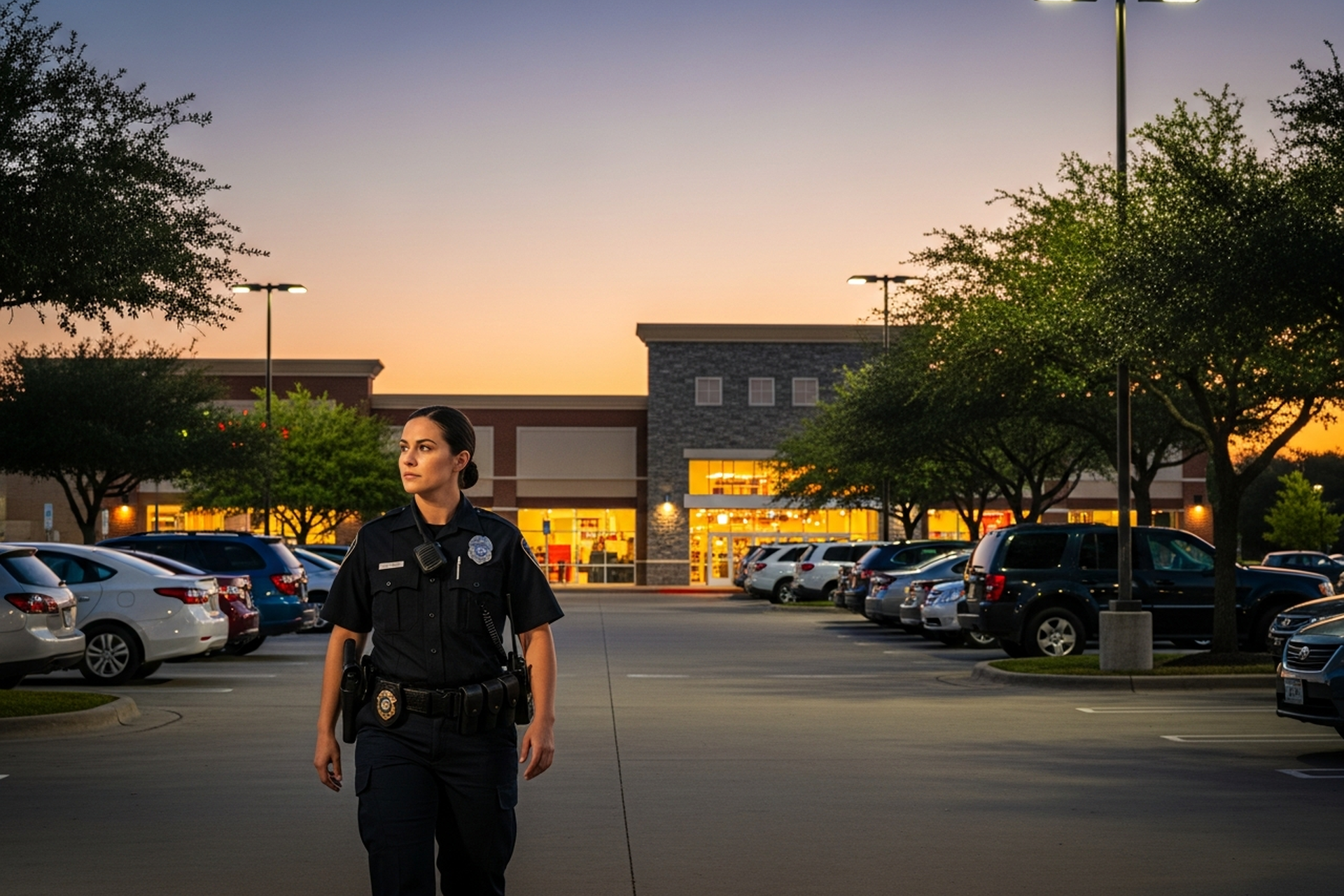
Perimeter control starts with access points that are actively managed, not just gated. Stationing unarmed security officers at entry points ensures credentials are verified, vendor and contractor arrivals are logged, and a visible deterrent replaces what passive gates cannot provide.
Yard management requires regular lot checks to account for every trailer, document seal numbers, and flag any unit that is improperly positioned or shows signs of tampering. Large yards are covered more efficiently with mobile patrol units than stationary posts, and documented visit logs support insurance claims and internal investigations.
Dock, Seal, and Surveillance Controls
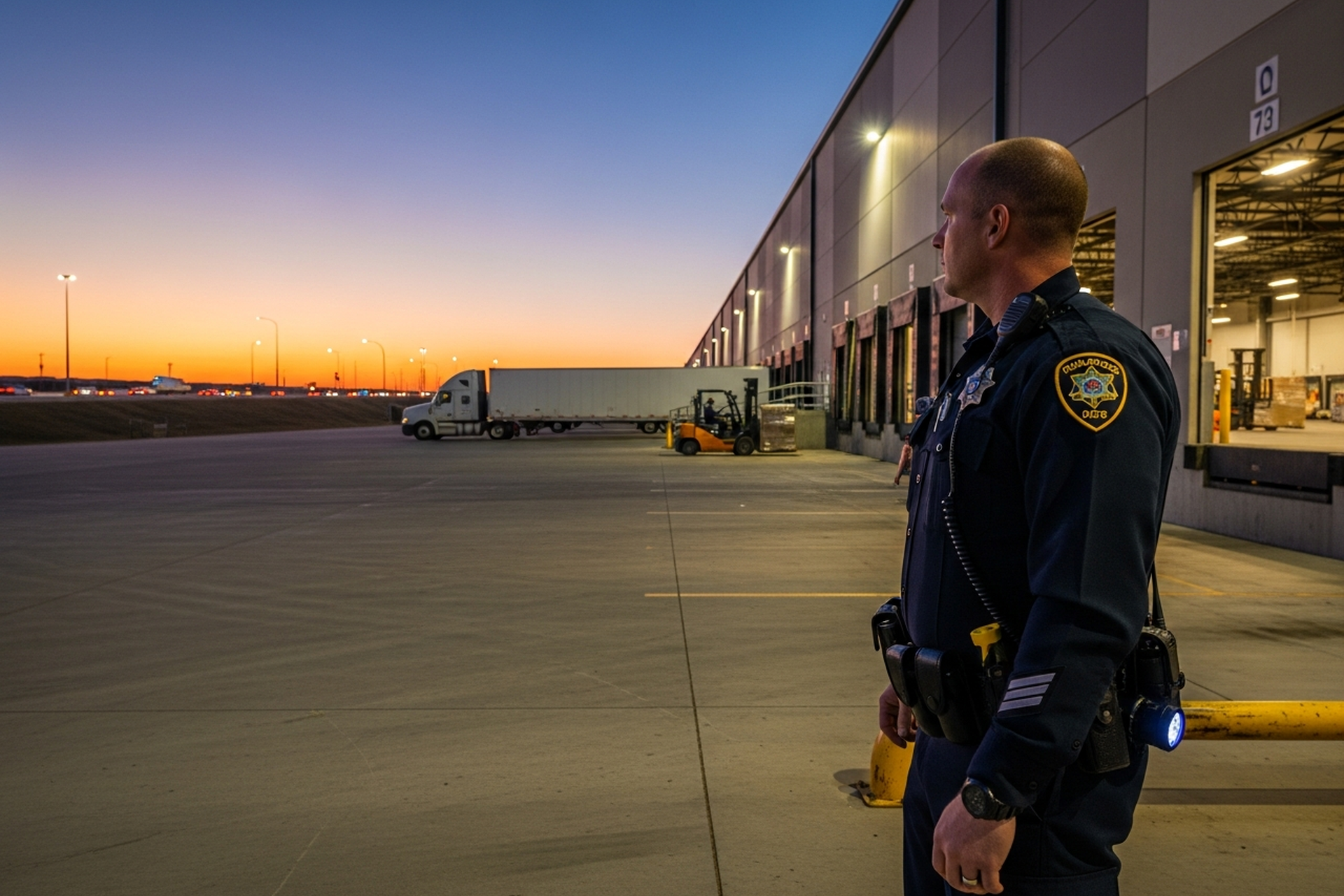
Dock monitoring pairs an officer presence during active loading and receiving windows with a structured handoff protocol at shift changes. This closes the window when dock pilferage is easiest to commit.
Seal verification is the control most facilities implement inconsistently. Every outbound trailer should have its seal number documented by security at closing, cross-referenced against the bill of lading, and confirmed again at the gate before departure. Any mismatch stops the trailer.
Surveillance integration ties camera feeds to patrol schedules so that officers respond to alerts rather than performing random checks. Facilities that integrate camera coverage with active patrol see faster incident response and better evidence quality when events do occur.
Armed Coverage for High-Value Freight
For facilities managing exceptionally high-value freight, armed security officers stationed at key control points add a meaningful deterrent layer against confrontational theft attempts.
What Good DFW Distribution Security Partners Do Differently
The difference between a vendor and a genuine security partner shows up in program design, not marketing language. Here is what separates effective providers.
- They conduct a site-specific risk assessment before quoting. A provider that quotes without walking the yard, reviewing access point layouts, and asking about freight mix is selling headcount, not a program.
- They write post orders that reflect your operation. Generic post orders produce inconsistent officer behavior. Site-specific instructions for dock procedures, trailer logging, and escalation paths drive consistent execution.
- They staff for shift transitions. Most incidents occur during handoffs. Good providers build overlap into shift schedules rather than leaving coverage gaps at the highest-risk moments.
- They provide documented patrol reports. Shift logs, trailer seal verification records, and incident reports give your loss prevention team the data to identify patterns before they become recurring events.
Some DFW distribution centers deploy off-duty law enforcement officers for high-value freight windows or weekend lot coverage. Their statutory authority can be meaningful at facilities that have experienced confrontational incidents.
Insider Risk and Access Control
Insider theft is the category most operations leaders are reluctant to discuss, but it is the one most amenable to structural controls. The goal is not to treat employees as suspects; it is to build systems in which theft is difficult, regardless of who attempts it.
Credential management is the foundation. Every person entering the secure freight area should have a documented, time-limited reason to be there. Contractor and temp worker access should be revoked promptly upon assignment completion. The Texas Department of Public Safety Private Security Bureau licenses security officers operating in Texas, and reputable providers ensure personnel pass background checks appropriate to the access level required.
Separation of duties on seal issuance prevents any single employee from controlling both the seal record and outbound verification. When two people must sign off, collusion becomes necessary, which significantly raises the risk for anyone considering it.
Outbound Load Verification
Randomized secondary checks on outbound loads, conducted by security rather than the dock team that loaded the trailer, introduce unpredictability that deters opportunistic schemes without creating an adversarial environment.
What This Means for Your DFW Distribution Operation
DFW's position as a national logistics hub is a business advantage, but it puts your facility in the same geography where organized cargo theft groups actively work. A layered security program tailored to your freight mix, shift schedule, and access point layout can materially reduce shrink without disrupting operations.
The starting point is an honest assessment of where current controls have gaps. Yard lot-check frequency, dock handoff procedures, seal verification consistency, and access credential management are areas where most DFW distribution centers have room to tighten. A qualified security partner identifies those gaps and builds a program that addresses them systematically.
Cascadia Global Security provides security services built for the scale and complexity of DFW warehouse and distribution operations. Programs are designed for your site, not borrowed from a template.
Frequently Asked Questions
How much does distribution center security cost in DFW?
Cost depends on facility size, freight value, shift coverage requirements, and whether you need static posts, mobile patrols, or a combination. A single-shift operation with basic yard coverage costs significantly less than a multi-shift, multi-dock facility requiring armed coverage and seal verification. The right starting point is a site assessment so the provider can scope coverage accurately rather than quoting a generic package.
What is the difference between yard patrol and dock monitoring?
Yard patrol covers the exterior lot: regular lot checks, seal verification on staged trailers, and documentation of trailer positions and any unauthorized vehicles. Dock monitoring covers the active loading and receiving bays during operational hours. Both are necessary.
Facilities that run dock monitoring without yard patrol leave staged trailers exposed overnight. Facilities that run yard patrol without dock monitoring leave the highest-activity theft window unaddressed.
How do security officers verify outbound trailer seals?
Officers confirm the seal number on the trailer matches the bill of lading, visually inspect the seal for tool marks, improper seating, or mismatched manufacturer codes, and log the verified number in the shift record before the trailer exits. Any discrepancy stops the trailer and triggers a documentation and notification protocol before the load departs.
Can security teams prevent insider theft at distribution centers?
Security officers are one layer in an insider theft prevention program, not the whole program. Their contribution includes access control enforcement, visitor escort, and randomized secondary load checks. They work alongside credential management, separation of duties on seal documentation, and background screening. No single control eliminates insider risk, but together, structural controls and a security presence make schemes significantly harder to execute without detection.
How quickly can a DFW distribution security program start?
Timelines depend on post volume, officer licensing requirements under Texas regulations, and site-specific onboarding for post orders and facility orientation. For standard static and patrol programs, a well-resourced provider can typically mobilize within two to four weeks of a signed agreement. Emergency or temporary coverage for a specific event, seasonal surge, or incident response can often be initiated more quickly through temporary and emergency security deployment. If your facility has an immediate exposure, that should be part of the initial conversation with any provider you evaluate.
Protect Your DFW Distribution Operation
Cargo loss is a solvable problem. The facilities that control it best spend on the right layers, in the right sequence, with providers who understand the DFW logistics environment.
Cascadia Global Security is a veteran-owned firm providing distribution center and warehouse security across the DFW Metroplex. We build programs around your operation, your freight mix, and your exposure, not off-the-shelf guard packages.
Request a site assessment and custom quote or call us directly at (800) 939-1549. We will walk your facility, identify the gaps, and build a program that matches your risk profile and budget.