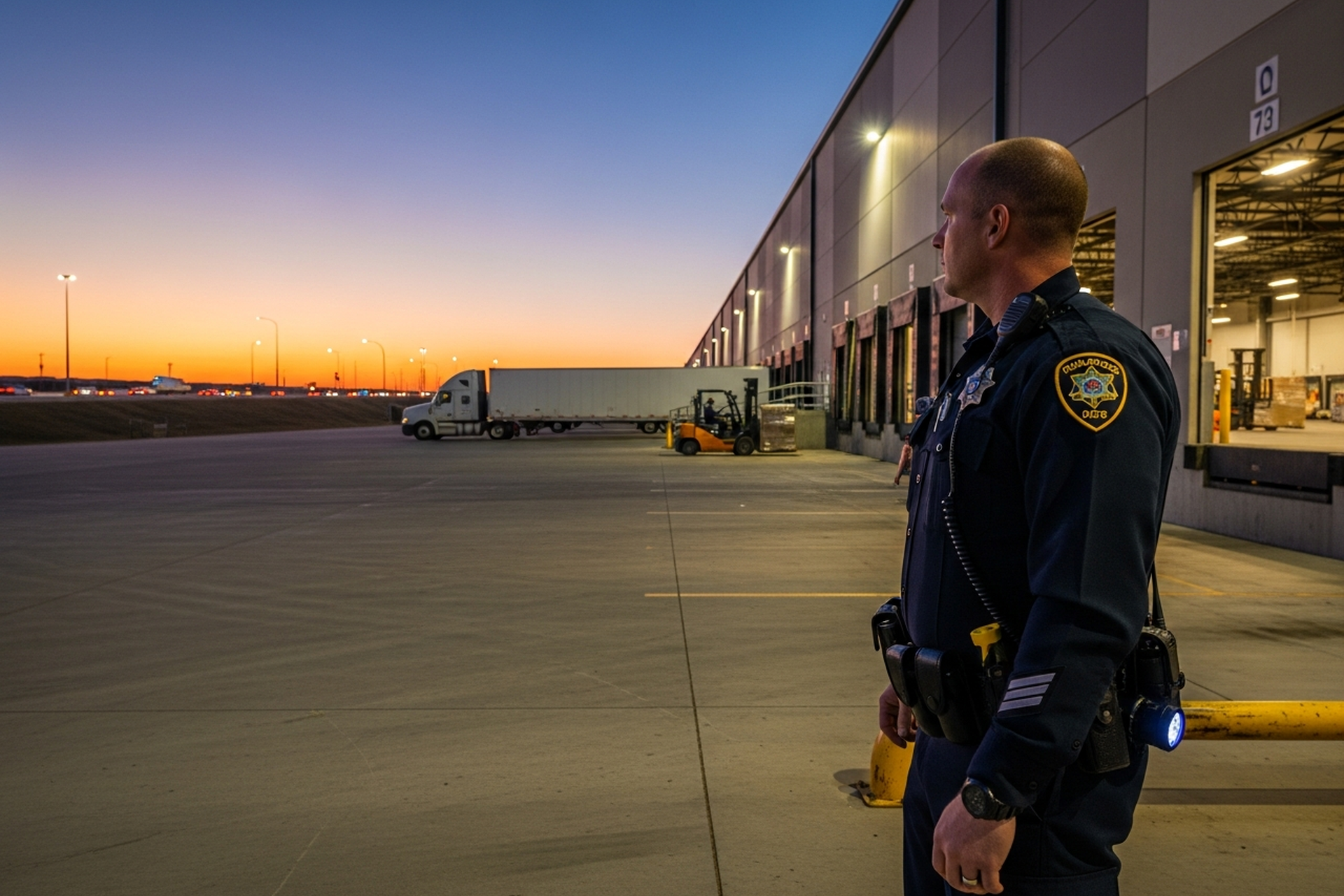
DFW Retail and Parking Lot Security: Integrated Strategies
Josh Harris | May 21, 2026
DFW retail security is no longer a problem you solve at the front door alone. The shoplifter walking the aisles and the catalytic-converter crew working the back row of the parking lot are part of the same threat picture, and treating them as separate problems is one of the most common mistakes shopping center managers and big-box operators make in the Dallas-Fort Worth market. A program that protects inventory but ignores the lot, or vice versa, leaves the property half-covered. This guide walks through what an integrated retail-and-parking strategy looks like across DFW.
Why DFW Retail and Parking Environments Share One Threat Profile
Shopping centers, lifestyle developments, and standalone big-box stores across DFW share a common physical pattern: a high-foot-traffic interior wrapped by a high-vehicle-traffic exterior, both operating under one property manager. Power centers in Frisco, lifestyle properties in Plano and Southlake, regional malls like NorthPark and Stonebriar, and grocery-anchored centers across Arlington, Irving, and Garland all share that template, and the threats inside and outside the building are not independent.
Organized retail crime crews scout from the lot before they enter. Booster groups stage vehicles in low-visibility corners while members work the store. Vehicle break-ins concentrate in the same evening windows when cashiers are managing peak transaction volume and have the least bandwidth to watch entrances. The parking lot is the staging ground, the getaway zone, and a primary loss surface in its own right. Property and larceny-theft trends across the metro can be tracked through the FBI Crime Data Explorer , which retail security teams use alongside their own incident logs to calibrate coverage by submarket.
Tenants feel both sides. A retailer experiencing rising shrink rarely separates store losses from parking complaints at lease renewal. Both shape whether customers want to shop there and whether tenants want to stay.
Inside-the-Store Strategies
The interior of a DFW retail location relies on three layers working together: visible deterrence, trained behavioral awareness, and clear de-escalation protocols. Each layer fails the moment one of the others is missing.
Visible deterrence at tier-1 entrances. A uniformed officer at the primary entrance during peak hours sets the tone for the entire visit. The job is presence: a clearly identifiable security professional in a branded uniform who acknowledges customers, monitors the entry zone, and signals to anyone planning to commit theft that the location is staffed and attentive. For most DFW retail tenants, unarmed guards handle this role effectively. Stores carrying high-value merchandise or operating in higher-risk submarkets may layer in armed guards for specific shifts.
ORC awareness training. Organized retail crime is not opportunistic shoplifting, and store-level staff who treat it that way will lose. Crews use spotters, communicate by phone, target specific high-resale categories (laundry detergent, baby formula, designer apparel, fragrance, OTC pharmacy), and rotate across multiple stores in a single day. The National Retail Federation tracks ORC trends through NRF Retail Safety and Security Resources, including the annual Impact of Retail Theft and Violence reporting that retail security teams use to recalibrate response. Officers and store managers working DFW locations need pattern recognition for staging behavior, multi-cart loadouts, and brief lingering near exits that often precedes a coordinated push-out.
De-escalation protocols. The most expensive shoplifting incidents are not the ones where merchandise leaves the store. They are the ones that turn into staff or customer injuries because untrained employees confronted a thief. A clear store policy draws a hard line: officers observe, document, and engage in accordance with written procedure. Employees do not pursue. Confrontations that escalate to violence drive workers' comp claims, PR damage, and tenant complaints.
Parking Lot Strategies
The lot is the part of the property most retailers underinvest in, and it is where the threat profile has shifted most aggressively over the past several years across DFW. Auto burglary, catalytic converter theft, and tailgate-and-tow incidents on pickup trucks are the dominant patterns, with vehicle theft itself concentrating in specific submarkets.
Lighting per IES standards. Parking facility lighting is a published engineering standard, not a guess. The Illuminating Engineering Society's recommended practice for roadway and parking facility lighting defines minimum illuminance levels, uniformity ratios, and glare control for both surface lots and structures. A lot that meets these specifications materially reduces the conditions opportunistic crime relies on. A lot with dark corners, burned-out fixtures, or non-uniform coverage signals to anyone scouting the property that low-risk concealment is available.
Camera coverage that matches lot geometry. Cameras need to cover entry and exit drive lanes, cart corrals (where break-in scouts often loiter), the rear and side rows of high-resale-vehicle parking, and pedestrian transit zones. Coverage limited to the storefront face leaves the back of the lot, where most vehicle crime concentrates, blind.
Mobile patrol cadence. A standing officer cannot cover a large surface lot, and a static camera cannot intervene. Vehicle-based mobile patrols bridge that gap. Marked-vehicle patrols with documented stops, GPS-verified passes, and randomized cadence make the lot a verifiably hard target without the cost of a dedicated post. For DFW retail centers in suburban submarkets, that pattern of unpredictable patrol passes is what consistently moves vehicle break-in numbers.
Targeted hardening on vehicle break-ins. Signage advising customers to remove visible valuables, reinforced patrol presence during high-risk windows (late afternoon through closing), and coordination with tenants on customer communication reduce break-in volume. This is also where coordination with parking facilities operations most affects outcomes.
Coordinating Store and Lot Programs Under One Provider
The biggest operational gain available to most DFW retail properties is also the simplest: run the inside-the-store and parking-lot programs through the same security provider. Splitting them across two vendors creates communication gaps that the threats themselves do not respect.
A unified program means shared radio comms between in-store and patrol, integrated post orders that cover both zones, single-channel incident reporting, and a single accountable point of contact for the property manager. When an in-store officer spots a known booster crew, the patrol vehicle can be looking for the staging vehicle within seconds. When the patrol officer observes loitering near a loading area, the in-store team is alerted before goods walk out the back.
A property manager running a retail security program for a multi-tenant DFW property usually has enough variability across tenant requirements to justify a single provider that can scale armed and unarmed staffing, mobile patrol, and after-hours coverage from one operations center. The same is true for mixed-use developments where the lot also serves multifamily housing or hotel tenants and the threat profile extends beyond retail hours.
Loss Prevention Partnership With Local Law Enforcement
Local law enforcement is a partner, not a substitute for on-site coverage. DFW police agencies generally welcome retail security teams that thoroughly document incidents, identify ORC patterns, and provide investigators with usable evidence. A property whose security team produces clean incident reports, time-stamped video, and license plate captures gets faster investigative response on the cases that matter.
For high-value or high-frequency operations, off-duty law enforcement sworn officers add a level of presence and authority that complements the contract security program. Off-duty deputies and officers carry full police authority, can directly process ORC arrests, and shorten the chain between observation and prosecution. Many DFW retail centers run a hybrid model: contract officers covering the standard footprint, with off-duty law enforcement layered in during peak season, special events, or known high-risk windows.
What This Means for Your DFW Retail Property
The properties holding tenants and protecting margin in DFW are running an integrated program: a visible in-store officer presence backed by ORC-aware staff training, a parking lot covered by IES-compliant lighting, and a patrol cadence customers can see, all coordinated through one provider with clean reporting and an active relationship with local law enforcement. The properties losing on shrink and seeing tenant churn typically have one or two of those pieces and assume the rest will hold.
Your decision is rarely whether to invest. Tenants demand it, insurance carriers expect it, and the threat environment will not give you a quiet quarter to delay. The decision is whether your program is integrated end-to-end across store and lot, or whether it is a patchwork that the next ORC crew or auto-burglary ring will read in five minutes from the parking lot.
Frequently Asked Questions
What does a DFW retail security program typically cost?
Costs vary based on store footprint, lot size, hours of coverage, armed-versus-unarmed mix, and whether mobile patrol is layered in. Unarmed officer programs for a single DFW retail location typically run in the $20- $28 per-hour range per officer, with armed posts and off-duty law enforcement priced higher. A combined store-plus-lot program for a multi-tenant center is priced per site. Contact Cascadia at (800) 939-1549 for a site-specific estimate.
When should a retail property add mobile patrol to its program?
Mobile patrol becomes a strong fit when the lot footprint exceeds what a stationed officer can cover, when after-hours coverage is required but does not justify a full overnight post, or when the property has documented vehicle-crime incidents in specific zones of the lot. Many DFW centers run a stationed in-store officer during operating hours and transition to mobile patrol for the overnight window.
How do you mitigate organized retail crime in a Dallas-Fort Worth store?
ORC mitigation starts with trained officers who recognize staging behavior, policies that direct employees to observe and document rather than confront, integrated comms between in-store officers and parking-lot patrol, and clean incident documentation that supports law-enforcement investigation. High-risk categories may also justify locked-case protocols, receipt-checking at the exit, and shift coverage during the windows ORC crews historically prefer.
How do you scale retail security for peak shopping seasons?
Holiday and back-to-school windows require schedule density that does not match the rest of the year. Most DFW properties scale by adding officer hours during peak periods, layering in off-duty law enforcement on the highest-traffic days, and increasing patrol frequency throughout the lot during evening hours. A provider with reserve staffing capacity is essential because peak-season demand spikes simultaneously across the market.
Do parking lots need security coverage during evening hours specifically?
Yes. Vehicle break-ins, catalytic converter theft, and assault risk concentrate in the late-afternoon-through-closing window, when lot activity peaks and natural surveillance from in-store traffic begins to thin. A patrol cadence that increases visibility during those hours, paired with IES-compliant lighting, reduces incident volume.
Get a DFW Retail Security Quote
Cascadia Global Security runs integrated retail and parking lot programs across DFW, from single-store locations to multi-tenant shopping centers. Officers are licensed through Texas DPS, trained on ORC pattern recognition, and supported by mobile patrol, off-duty law enforcement, and 24/7 operations oversight. Call (800) 939-1549 or request a quote for a site-specific program.