Magnificent Mile Retail Security: Premier Shopping Corridor
Josh Harris | June 14, 2026
The stretch of North Michigan Avenue from the Chicago River to Oak Street draws tens of millions of visitors every year. Flagship stores, five-star hotels, and upscale dining line both sides of the boulevard for thirteen city blocks, making the Magnificent Mile one of the most productive retail corridors in the country. That same density of foot traffic, tourist concentration, and high-value merchandise creates a security environment unlike anything found in a standard shopping center. Magnificent Mile retail security is not a single tactic; it is a coordinated, layered system that must account for threats ranging from smash-and-grab events to everyday shoplifting to the specific vulnerabilities that come with serving a tourist-heavy customer base.
What Makes the Mag Mile Corridor Different
The Chicago retail market is large and varied, but the Magnificent Mile operates under a distinct set of conditions that drive every security decision.
Foot traffic volume is exceptional, and a significant portion of it is transient. Tourists unfamiliar with their surroundings are statistically more likely to be targeted by pickpockets and distraction-based scam teams that operate in high-density corridors worldwide. A visitor carrying shopping bags, pausing to take photos, and navigating an unfamiliar city is a different kind of customer than a local regular who knows the store, knows the staff, and keeps an eye on their belongings.
Merchandise concentration is also unusually high. A single floor of a luxury goods flagship may hold more retail inventory value than an entire strip mall. Watches, jewelry, electronics, and limited-edition sneakers or streetwear are attractive to organized retail crime (ORC) groups precisely because they are portable, resalable, and densely stocked in locations with predictable hours and high public traffic.
The corridor also experiences seasonal and event-driven surges. Holiday weekends, major conventions at McCormick Place, and the annual Magnificent Mile Lights Festival bring spikes in foot traffic that compress staffing decisions and increase exposure. Security programs that are calibrated for average Tuesday conditions will be underprepared for a Saturday in November.
The Threat Landscape for Mag Mile Retailers
Understanding the specific threats that face this corridor shapes every staffing and technology decision.
Organized retail crime. ORC is the most significant financial threat for luxury and mid-tier flagships alike. Groups executing coordinated theft operate with speed and pre-planning: they enter, target high-value items, and exit before staff can respond. Smash-and-grab tactics targeting display cases, multiple-person diversion schemes, and mass-entry events have been documented across Illinois in recent years. Illinois has strengthened its organized retail crime statutes to address these patterns, and retailers on the corridor coordinate closely with law enforcement when incidents occur.
The National Retail Federation tracks organized retail crime as one of the most persistent and costly challenges facing the industry, with research showing ORC groups are increasingly sophisticated in their selection of targets and timing.
Tourist-targeted theft. Pickpocketing, bag-snatching, and distraction-based theft concentrate wherever tourists concentrate. Crowded sidewalks near Water Tower Place, the Apple Store, and the Millennium Park entry point create conditions in which a skilled street thief can operate without attracting attention. Retailers with outdoor or semi-outdoor sales areas face particular exposure.
After-hours break-ins. Glass storefronts and ground-level displays are the physical vulnerability for overnight periods. After-hours entry attempts targeting display cases and electronics have occurred across the corridor. Window film, reinforced storefront glazing, and monitored alarm systems with fast alarm response are the primary countermeasures.
Employee theft. High-value retail environments with significant inventory turnover are also exposed to internal theft. ELT (employee-linked theft) often goes undetected longer than shoplifting because it exploits trust and access. Inventory controls, point-of-sale exception reporting, and plainclothes LP observation are the standard tools for addressing this exposure.
Civil unrest and crowd events. The corridor's central location in the city means that large civic gatherings, protests, or unplanned crowd events can affect operations. Most flagship retailers have contingency protocols for rapid storefront protection, including collapsible security grilles and pre-positioned staffing for escalation scenarios.
A Layered Security Model for the Corridor
Effective retail loss prevention on the Magnificent Mile is not a single officer at the door. It is a combination of people, technology, and operational controls that work together.
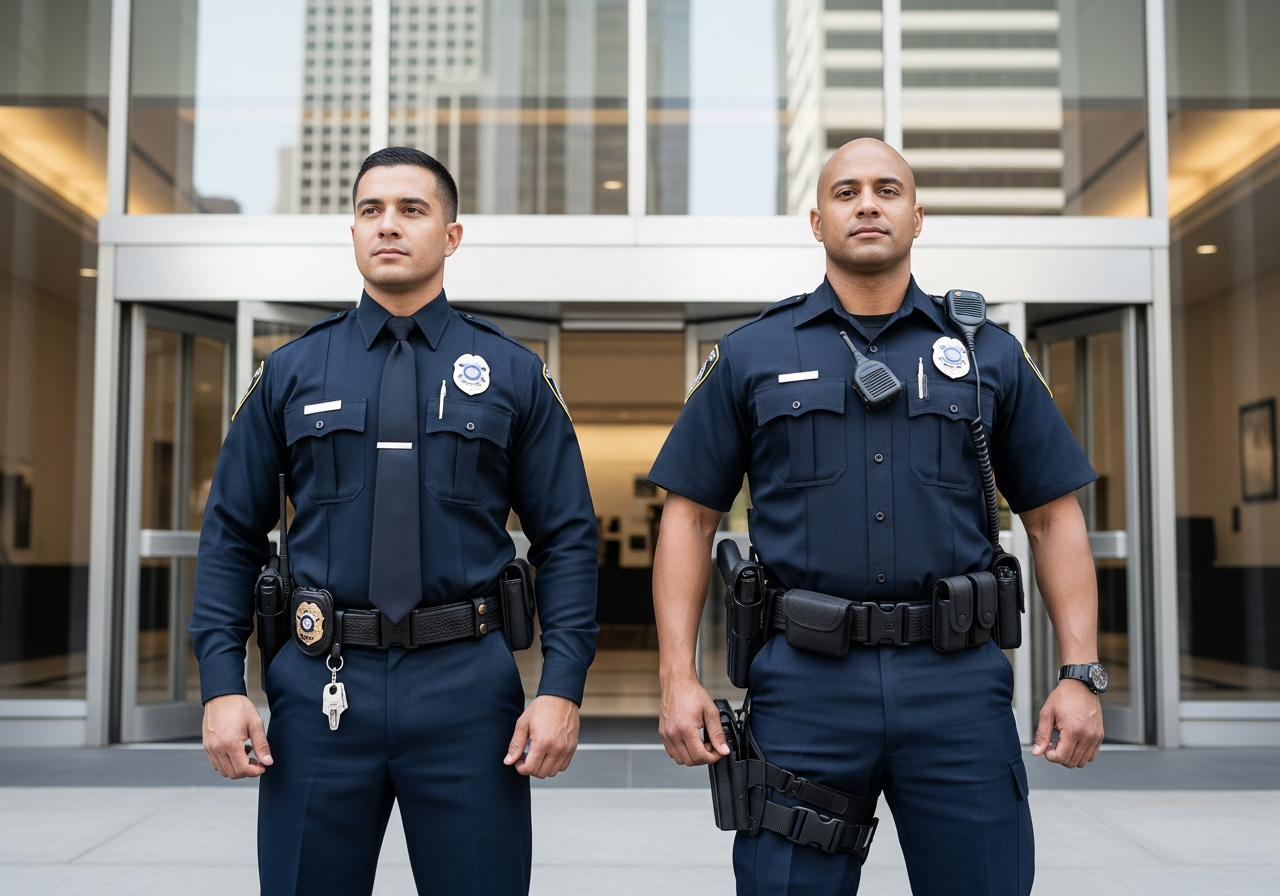
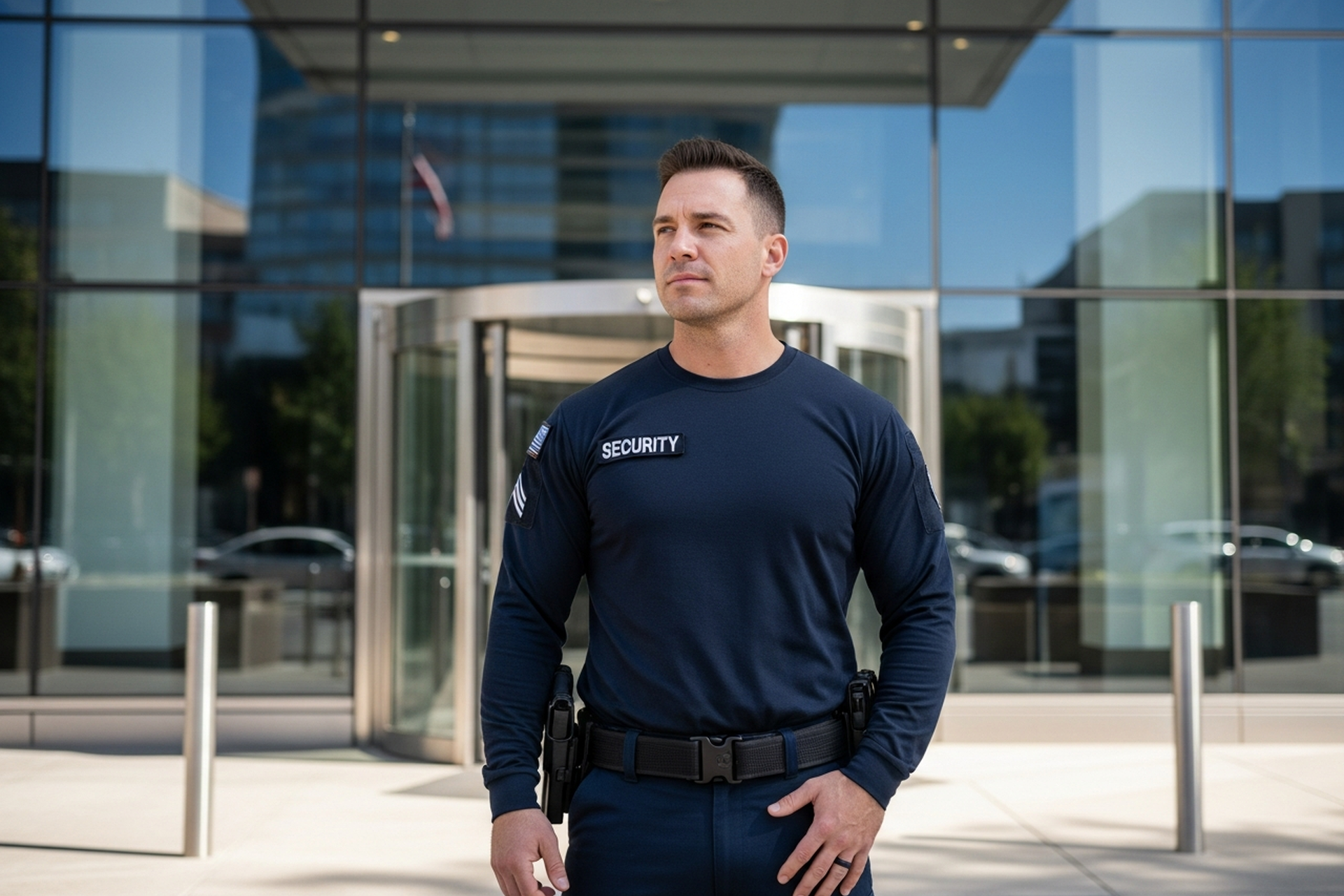
Visible deterrence at entry. A uniformed, unarmed guard positioned at or near the entrance serves multiple purposes simultaneously: deterrence to opportunistic shoplifters, a customer service touchpoint for tourists who need directions, and a trained observer monitoring ingress for known ORC indicators. Luxury brands often choose a customer-facing presentation (business attire or branded uniform) rather than a traditional guard uniform to match the store's aesthetic. The deterrence function remains intact regardless of presentation.
Plainclothes loss prevention. For high-value environments where visible security may discourage browsing, plainclothes LP officers blend into the floor. They observe customer behavior, communicate via earpiece with floor staff, and coordinate a response when a theft is in progress. Large flagships often run both a door presence and plainclothes floor coverage simultaneously.
CCTV with video analytics. Modern camera systems in the corridor go beyond passive recording. Video analytics can flag dwell-time anomalies (someone spending an unusual amount of time near a specific case), entry/exit counting for occupancy management, and license plate reading in adjacent parking structures. Footage is reviewed live during high-traffic periods and archived for post-incident review.
Electronic article surveillance (EAS). Hard tags and soft labels on merchandise trigger pedestal alarms at exit points. For luxury goods, spider wraps and locked display cases provide a physical barrier in addition to the electronic deterrent. EAS is the baseline technology layer for almost every retailer along the corridor, though its effectiveness is highest when paired with attentive floor staff who respond quickly to an alarm.
Off-duty CPD and elevated staffing. For high-risk periods, including product launches, holiday weekends, and large corridor events, retailers supplement their contracted security with off-duty law enforcement. Off-duty Chicago Police Department officers carry arrest authority and provide a credible deterrent for ORC groups that have learned to identify and avoid standard private security. The 18th District (which covers the Magnificent Mile and Near North Side) maintains an active relationship with corridor retailers on incident reporting and special event coordination.
Overnight mobile patrol. When the stores close, mobile patrol becomes the primary means of coverage. A patrol vehicle making documented visits through the corridor's service alleys and parking structures, checking storefront glazing, and providing a visible overnight presence is the cost-effective alternative to a posted overnight guard at every address.
BID-level coordination. The Magnificent Mile Association, the Business Improvement District representing the corridor, facilitates information sharing among retailers, hotels, and other stakeholders. When an ORC group is identified in the area, coordinated communication through the BID network can put multiple stores on alert within minutes, a capability no single retailer could achieve operating in isolation.
Staffing Models for Mag Mile Retail Operations
There is no single staffing structure that fits every retailer in the corridor. The right model depends on store size, merchandise category, brand positioning, and budget.
In-house security departments are common at large flagships with the volume and resources to support a dedicated LP team. These programs typically include a director-level LP manager, plainclothes investigators, CCTV operators, and a defined incident response protocol. In-house teams have deep product knowledge and can develop sophisticated exception reporting tied directly to the store's POS and inventory systems.
Contracted retail security firms are the dominant model for mid-size and specialty retailers. A contracted firm provides trained, licensed personnel, schedules and manages coverage, and absorbs the administrative overhead of hiring, background checks, and PERC card compliance under Illinois law. For a brand with multiple locations on the corridor, a contracted firm that covers all locations under a single agreement is often more efficient than managing in-house programs at each address.
Mixed models are common for large flagships during peak periods. The core LP program runs in-house year-round, and contracted support, including off-duty CPD supplements for product launches or holiday weekends, layers on top when volume or threat level warrants it.
Regardless of model, all security personnel operating on the corridor who are compensated for security functions must hold a valid PERC (Permanent Employee Registration Card) issued by the Illinois Department of Financial and Professional Regulation. Armed personnel require an additional Firearm Control Card (FCC). Most luxury retail environments use unarmed LPs because the customer-service orientation and deterrence-forward philosophy of the work do not require an armed presence.
Metrics That Matter for Corridor LP Programs
A well-run retail security program produces measurable outcomes, not just staffing hours.
Shrink percentage (total inventory loss as a percentage of sales) is the primary financial metric. Industry benchmarks provide a point of comparison, though corridor retailers with high-value merchandise categories may see shrink figures that differ from general retail averages. The direction of shrinkage over time is more meaningful than any single year's number.
Incident frequency tracks the number of theft attempts, confrontations, and ORC events per month. Rising incident frequency without a corresponding rise in apprehension rates may indicate a gap in detection or response. A falling frequency during a period of unchanged staffing may indicate that deterrence is working.
Recovery rate measures the percentage of stolen merchandise recovered. For high-value items, recovery through civil demand, criminal prosecution, or ORC network takedowns can directly offset LP program costs.
Choosing the Right Security Partner for the Mag Mile
The best security partner for a Magnificent Mile flagship has direct experience in retail LP, not just commercial building security. They understand the difference between a shoplifter and an ORC scout, know how to coordinate with CPD's 18th District, and can staff across multiple shifts and formats (uniformed, plainclothes, off-duty) without creating operational complexity for the retail team.
Vendor vetting for corridor retailers should cover Illinois licensing compliance for every officer on-site, experience in luxury retail environments, a documented incident-reporting process, and a clear escalation protocol for ORC-level events.
Cascadia Global Security provides retail security services for corridor operations, including unarmed LP officers, plainclothes coverage, and mobile patrol for overnight and off-hours periods. Our team holds PERC credentials across all deployed personnel and has experience supporting both in-house LP programs and standalone contracted engagements on the Magnificent Mile and across Chicago's broader commercial retail market.
To discuss coverage for your location, call (800) 939-1549 or get a quote.
Frequently Asked Questions
What type of security officer is most common in luxury retail on the Magnificent Mile?
Most luxury flagships use unarmed loss-prevention officers, often in plain clothes or brand-aligned attire rather than traditional guard uniforms. The focus is on deterrence, observation, and de-escalation rather than enforcement. Armed officers are reserved for specific situations such as high-value product launches or direct threat intelligence, and require both a PERC and a Firearm Control Card (FCC) under Illinois law.
How do retailers coordinate during an active ORC event on the corridor?
The primary coordination mechanism is the Business Improvement District network through The Magnificent Mile Association, supplemented by direct communication with CPD's 18th District. Many retailers have established radio or app-based communication links with neighboring stores so that an ORC sighting in one location can be shared across the block in real time. Contracted security firms serving multiple corridor locations often provide an additional communication layer.
What are the Illinois licensing requirements for LP officers on the Mag Mile?
Any individual compensated for security functions in Illinois must hold a valid PERC card issued by the Illinois Department of Financial and Professional Regulation. The PERC requires a background check, fingerprinting, and a minimum level of training. Armed officers are additionally required to have an FCC and must meet firearm qualification standards. Security contractors operating on the corridor should be able to provide documentation of PERC compliance for every officer on site.
How should retailers prepare for high-traffic events like product launches or holiday weekends?
Planning should begin at least two to three weeks out for significant events. Staffing increases should include both additional floor coverage and a defined escalation path for ORC-level threats. Many corridor retailers bring in off-duty CPD for product launches with the potential for mass arrival. BID notification, coordination with the 18th District, and a documented incident response plan for the specific event are standard preparation steps for any flagship on the corridor.
What does an overnight security program look like for a closed flagship store?
Most closed flagships rely on a combination of monitored alarm systems, CCTV review from a central station, window film or reinforced glazing for forced-entry resistance, and mobile patrol making documented visits through the corridor. For locations with a history of break-in attempts or during elevated threat periods, an overnight static post may be warranted. The patrol-plus-alarm model is the baseline for most corridor retailers that do not operate 24-hour staffing.