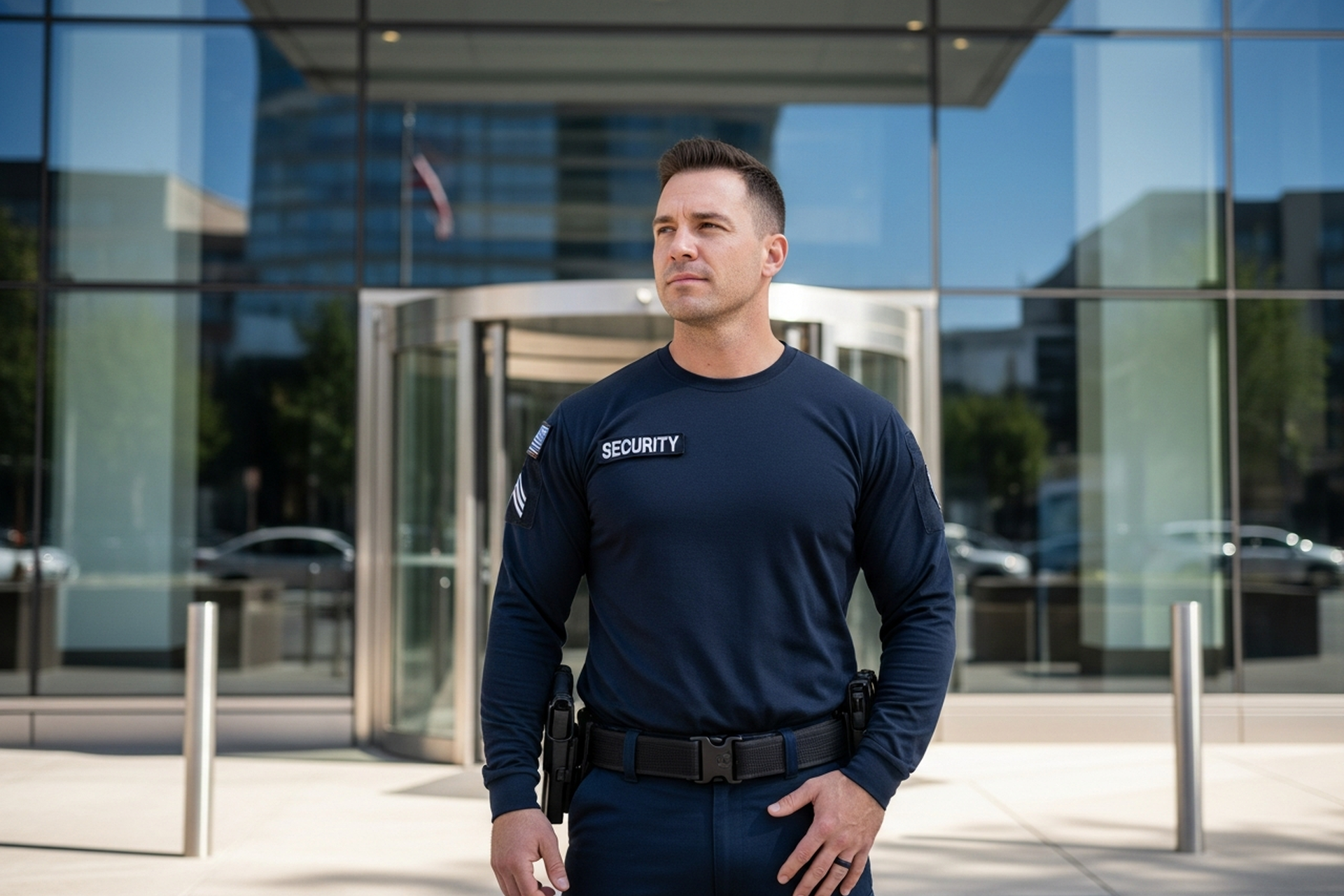
Multifamily and Apartment Security Services in Seattle
Josh Harris | June 16, 2026
Multifamily security in Seattle has become one of the most requested services among property managers and ownership groups across the Puget Sound region. With Seattle recording more than 38,000 property crimes in 2024 and a construction pipeline that added tens of thousands of new units to the market, apartment owners face a direct challenge: how do you keep residents safe, protect shared amenities, and maintain a property environment that attracts and retains tenants?
The answer requires more than cameras. It requires a trained professional presence that deters incidents before they happen, responds when something goes wrong, and documents everything in between.
Why Seattle Multifamily Properties Face Elevated Security Demands
Seattle sits in a market that has absorbed an enormous volume of new multifamily construction. In the Puget Sound region, approximately 95% of new starts in recent years have been concentrated in Seattle, Redmond, Kirkland, Shoreline, and Bellevue. Many of these properties are large-footprint mid-rise and high-rise buildings with underground parking garages, package rooms, fitness centers, and rooftop amenity decks.
Each of these shared spaces creates a security exposure. Package theft in lobby delivery areas has become a consistent concern for property managers. Parking garages are frequent targets for vehicle break-ins and catalytic converter theft. Unauthorized access through secondary entrances is a recurring problem in buildings that rely on access control technology alone without human verification.
Beyond property crime, multifamily buildings concentrate a large number of people in close quarters. Noise complaints, trespassing, and interpersonal disputes can escalate quickly when they are not addressed by a calm, professional presence before police response becomes necessary.
The Washington Multi-Family Housing Association represents rental housing providers across the state and consistently identifies resident safety and unauthorized access as top operational concerns for property managers in the Seattle area.
Multifamily Security Services Seattle Properties Rely On
Professional multifamily housing security programs are built around a layered approach. No single service covers every vulnerability, and effective programs combine several components based on the property's size, layout, and resident profile.
Lobby and concierge security
A uniformed officer stationed at the lobby entrance provides both access control and a visible deterrent. Officers greet residents, verify visitor identity, manage guest sign-in procedures, and ensure that package deliveries are handled according to property protocols. This level of service is especially effective in Class A mid-rise and high-rise buildings where residents expect a professional, managed environment.
Unarmed guards stationed at lobby posts are the most common deployment in Seattle apartment communities. Their role is to observe, document, and de-escalate, not to enforce lease provisions or conduct evictions. Those functions remain with property management and, when necessary, the courts. The security officer's value is in deterrence and in creating an accurate incident record that protects both residents and the ownership group.
Access control support
Modern apartment buildings use keycard, fob, or mobile-credential systems to restrict entry at lobby doors, parking entrances, amenity spaces, and elevators. These systems generate access logs and limit unauthorized entry, but they are not infallible. Tailgating through entry points is a well-documented problem in high-traffic buildings, and access control systems cannot respond to someone who is already inside the property acting in a disruptive or threatening way.
Officers assigned to access points verify credentials, prevent tailgating, escort unauthorized individuals out of the property, and escalate to law enforcement when the situation requires it. Cascadia officers do not conduct lockouts or tenant removals; those actions follow a legal process managed by property management and, when applicable, the courts. The officer's role is to maintain order, document what occurs, and notify the appropriate parties.
Mobile patrol coverage
Not every Seattle apartment community has the budget or operational need for a full-time lobby officer around the clock. Mobile patrol services offer a cost-effective alternative, or a complement to stationed coverage, by running regular vehicle-based patrols through the property on randomized schedules.
Mobile patrol officers check parking garages for vehicles propped open or suspicious activity, verify that secondary entrances are secured, inspect amenity areas for unauthorized occupants after hours, and generate written reports documenting each tour. The unpredictable schedule is itself a deterrent: when potential bad actors cannot predict when a patrol vehicle will appear, the property becomes a harder target.
For large garden-style apartment communities in Renton, Bothell, Lynnwood, and south King County, mobile patrol is often the primary security model, providing wide-area coverage across multiple buildings without the cost of multiple fixed posts.
Parking garage security
Parking structures in Seattle multifamily properties are high-risk areas. Poor lighting, multiple entry and exit points, and low foot traffic during late-night and early-morning hours create conditions where vehicle break-ins, theft, and vandalism occur with regularity.
Dedicated parking security details include posted officers during peak vulnerability windows, regular foot patrols through garage levels, and coordination with management on lighting deficiencies or unsecured access points that a camera system alone cannot correct. Officers document every incident in writing, creating the records that property managers and insurers need when losses occur.
What Security Officers Can and Cannot Do in Washington State
This distinction matters for any property manager considering a professional security program. Washington state law, specifically the framework under RCW 59.18 governing landlord-tenant rights, defines a clear set of actions that require a legal process managed by the property owner or a licensed attorney. These include lease enforcement, tenant lockouts, and removal of occupants from a unit.
Security officers from Cascadia are trained to operate within these boundaries. When an officer encounters a situation that crosses into property-management or legal jurisdiction, the correct response is to document the incident, notify management, and contact law enforcement if safety is at risk. Officers do not carry out eviction-related actions, remove personal property from units, or make legal determinations about tenancy.
What security officers can and should do: deter trespassers from common areas, respond to disturbances in shared spaces, verify that only authorized individuals are accessing the building, document incidents in real time, and serve as the first point of calm professional presence when a situation develops.
The Institute of Real Estate Management notes that clear documentation and consistent incident reporting are among the most valuable contributions a security program makes to multifamily property operations. Incident logs support insurance claims, inform risk assessments, and demonstrate due diligence in the event of litigation.
Selecting the Right Security Model for Your Property
The right program depends on several factors that vary significantly across Seattle-area multifamily properties.
Building type and size matter. A 300-unit high-rise in South Lake Union has different vulnerabilities than a 60-unit garden-style community in Kirkland. The high-rise typically needs lobby coverage, elevator monitoring, and parking garage patrols. The garden-style community may be best served by mobile patrol and overnight static coverage at the main entrance.
Resident profile matters. Student housing near University of Washington has different behavioral patterns and risk exposures than a corporate apartment community in Bellevue serving technology employees. A security program should account for who is living in the building and what specific risks that population generates.
History of incidents matters. If a property has seen a pattern of vehicle break-ins in the parking structure, the response should include targeted patrol during the hours when those incidents occur. If the primary issue is unauthorized visitors in amenity spaces, the response should include after-hours monitoring of those specific areas.
Security programs for multifamily properties are not one-size-fits-all. A qualified provider will conduct a site walk, review incident history, and propose a program that addresses the actual risk profile rather than a generic service package.
Building a Lasting Security Partnership
The most effective multifamily security programs in Seattle are not transactional. They are ongoing partnerships between the property management team and the security provider, built on clear communication, regular reporting, and the flexibility to adjust as the property's needs change.
Cascadia Global Security works with apartment communities across the Puget Sound region, from downtown Seattle high-rises to suburban garden-style properties in Kirkland, Renton, and Everett. Our officers are Washington-state licensed, trained in de-escalation and documentation, and oriented specifically to the property before their first shift.
We provide written incident reports after every notable event, maintain communication with on-site management teams, and flag safety concerns, such as lighting deficiencies, unsecured access points, or recurring problem areas, that property management can address through maintenance channels.
When you are ready to evaluate options for your multifamily property, call us at (800) 939-1549 or get a quote online to start with a site assessment.
Frequently Asked Questions
What types of multifamily properties does Cascadia serve in Seattle?
Cascadia provides security services for a broad range of residential properties across the Puget Sound region, including high-rise apartment towers, mid-rise urban communities, garden-style complexes, mixed-use residential buildings, and HOA-managed communities. Properties range from downtown Seattle to suburban markets in Bellevue, Kirkland, Renton, Bothell, Lynnwood, and Everett.
Can security officers enforce lease rules or remove problem tenants?
No. Security officers observe, document, and de-escalate. Lease enforcement and tenant removal are legal processes governed by Washington state law and must be handled by property management and, when required, through the courts. Officers will document incidents in common areas, address unauthorized access, and contact law enforcement when safety is at risk, but they do not take actions that fall under landlord-tenant law.
How does mobile patrol differ from a stationed officer for apartments?
A stationed officer is present at a fixed location, typically a lobby or parking entry, for their full shift. A mobile patrol officer travels through the property and surrounding areas on a randomized schedule throughout the night or shift window. Mobile patrol provides unpredictable visibility across larger footprints at a lower cost than full-time static coverage, and works well as a standalone program or as an after-hours complement to daytime stationed coverage.
What credentials do Washington state security officers need to work at apartment buildings?
All security officers operating in Washington state must hold a valid license issued by the Washington State Department of Licensing, which requires a background check, minimum age of 18, and completion of state-mandated pre-assignment training. Armed officers carry additional licensing requirements including weapons qualification. Cascadia verifies licensing for every officer and maintains documentation on file.
How quickly can security coverage start for a Seattle multifamily property?
Cascadia can typically mobilize for a new apartment property assignment within a short window after contract execution. The timeline depends on the scope of coverage requested and officer availability in the relevant submarket. We prioritize a site walk and property orientation before the first shift to ensure officers understand the layout, access protocols, and specific concerns of the management team.