Retail Security and Loss Prevention Services in Seattle
Josh Harris | May 18, 2026
Retail loss prevention in Seattle is no longer just about catching shoplifters. Organized retail crime (ORC) rings, opportunistic theft, and employee dishonesty now combine to drain millions from retailers across the Puget Sound region every year. For store owners and operations managers who have watched shrinkage eat into already-thin margins, the right security response makes a measurable difference.
Seattle's retail landscape stretches from downtown flagships and South Lake Union boutiques to neighborhood grocery anchors in Rainier Beach and strip centers along the Eastside corridors in Bellevue and Redmond. Each format faces different threats, and a one-size-fits-all approach rarely holds. Professional retail security services, built around trained personnel and proven protocols, give retailers a sustainable edge over theft rather than a reactive scramble after losses mount.
Why retail loss prevention matters in the Seattle area
Shrinkage, the industry term for inventory losses from theft, fraud, and operational errors, continues to be a significant cost driver for retailers of every size. While external theft and internal dishonesty both contribute, organized retail crime has raised the stakes. ORC rings operate methodically: they scout target stores, coordinate multi-person boosts, and resell merchandise through online marketplaces or gray-market fencing operations. The losses from a single organized incident can exceed what a store absorbs from months of individual shoplifting.
Washington state's RCW 9A.56.350, the organized retail theft statute, classifies coordinated retail theft as a felony. A first-degree offense, involving property valued at $5,000 or more, carries class B felony charges. A second-degree offense, covering thefts between $750 and $5,000, is a class C felony. The statute also allows prosecutors to aggregate thefts committed by the same person across multiple locations over a 180-day window, which gives retailers and law enforcement a stronger tool when a ring hits multiple stores in a pattern.
Understanding the legal framework matters for loss prevention planning because it shapes how incidents should be documented. Officers at the scene de-escalate situations, observe, and thoroughly document what they witness. Law enforcement handles the actual arrest authority; the security team's job is to build a clean evidentiary record that supports prosecution when charges are filed.
The components of an effective retail security program
A well-structured retail security program layers deterrence, detection, and documentation. Each layer serves a distinct purpose, and removing any one of them creates a gap that experienced thieves will eventually find.
Visible uniformed presence
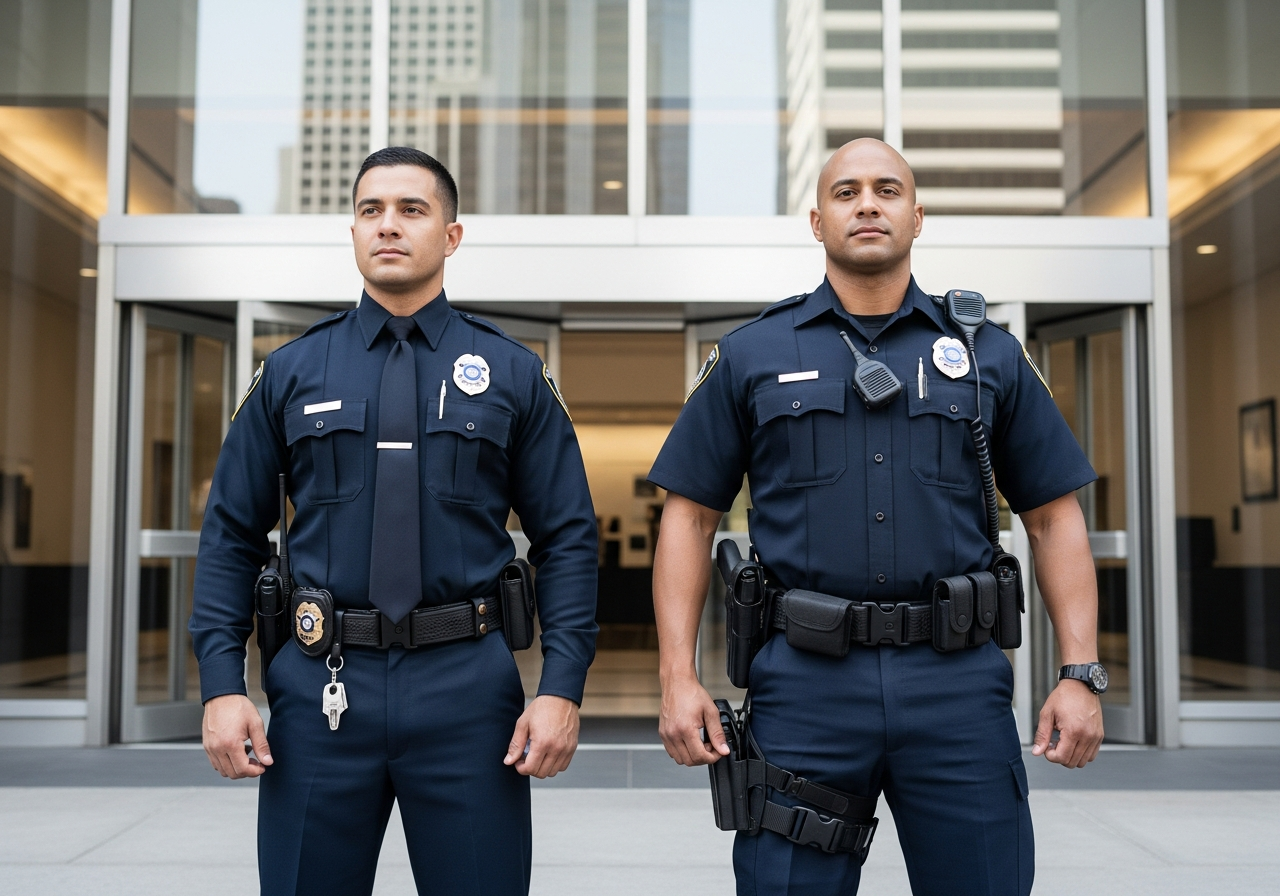
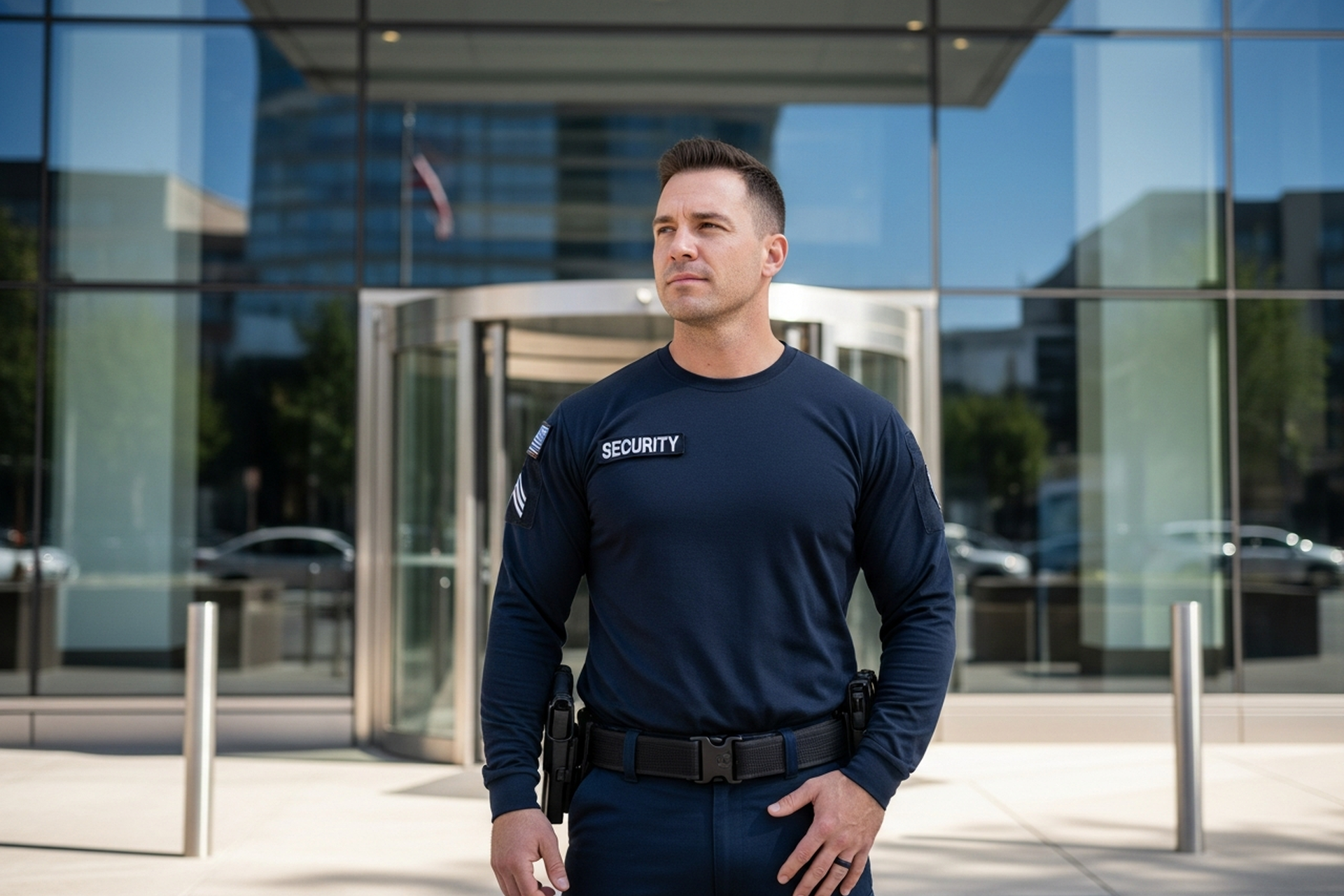
Visible security is deterrence. A uniformed unarmed guard stationed at a store entrance, walking the floor, or monitoring a high-value merchandise section signals to would-be thieves that the environment is actively managed. Research in the loss prevention industry consistently shows that visible uniformed presence reduces opportunistic theft, particularly in high-traffic retail environments. Loss Prevention Magazine covers how retailers combine physical presence with technology to address modern ORC tactics.
For stores with higher risk profiles, such as electronics retailers, pharmacies carrying controlled products, or jewelers, armed security may be appropriate. Cascadia Global Security places armed officers who have met Washington's full PERC (Private Security Guard) licensing requirements, including the additional endorsements required for armed duty under WAC guidelines.
Floor coverage and plain-clothes options
Not every retail environment calls for a uniformed post at the door. Specialty stores, boutique shops, and retailers where a guard's presence might affect the customer experience often benefit from plain-clothes loss prevention personnel. These officers blend into the shopping environment, identify suspicious behavior patterns, and coordinate with uniformed staff or law enforcement when an incident escalates. The goal is always observation and documentation: Cascadia officers are trained to de-escalate and document rather than to physically confront or detain.
Mobile patrol integration
For retail centers, strip malls, and outdoor shopping districts, a fixed post is not always cost-effective for every tenant. Mobile patrol services provide scheduled and random-interval visits across multiple locations within a single patrol route. A mobile unit covering a King County retail corridor can check several properties per hour, creating the impression of unpredictable presence that organized thieves specifically try to avoid.
Mobile patrols also provide rapid response when a store manager calls in a situation in progress. Rather than waiting for law enforcement alone, a patrol officer already on route can arrive quickly, assess the environment, and manage the scene until police arrive.
After-hours and closing security
The period immediately after a retail location closes is one of the highest-risk windows for break-ins and smash-and-grab attempts. Retail locations in downtown Seattle, Capitol Hill, and along the Eastside corridors in Bellevue have seen overnight incidents that could have been mitigated with a closing-time escort or late-night patrol coverage. Cascadia's after-hours options include both dedicated overnight posts and mobile patrol coverage built into a broader route.
CCTV monitoring support and access control
Security technology works best when someone is actively monitoring it. Camera systems without trained observers reviewing footage often identify incidents after the fact rather than preventing them. Security personnel can be deployed to manage CCTV feeds in real time, flag suspicious behavior patterns, and coordinate with floor staff. Access control management at stockrooms, receiving docks, and high-value storage areas adds another layer of protection against internal theft, which consistently accounts for a meaningful share of overall retail shrinkage.
Security considerations by retail format
Different store formats call for different security approaches. What works for a grocery anchor is not right for a fashion boutique, and what protects a big-box electronics store is overkill for a small specialty shop.
Grocery and pharmacy
High foot traffic, a wide range of price points, and products that are easy to conceal make grocery and pharmacy environments persistent targets. Organized rings frequently target high-value consumables, over-the-counter medications, and personal care items. A combination of uniformed floor presence and access control at pharmacy counters addresses both opportunistic and organized theft.
Apparel and accessories
Fitting rooms and blind spots near displays create concealment opportunities for wardrobing and tag-switching. Uniformed presence at fitting room entrances and floor-walking coverage during peak hours, particularly on evenings and weekends, significantly reduces these loss vectors.
Electronics and high-value specialty retail
Smash-and-grab incidents targeting display cases, quick concealment of small high-value items, and coordinated multi-person distractions are common tactics against electronics and jewelry retailers. This category often justifies armed officer deployment or a visible command post near displays, combined with mobile patrol for after-hours coverage.
Outdoor shopping districts and retail corridors
Pike Place Market vendors, Capitol Hill retail strips, and the mixed-use retail-and-office corridors of South Lake Union present different challenges from a single-storefront environment. Shared security arrangements, where a single patrol covers multiple businesses in a defined area, spread the cost while maintaining visible deterrence across the block or district.
Working with a Seattle-area loss prevention partner
Choosing the right security provider for retail involves more than finding someone with a license. Washington state requires all private security guards to hold a PERC card issued by the Washington State Department of Licensing. Guards working armed duty carry additional endorsements. Verifying that your provider's officers hold current credentials is a starting point, not an endpoint.
Beyond licensing, effective retail security comes from experience with the specific environment. Officers who have worked retail loss prevention understand customer service expectations, know how to de-escalate confrontations without creating a scene, and have practiced the documentation disciplines that support prosecution when incidents reach that point. They also understand the Seattle market's specific dynamics, from the density of downtown retail to the suburban strip-center patterns of Kirkland, Bothell, and Lynnwood.
Retailers in Seattle and across the Puget Sound region benefit from a partner who can scale coverage as business needs shift, whether that means adding weekend staff during the holiday season, covering a special event, or deploying temporarily while an internal investigation is underway. Cascadia Global Security operates across King County, Snohomish County, and Pierce County, providing the geographic reach that multi-location retailers and shopping center operators need.
Closing: protect your store and your people
Retail theft is a business problem, and it deserves a business solution. Reactive measures after losses occur are always more expensive than prevention, and professional loss prevention services are a sustainable investment rather than a discretionary cost.
Cascadia Global Security works with retailers across the Seattle area, from single-location independents to multi-site regional operators, to build security programs that match the store format, risk profile, and budget. Our officers are licensed, trained in retail-specific de-escalation protocols, and committed to protecting both inventory and the people who work in your store.
Contact Cascadia Global Security for a no-obligation quote or call us at (800) 939-1549 to discuss your retail security needs.
Frequently Asked Questions
What is organized retail crime and how does it affect Seattle stores?
Organized retail crime refers to coordinated, commercial-scale theft carried out by groups rather than individual shoplifters. ORC rings scout target stores in advance, use multiple participants to distract staff and overwhelm loss prevention, and resell stolen merchandise through online platforms or fencing networks. Seattle's high-volume retail corridors in downtown, Bellevue, and Redmond have seen ORC activity targeting electronics, pharmacy products, and apparel. Washington's RCW 9A.56.350 classifies coordinated retail theft as a class B or class C felony depending on the value involved.
Do retail security officers in Washington need a special license?
Yes. All private security guards working in Washington state must hold a current PERC card issued by the Washington State Department of Licensing. Officers assigned to armed duty carry an additional armed endorsement. Employers should verify that any contracted security company's officers hold valid, current credentials before deployment.
How does a visible security presence reduce retail theft?
Opportunistic theft, the most common category by incident volume, relies on low perceived risk. When a uniformed officer is visible at an entrance or walking the floor, the psychological calculus for a potential thief shifts immediately. Organized retail crime groups also perform advance reconnaissance: stores with consistent, professional security are deprioritized in favor of less-protected targets. Deterrence is not passive; it is an active component of a loss prevention program.
What is the difference between uniformed guards and plain-clothes loss prevention officers?
Uniformed guards provide visible deterrence and are most effective at reducing opportunistic theft and managing the door environment. Plain-clothes loss prevention officers blend into the retail environment to observe and identify theft behaviors that occur away from the entrance, including fitting room theft, tag switching, and internal employee dishonesty. Many effective retail programs combine both roles, deploying each where it has the most impact.
Can Cascadia cover multiple retail locations or a full shopping center?
Yes. Cascadia Global Security provides both fixed-post coverage for individual stores and mobile patrol services that cover multiple locations on a defined route. For shopping center operators and multi-location retailers across King County, Snohomish County, and Pierce County, Cascadia can build a patrol program that balances coverage, cost, and response capability across the full portfolio.