Retail Security Companies and On-Site Protection
Josh Harris | March 20, 2026
The Evolving Landscape of Modern Retail Security
Retail theft costs American businesses over $121.6 billion annually, a figure that continues to climb as criminal tactics grow more sophisticated. For store owners and operations managers, the question is no longer whether to invest in professional security, but how to deploy it effectively. Retail security companies specializing in on-site protection have become essential partners for businesses ranging from single-location boutiques to national chains.
The difference between a secure store and a vulnerable one often comes down to having trained professionals who understand both the psychology of theft and the operational realities of retail environments.
Physical security presence does more than deter shoplifters. It protects employees from confrontational situations, safeguards customers, and preserves the shopping experience that drives revenue. When security is handled poorly or neglected entirely, the consequences extend far beyond inventory shrinkage, including staff turnover, liability exposure, and reputational damage.
Rising Threats: Organized Retail Crime and Shoplifting
Organized retail crime has evolved from opportunistic theft to coordinated operations targeting specific merchandise for resale. These groups conduct surveillance, exploit staffing gaps, and sometimes use distraction techniques that overwhelm unprepared employees. The National Retail Federation reports that ORC incidents rose by approximately 23% between 2022 and 2024, with average case values exceeding $1,000.
Individual shoplifting remains prevalent but has also evolved. Self-checkout exploitation, return fraud, and ticket-switching require different prevention approaches than traditional concealment methods. Security teams must recognize patterns across multiple theft categories simultaneously.
The Role of Professional Security in Brand Protection
Security personnel serve as brand ambassadors whether they realize it or not. A professional, courteous guard at the entrance sets expectations for the entire shopping experience. Conversely, aggressive or poorly trained security can alienate legitimate customers and generate negative reviews that impact foot traffic.
Effective retail security companies train their officers to balance vigilance with hospitality. The goal is to create an environment where honest customers feel welcomed while potential thieves recognize the risk of attempting theft.
Core Services Provided by Retail Security Companies
Professional retail security extends well beyond stationing a guard at the door. Comprehensive programs address vulnerabilities throughout the customer journey and across all operational hours.
Uniformed vs. Plainclothes Loss Prevention Officers
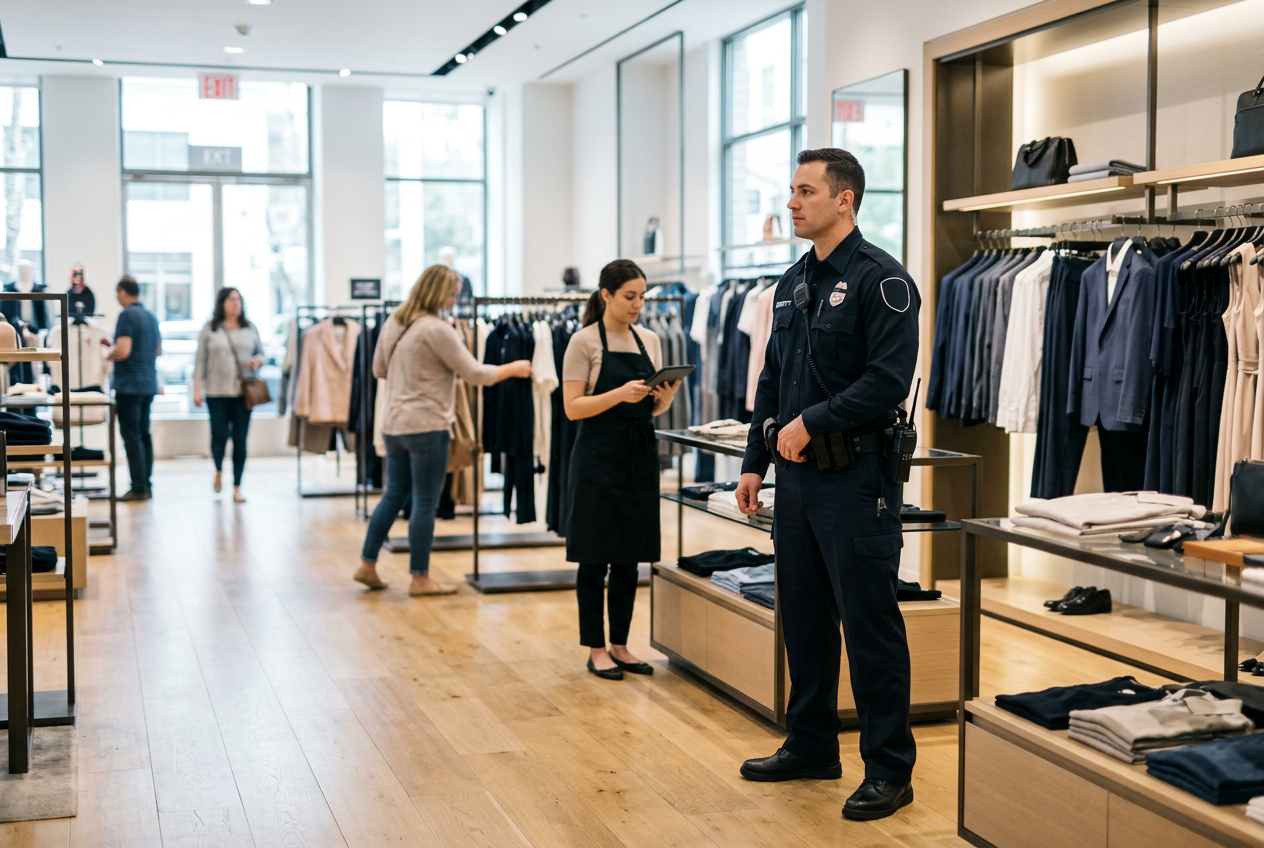
Uniformed officers provide visible deterrence. Their presence signals to would-be thieves that the store actively monitors for criminal activity. This visibility also reassures customers and staff, particularly during evening hours or in higher-risk locations.
Plainclothes loss prevention specialists operate differently. They blend with shoppers to observe suspicious behavior without alerting subjects to their presence. This approach proves particularly effective for catching organized theft rings that scout stores before executing larger heists. Many retailers deploy both types simultaneously for layered protection.
Mobile Patrols and Perimeter Surveillance
Parking lots and exterior areas present distinct security challenges. Vehicle break-ins, cart theft, and customer harassment often occur outside the store's walls. Mobile patrol units from Cascadia Global Security conduct regular circuits through parking areas, loading zones, and adjacent spaces.
These patrols serve multiple functions: deterring criminal activity, responding to incidents, and documenting conditions that might create liability issues. Regular patrol logs also provide valuable data for identifying patterns that warrant additional attention.
Access Control and Employee Screening Protocols
Internal theft accounts for a significant portion of retail shrinkage, often representing roughly one-third of total shrinkage. Security companies implement access control systems that restrict employee movement to necessary areas and create accountability for high-value inventory zones.
Employee screening protocols include bag checks, locker inspections, and monitoring of after-hours access. Professional security teams handle these procedures consistently and respectfully, maintaining staff morale while protecting assets.
Strategic Benefits of On-Site Protection Teams
The value proposition for on-site security extends beyond simple theft prevention into operational improvements that affect multiple business metrics.
Immediate Incident Response and De-escalation
When confrontations occur, response time determines outcomes. On-site security officers can intervene within seconds rather than the minutes required for police response. This immediacy prevents escalation, protects merchandise, and reduces the risk of injuries to staff or customers.
Trained de-escalation techniques prove especially valuable during returns disputes, situations involving intoxicated customers, and mental health crises. Officers from established retail security companies receive specific training for these scenarios, knowing when to engage verbally and when to create distance.
Deterrence Through Visible Security Presence
A visible security presence can reduce attempted theft by 20–60% compared to unprotected locations. Criminals conduct risk-benefit calculations, and professional security shifts that equation decisively toward moving on to easier targets.
This deterrence effect compounds over time. Word spreads among theft networks about which stores present a higher risk, creating lasting protection benefits beyond any single prevented incident.
Integrating Technology with Physical Guarding
Modern retail protection combines human judgment with technological capabilities that neither can provide alone.
CCTV Monitoring and Real-Time Analytics
Camera systems generate footage, but footage alone doesn't prevent theft. Security officers monitoring feeds in real time can dispatch floor personnel to address suspicious activity before losses occur. Advanced analytics now flag behaviors such as unusual dwell times, repeated visits to high-theft areas, and recognition of known offenders.
Cascadia Global Security integrates monitoring services with on-site personnel, creating response capabilities that pure technology solutions cannot match.
Electronic Article Surveillance (EAS) Systems
EAS tags and pedestals create another layer of deterrence, but they require a human response to be effective. Security officers positioned near exits can respond immediately to alarms, distinguishing between legitimate deactivation failures and actual theft attempts.
Proper EAS management includes tagging protocols, alarm response procedures, and regular system testing. Security teams coordinate with store staff to ensure consistent execution across all shifts.
Selecting the Right Security Partner for Your Store
Not all security providers deliver equal value. Evaluation criteria should focus on capabilities that directly impact your specific risk profile.
Evaluating Training Standards and Certifications
Ask potential partners about their training curriculum, ongoing education requirements, and certification standards. Quality providers invest significantly in officer development, covering topics from legal authority limits to customer service excellence.
Industry certifications like those from ASIS International indicate commitment to professional standards. Background check procedures, drug testing policies, and supervision ratios also reveal organizational priorities.
Customizing Security Plans for Store Layouts
Cookie-cutter security programs waste resources and leave vulnerabilities unaddressed. Effective partners conduct thorough site assessments to identify blind spots, high-risk merchandise locations, and traffic flow patterns unique to your store.
Cascadia Global Security develops customized security plans based on individual store characteristics, staffing patterns, and loss history data.
Measuring the ROI of On-Site Security Investment
Security spending should demonstrate measurable returns. Track shrinkage rates before and after implementation, comparing against industry benchmarks. Monitor incident reports, response times, and resolution outcomes.
Employee retention often improves when staff feel protected, reducing hiring and training costs. Customer satisfaction scores may also increase, particularly in locations where prior security gaps led to uncomfortable shopping experiences. The most successful retail security programs pay for themselves through prevented losses while generating additional value through operational improvements.
Frequently Asked Questions
How much does retail security typically cost per hour?
Rates vary by region, service type, and contract length, typically ranging from $22–40 per hour for unarmed officers. Armed security and specialized loss prevention services command premium rates. Volume commitments and multi-location contracts often qualify for reduced pricing.
What's the difference between security guards and loss prevention officers?
Security guards focus on overall safety, access control, and deterrence. Loss prevention officers specialize in theft detection and apprehension, often working in plainclothes and maintaining detailed knowledge of shoplifting techniques and legal procedures for apprehending suspects.
Can security guards legally detain shoplifters?
Most states allow merchant detention under specific conditions: a reasonable belief that theft occurred, detention for a reasonable time, and the use of only reasonable force. Professional security companies train officers extensively on these legal boundaries to protect both the retailer and the individual.
How quickly can a security company deploy officers to my store?
Established providers maintain staffing pools that enable deployment within 12–48 hours for standard coverage. Emergency or same-day coverage is available from larger companies, though premium rates typically apply.
Protecting Your Retail Investment
Effective retail security requires professional expertise, appropriate technology, and customized strategies aligned with your specific risk profile. The investment protects not just inventory but employees, customers, and brand reputation.
For businesses seeking reliable on-site protection, Cascadia Global Security offers veteran-owned, locally managed security services tailored to retail environments across the United States. Get a consultation to discuss your store's specific security needs.