
Retail Security Tags and Detection Systems Explained
Josh Harris | March 10, 2026
Every year, retail businesses lose billions of dollars to theft, with the National Retail Federation reporting shrinkage rates hovering around 1.4% of total sales. For a store generating $10 million annually, that translates to $140,000 walking out the door. The first line of defense against this loss? Electronic Article Surveillance systems, the technology behind those security tags attached to merchandise, and the pedestals standing guard at store exits. Understanding how retail security tags and detection systems work gives business owners the knowledge to make informed decisions about protecting their inventory. These systems have evolved significantly over the past decade, moving beyond simple theft deterrence to integrated solutions that combine loss prevention with inventory management. Whether you operate a boutique clothing store or manage a multi-location retail chain, the right combination of tags, labels, and detection equipment can dramatically reduce shrinkage while maintaining a positive shopping environment. Understanding the technology's fundamental principles reveals its simplicity. Moreover, the typical return on investment usually covers the initial implementation costs within just 12 to 18 months, effectively justifying the expenditure.
The Fundamentals of Electronic Article Surveillance (EAS)
Electronic Article Surveillance forms the backbone of modern retail loss prevention. At its core, EAS relies on a simple concept: attach a tag or label to merchandise that triggers an alarm if someone attempts to leave the store without properly deactivating or removing it at checkout.
How Transmitters and Receivers Communicate
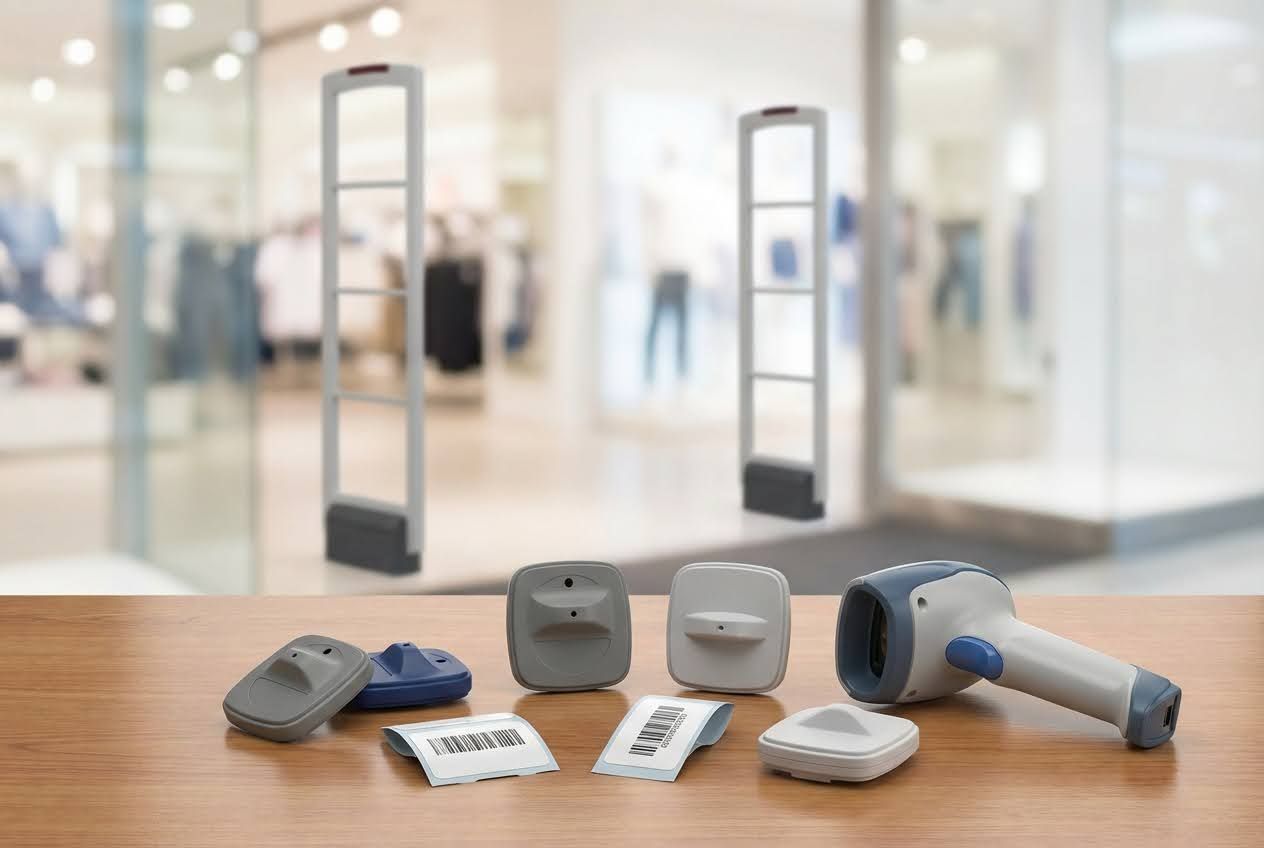
The detection pedestals you see at store entrances contain both transmitter and receiver components. The transmitter creates an electromagnetic field, typically called a surveillance zone, that extends between the pedestals. When a live tag enters this zone, it interacts with the electromagnetic field in a specific way, depending on the technology used.
The receiver component detects this interaction and triggers the alarm. Different technologies create different types of interactions. Some tags resonate at specific frequencies, while others absorb and reflect energy in detectable patterns. The key is that each system is tuned to recognize only its compatible tags, preventing false alarms from other electronic devices that customers might carry.
The Role of Deactivators and Detectors at Checkout
Legitimate purchases require tag neutralization at the point of sale. Hard tags require physical removal using specialized detachers, such as magnetic release devices or mechanical tools. Soft labels are deactivated electronically by passing them over or near a deactivation pad that disrupts the tag's internal circuitry.
Proper checkout procedures are critical. Cascadia Global Security often works with retail clients to ensure staff training includes the correct deactivation protocols, since missed tags can embarrass customers and erode trust in the system.
Common Types of Retail Security Tags and Labels
Selecting the right tag type depends on your merchandise, store layout, and loss prevention priorities. Each option offers distinct advantages for specific applications.
Hard Tags for Apparel and Soft Goods
Hard tags remain the workhorse of apparel security. These reusable plastic housings contain the detection element and attach to garments via pins, cables, or lanyards. Standard clamp-style tags work well for most clothing, while specialty versions accommodate shoes, handbags, and accessories.
The reusability factor makes hard tags economical over time. A single tag might cycle through hundreds of uses before replacement. They also provide visible deterrence, since potential thieves recognize them immediately.
Adhesive Soft Labels for Boxed Merchandise
Soft labels are thin, disposable tags that adhere directly to product packaging. They work well for cosmetics, electronics, pharmaceuticals, and any boxed goods where hard tags would damage the product or packaging.
Modern soft labels can be as thin as a standard price sticker, making them easy to integrate into existing packaging processes. Some manufacturers even embed labels during production, eliminating in-store application entirely.
Specialty Alarming Tags and Spider Wraps
High-value items often require enhanced protection. Alarming tags contain internal batteries and produce loud alerts when tampered with, regardless of proximity to detection pedestals. Spider wraps use cable systems to secure irregularly shaped items like power tools, small appliances, and electronics.
Bottle locks protect wine and spirits, while keeper boxes provide see-through security for video games and other small, high-theft items. The right specialty tag matches the merchandise profile and theft patterns specific to your store.
Comparing Detection Technologies: AM vs. RF vs. RFID
Three primary technologies dominate the retail security market, each with distinct operational characteristics and optimal use cases.
Acousto-Magnetic (AM) Systems for Wide Entrances
AM systems use tags containing two magnetostrictive strips that vibrate at a specific frequency when energized by the transmitter. This technology offers excellent detection rates, often exceeding 90%, and works reliably even in wide entrance configurations up to 8 feet apart.
AM tags are more difficult to defeat than some alternatives, and the technology is resistant to interference from shopping carts, strollers, and other metal objects. The trade-off is a higher tag cost compared to RF alternatives.
Radio Frequency (RF) Systems for High-Volume Retail
RF systems utilize tags containing a small circuit and a capacitor, designed to resonate when they pass through the detection field. These systems typically operate at frequencies of 8.2 MHz or 9.5 MHz. These systems offer lower per-tag costs, making them popular in high-volume retail environments where thousands of labels are applied daily.
RF labels can be extremely thin and are often integrated into existing product labels or packaging. Detection rates typically range from 75% to 90%, somewhat lower than AM systems but often acceptable given the cost advantages.
RFID Integration for Inventory and Security
Radio Frequency Identification represents the convergence of security and inventory management. RFID tags contain unique identifiers that can be read individually, enabling real-time inventory tracking alongside theft prevention.
Retailers using RFID can conduct inventory counts in minutes rather than hours, identify shrinkage sources with precision, and even enable self-checkout experiences. The higher per-tag cost is offset by operational efficiencies and enhanced loss prevention intelligence.
Strategic Placement of Detection Pedestals
Where you position your detection equipment affects both security effectiveness and customer experience.
Visible Deterrence vs. Concealed Floor Systems
Traditional pedestal systems provide obvious visual deterrence. Potential thieves see the equipment and understand they're being monitored. This psychological factor prevents many opportunistic thefts from occurring.
Concealed floor systems embed detection technology beneath flooring materials, maintaining store aesthetics while still providing protection. High-end retailers often prefer this approach to preserve their brand environment. Cascadia Global Security can assess your specific retail environment and recommend optimal placement strategies that balance visibility and the customer experience.
Benefits of Modern Loss Prevention Systems
Investing in EAS technology delivers measurable returns across multiple operational dimensions.
Reducing Shrinkage and Increasing Profitability
Studies consistently show that properly implemented EAS systems reduce theft by 30% to 70%. For retailers operating on thin margins, this improvement often represents the difference between profitability and loss.
Beyond reducing direct theft, EAS systems deter internal theft and reduce "sweethearting," in which employees fail to scan items for friends or family. The comprehensive protection addresses multiple shrinkage sources simultaneously.
Enhancing the Customer Shopping Experience
Effective security allows retailers to display merchandise openly rather than locking items behind glass or in back rooms. Customers can freely touch, examine, and compare products, leading to increased sales and satisfaction.
Modern systems also reduce false alarms, which embarrass innocent customers and create negative associations with your brand. Reliable detection technology protects your inventory while respecting your customers.
Future Trends in Retail Security and Smart Tagging
The retail security landscape continues evolving toward integrated, intelligent systems. Source tagging, in which manufacturers apply security elements during production, is becoming standard practice among major brands. This approach ensures consistent protection while reducing in-store labor costs.
Artificial intelligence is enhancing video analytics, enabling systems to identify suspicious behavior patterns before theft occurs. When combined with EAS data, these systems provide comprehensive loss-prevention intelligence.
RFID adoption is accelerating as tag costs decrease and retailers recognize the inventory management benefits. The technology enables new retail concepts like cashierless stores and automated checkout, fundamentally changing how customers interact with merchandise.
Frequently Asked Questions
How much do retail security systems typically cost?
Entry-level systems start around $2,000 to $5,000 for basic pedestals and deactivation equipment. Comprehensive installations with multiple entrances, advanced technology, and integration features can range from $10,000 to $60,000 or more, depending on store size and requirements.
Can security tags damage merchandise?
Modern tags are designed to attach without causing damage when properly applied. However, incorrect pin placement or excessive force during removal can harm delicate fabrics. Staff training on proper application and removal techniques prevents most damage issues.
How often do false alarms occur?
Well-maintained quality systems have false-alarm rates below 2%. Common causes include improperly deactivated tags, interference from nearby electronics, and tags from other stores that weren't removed. Regular calibration and staff training minimize these occurrences.
Do security tags really prevent theft?
Research indicates that visible security measures deter approximately 50%–60% of potential shoplifters. Combined with actual detection capabilities, properly implemented systems significantly reduce overall shrinkage. The deterrent effect alone often justifies the investment.
Protecting Your Retail Investment
Retail security technology has matured into reliable, cost-effective protection that delivers measurable returns. The right combination of tags, detection equipment, and strategic implementation creates an environment where inventory stays secure, and customers shop comfortably.
For retailers seeking comprehensive loss prevention that extends beyond technology, professional security services provide an additional layer of protection. Cascadia Global Security, a veteran-owned security firm, offers professional guard and loss prevention services tailored to retail environments across the United States. Their locally managed teams understand that effective security combines technology with trained personnel who can respond to situations as they develop.