Unarmed Security Companies and When They’re the Right Fit
Josh Harris | March 10, 2026
Security guards don't always need to carry firearms to protect your property effectively. For many businesses, unarmed security personnel provide the ideal balance of visible deterrence, customer service, and cost efficiency. Understanding when unarmed security companies are the right fit for your specific situation can save thousands in unnecessary expenses while still maintaining a safe environment.
The decision between armed and unarmed protection isn't about choosing less security. It's about matching your security posture to your actual risk profile. A retail store in a suburban shopping center faces fundamentally different threats than a jewelry exchange in a high-crime district. Hiring armed guards for the former is a waste of money and can create an uncomfortable atmosphere for customers. The wrong choice in either direction leaves you either over-protected and over-budget, or dangerously exposed.
Data from the Bureau of Labor Statistics show that approximately 70% of security guard positions in the United States are unarmed. This isn't because businesses are cutting corners. It reflects a practical reality: most security situations require observation, communication, and presence rather than the threat of lethal force. When you understand the specific strengths of unarmed security and where these professionals excel, you can make informed decisions that protect both your assets and your bottom line.
Defining the Role of Unarmed Security Personnel
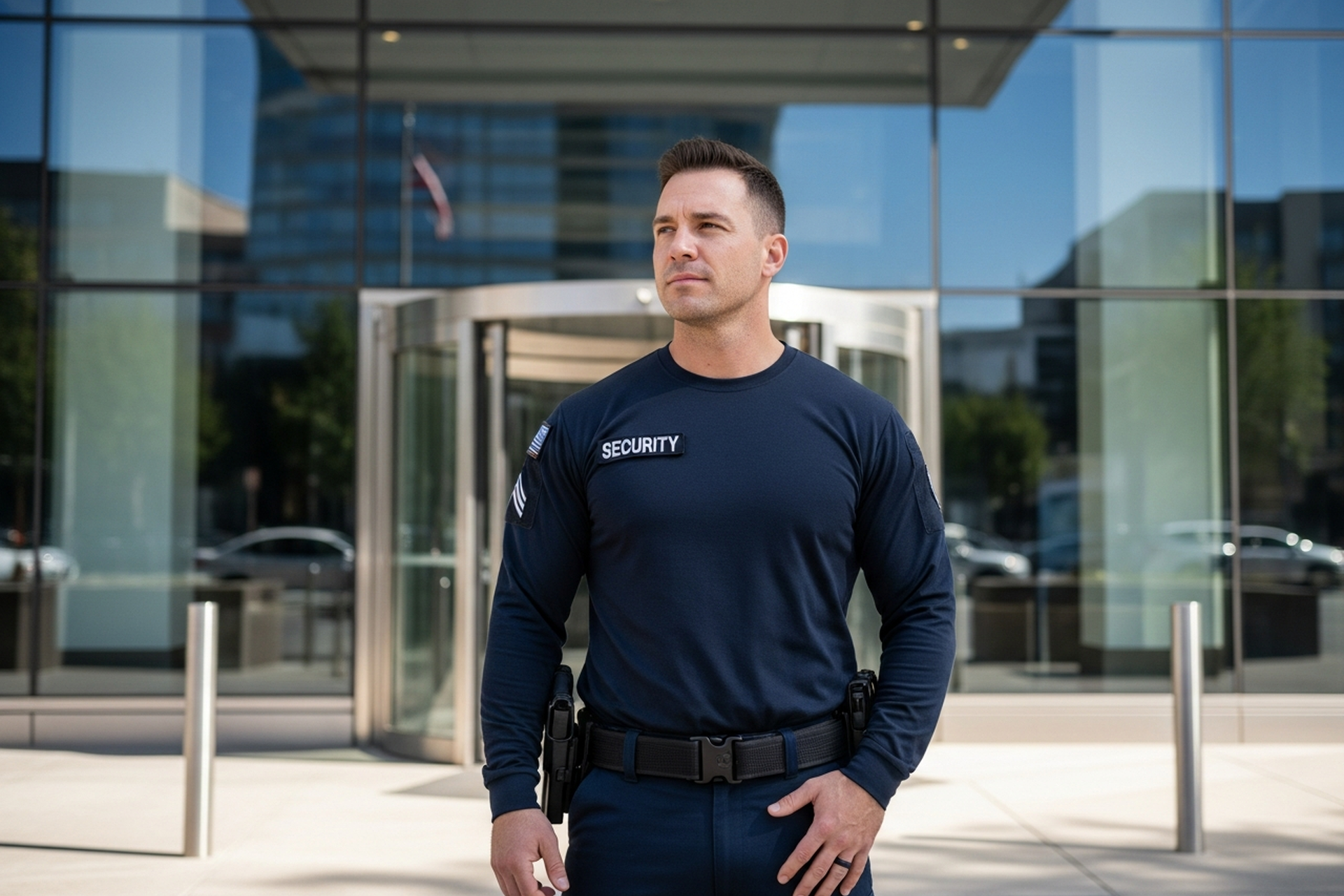
Unarmed security officers serve as the first line of defense for properties where the primary threats involve trespassing, theft, vandalism, or unauthorized access rather than violent confrontation. Their effectiveness comes from visibility, training, and the ability to respond appropriately to developing situations before they escalate.
Core Responsibilities and Training Standards
Professional unarmed guards undergo comprehensive training that covers access control procedures, emergency response protocols, conflict resolution, and detailed reporting. State licensing requirements vary, but reputable companies go beyond minimum standards by providing ongoing education in areas such as fire safety, first aid, and customer service.
The typical responsibilities include monitoring surveillance systems, conducting regular patrols, verifying credentials at entry points, and documenting incidents. Guards also serve as the primary contact for emergency services, ensuring that police, fire, or medical responders receive accurate information upon arrival. Cascadia Global Security trains personnel in these core competencies while emphasizing the communication skills that distinguish professional security from simple watchman services.
The Psychological Advantage of a Non-Threatening Presence
A uniformed guard creates what security professionals call "natural surveillance," the awareness among potential wrongdoers that their actions are being observed. This deterrent effect works regardless of whether the guard carries a weapon.
Research in environmental criminology consistently demonstrates that visible security presence reduces opportunistic crime. The key insight is that most property crimes are crimes of opportunity. Shoplifters, vandals, and trespassers typically avoid locations with obvious security. An unarmed guard in a professional uniform achieves this deterrent effect while maintaining an approachable demeanor that doesn't alienate legitimate visitors or customers.
Key Environments Where Unarmed Security Excels
Certain settings benefit specifically from unarmed security due to their operational requirements, customer demographics, or risk profiles. Matching security type to environment maximizes both protection and return on investment.
Retail and Commercial Customer Service Roles
Retail environments present a unique challenge: security must deter theft while creating a welcoming atmosphere for paying customers. Armed guards can intimidate shoppers and create an uncomfortable environment, hurting sales.
Unarmed officers trained in loss prevention techniques observe customer behavior, monitor fitting rooms and high-theft areas, and intervene appropriately when they spot suspicious activity. They greet customers, answer questions, and assist with directions, blending security functions with customer service. This dual role makes them valuable assets rather than pure overhead costs.
Residential Communities and Gated Access Control
Homeowners' associations and apartment complexes require security that balances protection with community relations. Residents want to feel safe, not surveilled. Armed guards at a residential gate create an atmosphere more appropriate for a military installation than a family neighborhood.
Unarmed officers handle visitor verification, package acceptance, patrol common areas, and respond to noise complaints or minor disputes. They become familiar faces who know the residents, creating a sense of community while maintaining security protocols.
Corporate Offices and Low-Risk Event Management
Office buildings and corporate campuses need security for access control, visitor management, and after-hours protection. The primary threats involve unauthorized entry, workplace violence prevention through early intervention, and protection of sensitive information rather than armed robbery.
Conference security, trade shows, and corporate events similarly benefit from unarmed personnel who can manage crowds, check credentials, and respond to medical emergencies without the liability concerns that accompany armed guards at gatherings.
Evaluating the Benefits: Cost-Effectiveness and Liability
Financial considerations often drive security decisions, and unarmed services offer significant advantages in both direct costs and risk management.
Reduced Insurance Premiums and Legal Risks
Armed security introduces substantial liability exposure. Any incident involving a firearm, whether a discharge, threat, or even improper display, can result in lawsuits naming both the security company and the client's business. Insurance premiums for armed guard services typically run 20–35% higher than unarmed equivalents.
The legal standard for armed response is also more stringent. Courts scrutinize armed interventions more carefully, and the consequences of mistakes are severe. Unarmed guards face lower liability thresholds because their response options don't include lethal force.
Budget-Friendly Security Scalability
Unarmed officers cost less per hour, allowing businesses to deploy more coverage with the same budget. A company that can afford one armed guard for eight hours might instead employ two unarmed officers for overlapping shifts, providing 16 hours of coverage.
This scalability matters particularly for businesses with variable security needs. Cascadia Global Security works with clients to develop flexible staffing models that increase coverage during high-risk periods without the premium costs associated with armed personnel.
When to Choose Unarmed Over Armed Guards
The decision requires an honest assessment of your actual security environment rather than assumptions about what "real" security looks like.
Assessing Threat Levels and Crime Statistics
Start with data. What crimes occur in your area and at similar businesses? Local police departments provide crime statistics by neighborhood. If your primary concerns involve shoplifting, trespassing, or vandalism rather than armed robbery or violent crime, unarmed security addresses your actual risks.
Industry matters too. Banks, jewelry stores, and cannabis dispensaries face different threat profiles than office buildings or apartment complexes. The presence of cash, high-value portable merchandise, or controlled substances changes the calculus.
De-escalation vs. Force: Prioritizing Communication
Most security incidents are resolved through communication rather than force. A skilled guard who can talk down an agitated person, calmly redirect a trespasser, or defuse a customer dispute provides more practical value than one whose primary qualification is weapons proficiency.
Training in verbal de-escalation, crisis intervention, and conflict resolution equips unarmed officers to handle the situations they'll actually encounter. These skills prevent incidents from escalating to the point where armed response would even be considered.
Selecting the Right Unarmed Security Partner
Not all security companies deliver equivalent service. Due diligence in vendor selection protects your investment and ensures you receive professional protection.
Verifying Licensing and Professional Certifications
Every state requires security companies and individual guards to hold valid licenses. Request proof of current licensing and verify it independently through your state's regulatory agency. Ask about insurance coverage, including general liability and workers' compensation.
Professional certifications from organizations such as ASIS International indicate a commitment to industry standards. Companies that invest in certification demonstrate a serious commitment to their profession.
Tailoring Security Plans to Specific Facility Needs
Generic security approaches waste money and leave gaps. A qualified provider conducts a thorough assessment of your property, identifies vulnerabilities, and develops customized protocols.
Cascadia Global Security emphasizes site-specific planning that addresses your unique operational requirements rather than applying one-size-fits-all solutions.
Ask potential providers about their supervision structure, response times for filling shifts, and incident-handling procedures. The answers reveal whether you're dealing with professionals or a company that simply places warm bodies at your door.

Frequently Asked Questions
What situations require armed guards instead of unarmed security?
Armed guards become necessary when your facility handles large amounts of cash, valuable portable merchandise, or controlled substances. High-crime locations with documented histories of armed robbery also warrant armed protection. If your threat assessment identifies risks that unarmed personnel cannot reasonably address, armed services are appropriate.
How much do unarmed security services typically cost?
Rates vary by region, shift timing, and specific requirements, but unarmed guards generally cost 25–45% less per hour than armed personnel. Most companies offer volume discounts for multiple guards or extended contracts. Request detailed quotes that include all fees, not just hourly rates.
Can unarmed guards detain shoplifters or trespassers?
Laws vary by state, but most jurisdictions allow security personnel to detain individuals under "shopkeeper's privilege" or citizen's arrest provisions when they witness criminal activity. Proper training ensures guards understand the legal boundaries and documentation requirements for lawful detention.
What training should I expect from a professional unarmed security company?
Expect state-mandated licensing training plus company-specific instruction in your facility's protocols, emergency procedures, customer service standards, and incident reporting. Ongoing training in areas like first aid, fire safety, and de-escalation techniques indicates a quality provider.
Making the Right Security Investment
Choosing unarmed security isn't settling for less protection. It's matching your security investment to your actual needs. In most commercial, residential, and corporate environments, trained unarmed personnel provide effective deterrence, professional response, and valuable customer service at a fraction of the cost of armed security.
The key lies in honest threat assessment and selecting a provider with genuine expertise. If you're evaluating security options for your property, Cascadia Global Security offers professional consultation to determine the right fit for your specific situation. Get started with a veteran-owned team that understands both the operational requirements and budget realities of effective security programs.