Security Cameras for Business: How They Support Guard Operations
Josh Harris | February 6, 2026
The Evolving Synergy Between Surveillance Technology and Physical Guarding
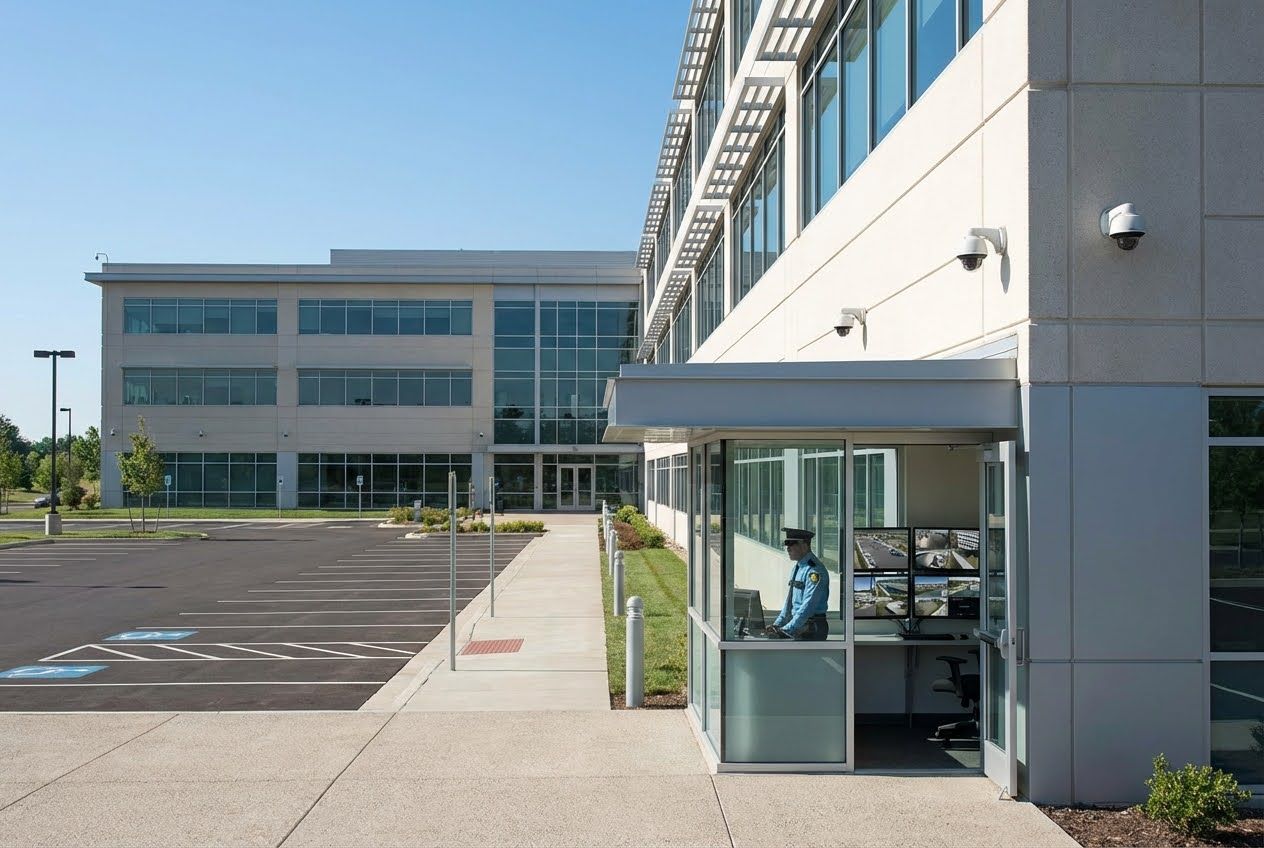
A security guard standing alone at a warehouse entrance can monitor one door, one hallway, one moment at a time. Add a network of strategically placed cameras, and that same guard gains visibility across dozens of access points, parking lots, and perimeter zones simultaneously. This multiplication of awareness represents the core value proposition when businesses integrate security cameras with professional guard operations.
The relationship between surveillance technology and physical security personnel has matured significantly over the past decade. Security cameras for business environments now serve as force multipliers rather than replacements for human judgment. Guards bring contextual awareness, de-escalation skills, and physical intervention capabilities that cameras cannot replicate. Cameras provide persistent observation, instant replay, and documentation that human memory cannot match. When these capabilities merge through thoughtful integration, businesses achieve security outcomes neither approach delivers on its own.
Extending the Guard's Field of Vision
Physical security professionals can be in only one location at any given time. Camera systems eliminate this fundamental limitation by bringing multiple locations to the guard rather than requiring the guard to travel to each area.
Eliminating Blind Spots in Large Facilities
Warehouses, distribution centers, and corporate campuses present coverage challenges that foot patrols alone cannot address. A 200,000-square-foot facility might require 45 minutes for a complete walking patrol, leaving most areas unobserved for extended periods.
- Camera networks provide continuous monitoring of loading docks, emergency exits, and storage areas between patrol rounds
- PTZ (pan-tilt-zoom) cameras allow guards to investigate suspicious activity without leaving their post
- Thermal imaging cameras detect unauthorized presence in areas where lighting conditions limit standard video effectiveness
Remote Perimeter Monitoring and Early Detection
Perimeter breaches often occur at the facility's edges, far from guard stations. Camera systems positioned along fence lines and property boundaries provide early warning that gives guards time to respond before intruders reach critical assets.
- Motion-activated cameras alert guards to perimeter activity within seconds of detection
- Night vision capabilities maintain visibility during hours when most unauthorized access attempts occur
- Integration with access control systems allows guards to verify whether detected movement involves authorized personnel
Enhancing Real-Time Incident Response
The value of business security cameras becomes most apparent during active incidents when rapid, informed response determines outcomes.
Video Verification for Alarm Prioritization
False alarms plague security operations, consuming guard resources and creating response fatigue. When an alarm triggers, camera verification allows guards to distinguish between actual threats and environmental triggers before committing to full response protocols.
- Guards can visually confirm whether motion alarms indicate human presence or wildlife, debris, or equipment malfunction
- Video verification reduces unnecessary armed responses, lowering liability exposure and response costs
- Accurate threat assessment allows guards to request appropriate backup before engaging with confirmed intruders
Tactical Intelligence for On-Site Interventions
When guards respond to confirmed incidents, camera feeds provide critical situational awareness. Knowing the number of individuals involved, their location, direction of movement, and whether weapons are visible allows guards to approach safely and effectively.
- Command center personnel can guide responding guards via radio while monitoring camera feeds
- Multiple camera angles reveal escape routes subjects might use, enabling coordinated containment
- Real-time video allows supervisors to make informed decisions about escalation and law enforcement notification
Improving Guard Safety and Accountability
Security cameras protect guards as much as they protect facilities. Documentation of guard activities and interactions serves both safety and professional accountability objectives.
Documenting Interactions for Liability Protection
Every interaction between security personnel and visitors, employees, or trespassers carries potential liability. Camera documentation provides objective records that protect guards against false accusations and support accurate incident reporting.
- Video evidence resolves disputes about guard conduct during confrontational encounters
- Documented patrol routes and response times demonstrate professional diligence
- Video documentation can support legitimate workplace injury claims when guards are injured on duty, provided the footage is handled in compliance with privacy and evidence-retention laws.
Cascadia Global Security emphasizes proper documentation protocols across all guard operations, recognizing that camera evidence protects both clients and security personnel.
Virtual Escorts During High-Risk Patrols
Guards conducting nighttime patrols in isolated areas face heightened risk. Camera systems enable virtual escort protocols where command center personnel maintain visual contact with patrolling guards throughout their rounds.
- Continuous visual monitoring ensures a rapid response if guards encounter danger
- Check-in protocols at camera-equipped waypoints confirm guard safety at regular intervals
- Recorded patrol footage documents completion of assigned routes and inspection points
Optimizing Guard Resources Through Video Analytics
Modern camera systems offer analytical capabilities that transform raw video into actionable intelligence, allowing security managers to deploy guard resources more effectively.
Automating Routine Surveillance Tasks
Video analytics handle repetitive monitoring tasks that previously required guard attention, freeing personnel for higher-value activities that require human judgment.
- License plate recognition automatically logs vehicle entries and flags unauthorized plates
- Facial recognition systems may assist guards in identifying persons of interest, but their use must comply with applicable state privacy and biometric data laws, such as Washington’s 2021 biometric privacy regulations.
- Loitering detection identifies individuals remaining in sensitive areas beyond normal timeframes
Data-Driven Guard Deployment Strategies
Camera systems generate data on traffic patterns, peak activity periods, and incident locations, which inform intelligent guard scheduling and positioning.
- Heat maps reveal high-traffic areas requiring increased guard presence
- Incident trend analysis identifies times and locations where security events cluster
- Occupancy monitoring helps guards anticipate crowding situations before they become problematic
Businesses working with Cascadia Global Security benefit from data-informed deployment strategies that maximize guard effectiveness while controlling labor costs.
Post-Incident Support and Evidence Management
Camera footage serves critical functions after incidents conclude, supporting investigations, insurance claims, and legal proceedings.
- High-resolution footage captures identifying details that witnesses often miss or misremember
- Timestamp accuracy establishes precise incident timelines for law enforcement reports
- Maintaining a verified chain of custody is essential to ensure video evidence remains admissible under U.S. Federal Rules of Evidence and state-level digital evidence standards.
- Archived footage allows investigators to review events leading up to incidents, revealing patterns or planning activities
Proper evidence management requires compliance with current data retention laws, including state-specific video storage limits and privacy protections for recorded individuals, to maintain evidentiary integrity.
Frequently Asked Questions
How do security cameras improve guard response times?
Cameras provide instant visual verification of alarms and incidents, eliminating travel time for initial assessment. Guards can confirm threat validity and gather tactical information before physically responding, reducing wasted responses to false alarms while accelerating reaction to genuine threats.
Can security cameras replace physical security guards?
Cameras cannot replace guards for functions requiring physical presence: access control enforcement, visitor assistance, de-escalation, emergency response, and deterrence through visible human presence. Cameras enhance guard capabilities but cannot replicate human judgment and intervention.
What camera features matter most for guard integration?
PTZ controls, real-time alert integration, mobile viewing capability, and clear audio capture provide the greatest operational value for guard teams. Analytics features such as motion detection and legally compliant facial recognition can significantly enhance situational awareness when configured in accordance with privacy and data protection standards.
How should businesses budget for integrated camera and guard security?
Integration typically adds 10–20% to the costs of a standalone camera system, depending on network complexity, licensing, and compliance requirements. Additional investment in guard training and policy development yields long-term savings by improving operational efficiency and reducing false alarm responses.
Building a Future-Proof Integrated Security Strategy
The most effective security programs treat cameras and guards as complementary components of unified systems rather than separate investments. Integration requires thoughtful planning around technology selection, training, and operational procedures.
Organizations should evaluate camera placement based on guard workflow rather than installing cameras independently and expecting guards to adapt. Training programs must ensure guards can effectively operate camera systems, interpret analytics alerts, and incorporate video intelligence into response protocols.
For businesses seeking professional security solutions that integrate surveillance technology with trained personnel, Cascadia Global Security offers veteran-owned expertise in developing comprehensive security programs. Their locally managed teams understand how to maximize the value of camera investments through proper guard integration and operational discipline.