
Security Strategies for Retail Stores
Josh Harris | March 20, 2026
Retail theft cost U.S. businesses over $121.6 billion in 2022, with shrinkage rates climbing to their highest levels in years. For store owners and operations managers, these numbers translate directly to eroded margins and operational headaches that compound quarterly. The challenge isn't just catching shoplifters: it's building comprehensive security strategies for retail stores that address everything from opportunistic theft to sophisticated organized crime rings. Effective protection requires layered defenses that work together, from physical deterrents and surveillance technology to staff training and digital safeguards. The retailers who get this right don't just reduce losses; they create safer environments for employees and customers while protecting the brand reputation they've worked years to build. What follows is an operational framework for building retail security that actually works, based on proven methods and real-world implementation.
Assessing Modern Retail Security Risks
Understanding your threat landscape is the foundation of any effective security program. Retailers face a diverse mix of challenges that require different countermeasures.
Common Physical Threats and Shoplifting Tactics
Opportunistic shoplifters account for roughly 60% of retail theft incidents. These individuals typically employ predictable methods: concealment in bags or clothing, tag switching, fitting room theft, and distraction techniques involving accomplices. Peak theft windows align with high-traffic periods when staff attention is divided, particularly during lunch rushes, after-school hours, and holiday seasons.
Professional boosters operate differently. They scout stores beforehand, identify blind spots in surveillance coverage, and target specific high-value items. Many use foil-lined booster bags to defeat electronic article surveillance systems. Recognizing these behavioral patterns helps staff intervene before merchandise leaves the store.
The Rise of Organized Retail Crime (ORC)
Organized retail crime has evolved into a sophisticated enterprise. ORC groups operate across multiple locations, employing teams of thieves who target specific merchandise categories for resale through online marketplaces, fencing operations, or even back into legitimate supply chains.
The National Retail Federation estimates ORC costs retailers $720,000 per $1 billion in sales as of 2024. These groups often conduct surveillance at stores, timing their thefts to coincide with shifts or known gaps in coverage. Fighting ORC requires coordination with law enforcement and information sharing with other retailers in your area.
Internal Loss Prevention and Employee Theft
Internal theft accounts for approximately 35% of retail shrinkage, often exceeding external theft in dollar value.
Employee theft ranges from cash register manipulation and fraudulent refunds to collusion with external thieves. Warning signs include lifestyle changes inconsistent with salary, reluctance to take time off, and resistance to procedural changes.
Effective internal controls include dual-verification for voids and refunds, regular cash drawer audits, and rotation of duties. Background checks during hiring and anonymous tip lines provide additional layers of protection.
Implementing Layered Physical Security Measures
No single security measure stops all threats. Effective retail protection combines multiple systems that reinforce each other.
Strategic Surveillance and AI-Powered Monitoring
Modern surveillance goes far beyond passive recording. AI-powered analytics can identify suspicious behaviors in real-time: loitering in high-value areas, concealment movements, and coordinated group activity. These systems alert staff to potential incidents before losses occur.
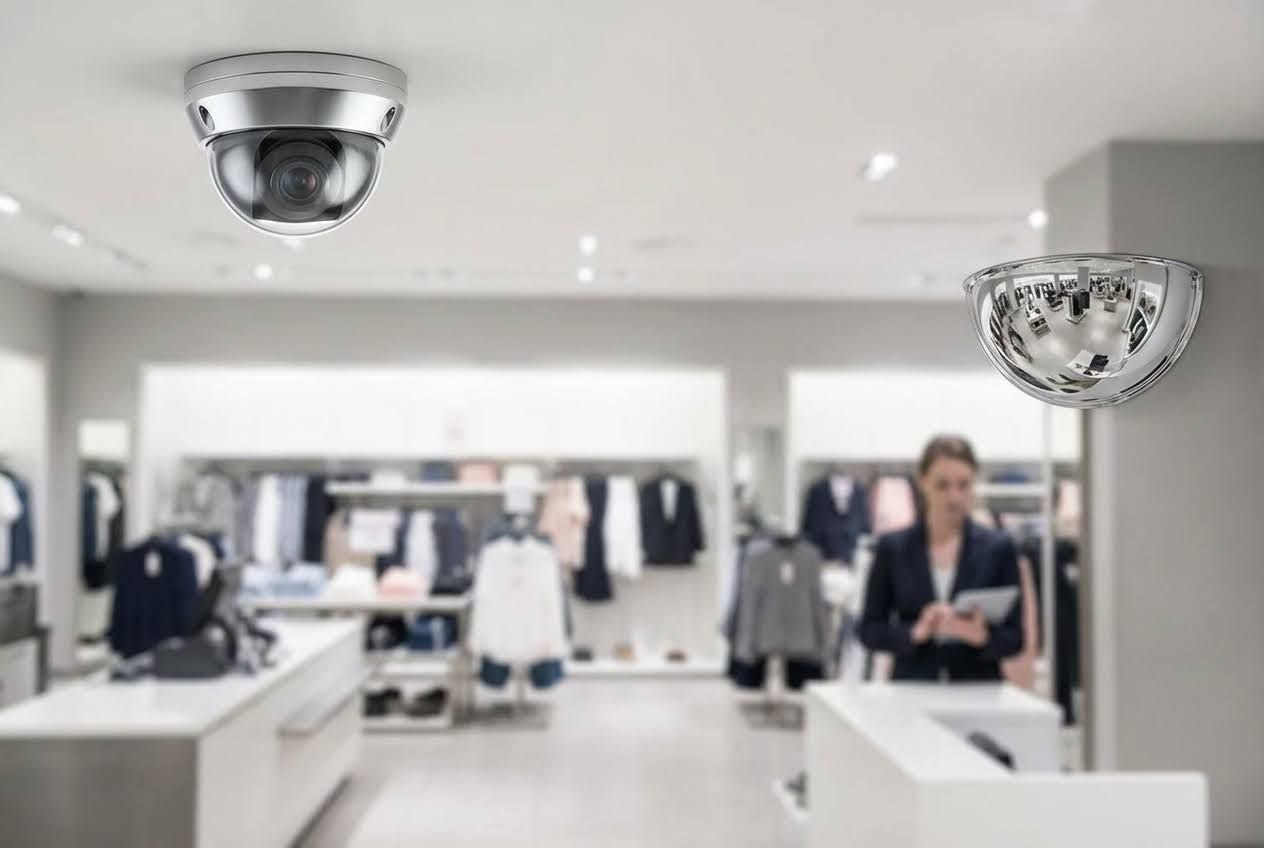
Camera placement matters as much as camera quality. Prioritize coverage of entrances, exits, point-of-sale areas, and high-shrinkage zones. Eliminate blind spots in aisles and fitting rooms while ensuring adequate lighting for clear footage. Cascadia Global Security offers trained personnel who can monitor these systems effectively and respond to alerts immediately.
Access Control and Perimeter Reinforcement
Controlling who enters restricted areas prevents both internal and external theft. Stockrooms, receiving docks, and managers' offices should require key cards or codes. Track access logs to identify unusual patterns.
Perimeter security starts at the parking lot. Adequate lighting, clear sightlines, and a visible security presence deter criminals before they enter your store. Bollards and barriers protect storefronts from smash-and-grab attacks, which have increased steadily through 2025, according to the U.S. Chamber of Commerce.
Electronic Article Surveillance (EAS) Systems
EAS systems create a final checkpoint at store exits. Tags and labels trigger alarms when merchandise passes through detection pedestals without being properly deactivated. Modern systems offer improved detection rates and reduced false alarms compared to older technology.
Effective EAS deployment requires consistent tagging protocols. High-shrinkage items need hard tags that require special tools for removal. Source tagging, where manufacturers apply tags during production, ensures consistent protection and reduces labor costs.
Optimizing Store Layout for Loss Prevention
Your store's physical design is a security tool. Thoughtful layout choices make theft more difficult while improving the customer experience.
Maximizing Visibility and Line-of-Sight
Open floor plans allow staff to observe more of the sales floor from any position. Keep fixture heights below eye level, particularly near entrances and high-value displays. Convex mirrors in corners extend sightlines into areas that would otherwise be blind spots.
Position checkout counters near exits so customers must pass employees on their way out. This creates a natural checkpoint without the confrontational feel of security gates. Staff stationed at these positions can greet customers while observing for signs of concealment.
High-Value Merchandise Placement Strategies
Small, expensive items belong in locked cases or behind counters where staff control access. Position these displays within direct view of employees, not tucked into corners or alcoves. The inconvenience to legitimate customers is minimal compared to the reduction in shrinkage.
Consider the path of travel through your store. Place high-theft items where natural traffic patterns keep them under observation. Avoid positioning valuable merchandise near emergency exits or in areas with limited camera coverage.
Cybersecurity and Point-of-Sale Protection
Physical security means little if criminals access your systems digitally. Retail cybersecurity protects both business operations and customer trust.
Securing Customer Data and Payment Gateways
PCI DSS compliance is the baseline, not the ceiling, for payment security. Encrypt all cardholder data in transit and at rest. Segment your network so point-of-sale systems cannot communicate with general business computers or guest WiFi.
Regular security assessments identify vulnerabilities before criminals exploit them. Penetration testing, vulnerability scanning, and code reviews should occur at least annually. Train employees to recognize phishing attempts, which remain the most common entry point for data breaches.
Preventing POS Skimming and Digital Fraud
Physical inspection of payment terminals should occur daily. Skimming devices overlay legitimate card readers to capture payment information. Staff should know what their terminals normally look like and report any changes immediately.
EMV chip transactions and contactless payments provide stronger authentication than magnetic stripe cards. Encourage customers to use these methods. Monitor transaction patterns for anomalies that might indicate compromised credentials or fraudulent returns.
Staff Training and Crisis Management Protocols
Technology and physical barriers require human judgment to function effectively. Well-trained staff multiplies the effectiveness of every other security investment.
De-escalation Techniques for Front-Line Staff
Most retail confrontations can be resolved without physical intervention. Train employees to maintain calm voices, avoid accusatory language, and create distance when situations escalate. The goal is protecting people first, merchandise second.
Establish clear policies about when staff should intervene versus observe and report. Direct confrontation with shoplifters creates liability and safety risks. Cascadia Global Security provides professional personnel trained specifically in retail environments who can handle confrontations safely.
Emergency Response and Incident Reporting
Every employee should know evacuation routes, assembly points, and communication protocols for emergencies. Active threat situations require different responses than fires or medical emergencies. Regular drills build muscle memory that functions under stress.
Incident documentation supports prosecution and insurance claims. Train staff to record detailed observations: physical descriptions, vehicle information, merchandise taken, and timestamps. Video footage should be preserved immediately following incidents before automatic overwriting occurs.
Frequently Asked Questions
What is the most cost-effective security measure for small retailers?
Visible deterrents provide the highest return for limited budgets. Quality surveillance cameras with prominent signage, combined with trained staff who greet every customer, prevent more theft than expensive technology alone. Start with coverage of entrances, exits, and checkout areas before expanding.
How often should retail security systems be updated?
Technology assessments should occur annually, with major upgrades every three to five years. Software updates and patches require more frequent attention, often monthly. Staff training should be refreshed at least quarterly to address new threats and reinforce protocols.
Should retail stores hire armed or unarmed security guards?
Most retail environments benefit from unarmed security personnel who focus on observation, customer service, and deterrence. Armed guards may be appropriate for high-value retailers like jewelry stores or locations in high-crime areas. The decision depends on specific risk assessments and local regulations.
How can retailers identify organized retail crime versus regular shoplifting?
ORC operations typically involve multiple individuals working in coordination, targeting specific merchandise categories, and hitting multiple stores in sequence. Watch for groups that split up upon entering, individuals who appear to be communicating with others outside, and theft of quantities exceeding personal use.
What role does employee training play in loss prevention?
Training is arguably the highest-impact security investment. Employees who understand theft indicators, follow consistent procedures, and feel empowered to report concerns prevent more losses than passive technology. Regular training also reduces internal theft by establishing clear expectations and accountability.
Evaluating and Evolving Security ROI
Security spending must demonstrate measurable returns. Track shrinkage rates, incident frequency, and resolution rates before and after implementing new measures. Compare these metrics against industry benchmarks to identify areas needing improvement.
Annual security audits reveal gaps that emerge as store layouts change, staff turnover increases, and criminal tactics evolve. What worked three years ago may be obsolete today. Budget for regular updates to both technology and training programs.
The most effective retail security strategies combine multiple layers working together. Physical barriers slow criminals down. Surveillance captures evidence. Trained staff respond appropriately. Digital protections secure transactions. When one layer fails, others compensate. For retailers seeking professional support in implementing these strategies, Cascadia Global Security offers comprehensive assessments and trained security personnel who integrate seamlessly with existing operations.