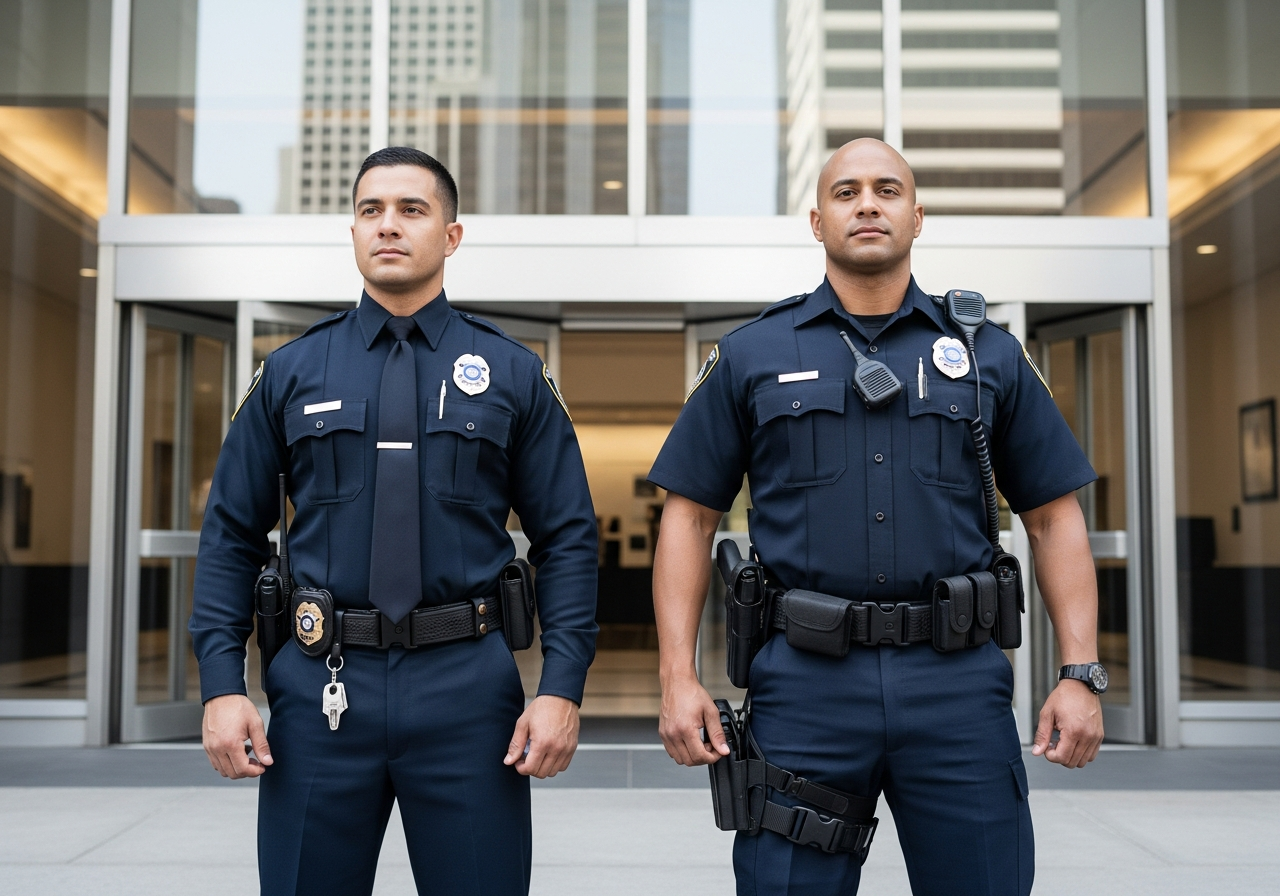
Washington State Security Guard Licensing: A Complete Guide
Josh Harris | June 12, 2026
Washington state security guard licensing is governed by a specific regulatory framework that applies to every private security guard working in the state, regardless of city or industry. If you are evaluating a security provider for your Seattle business, or if you are personally considering a career in security, understanding how the Washington Department of Licensing system works is the right starting point.
This guide explains what the law requires, how the process works for both unarmed and armed licenses, what disqualifies an applicant, and how to verify that any guard or company you work with holds a valid license.
What the Washington Department of Licensing requires for security guards
Washington's private security guard industry is regulated under RCW 18.170 and the accompanying administrative rules in WAC 308-18. The Washington Department of Licensing administers the program and issues individual guard licenses, company licenses, and trainer endorsements.
Every person working as a private security guard in Washington must hold a valid DOL license before beginning work. This is not optional and not waived by on-the-job experience. A guard who shows up to a post without a license is out of compliance, and the company employing that guard can face regulatory consequences.
The DOL distinguishes between two individual license types: unarmed private security guard and armed private security guard. The two licenses carry different requirements, different fees, and different training obligations. A guard who holds only an unarmed license is not authorized to carry a firearm on duty, regardless of whether they have a Concealed Pistol License or other personal carry authorization.
Unarmed security guard license: requirements and process
An unarmed security guard license applies to anyone who does not carry a firearm while working on duty for a licensed private security guard company. The minimum requirements under RCW 18.170.030 are:
- Be at least 18 years old
- Be a U.S. citizen or resident alien
- Be employed by, or have an employment offer from, a licensed private security guard company
- Complete pre-assignment training requirements
- Submit fingerprints for a background check
- Pay the application fee ($101 as of current DOL fee schedule)
Applicants can apply online through SecureAccess Washington (SAW) or by mail to the Private Security Guard Program in Seattle. Applying online is faster. Once an application number is issued, the applicant schedules fingerprinting through IdentoGO, Washington's electronic fingerprinting vendor.
The DOL fees page lists the current fee schedule: $101 for initial unarmed application, $95 for annual renewal, and a $5 license print fee. There is no multi-year license option; all individual guard licenses expire one year from issuance and must be renewed annually.
Training requirements: pre-assignment and ongoing
Before a new guard receives their license or temporary registration card, they must complete pre-assignment training with a DOL-certified trainer. The requirement is a minimum of 8 hours total, structured as at least 4 hours of classroom instruction followed by an additional 4 hours of classroom or individual instruction. The certified trainer signs the certification on the application when training is complete.
The training covers topics specified in WAC 308-18-300, and applicants must pass a written exam at the end of the pre-assignment course. All questions must be answered correctly, or incorrectly answered questions must be reviewed and initialed by both the applicant and the trainer before the application moves forward.
Pre-assignment training may be waived for individuals who were most recently employed full time as a sworn peace officer within the past five years, provided they pass the standard exam.
Post-assignment training requirements also exist under WAC 308-18-305. Guards working active posts are expected to maintain ongoing training in relevant subjects. Employers and companies should consult the WAC directly or work with their certified trainer to ensure ongoing compliance.
Armed security guard license: additional requirements
The armed private security guard designation carries meaningfully different requirements. A guard working armed posts must hold an armed private security guard license from the Washington Department of Licensing and a current Firearms Certificate issued by the Washington State Criminal Justice Training Commission (WACJTC).
To apply for the armed license through DOL, the applicant must:
- Be at least 21 years old
- Have a current WACJTC Firearms Certificate
The armed endorsement costs an additional $10 at DOL, on top of the standard guard license fees. Resident aliens must also provide proof of a noncitizen firearm license.
Obtaining the WACJTC Firearms Certificate is a separate process from the DOL license. The applicant (or their employing company) must complete an 8-hour Firearms Certificate Training Class with a WACJTC-certified private security firearms instructor, pass a written test, and complete a firearm qualification for each specific firearm make and model they will carry on duty. The employing company submits the application to WACJTC through the Acadis Portal. As of July 2025, the WACJTC Firearms Certificate application fee is $200 per person per company.
Firearms Certificates are issued per company. A guard working armed posts for two different companies needs two separate Firearms Certificates. Certificates renew annually and must be renewed within 30 days of expiration. The WACJTC Firearms Certificate page provides the current application packet, fee instructions, and renewal process details.
One point businesses and career-seekers often misunderstand: holding a Washington Concealed Pistol License (CPL) alone does not authorize a guard to work an armed security post. The CPL is a separate credential. The WACJTC Firearms Certificate is the required credential for armed private security work, and it must be current and tied to the specific employing company.
Background check, fingerprinting, and disqualifications
All Washington security guard applicants must submit fingerprints for a combined FBI and Washington State Patrol background check. The fingerprinting is processed by IdentoGO. Applicants must receive their DOL application number before scheduling fingerprinting, and the background check fee is paid separately to IdentoGO at the time of the appointment.
Under RCW 18.170.030, a prior criminal conviction does not automatically disqualify an applicant. The DOL evaluates whether the specific conviction directly relates to the applicant's capacity to perform security guard duties and whether withholding the license is necessary to protect Washington residents. The director exercises discretion in that determination.
In practice, convictions involving dishonesty, violence, or crimes directly connected to the guard role are the most likely to result in denial. Applicants with prior convictions are not prevented from applying; they should be prepared for additional review and potential denial depending on the nature and recency of the conviction.
Renewal cycle and fees
Washington security guard licenses renew annually. Renewal can be completed online through SecureAccess Washington or by mail. Guards can begin the renewal process up to 120 days before their license expires.
Current renewal fees from the DOL fee schedule:
- Individual guard license renewal: $95 (late renewal: $110)
- Company license renewal: $332 (late renewal: $442)
- Certified trainer endorsement renewal: $15 additional
- License print fee: $5
Failing to renew on time does not automatically void a guard's license; late renewal is possible at the higher fee. However, a guard whose license has lapsed should not be working active posts until the renewal is processed and the license is reinstated.
How to verify a guard or company is properly licensed
Anyone evaluating a security provider can verify license status through the Washington DOL license lookup portal at professions.dol.wa.gov. The tool allows searches by name or license number and returns current license status for individual guards, companies, and trainers.
For businesses hiring a security vendor, this verification step matters. A licensed company operating in Washington must hold a company-level license in addition to having all its guards individually licensed. Both layers should be confirmed before signing a contract.
This is also relevant for businesses that already have a vendor: random spot-checks of guard credentials against the DOL lookup are a straightforward compliance measure that takes minutes and costs nothing.
What this means for businesses evaluating security providers
Washington's licensing framework exists to create a baseline of accountability in the private security industry. For businesses in Seattle, Bellevue, Tacoma, and across the Puget Sound region, those requirements translate into a concrete set of questions worth asking any potential security vendor:
- Is the company holding a current DOL private security company license?
- Are all guards individually licensed, with current unarmed or armed endorsements as appropriate to their posts?
- For armed posts, does each guard hold a current WACJTC Firearms Certificate tied to this specific company?
- Who handles renewals and compliance tracking, and how is that documented?
A reputable provider will not only answer those questions directly but will have the documentation to back them up. If a vendor is vague about licensing status, that is worth taking seriously.
Cascadia Global Security maintains full Washington DOL compliance across its unarmed guards and armed guards programs operating in the Pacific Northwest. For businesses evaluating whether a current or prospective provider meets Washington's licensing standards, Cascadia's team can walk you through what to look for and how to verify it.
To connect with a Cascadia security specialist, reach out at (800) 939-1549 or request a quote and let us know you want to discuss Washington licensing compliance as part of your evaluation.
Frequently Asked Questions
How does the unarmed security guard license differ from the armed license in Washington?
The unarmed license requires applicants to be at least 18 years old, complete 8 hours of pre-assignment training, pass a background check, and pay a $101 application fee. The armed license requires applicants to be at least 21 years old and hold a current Firearms Certificate from WACJTC in addition to meeting the standard DOL requirements. The armed endorsement adds a $10 fee through DOL, and the WACJTC Firearms Certificate application currently costs $200 per person per employing company.
What does the pre-assignment training for Washington security guards cover?
Pre-assignment training consists of at least 8 hours with a DOL-certified trainer: a minimum of 4 hours of classroom instruction plus 4 additional hours of classroom or individual instruction. The curriculum follows topics defined in WAC 308-18-300, and applicants must pass a written exam before receiving their license. Guards with recent full-time sworn law enforcement experience may qualify for a training waiver if they pass the standard exam.
Does a Concealed Pistol License allow a Washington security guard to work armed posts?
No. A Washington CPL authorizes personal carry under state law but does not satisfy the requirements for working as a licensed armed private security guard. Armed guard posts require both a Washington DOL armed security guard license and a current WACJTC Firearms Certificate tied to the specific employing company. These are separate credentials with separate application processes.
How often do Washington security guard licenses need to be renewed?
Individual security guard licenses in Washington are valid for one year from the date of issuance and must be renewed annually. Renewals can be submitted up to 120 days before expiration. The current renewal fee is $95 for individual guards, with a $110 late renewal fee. WACJTC Firearms Certificates for armed guards also renew annually and must be renewed within 30 days of the expiration date.
How can a business verify that a security guard or company is licensed in Washington?
License verification is available through the Washington DOL license lookup tool at professions.dol.wa.gov. Searching by name or license number returns current license status for individual guards, security companies, and certified trainers. Businesses should verify both company-level and individual guard licenses before signing a service contract, and can use the same tool to spot-check vendors over the course of an ongoing engagement.