
What Rapid Response Means in Professional Security Operations

POST AUTHOR | POST PUBLISH DATE

When a fire alarm triggers at 2:47 AM in a corporate headquarters, the difference between a minor incident and a catastrophic loss often comes down to minutes. Security teams that understand what rapid response means in professional security operations don't just react faster: they respond smarter.

The distinction matters more than most facility managers realize. Formalized rapid response protocols are highly effective in security operations. According to an industry analysis by
ASIS International, properties with these established protocols saw a significant reduction in losses, specifically, approximately 60% less loss during security incidents, compared to those that relied on ad-hoc reactions. This gap exists because true rapid response isn't about speed alone. It's about coordinated action, pre-established protocols, and personnel trained to make tactical decisions under pressure. Whether you're protecting a distribution center, corporate campus, or retail location, the fundamentals remain consistent. Understanding these fundamentals transforms security from a passive deterrent into an active protective system.


Defining Rapid Response in a Security Context


Rapid response in security operations refers to the ability to detect, assess, and address threats within defined timeframes. Unlike emergency services that respond after incidents escalate, professional security rapid response aims to intercept threats during their earliest stages.


The Difference Between Reaction and Strategic Response


Reaction is instinctive. Strategic response is deliberate. When an untrained individual encounters a security breach, they react emotionally and with limited information. A trained security professional responds according to established protocols that account for variables an untrained person would never consider.


Consider an unauthorized vehicle approaching a facility perimeter. A reactive approach might involve confrontation or panic. The strategic response includes verifying against expected visitor logs, assessing vehicle behavior patterns, notifying backup personnel, and predetermined positioning to maintain safety while gathering information. Each step follows a decision tree developed through scenario planning.


Measuring Success Through Response Time Metrics


Professional security operations track response times across multiple categories. Initial detection to acknowledgment should occur within 30 seconds for monitored systems. Acknowledgment to dispatch typically targets 60 seconds. Dispatch-to-on-scene response time varies by facility size but typically ranges from 4–7 minutes for mobile patrols, depending on terrain and facility layout.


These metrics matter because threat escalation follows predictable timelines. Property crimes are often completed within 10–15 minutes. Violent incidents can escalate to a crisis within 90 seconds. Security programs that measure and optimize response times are better positioned to intercept threats before they reach critical stages.


Core Components of an Effective Rapid Response System


Building a rapid response capability requires investment across three interconnected areas: technology, operations centers, and mobile assets.


Advanced Surveillance and Threat Detection Technology


Modern threat detection extends far beyond camera systems. Integrated platforms combine video analytics, access control data, environmental sensors, and perimeter detection into a single dashboard. These systems automatically flag anomalies, reducing the cognitive load on monitoring personnel.


Video analytics can detect loitering behavior, abandoned objects, and movement in restricted areas without human oversight. Access control integration reveals when credentials are used at unusual times or in impossible sequences. Environmental sensors detect glass breaks, forced entry, or unusual temperature changes that might indicate fire or HVAC tampering.


24/7 Global Security Operations Centers (GSOC)


Operations centers serve as the nervous system of rapid response. Trained operators monitor feeds, verify alarms, and coordinate field responses around the clock. The best
GSOCs maintain direct communication links with client facilities, mobile units, and local law enforcement.


Effective operations centers follow standardized verification protocols that distinguish genuine threats from false alarms. This verification step prevents alarm fatigue while ensuring real incidents receive immediate attention.
Cascadia Global Security maintains centralized oversight capabilities that coordinate response activities across multiple client locations.


Mobile Patrol Units and Strategic Asset Deployment


Fixed security posts provide a consistent presence, but mobile units deliver flexibility. Patrol vehicles can respond to incidents across wider geographic areas, conduct random deterrence checks, and provide backup to static positions during escalated situations.


Strategic deployment means positioning mobile assets based on threat data rather than arbitrary schedules. If incident reports indicate increased activity in specific areas at certain hours, patrol patterns are adjusted accordingly. This intelligence-driven approach maximizes the protective value of limited resources.


The Role of Protocol and Standard Operating Procedures


Protocols transform individual competence into organizational capability. When every team member follows consistent procedures, response quality becomes predictable rather than dependent on who is on duty.


Escalation Matrices for Different Threat Levels


Not every incident requires the same level of response. Escalation matrices define which resources activate for different threat categories. A suspicious person near a perimeter fence triggers different actions than an active intrusion or a medical emergency.


Typical matrices include three to five levels, ranging from routine observation through full emergency response with law enforcement coordination. Each level specifies notification requirements, personnel deployment, documentation standards, and decision authority. Clear matrices prevent both under-response and over-reaction.


Communication Interoperability with Law Enforcement


Private security operates most effectively when integrated with public safety resources. This requires compatible communication systems, established relationship protocols, and mutual understanding of capabilities and limitations.


Interoperability planning includes identifying which law enforcement agencies hold jurisdiction, establishing direct contact methods that bypass general dispatch queues, and conducting periodic joint exercises. When security personnel can communicate directly with responding officers, handoffs are smooth and critical information is transferred without delay.


Human Factors: Training and Situational Awareness


Technology and protocols provide the framework, but human performance determines outcomes. The most sophisticated systems fail without personnel capable of executing under pressure.


Psychological Preparedness for High-Pressure Incidents


Security personnel face a unique challenge: extended periods of routine punctuated by moments of intense stress. Maintaining readiness during quiet shifts while remaining capable of immediate high-performance response requires specific psychological conditioning.


Effective training programs include scenario-based exercises that simulate real stress conditions. Repetition builds automatic responses that function even when cognitive processing slows under pressure.
Cascadia Global Security emphasizes this training approach, recognizing that personnel preparation directly impacts response quality.


Tactical Decision-Making Under Stress


Stress degrades decision-making through predictable mechanisms. Tunnel vision narrows perception. Time distortion affects judgment. Fine motor skills deteriorate. Training that accounts for these effects produces personnel who perform reliably when it matters most.


Tactical decision frameworks provide simple decision trees that function under cognitive load. Rather than requiring complex analysis, these frameworks provide clear if-then guidance that personnel can follow even under stress. Regular drilling ensures these frameworks become automatic.


Benefits of Rapid Response for Risk Mitigation


Investing in rapid response capability delivers measurable returns across multiple risk categories.


Minimizing Property Damage and Financial Loss


The relationship between response time and loss severity follows a predictable curve. Fires can double in size approximately every 60 to 90 seconds during the early stages, depending on materials and ventilation. Theft losses correlate directly with the time available to perpetrators. Water damage from burst pipes or equipment failures compounds rapidly.


Rapid detection and response interrupts these escalation patterns. A security team that identifies and addresses a small fire within two minutes prevents the loss that would occur if the same fire burned for ten minutes before discovery. The math consistently favors investment in response capability.


Ensuring Personnel Safety and Duty of Care


Organizations hold legal and ethical obligations to protect employees, visitors, and contractors on their premises. Rapid response capability demonstrates reasonable care in meeting these obligations.

Beyond liability considerations, personnel safety directly impacts organizational performance. Employees who feel secure in their workplace demonstrate higher engagement and lower turnover. Customers and clients form trust relationships with organizations that visibly prioritize safety.


Future Trends: AI and Predictive Rapid Response


Artificial intelligence is shifting from reactive to predictive. Machine learning algorithms analyze historical incident data, environmental conditions, and behavioral patterns to identify periods of elevated risk before incidents occur.


Predictive systems might flag that a particular facility entrance experiences increased unauthorized access attempts during specific weather conditions or that certain times correlate with higher incident rates. This intelligence allows preemptive resource positioning rather than purely reactive deployment.

Advances in computer vision enable real-time threat assessment that exceeds human capability in specific contexts. Systems can simultaneously monitor hundreds of camera feeds, identifying anomalies that would otherwise go unnoticed during extended monitoring sessions.
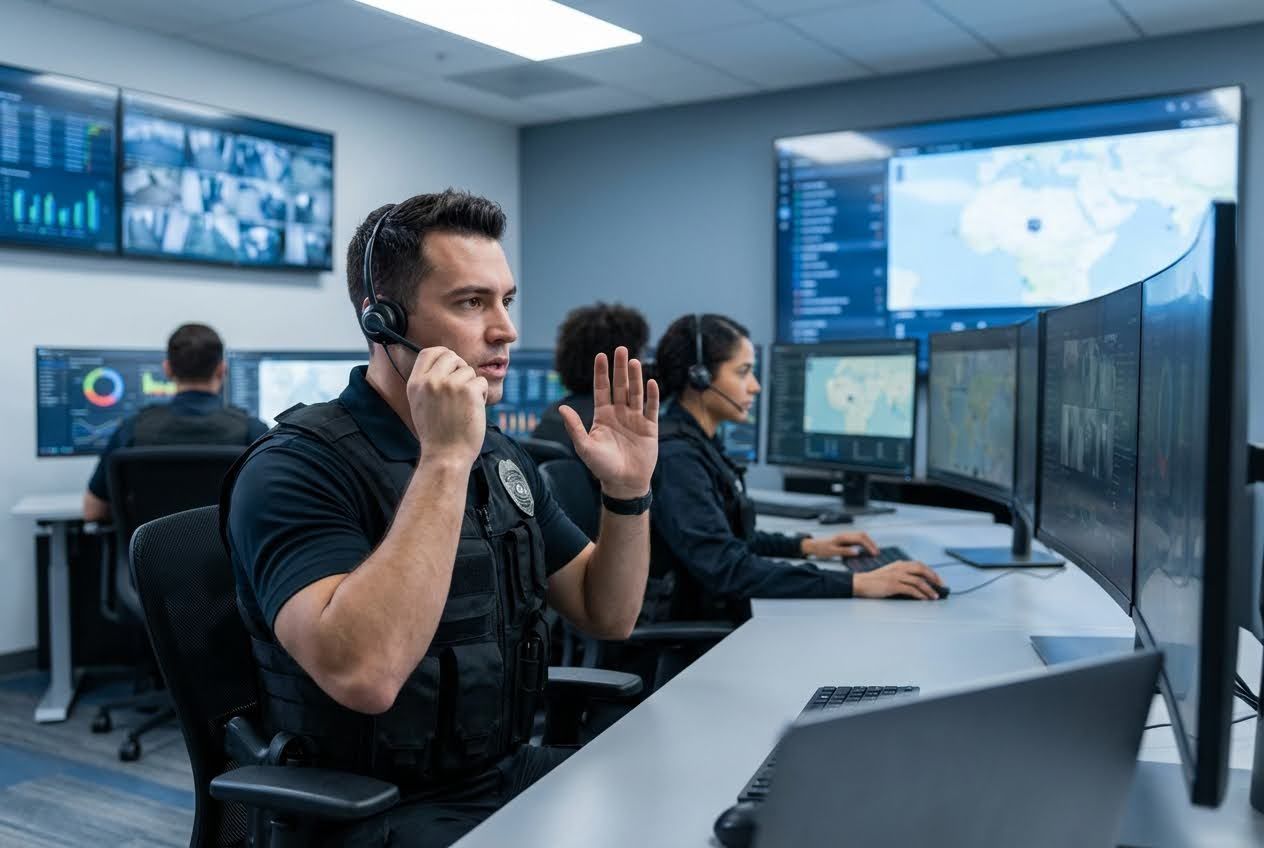

Security operations center with agents in tactical vests, headsets, and multiple screens displaying maps and surveillance feeds.

Frequently Asked Questions


What response time should professional security achieve?


Industry benchmarks target initial acknowledgment within 30 seconds of detection and on-scene response within 4–7 minutes for mobile patrols. Specific targets vary based on facility size and threat profile.


How does rapid response differ from standard security presence?


Standard security provides deterrence and observation. Rapid response includes systematic protocols, trained personnel, and coordinated resources designed to intercept and address active threats within defined timeframes.


What technology supports effective rapid response?


Integrated platforms combining video analytics, access control, environmental sensors, and communication systems provide the foundation. Operations centers coordinate these inputs into actionable intelligence for field personnel.


How do security teams coordinate with law enforcement during incidents?


Effective coordination requires pre-established relationships, compatible communication systems, and clear protocols for information sharing. Joint exercises build mutual understanding before incidents occur.


What training do rapid response personnel require?


Beyond basic security certifications, rapid-response personnel need scenario-based stress training, tactical decision-making frameworks, and regular drills in escalation protocols.


Building Security That Responds When It Matters


Understanding what rapid response means in professional security operations reveals why some security programs deliver genuine protection while others provide only the appearance of safety. The combination of technology, protocols, and trained personnel creates a capability that passive security presence cannot match.


For organizations evaluating their security posture, rapid response capability should be a key factor in program design.
Cascadia Global Security offers professional security guard services and off-duty law enforcement solutions designed around these principles. As a veteran-owned firm with locally managed teams, they bring the operational discipline required for effective rapid response. Learn more about how structured security programs protect what matters most.

By Josh Harris February 18, 2026
Austin's tech-driven economy and rapid population growth have created a perfect storm of security challenges for local businesses. From data breaches targeting Silicon Hills startups to physical threats at expanding retail centers, companies across Central Texas face risks that demand sophisticated, multi-layered protection. The numbers tell the story: Texas ranked third nationally in reported data breaches in 2025, and Austin-area businesses experienced a 29% increase in cybersecurity incidents compared to the previous year. Physical security concerns have grown alongside a 14% increase in commercial property crimes in Travis County during the same period. For businesses seeking comprehensive security support in Austin, Texas, the question isn't whether to invest in protection, but how to build a program that addresses both digital and physical vulnerabilities while remaining compliant with state and federal regulations. The Evolving Security Landscape for Austin Businesses Austin's transformation from a mid-sized state capital to a major technology hub has fundamentally changed the threat environment. The city now hosts operations for Tesla, Apple, Google, and hundreds of venture-backed startups, making it a high-value target for both cybercriminals and traditional thieves. Unique Challenges for the Silicon Hills Tech Sector Tech companies face a distinct risk profile. Intellectual property theft, corporate espionage, and ransomware attacks represent existential threats to startups whose entire value may reside in proprietary code or customer data. A single breach can destroy years of development work and investor confidence. The hybrid work model adds complexity. Employees accessing sensitive systems via coffee shops, co-working spaces, and home networks exponentially expand the attack surface. Physical security at headquarters means little when credentials can be compromised from anywhere. Regulatory Compliance for Texas Enterprises Texas businesses must navigate an increasingly complex regulatory environment. Businesses face complex compliance requirements, including the rigorous data-handling standards under the Texas Data Privacy and Security Act (TDPSA) . Adherence to industry-specific regulations such as HIPAA, PCI DSS, and SOC 2 adds significant and essential layers of compliance. Non-compliance carries real consequences. Fines can reach millions of dollars, and regulatory violations often trigger mandatory breach notifications that damage customer trust. Companies operating across state lines face even greater complexity, as they must comply with both Texas requirements and stricter standards in states like California. Managed Cybersecurity Services Outsourcing cybersecurity operations to specialized providers has become the default approach for mid-market Austin businesses. The economics are straightforward: building an in-house security operations center requires seven-figure investments in technology and talent that most companies cannot justify. 24/7 Threat Monitoring and Incident Response Cyberattacks don't follow business hours. Ransomware deployments most frequently occur on weekends or early mornings, when IT coverage is reduced, requiring continuous monitoring by trained analysts who can identify and contain threats before they spread. Modern security operations centers use automated threat detection to flag suspicious activity, but human judgment remains essential for distinguishing genuine attacks from false positives. The best providers maintain response times under 15 minutes for critical alerts and have clear escalation procedures for different threat levels. Data Encryption and Cloud Security Solutions Encryption protects data both at rest and in transit, rendering stolen information useless without decryption keys. For Austin businesses using cloud infrastructure, encryption must extend across AWS, Azure, Google Cloud, and hybrid environments. Cloud security requires specialized expertise. Misconfigured S3 buckets and overly permissive access controls have caused some of the largest data breaches in recent years. Regular security audits and automated configuration monitoring catch these vulnerabilities before attackers exploit them. Physical Security and Surveillance Integration Digital security means nothing if someone can walk into your server room. Physical security remains the foundation of any comprehensive protection program, and modern systems integrate with cybersecurity infrastructure to provide unified threat visibility. Smart Access Control Systems Traditional lock-and-key systems create management nightmares. Keys get copied, lost employees retain access, and there's no audit trail showing who entered which areas and when. Smart access control solves these problems through credential-based entry systems that can be managed remotely. Cascadia Global Security provides professional security personnel who work alongside access control technology, ensuring that automated systems have human backup for unusual situations. The combination of trained guards and smart technology creates a defense-in-depth that neither approach achieves on its own. AI-Powered Video Analytics for Austin Facilities Video surveillance has evolved far beyond passive recording. AI-powered analytics can detect unusual behavior patterns, identify unauthorized individuals, and alert security personnel to potential threats in real time. These systems reduce the burden on human operators while improving detection rates. For Austin businesses with multiple locations, centralized video management allows security teams to monitor all facilities from a single dashboard. Integration with access control systems enables automatic camera activation when doors are accessed, creating comprehensive incident documentation. Employee Training and Security Culture Employee training is one of the most impactful security investments a business can make. Recent industry reports estimate that human error accounts for approximately 74% of data breaches, underscoring that technology alone is insufficient to prevent security incidents. Phishing Simulation and Awareness Programs Phishing attacks have grown increasingly sophisticated. Attackers research targets on LinkedIn, craft personalized messages, and create convincing replicas of legitimate websites. Even security-conscious employees can be fooled by well-executed campaigns. Effective training programs combine periodic awareness sessions with ongoing phishing simulations that test employee vigilance. When someone clicks a simulated phishing link, they receive immediate feedback explaining what they missed. This approach reduces click rates by 60-80% over six months. Training should extend beyond phishing to cover physical security awareness, including: Challenging unfamiliar individuals in secure areas Proper visitor escort procedures Reporting suspicious behavior or objects Secure document handling and disposal Disaster Recovery and Business Continuity Planning Security isn't just about preventing incidents; it's about surviving them. Every Austin business needs documented plans to maintain operations when systems fail, whether due to cyberattacks, natural disasters, or equipment failures. Automated Backup Solutions for Local Servers The 3-2-1 backup rule remains the gold standard: three copies of data on two different media, with one copy stored offsite. For Austin businesses, this typically means local backups for rapid recovery, cloud backups for disaster protection, and air-gapped backups to protect against ransomware. Automated backup systems eliminate human error. Manual backup processes inevitably fail when employees forget, skip steps, or make configuration mistakes. Automation ensures consistent protection regardless of staff turnover or workload pressures. Rapid Recovery Protocols to Minimize Downtime Backup data means nothing without tested recovery procedures. Too many businesses discover their backups are corrupted or incomplete only when they desperately need them. Regular recovery testing validates backup integrity and trains staff on restoration procedures. Recovery time objectives vary by system criticality. Email may tolerate 24 hours of downtime, whereas e-commerce platforms require recovery within minutes. Documenting these requirements ensures recovery efforts are prioritized correctly during actual incidents. Selecting a Local Security Partner in Central Texas Choosing a security provider is one of the most consequential decisions Austin businesses make. The wrong partner creates false confidence while leaving critical vulnerabilities unaddressed. Look for providers with demonstrated expertise in Austin. Local knowledge matters: understanding which neighborhoods have higher crime rates, which regulatory agencies are most active, and which response times are realistic given Austin traffic conditions. Cascadia Global Security maintains locally managed teams throughout Texas, providing the responsiveness of a local provider with the resources of a national organization. Their combination of trained security personnel and technology integration addresses both physical and operational security needs. Verify credentials carefully. Professional security providers should carry appropriate insurance, conduct thorough background checks on all personnel, and maintain current certifications. Ask for references from similar businesses and actually call them.
By Josh Harris February 18, 2026
The Evolving Landscape of Retail Shrinkage Retail theft costs American businesses over $86.6 billion annually, a figure that continues climbing as criminal tactics grow more sophisticated. For store owners and loss-prevention managers, reducing retail theft through security presence and strategic planning has become essential to protecting margins and maintaining a safe shopping environment. The days of relying solely on cameras and hope are over. What separates thriving retailers from those bleeding inventory isn't just budget size. It's the intelligence behind their security approach. Effective theft prevention combines visible deterrence, trained personnel, environmental design, and data-driven decision-making into a cohesive system. Each element reinforces the others, creating layers of protection that adapt to emerging threats. Retailers who see the best results treat security as an operational discipline rather than an afterthought. They conduct regular assessments, train their teams, and partner with professional security providers who understand retail-specific challenges. This proactive stance transforms loss prevention from a cost center into a genuine competitive advantage. Understanding Internal vs. External Theft Internal theft accounts for roughly 35% of retail shrinkage, making it nearly as damaging as external shoplifting. Employees have access, knowledge of blind spots, and understanding of inventory systems that external thieves lack. Common schemes include sweethearting (giving unauthorized discounts to friends), ticket switching, and outright merchandise theft during shifts. External theft ranges from opportunistic shoplifting to sophisticated grab-and-run operations. Professional thieves often case stores beforehand, identifying security gaps and high-value targets. Understanding both threat types allows retailers to design countermeasures addressing the full spectrum of risk. The Economic Impact of Organized Retail Crime Organized retail crime (ORC) has transformed from a nuisance into a billion-dollar problem. These networks operate with business-like efficiency, targeting specific merchandise categories and reselling stolen goods through online marketplaces. A single ORC operation can strip thousands of dollars in inventory within minutes. The ripple effects extend beyond direct losses. Insurance premiums rise, employee morale suffers, and some retailers close locations in high-crime areas entirely. Communities lose jobs and convenient shopping options, creating economic damage that far exceeds the value of stolen merchandise. Strategic Security Personnel Placement Security guards remain the most visible and immediate deterrent against retail theft. Their effectiveness depends heavily on strategic positioning, proper training, and integration with broader loss prevention systems. Random placement wastes resources while targeted deployment multiplies impact. Uniformed Presence as a Visual Deterrent A uniformed guard stationed at the entrance changes criminal calculations instantly. Studies consistently show that visible security presence reduces theft attempts by 25–55% in retail environments. The psychology is straightforward: thieves prefer easy targets, and a guard signals this store isn't one. Entrance positioning serves multiple purposes beyond deterrence. Guards can greet customers, creating positive engagement while simultaneously observing behavior patterns. They manage access during high-traffic periods and provide immediate response capability when incidents occur. Cascadia Global Security provides trained retail security personnel who understand this balance between customer service and vigilant observation. Undercover Loss Prevention Tactics Plainclothes loss prevention officers complement uniformed guards by catching thieves who've learned to avoid obvious security. These specialists blend with regular shoppers while monitoring suspicious behavior patterns. They can observe without alerting potential thieves, building cases for apprehension and prosecution. Effective undercover operations require specific training in legal observation, evidence documentation, and safe apprehension procedures. Officers must understand the fine line between observation and harassment, protecting both the store and customer rights. Optimizing Guard Placement at High-Risk Zones Data should drive guard positioning decisions. High-theft areas typically include cosmetics, electronics, small high-value items, and fitting rooms. Heat mapping software combined with loss data reveals exactly where security presence generates maximum return. Rotating positions throughout shifts prevents predictability while maintaining coverage. Thieves study patterns, so guards who vary their routes and timing create uncertainty that deters criminal planning. Designing a Comprehensive Loss Prevention Plan Effective theft reduction requires documented strategies, clear protocols, and regular refinement based on results. Ad-hoc approaches leave gaps that criminals exploit. A written plan ensures consistency across shifts, locations, and personnel changes. Conducting Regular Vulnerability Assessments Quarterly security audits identify weaknesses before criminals do. Professional assessments examine physical security, procedural gaps, employee compliance, and technology effectiveness. Outside evaluators often spot blind spots that internal teams overlook through familiarity. Assessment findings should generate prioritized action items with assigned ownership and deadlines. The most sophisticated audit means nothing without follow-through on recommendations. Integrating Technology with Physical Security Cameras, electronic article surveillance (EAS), and inventory tracking systems multiply human effectiveness when properly integrated. Guards equipped with real-time camera access can respond to incidents across the store. EAS systems alert staff to concealment attempts. Technology alone catches few thieves. Its value lies in supporting trained personnel who interpret alerts and take appropriate action. Cascadia Global Security teams coordinate seamlessly with existing technology infrastructure to maximize protective coverage. Employee Training and Incident Response Every employee becomes a loss prevention asset with proper training. Front-line staff notice suspicious behavior, witness theft attempts, and interact with potential shoplifters daily. Equipping them with knowledge and protocols transforms passive observers into active participants in store protection. De-escalation Techniques for Staff Confrontations over suspected theft can escalate dangerously. Employees need training in calm, professional approaches that prioritize safety over merchandise recovery. Aggressive tactics risk injury, lawsuits, and negative publicity that far exceed the value of any stolen item. Effective de-escalation emphasizes observation and reporting over direct confrontation. Staff should know when to engage, when to maintain distance, and when to immediately contact security personnel. Standardized Reporting and Evidence Collection Consistent documentation supports prosecution, insurance claims, and pattern analysis. Every incident should generate a written report that includes the time, location, suspect description, merchandise involved, and witness information. Mobile reporting apps streamline this process. Evidence collection protocols preserve the chain of custody for potential prosecution. Video clips, photographs, and recovered merchandise must be handled in accordance with established procedures to maintain evidentiary value. Environmental Design and Store Layout Optimization Physical store design significantly affects the opportunity for theft. The concept of Crime Prevention Through Environmental Design (CPTED) applies directly to retail environments, using layout and visibility to discourage criminal behavior. Eliminating Blind Spots and Improving Sightlines Low shelving units, strategically placed mirrors, and open floor plans keep merchandise visible from multiple angles. Thieves need concealment to operate, and removing hiding spots forces them to work in plain sight. Fitting rooms require particular attention as common concealment locations. Attendant stations, item limits, and count verification reduce opportunities for merchandise to disappear behind closed doors. Measuring the ROI of Security Investments Security spending should deliver measurable returns through reduced shrinkage, lower insurance costs, and fewer incidents. Tracking these metrics requires baseline measurements and consistent data collection over time. Effective measurement compares shrinkage rates before and after security implementations. Factor in all costs, including personnel, technology, and training, against documented loss reductions. Professional security services typically recoup their cost through theft prevention, often within the initial 12 to 18 months.