Workplace Safety Topics Where Security Plays a Key Role

Josh Harris • February 6, 2026

The Intersection of Physical Security and Occupational Safety


A forklift operator works in a restricted warehouse zone while an unauthorized visitor wanders past a broken access gate. A chemical spill goes unnoticed because surveillance cameras point only at entry doors. These scenarios reveal a critical gap: when physical security and occupational safety operate in silos, preventable incidents become inevitable. Organizations that recognize workplace safety topics where security plays a key role gain a significant advantage in protecting both people and operations.

The most effective risk management programs treat security and safety as two sides of the same coin. Security professionals bring expertise in threat assessment, access control systems, and emergency response capabilities. Safety teams contribute hazard identification, compliance knowledge, and injury prevention protocols. When these disciplines collaborate, organizations create comprehensive protection that neither could achieve on its own.


Defining the Shared Responsibility Framework


Security and safety teams must establish clear ownership while maintaining collaborative oversight. This framework typically includes:

  • Joint risk assessments are conducted quarterly
  • Shared incident reporting systems
  • Cross-training programs for frontline personnel
  • Unified communication protocols during emergencies
  • Combined budget planning for protective measures

The framework succeeds when both teams recognize their interdependence rather than competing for resources or authority.


The Impact of Integrated Security on Risk Mitigation


Organizations with integrated security and safety programs report up to 30% fewer workplace incidents than those with separate departments. This reduction stems from eliminating blind spots that exist when teams work independently. A security officer trained to recognize chemical storage violations becomes an additional safety resource. A safety manager who understands access control can identify vulnerabilities in hazardous areas.


Access Control as a Safety Barrier


Access control serves dual purposes: keeping unauthorized individuals out and keeping employees safe from hazardous environments. Modern access systems do far more than verify credentials at front doors.


Preventing Unauthorized Entry into High-Hazard Zones


Restricted areas exist for good reasons. Electrical rooms, chemical storage facilities, and heavy machinery zones require specific training and protective equipment. Effective access control in these areas involves:

  • Credential-based entry requiring verified safety certifications
  • Real-time monitoring of zone occupancy
  • Automatic lockouts during maintenance operations
  • Integration with safety training databases
  • Audit trails documenting all access attempts

Cascadia Global Security deploys trained personnel who understand both security protocols and safety requirements, ensuring that access restrictions serve protective purposes rather than mere compliance checkboxes.


Visitor Management and Emergency Muster Protocols


Knowing exactly who is in your facility at any given moment becomes critical during emergencies. Visitor management systems that capture names, locations, and expected departure times enable accurate headcounts during evacuations. Security teams can provide real-time occupancy data to emergency responders, potentially saving lives when every minute matters.


Mitigating Workplace Violence and Internal Threats


Workplace violence remains a serious concern across industries. According to
OSHA and the U.S. Bureau of Labor Statistics (2024), approximately 1.3 million American workers experience workplace violence annually. Security personnel serve as the primary defense against both external threats and internal conflicts that escalate dangerously.


De-escalation Training and Intervention Strategies


Security officers trained in de-escalation techniques can prevent confrontations from becoming violent incidents. Effective intervention strategies include:

  • Recognizing early warning signs of agitation
  • Creating physical distance while maintaining communication
  • Using calm, non-threatening verbal techniques
  • Knowing when to call for backup versus handling situations independently
  • Documenting incidents thoroughly for future prevention


Panic Alarm Systems and Rapid Response Coordination


Silent panic alarms allow employees to summon help without escalating volatile situations. Security teams must coordinate response protocols with local law enforcement, establishing clear communication channels and designated staging areas. Response time directly correlates with outcome severity, making pre-planned coordination essential.


Surveillance and Environmental Safety Monitoring


Video surveillance systems protect against theft and unauthorized access, but their safety applications often go underutilized. Strategic camera placement and trained monitoring personnel transform surveillance into a proactive safety tool.


Using CCTV to Identify Slip and Fall Hazards


Security personnel monitoring surveillance feeds can identify hazards before they cause injuries. Spilled liquids, damaged flooring, obstructed walkways, and improper storage create slip-and-fall risks that cameras can detect. Trained observers watching live feeds can dispatch maintenance or security to address hazards immediately rather than waiting for incident reports.

Key monitoring priorities include:

  • Loading dock conditions during deliveries
  • Walkway obstructions in high-traffic areas
  • Weather-related hazards at building entrances
  • Equipment or material storage violations


Remote Monitoring for Lone Worker Protection


Employees working alone face elevated risks when colleagues are not nearby to assist during emergencies. Remote monitoring through surveillance systems and check-in protocols provides essential oversight.
Cascadia Global Security offers monitoring services that maintain visual and communication contact with isolated workers, ensuring rapid response in the event of incidents.


Emergency Response and Crisis Management


When emergencies strike, security personnel often serve as the first line of response. Their training, positioning, and communication equipment make them natural first responders for medical emergencies, fires, and security threats.


Security Personnel as First Responders


Security officers positioned throughout facilities can reach incident scenes faster than external emergency services. Effective first-responder capabilities require:

  • CPR and first aid certification
  • AED training and equipment access
  • Fire extinguisher operation knowledge
  • Hazardous material awareness
  • Clear escalation protocols


Coordinating Evacuations and Shelter-in-Place Orders


Security teams manage building evacuations, ensuring orderly exits and accounting for all occupants. They also coordinate shelter-in-place orders during external threats, securing entrances and directing occupants to safe locations. These responsibilities demand clear communication systems, regular drills, and coordination with local emergency services.


Cyber-Physical Security in Industrial Environments


Industrial control systems manage critical safety functions in manufacturing, utilities, and processing facilities. These systems increasingly connect to networks, creating vulnerabilities that traditional IT security may not address.


Protecting Safety-Critical Control Systems


A cyberattack on safety systems could disable emergency shutoffs, manipulate sensor readings, or trigger dangerous equipment malfunctions. Physical security measures protect access points to control system hardware:

  • Secured server rooms with monitored access
  • Protected network infrastructure and connection points
  • Visitor escort requirements in control areas
  • Regular audits of physical access to critical systems

Security teams must understand which physical assets support safety-critical systems and prioritize their protection accordingly.


Building a Unified Culture of Vigilance and Safety


Sustainable safety and security performance requires cultural commitment beyond policies and procedures. Organizations that excel create environments where every employee feels responsible for identifying and reporting hazards and threats.

Building this culture involves visible leadership commitment, consistent communication about safety and security priorities, and recognition programs that reward proactive behavior. Security personnel who engage positively with employees, rather than acting solely as enforcers, encourage the information sharing that prevents incidents.

Regular training that addresses both safety and security topics reinforces the connection between these disciplines. Joint exercises, tabletop scenarios, and cross-functional team meetings build relationships and shared understanding that prove invaluable during actual emergencies.
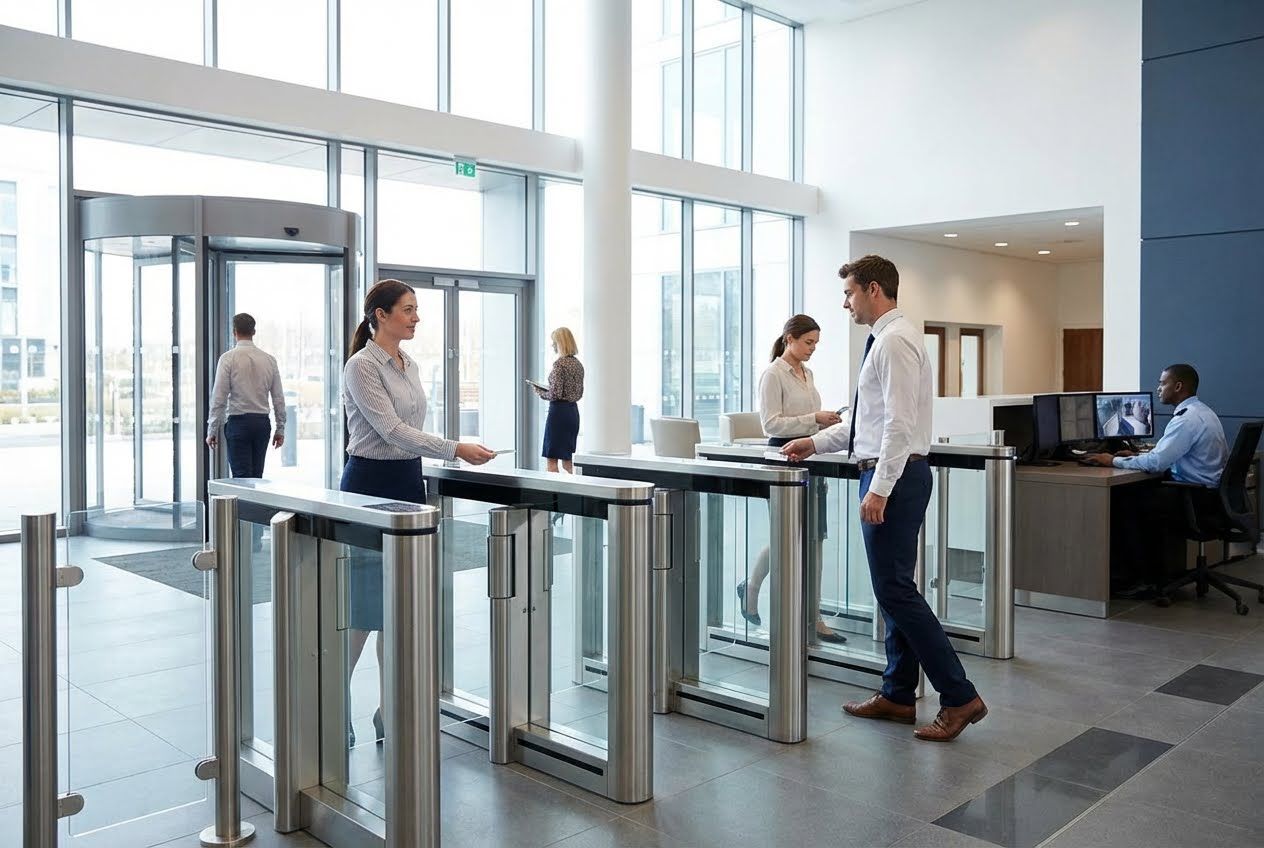

People entering a modern office building through security turnstiles, with a guard monitoring screens at a desk.

Frequently Asked Questions


How do security guards contribute to workplace safety beyond preventing theft?


Security personnel identify hazards, respond to medical emergencies, manage evacuations, monitor lone workers, and enforce access restrictions to dangerous areas. Their constant presence and training make them valuable safety resources.


What training should security officers receive for safety-related responsibilities?


Essential training includes first aid, CPR, AED operation, fire extinguisher use, hazardous material awareness, and de-escalation techniques. Industry-specific training addresses unique hazards present in each facility.


How can access control systems improve workplace safety?


Access control prevents untrained individuals from entering hazardous zones, tracks facility occupancy for emergency response, and creates audit trails documenting who accessed restricted areas.


What role does surveillance play in preventing workplace injuries?


Trained security personnel monitoring surveillance feeds can identify slip hazards, unsafe behaviors, and equipment problems before they cause injuries, enabling proactive intervention.


How should organizations coordinate security and safety departments?


Effective coordination includes joint risk assessments, shared incident-reporting systems, cross-training programs, unified communication protocols, and coordinated planning for protective measures.


Creating Safer Workplaces Through Professional Security


The connection between physical security and occupational safety grows stronger as organizations recognize that protecting people requires comprehensive approaches. Security personnel who understand safety principles and safety professionals who appreciate security capabilities create protection that neither discipline achieves independently.

For organizations seeking professional security services that integrate with broader safety objectives, Cascadia Global Security provides trained personnel, local management, and customized programs designed for specific operational requirements. Explore how professional security services can strengthen your workplace safety program.

By Josh Harris February 7, 2026
When alarms sound, and panic spreads, the difference between controlled evacuation and chaos often comes down to one factor: security personnel who know exactly what to do. Buildings empty in minutes during emergencies, but those minutes determine whether everyone reaches safety or whether bottlenecks, confusion, and secondary incidents claim lives. Effective evacuation planning assigns security teams a central role during emergencies, transforming guards from passive observers into active life-safety coordinators. Security officers positioned at critical points, trained in crowd psychology, and connected to real-time communication networks become force multipliers when seconds count. Understanding how security professionals contribute to emergency response reveals why their involvement must begin long before any alarm sounds. The Intersection of Physical Security and Life Safety Security and emergency management share a fundamental goal: protecting people and assets from harm. When these disciplines operate in silos, gaps emerge that cost lives during actual emergencies. Defining the Security Officer's Role in Crisis Management Security officers occupy a unique position during emergencies. They know the facility's layout intimately, recognize faces, and understand normal traffic patterns. This institutional knowledge proves invaluable when directing evacuees away from danger zones or identifying individuals who need assistance. Their responsibilities during crisis events typically include: Initial threat assessment and alarm verification Crowd direction at key decision points Access control to prevent re-entry into dangerous areas Communication relay between occupants and emergency responders Assistance coordination for individuals with mobility challenges Integrating Security Personnel into Emergency Action Plans (EAPs) Emergency action plans that treat security as an afterthought fail when tested. Cascadia Global Security emphasizes integrating guard services directly into client EAPs from the earliest stages of development. This means security officers participate in planning meetings, review evacuation routes, and provide input on potential obstacles. The result is a plan that accounts for real-world conditions rather than theoretical scenarios drawn on blueprints. Pre-Emergency Risk Assessment and Facility Hardening Effective emergency response begins months or years before any incident occurs. Security teams contribute critical ground-level intelligence during the assessment phase. Identifying Vulnerabilities in Egress Routes Security officers patrol facilities daily and notice problems that escape periodic inspections. Locked exit doors, blocked corridors, malfunctioning emergency lighting, and obstructed stairwells all create evacuation hazards. Regular vulnerability assessments should document: Exit door functionality and signage visibility Corridor widths and potential obstruction points Stairwell capacity and lighting conditions Assembly area accessibility and capacity Alternative routes when primary paths become compromised Strategic Placement of Security Assets and Wayfinding Where security officers position themselves during emergencies determines the efficiency of evacuations. Pre-planned posts at corridor intersections, stairwell entrances, and exit points ensure evacuees receive consistent direction. Wayfinding becomes critical when smoke, power outages, or unfamiliar visitors complicate navigation. Security personnel stationed at decision points prevent hesitation that can create dangerous crowding. Active Response: Crowd Control and Panic Mitigation The moment an emergency begins, security officers transition from monitoring to active intervention. Their visible presence and calm authority shape how evacuees behave. Directing Safe Movement and Preventing Bottlenecks Bottlenecks kill people during evacuations. Crowds compress at narrow points, creating crushing pressure that can cause injuries and block escape routes entirely. Security officers trained in crowd dynamics recognize early warning signs: slowing movement, increasing density, and rising noise levels. Effective interventions include: Redirecting flow to underutilized exits Maintaining spacing at merge points Physically positioning to prevent counterflow Using clear verbal commands that cut through ambient noise Research indicates that trained personnel can effectively influence nearby crowd behavior, though the effective distance varies based on environmental factors and acoustics. Managing Access Control During Mass Egress Normal access control protocols reverse during evacuations. Doors that typically require credentials must open freely for outbound traffic while preventing unauthorized re-entry. Security teams manage this transition by overriding electronic locks, propping doors appropriately, and stationing personnel to ensure one-way flow. The challenge intensifies when evacuations occur during active threats, requiring officers to balance rapid egress against the risk of admitting hostile actors. Communication Systems and Information Flow Information moves faster than people during emergencies. Security teams that control information flow can direct evacuations more effectively than those relying solely on physical presence. Security Operations Centers (SOC) as Information Hubs Centralized security operations centers aggregate data from cameras, access systems, fire panels, and field personnel into a unified picture. SOC operators track evacuation progress across multiple zones simultaneously, identifying areas where movement has stalled or where threats have emerged. This bird's-eye view enables: Real-time route adjustments based on developing conditions Resource reallocation to problem areas Accurate status reporting to emergency responders Documentation for post-incident analysis Liaising with First Responders and Law Enforcement When fire departments, police, or EMS arrive, security personnel serve as translators between institutional knowledge and external responses. Officers brief responders on building layout, occupant counts, hazard locations, and evacuation status. This handoff accelerates professional response and prevents duplication of effort. Cascadia Global Security trains personnel specifically in interagency communication protocols, ensuring smooth coordination when multiple organizations converge on an incident. Post-Evacuation Accountability and Site Security Evacuations don't end when occupants exit the building. The post-evacuation phase presents distinct security challenges that require continued vigilance. Assisting in Muster Point Verification Accountability determines whether rescue operations are necessary. Security officers assist department heads in verifying personnel at designated muster points, cross-referencing against access logs and visitor records. Missing persons trigger search protocols that put responders at risk, making accurate counts essential. Key accountability tasks include: Maintaining muster point perimeters to prevent wandering Recording arrivals and departure times Identifying individuals requiring medical attention Communicating headcount status to the incident command Securing the Perimeter Against Secondary Threats Empty buildings attract opportunistic threats. Looters, vandals, and individuals seeking shelter may attempt entry during the confusion following evacuations. Security teams establish perimeter control to protect assets and preserve the scene for investigation. This phase also involves preventing premature re-entry by employees eager to retrieve belongings or resume work before conditions are declared safe. Continuous Improvement Through Training and Drills Emergency response capabilities degrade without regular practice. Training transforms written procedures into reflexive actions that function under stress. Effective drill programs test specific capabilities rather than simply moving people outside. Scenario-based exercises might simulate blocked exits, injured evacuees, or communication failures to evaluate adaptive response. After-action reviews identify gaps between planned and actual performance, driving procedure updates, and targeted retraining. Organizations partnering with professional security providers like Cascadia Global Security benefit from personnel who arrive with baseline emergency response training and integrate quickly into site-specific protocols. Quarterly drills, annual full-scale exercises, and tabletop simulations each serve distinct purposes in maintaining readiness. The investment in training time pays dividends when real emergencies occur.
By Josh Harris February 7, 2026
A corporate executive receives a credible threat. A warehouse storing millions in inventory sits vulnerable overnight. A company must terminate a volatile employee with documented aggression issues. These scenarios share a common thread: the moment when internal resources prove insufficient and professional protection becomes essential. Knowing when to hire security professionals separates organizations that prevent incidents from those that react to them. The decision involves more than placing guards at doors. It requires understanding threat levels, matching personnel capabilities to specific risks, and building protection strategies that scale with organizational needs. For businesses facing genuine security concerns, the question isn't whether professional protection makes sense, but rather what type of coverage their situation demands. The Evolution of Private Security Needs Transitioning from Public to Private Protection Public law enforcement serves communities, not individual businesses. Police respond to crimes in progress or after they occur. They cannot provide dedicated surveillance, access control, or preventive presence for private property. This gap has driven organizations toward private security solutions that offer consistent, site-specific coverage. The shift reflects a practical reality: businesses need protection tailored to their operations, schedules, and vulnerabilities. A distribution center operating 24/7 requires different coverage than a corporate headquarters with standard business hours. Private security fills these needs with: Dedicated personnel assigned to specific locations Customized patrol schedules matching operational patterns Immediate response protocols for site-specific scenarios Direct accountability to the client organization Assessing Modern Threat Landscapes Today's security challenges extend beyond traditional concerns like theft and trespassing. Organizations face workplace violence, corporate espionage, activist disruptions, and cyber-physical threats where digital breaches enable physical access. Threat assessment has become more complex, requiring professionals who understand both traditional security principles and emerging risk categories. Effective assessment examines internal vulnerabilities, external threat actors, and their intersection. A retail location might prioritize shoplifting prevention, while a research facility focuses on intellectual property protection. Both require professional oversight, but the personnel, protocols, and technologies differ significantly. High-Risk Scenarios Requiring Professional Oversight Executive and VIP Close Protection Executives, public figures, and high-net-worth individuals face risks that standard security measures cannot address. Close protection requires specialized training in threat recognition, defensive driving, advanced site surveys, and emergency medical response. The personnel providing this coverage operate differently from static security guards. Close protection details typically include: Advance teams surveying venues before arrival Trained drivers with evasive maneuvering capabilities Real-time communication networks among team members Coordination with local law enforcement when appropriate High-Value Asset and Logistics Security Cargo theft costs U.S. businesses an estimated $1 billion to $2 billion annually, according to the FBI’s most recent estimates as of 2025. High-value shipments, whether electronics, pharmaceuticals, or luxury goods, attract organized criminal operations with sophisticated surveillance and interception capabilities. Protecting these assets requires security personnel who understand supply chain vulnerabilities and can implement countermeasures during transit and storage. Cascadia Global Security provides armed and unarmed personnel for warehouse protection, logistics security, and distribution center coverage where high-value inventory demands professional oversight. Crisis Management and Hostile Terminations Terminating employees with documented behavioral issues represents one of the highest-risk scenarios organizations face. HR departments often lack the training to assess genuine danger signals or implement protective measures during these interactions. Professional security personnel trained in crisis de-escalation can prevent situations from escalating into violence. The presence of trained security during hostile terminations serves multiple functions: it deters aggressive behavior, provides immediate response capability if situations escalate, and documents the interaction for potential legal proceedings. Corporate and Event Security Solutions Crowd Control and Venue Safety Protocols Large gatherings create unique security challenges. Crowd dynamics can shift rapidly, and minor incidents can escalate into dangerous situations within minutes. Professional event security involves more than positioning guards at entrances. It requires understanding crowd psychology, establishing communication protocols, and coordinating with emergency services. Effective event security programs address: Entry point screening and access credential verification Emergency evacuation route management Medical emergency response coordination VIP protection within larger venue settings Trade Secret and Intellectual Property Protection Corporate espionage costs American businesses an estimated $300 billion to $600 billion annually, according to the Commission on the Theft of American Intellectual Property’s 2024 update. Competitors, foreign actors, and disgruntled employees all represent potential threats to proprietary information. Physical security plays a critical role in protecting intellectual property, from controlling access to sensitive areas to monitoring visitor activities. Security personnel trained in intellectual property protection understand information security principles alongside physical security fundamentals. They recognize social engineering attempts, suspicious photography, and unauthorized access patterns that might indicate espionage activity. Evaluating Professional Security Personnel Licensing, Certification, and Specialized Training Not all security personnel possess equivalent qualifications. State licensing requirements vary significantly, and certifications indicate specialized training beyond minimum standards. Organizations hiring security services should verify: Current state licensing for all assigned personnel Background check procedures and standards Ongoing training requirements and schedules Specialized certifications relevant to the assignment type Cascadia Global Security maintains rigorous vetting procedures and provides personnel with training matched to specific client environments, from corporate offices to construction sites. Armed vs. Unarmed Security Considerations The decision to deploy armed versus unarmed security depends on threat levels, legal considerations, and organizational risk tolerance. Armed personnel provide enhanced deterrence and response capability but introduce additional liability considerations. Unarmed security often proves appropriate for access control, monitoring, and deterrence in lower-risk environments. Off-duty or former law enforcement officers operate under the same legal authority as private citizens unless acting in an official law enforcement capacity. They bring valuable training, judgment, and experience that benefit situations that may not require full-time armed security but benefit from personnel with law enforcement backgrounds. The Cost-Benefit Analysis of Outsourced Security Liability Reduction and Risk Mitigation Professional security services transfer significant liability from client organizations to security providers. This includes workers' compensation, training compliance, and incident response accountability. Insurance carriers may offer reduced premiums when professional security measures demonstrably lower risk exposure, though this is evaluated on a case-by-case basis and not guaranteed. The cost of a single serious incident, whether workplace violence, major theft, or premises liability claim, typically exceeds years of professional security investment. Risk mitigation calculations favor proactive protection over reactive response. Scalability and Resource Allocation Outsourced security provides flexibility that in-house programs cannot match. Organizations can: Scale coverage up during high-risk periods Reduce personnel during lower-threat seasons Add specialized capabilities without permanent hiring Access trained replacements during personnel absences This scalability is particularly valuable for organizations with variable security needs, such as retail operations that face seasonal fluctuations or construction companies that move between project sites.