Armed Security in Seattle: Trusted Protection for the PNW
Josh Harris | May 26, 2026
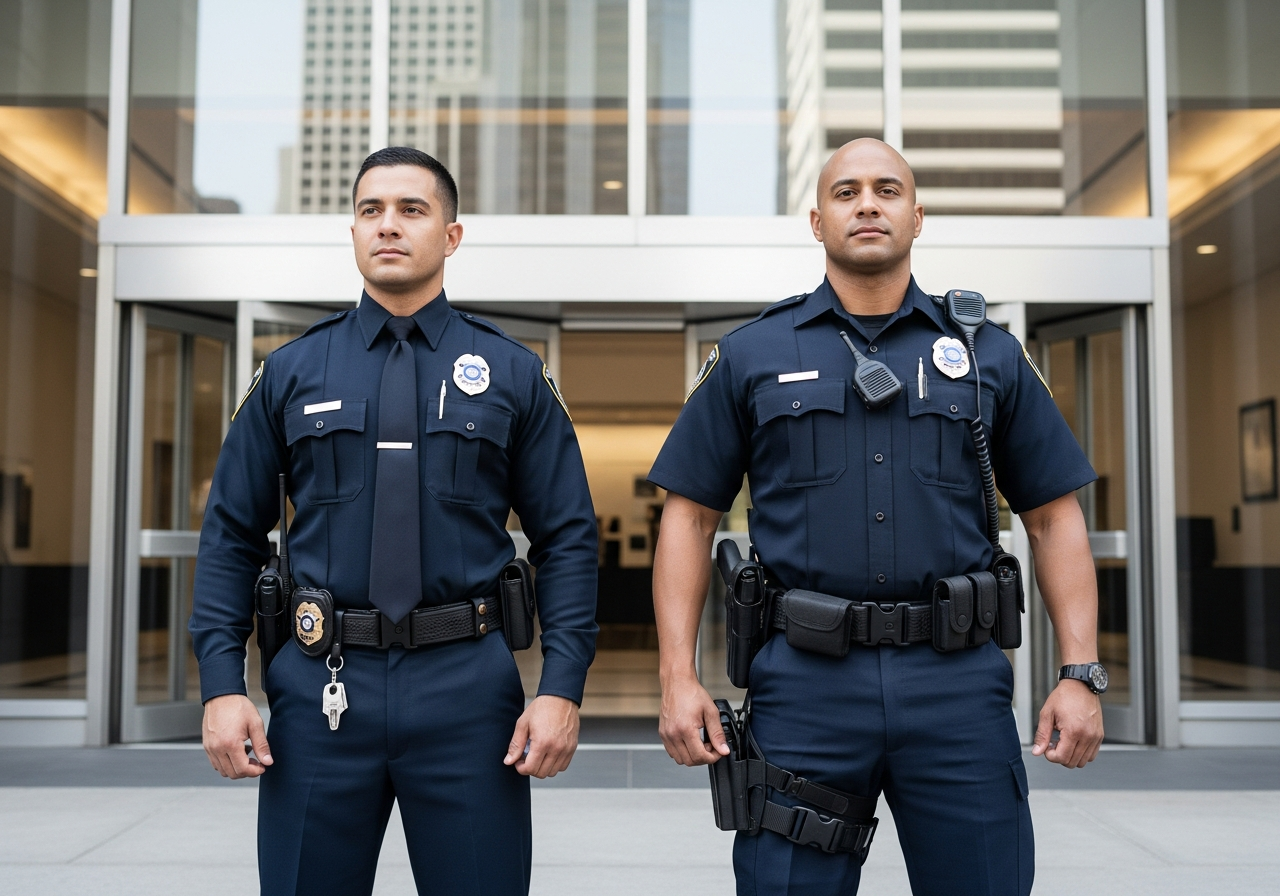
Not every security situation calls for an armed officer. But in certain environments, the presence of a licensed armed guard is the right answer, and in Washington State, that designation carries meaningful legal weight and additional training requirements that set armed officers apart from their unarmed counterparts.
For Seattle businesses operating in higher-risk settings, understanding when armed security makes sense, what state law requires, and how to evaluate providers is the foundation of a sound security decision.
When armed security in Seattle makes sense
The decision to deploy armed guards should be driven by a documented risk assessment, not by instinct or assumption. Armed officers are appropriate when the combination of asset value, cash volume, crime history, or operational profile creates a threat level that unarmed presence alone cannot address.
In Seattle's current market, several business categories consistently present those conditions.
Cannabis dispensaries. Washington's legal cannabis industry operates largely on a cash basis, which makes licensed dispensaries a recurring target for robbery. State cannabis regulations require documented security plans, and many operators integrate armed officers into shift coverage and cash transport procedures because the risk profile demands it.
Jewelry and luxury retail. High-value merchandise concentrated in display cases creates a specific robbery risk that calls for visible deterrence beyond what a camera or access control system provides. Armed officers stationed at entrances or floor positions signal that the business has taken a serious stance.
Financial institutions and cash-handling businesses. Banks, credit unions, currency exchanges, and businesses that handle significant daily cash volume often require armed coverage, particularly during opening, closing, and cash transport windows.
Corporate campuses and tech facilities. The Eastside and South Lake Union corridors house campuses where proprietary research, data infrastructure, and executive movement create concentrated high-value targets. Armed officers support access control protocols and provide a response capability that unarmed staff cannot.
High-risk multifamily properties and mixed-use developments. Some properties in areas with documented crime histories benefit from armed coverage on specific shifts rather than as a permanent deployment model, particularly where incident history shows escalation patterns.
The common thread across all of these settings is that armed guards are not a default response to general security concerns. They are a tool for environments where the threat level justifies the heightened profile and where de-escalation remains the first priority, with force only permissible as a last resort under Washington law.
What Washington State requires for armed security guards
Armed private security in Washington is governed by Chapter 18.170 RCW, the state's comprehensive security guard licensing statute. Anyone working as an armed guard in this state must hold two separate authorizations:
A licensed security guard credential from the Washington Department of Licensing. All security guards, armed and unarmed, must be licensed through WA DOL. This requires background screening, a set of fingerprints, age verification, and completion of basic guard training.
A firearms certificate issued by the Washington State Criminal Justice Training Commission. This is the armed endorsement that separates a standard guard from an armed officer. The Washington State Criminal Justice Training Commission administers the private security firearms certification program, which includes an 8-hour approved firearms course, a written test, and a live-fire qualification. Armed guards must also complete annual requalification to maintain their certificate.
Armed guards must be at least 21 years old, a higher threshold than the base guard license requires. The firearm they carry must be registered as part of the licensing process under RCW 18.170.050.
Washington's use-of-force framework, codified under RCW 9A.16, requires that any use of force be reasonable and proportional to the threat at hand. Armed officers are trained to de-escalate before drawing, and lethal force is a last resort that must meet a high legal bar. Hiring businesses should understand that deploying armed guards does not transfer legal exposure to the security company alone. A thorough vetting of the provider's training protocols, incident documentation practices, and supervision structure is essential.
Armed guards versus other options: choosing the right coverage level
A frequent question from facility managers and property owners is whether armed coverage is actually necessary, or whether a different service type would accomplish the same goal at a lower profile and cost.
Unarmed guards are appropriate for most commercial settings and can manage access control, conduct patrols, respond to incidents, and provide a visible deterrent without the elevated stakes of a firearm on site. For many Class A office buildings, retail environments, and multifamily properties across the Seattle metro area, unarmed coverage is the correct and sufficient answer.
Mobile patrol services are another option for properties that need a visible deterrent without a stationary presence. Mobile patrols can cover multiple locations in a single shift and are well-suited to after-hours industrial or warehouse environments where full-time armed coverage would be disproportionate.
Off-duty law enforcement is worth considering for high-visibility events, situations requiring real police authority, or locations where the combination of firearms training and law enforcement experience provides a specific operational advantage.
The question is not which option is most impressive. The question is which option matches the documented threat profile of your specific property. A credible security assessment starts with an honest look at incident history, asset exposure, and operational hours, not with a service category decision made in advance.
What to look for in an armed security provider in Seattle
Washington's licensing requirements establish a floor, not a ceiling. When evaluating armed security companies in Seattle, dig into the following areas before signing a contract.
Verified licensing. Confirm that the company holds a current private security company license through WA DOL and that individual armed officers can show current guard licenses and firearms certificates. Do not take this on faith.
Training beyond minimums. The WACJTC firearms certification is an entry requirement. The best providers layer additional use-of-force training, de-escalation protocols, and scenario-based instruction on top of state minimums.
Supervision and reporting. Armed deployments require active supervision, not just scheduling. Ask about shift supervisor ratios, incident documentation standards, and how the company communicates with the client when something happens on site.
Local experience. Officers familiar with the physical layout of Seattle neighborhoods, the SPD precinct structure, and the specific dynamics of the Eastside, South Lake Union, or King County jurisdictions will perform better than a national workforce rotated in without context.
Insurance and liability coverage. Armed security providers should carry higher liability limits than unarmed operations. Verify coverage amounts and understand what incidents the policy covers.
Cascadia Global Security operates across the Seattle metro area and the broader Puget Sound region, providing properly licensed armed and unarmed security guard services for commercial, retail, financial, and multifamily clients. Our officers hold current WA DOL credentials and WACJTC firearms certifications, and our supervision structure ensures accountability at every shift.
If you are evaluating security options for your property or organization, we can help you work through the right level of coverage for your risk profile. Call us at (800) 939-1549 or get a quote to start the conversation.
Frequently Asked Questions
What licenses does an armed security guard in Washington need?
An armed guard in Washington must hold two credentials: a current private security guard license issued by the Washington State Department of Licensing, and a firearms certificate issued by the Washington State Criminal Justice Training Commission. The guard license requires background screening, fingerprints, and basic training. The firearms certificate requires an approved 8-hour course, a written exam, and a live-fire qualification. Annual requalification is required to maintain armed status.
When is armed security the right choice for a Seattle business?
Armed coverage is appropriate when a documented risk assessment shows that the combination of asset value, cash handling, crime history, or operational exposure creates a threat level that unarmed presence cannot adequately address. Cannabis dispensaries, financial institutions, jewelry retailers, and certain corporate campuses in the Seattle area regularly meet that threshold. For most commercial and retail environments, unarmed guards or mobile patrols are the better fit.
How does Washington law govern use of force for private security guards?
Under RCW 9A.16, any use of force by a private security officer in Washington must be reasonable and proportional to the threat. Lethal force is treated as a last resort and is only legally defensible under a high standard of necessity. Reputable armed security providers train officers extensively in de-escalation and require documented incident reporting when any use-of-force occurs on duty.
What is the difference between armed guards and off-duty law enforcement in Seattle?
Off-duty SPD officers and other licensed law enforcement retain their peace officer authority when working secondary employment details, which means they can arrest, respond to calls, and exercise powers unavailable to private security officers. Armed private security guards operate within a different legal framework with no arrest authority beyond a citizen's arrest. Off-duty law enforcement is often the right call for high-visibility events or locations that need genuine police presence, while armed private guards are better suited to ongoing commercial deployments.
Can Cascadia Global Security provide armed guards for a cannabis dispensary in Washington?
Yes. Cascadia Global Security deploys licensed armed officers for cannabis dispensaries and other cash-intensive businesses throughout the Seattle metro area, including King County, Pierce County, and Snohomish County. Our officers hold current WA DOL guard licenses and WACJTC firearms certificates and are experienced with the security requirements specific to Washington's licensed cannabis retail environment. Contact us at (800) 939-1549 for a consultation.