Boutique and Luxury Hotel Security in Downtown Seattle
Josh Harris | June 5, 2026
Boutique luxury hotel security in downtown Seattle operates on a different set of requirements than almost any other commercial property. Guests expect seamless service, curated experiences, and an atmosphere where nothing feels out of place. That expectation extends to security. An officer who looks or acts out of step with the hotel's brand can be just as damaging to the guest experience as a genuine security incident.
Getting this right requires more than putting a guard in a lobby. It requires officers trained for the hospitality environment, protocols designed around the property's specific layout and service model, and a security partner who understands that protection and presentation are both part of the job.
Why Boutique and Luxury Hotel Security Has a Distinct Profile
Large convention hotels manage volume. Boutique and luxury properties manage intimacy. A 60-room boutique hotel in Belltown or a full-service luxury property near Pike Place Market may have fewer guests on any given night than a mid-scale hotel a few blocks away, but those guests expect significantly more personal attention, and they often bring significantly more valuable property with them.
The security profile that follows from that reality includes several elements that require specialized planning.
Small footprints with concentrated risk. A small property can have a rooftop bar, a destination restaurant, a spa, a retail boutique, and a 24/7 valet operation all within a few floors of each other. Each of those spaces has distinct loss exposure, access control needs, and staffing requirements. Incidents that would be absorbed quietly at a large property can become guest-facing problems very quickly at a smaller one.
VIP guests and high-value assets. Luxury travelers often carry expensive jewelry, electronics, and business materials. Some are executives who travel with their own executive protection details. Others arrive as public figures whose presence requires discretion without the formality of a full protective detail. In both cases, hotel security must coordinate, not compete, with whatever personal security the guest has brought.
Brand expectations. At a boutique or luxury property, every guest-facing touchpoint is measured against the room rate. An officer in tactical-style gear with a confrontational posture is inconsistent with that standard. Officers at these properties are typically stationed in business attire, positioned to assist as naturally as they protect, and trained to de-escalate through presence and conversation rather than physical intervention.
24/7 operations. Luxury hotels do not close. Overnight shifts carry their own risk profile: fewer staff on property, quieter common areas, and guests who may return late from events or entertainment in downtown Seattle. Security programs at these properties must account for all operational hours, not just peak times.
Discreet vs. Visible Security: When Each Fits
One of the first decisions a boutique or luxury hotel makes when building a security program is how visible that security should be. The answer is usually a combination, deployed by location and hour.
Plainclothes and business-attire officers work well in guest-facing areas: lobbies, restaurants, bars, and event spaces. Their presence blends with the environment. They can observe, assist guests, and respond to situations without the visual disruption of a uniformed security post. This approach is particularly effective during daytime hours and in properties that have deliberately cultivated an intimate atmosphere.
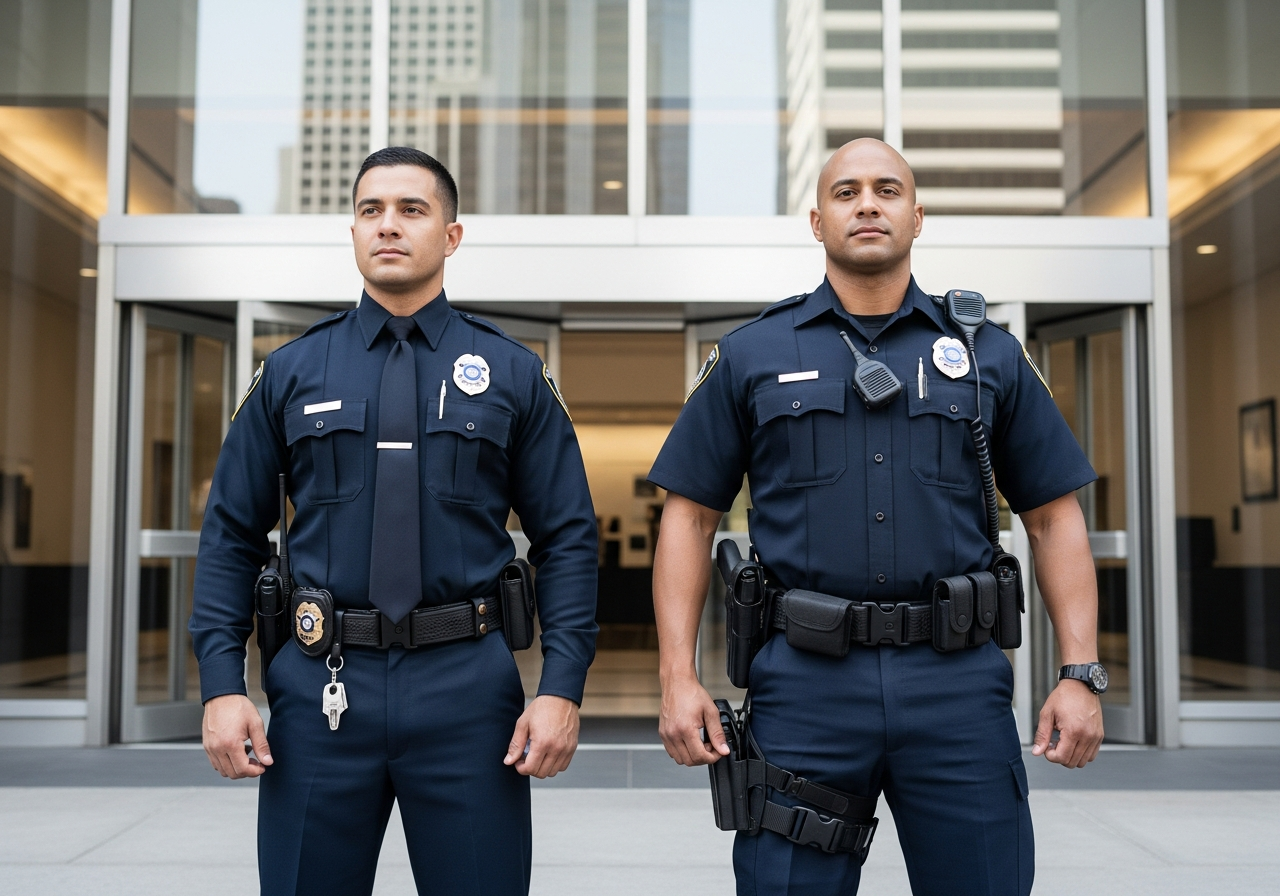
Uniformed officers remain appropriate in back-of-house areas, at loading docks, during late-night hours, and during high-traffic events such as private dinners, buyouts, and receptions. A visible unarmed guard at a service entrance or during a private event does not disrupt the guest experience, because guests rarely encounter those spaces directly.
Many properties use a tiered model: discreet coverage in guest areas during peak service hours, with uniformed presence transitioning in for overnight and event-heavy shifts. The goal is appropriate protection at every hour without any single point in the day where the security presence feels mismatched to the guest experience.
Concierge Overlap and Front-Desk Coordination
In boutique and luxury properties, security officers frequently occupy a hybrid role. They assist guests who need directions, flag taxis, help with luggage in the absence of a bellman, or answer basic questions about the neighborhood. This concierge-adjacent function is not incidental. It is part of how discreet security works in a hospitality environment.
The overlap requires coordination with the front desk and management team. Security officers need to know which guests are checking in and out, which rooms are flagged for specific concerns, and what events are scheduled on property. At the same time, they need clear escalation paths for situations that move beyond hospitality and into enforcement territory.
A well-structured program treats the morning briefing between security and front-of-house management as a core operational step, not an optional courtesy. When those two teams share information regularly, problems get intercepted before they reach guests.
F&B, Spa, and Retail Loss Prevention
Revenue-generating outlets within a hotel introduce loss exposure that many hotel operators underestimate. A destination bar in Belltown or a hotel-branded retail boutique near South Lake Union may see significant foot traffic from non-guests, especially if those venues are marketed to the local community.
For those spaces, loss prevention functions much like it does in any hotels and hospitality retail environment: coverage of high-value merchandise areas, awareness of customer behavior patterns, and coordination with outlet managers who may be reluctant to address suspicious situations without security backing.
Spa operations introduce a different category of vulnerability. Guests leave valuables in changing rooms. Services are delivered in private spaces. The combination of isolated environments and high-value personal property requires clear protocols around locker security, access control to treatment areas, and staff response to theft reports.
The risk does not need to be dramatic to be costly. Routine petty theft from F&B operations, spa locker areas, and retail spaces adds up across a calendar year. A security program designed for a luxury property accounts for these outlets specifically, rather than treating them as incidental to the guest room and lobby focus.
Coordinating with Executive Protection Details
When high-profile guests arrive at a boutique or luxury hotel with their own security personnel, the hotel's security program needs to integrate rather than interfere. Tensions between a guest's protective detail and the property's own security team are not uncommon, and they are almost always avoidable with advance communication.
Standard coordination protocols include advance notification to hotel security when a protectee is expected, a brief between the lead EP agent and the hotel security supervisor covering room location, preferred entry and exit routes, and any specific concerns the protective detail has flagged. The hotel security team then adjusts their patrol pattern and staffing to support rather than duplicate what the EP detail is doing.
AAHOA, which represents tens of thousands of hotel owners across the country, has documented the operational complexity that high-profile guests introduce for hotel management teams. Security coordination is one of the most frequently cited challenges. Properties that build this into their standard operating procedures before a high-profile arrival have significantly fewer operational issues during the stay.
When a guest does not have a protective detail but the hotel has identified them as someone who warrants additional attention, the hotel security supervisor should have a protocol for elevated coverage that does not feel like surveillance. That distinction matters for guest experience and for the ethical framing of how security operates in a hospitality environment.
Vendor and Contractor Management
Boutique and luxury hotels frequently host vendors who are not employees of the property: florists delivering for events, linen contractors, outside caterers, maintenance crews, and AV technicians for private functions. Each vendor brings access to guest-adjacent areas of the property.
Vendor credentialing is a routine part of security operations at well-run properties. Contractors should sign in at a designated entry point, receive a temporary credential that limits their access to the areas relevant to their work, and sign out when they leave. Security officers patrolling back-of-house areas should recognize credentialed vendors and flag those who are in unexpected areas.
The vulnerability here is not dramatic. It is the routine access that vendors have to service corridors, storage areas, and loading zones that makes the credentialing process important. An uncredentialed individual who appears to be a vendor can move through significant portions of a hotel property with minimal challenge if there is no access management protocol in place.
Staff Awareness and Human Trafficking Indicators
Hotels are recognized as a setting where human trafficking can occur, and luxury properties are not immune. Hospitality staff, including security officers, are in a position to observe indicators that front-of-house hotel employees may miss or may not feel authorized to act on.
Polaris, which operates the National Human Trafficking Hotline, identifies hotels as one of the highest-risk commercial settings for trafficking operations. Staff awareness training, including how to recognize indicators and how to report without direct confrontation, is a standard element of responsible hotel security programs.
Security officers who receive this training are better equipped to identify situations that warrant a discreet call to management or law enforcement, without taking independent action that could escalate an already sensitive situation. The goal is awareness and appropriate escalation, not enforcement.
What a Boutique and Luxury Hotel Security Program Includes
A complete security program for a downtown Seattle boutique or luxury property typically covers:
- Lobby and common area coverage during peak and off-peak hours
- Back-of-house patrol, including loading docks, service corridors, and parking areas
- F&B and retail loss prevention coordination
- Spa and changing room access protocols
- Vendor and contractor credentialing at designated entry points
- Event security for private functions, buyouts, and hosted gatherings
- EP coordination protocols for arriving high-profile guests
- Overnight staffing through all operating hours
- Staff awareness training on indicators of guest distress and trafficking
- Documented incident response procedures and regular briefings with management
The staffing mix for most boutique and luxury properties includes unarmed security officers as the primary coverage model, with armed personnel available for specific situations or high-profile events through coordinated scheduling with a provider who holds the appropriate Washington State licensing.
Frequently Asked Questions
What makes boutique luxury hotel security different from standard commercial security?
Boutique and luxury hotel security requires officers who can maintain a discreet, guest-friendly presence while still performing all standard security functions. The training emphasis shifts toward de-escalation, hospitality communication, and situational awareness in crowded social environments, rather than visible enforcement. Officers are typically stationed in business attire rather than traditional guard uniforms in guest-facing areas, and their positioning is designed to blend with the hotel's service environment.
Do hotels need armed or unarmed security officers?
Most boutique and luxury hotels in downtown Seattle operate with unarmed security as their standard coverage model. Unarmed officers handle the vast majority of situations that arise in a hospitality environment, including access management, guest disputes, loss prevention, and overnight patrols. Armed coverage may be appropriate for specific events, during periods of elevated risk, or when a hotel is hosting high-profile guests with known security concerns. A qualified security provider can assess the property and recommend the right staffing mix.
How does hotel security coordinate with a guest's personal executive protection team?
The hotel security supervisor should receive advance notification when a protectee is expected, then conduct a brief with the lead EP agent before arrival. That brief covers room location, preferred entry and exit routes, and any specific operational concerns. Hotel security then adjusts patrols to support rather than duplicate the EP detail. The goal is a unified protective posture that the guest never has to think about.
What security measures are appropriate for hotel F&B and spa outlets?
Food and beverage outlets, particularly bars and restaurants that serve the public, should have plainclothes or business-attire coverage during busy periods. Spa and wellness areas require clear locker security protocols, access control to treatment corridors, and a defined response procedure when a guest reports missing property. Retail outlets within the hotel benefit from the same basic loss prevention approaches used in any upscale retail environment: coverage positioning, awareness of customer traffic patterns, and coordination with outlet managers.
How does hotel security handle vendor and contractor access?
Vendors and contractors should enter through a designated service entrance, sign in with security, and receive a temporary credential that restricts their access to the areas relevant to their work. Security officers patrolling back-of-house areas verify credentials and flag individuals found in areas inconsistent with their purpose on the property. All vendors should sign out when leaving. This process does not need to be burdensome for legitimate vendors, but it creates a clear record of who has been on the property and where.
Protecting the Guest Experience from the Ground Up
Boutique and luxury hotel security in downtown Seattle is an operational discipline that touches every corner of the property. Getting it right means matching the service environment, coordinating across all operating hours and revenue outlets, and building protocols that management and staff can execute consistently.
Cascadia Global Security works with hospitality properties across the Seattle area to develop security programs that fit the brand, the building, and the guest profile. Whether a property needs a single overnight officer or a full-shift staffing model, the approach is the same: professional, discreet, and designed to protect without disrupting what makes the property worth staying at.
To discuss security options for your hotel, contact Cascadia Global Security at /get-a-quote or call (800) 939-1549.