
Business Video Surveillance Supported by Trained Security Personnel
Josh Harris | February 6, 2026
The Evolution of Video Surveillance in
Modern Business
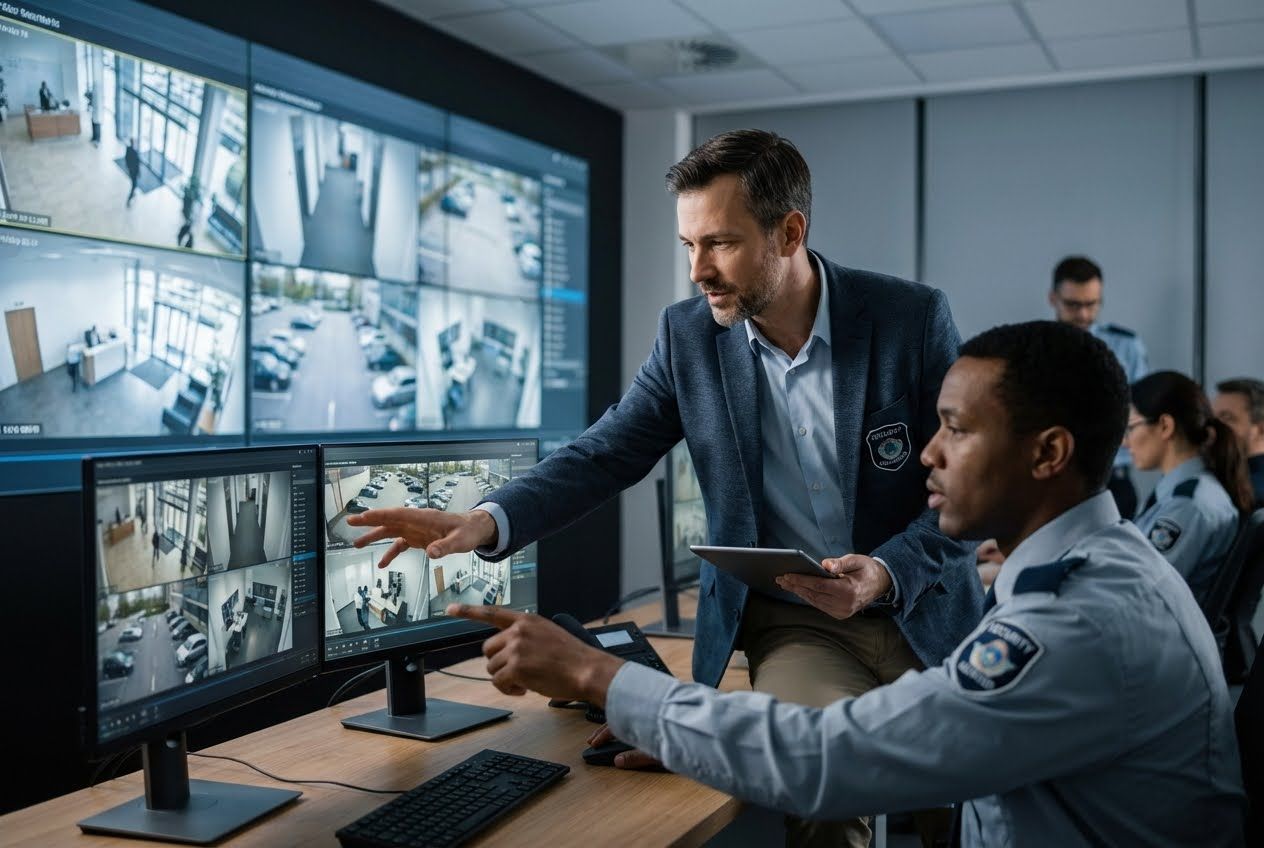
A warehouse manager reviews footage from the previous night and discovers a break-in occurred three hours before anyone noticed. The thieves had plenty of time to load merchandise into a van and disappear. This scenario plays out thousands of times each year across American businesses, resulting in billions in losses that could have been prevented. The difference between passive recording and active protection often comes down to one critical factor: trained security personnel monitoring those camera feeds in real time. Business video surveillance, supported by trained security personnel, transforms static recording systems into dynamic threat-prevention tools. When human expertise combines with modern camera technology, businesses can prevent incidents from escalating rather than simply document crimes after the fact.
From Passive Recording to Proactive Monitoring
Traditional surveillance systems operated on a simple premise: record everything and review later if something goes wrong. This approach served businesses adequately for decades when theft and vandalism represented the primary concerns. The footage existed primarily for insurance claims and police reports.
Modern security demands have shifted dramatically. Businesses now face sophisticated threats ranging from organized retail crime to workplace violence incidents. Recording alone cannot effectively address these challenges.
- Real-time monitoring enables immediate intervention during suspicious activity
- Trained operators can distinguish between actual threats and false alarms
- Live surveillance allows verbal warnings through speaker systems before incidents escalate
- Continuous observation deters criminal behavior more effectively than cameras alone
Limitations of Unmonitored Security Systems
Even the most advanced camera systems have significant blind spots when no one watches the feeds. According to 2024 data from the
Security Industry Association, unmonitored surveillance systems detect less than 15% of incidents in real time. The remaining majority are discovered hours or days later during footage review.
Automated alerts help, but they also create problems. Motion sensors trigger constantly from wildlife, weather, and normal business activity. Without trained personnel to verify alerts, businesses face two poor choices: respond to every notification or ignore most of them.
The Synergy of Advanced Technology and Human Expertise
AI-Driven Analytics vs. Human Interpretation
Artificial intelligence has improved video analytics significantly over the past five years. Modern systems can detect unusual movement patterns, recognize faces, and identify objects left in restricted areas. These capabilities reduce the workload for human operators by filtering obvious non-threats.
AI systems still struggle with context, though. A person running through a parking lot might be late for work or fleeing after committing a crime. Someone carrying a large bag could be a delivery driver or a shoplifter. Trained security personnel at Cascadia Global Security excel at making these distinctions by considering factors that algorithms cannot process effectively.
- Human operators understand site-specific norms and recognize when behavior deviates
- Security personnel can communicate directly with individuals on camera
- Trained staff coordinate with on-site guards and emergency responders seamlessly
Real-Time Threat Assessment and Verification
The verification process separates professional monitoring from automated systems. When cameras detect potential threats, trained operators follow established protocols to assess the situation accurately. This typically involves reviewing multiple camera angles, checking access logs, and comparing activity against expected patterns.
Verification prevents costly mistakes in both directions. False alarms waste police resources and can result in fines for businesses with repeated unnecessary dispatches. Missed threats obviously create far worse consequences.
Operational Benefits of Trained Security Personnel
Reducing False Alarms and Dispatch Costs
Police departments across the country have implemented alarm verification requirements due to the overwhelming volume of false calls. Some jurisdictions now impose substantial fines for repeated false dispatches, with fees ranging from $250 to $500 or more per incident after initial warnings.
Professional monitoring services dramatically reduce these occurrences:
- Operators verify threats before contacting emergency services
- Video evidence allows dispatchers to prioritize responses appropriately
- Detailed incident descriptions help responders prepare for specific situations
- Documentation protects businesses from liability claims related to false reports
Immediate Incident Response and Crisis Management
Speed matters enormously during security incidents. As of 2025, average police response times in urban areas range from eight to ten minutes, depending on jurisdiction and call priority. During that window, trained monitoring personnel can take several protective actions.
Operators activate lockdown procedures, guide employees to safety through PA systems, and provide real-time updates to responding officers. This coordination often prevents situations from escalating into serious harm. Video surveillance supported by trained security personnel creates a command center capability that standalone systems cannot replicate.
Enhancing Risk Management and Liability Protection
Gathering Admissible Evidence for Legal Proceedings
Video evidence must meet specific standards to be admissible in court. Chain of custody documentation, timestamp verification, and proper storage protocols all affect whether footage can support legal action.
Cascadia Global Security maintains rigorous evidence-handling procedures to protect the integrity of recordings.
- Incident logs document exactly when events occurred and who responded
- Backup systems ensure footage survives even if on-site equipment is damaged
- Trained personnel can provide testimony about what they observed in real time
Ensuring Compliance with Industry Safety Standards
Many industries face regulatory requirements around workplace safety and security documentation. Healthcare facilities must protect patient areas, financial institutions need specific monitoring protocols, and manufacturing sites often require continuous observation of hazardous zones.
Professional monitoring services help businesses demonstrate compliance during audits. Detailed activity logs, incident reports, and response documentation create the paper trail that regulators expect to see.
Implementing a Hybrid Security Strategy
Selecting the Right Monitoring Service Provider
Not all monitoring services provide the same level of protection. Key factors to evaluate include operator training standards, average response times,
technology integration capabilities, and experience with your specific industry.
Questions to ask potential providers:
- What certifications do your monitoring personnel hold?
- How many cameras can a single operator effectively monitor?
- What is your average time from alert to verification?
- Can you integrate with our existing security infrastructure?
- Do you provide dedicated operators or shared monitoring pools?
Customizing Surveillance for Specific Business Needs
Cookie-cutter security solutions rarely address unique operational requirements effectively. A distribution center needs different coverage than a corporate office. Retail locations face distinct challenges compared to manufacturing facilities.
Effective implementation starts with a thorough site assessment. Security professionals evaluate entry points, high-value areas, traffic patterns, and existing vulnerabilities. This analysis informs camera placement, monitoring schedules, and response protocols tailored to actual risk profiles.
Frequently Asked Questions
How does monitored surveillance differ from standard alarm systems?
Standard alarm systems detect specific triggers, such as door contacts or motion sensors, and automatically alert authorities. Monitored surveillance adds human verification, allowing trained operators to assess situations visually before dispatching emergency services. This reduces false alarms while ensuring genuine threats receive immediate attention.
What qualifications should monitoring personnel have?
Professional monitoring operators should hold relevant security certifications and complete training specific to video surveillance protocols. Certifications such as those from ASIS International or state-level licensing (where applicable) are typically required. Experience with emergency response coordination, familiarity with local law enforcement procedures, and ongoing education in threat recognition all contribute to effective monitoring performance.
Can existing camera systems be integrated with professional monitoring?
Most modern camera systems can connect to remote monitoring services through network integration. Older analog systems may require encoder hardware to enable remote access. A qualified security provider can assess your current infrastructure and recommend the most cost-effective path to monitored surveillance.
What happens during non-business hours?
Professional monitoring services typically operate around the clock, providing consistent coverage regardless of whether your facility is occupied. Many businesses find after-hours monitoring particularly valuable since most break-ins occur when buildings are empty and response times matter most.
How quickly can monitoring personnel respond to detected threats?
Response times vary by provider, but quality services typically verify alerts within 15 to 45 seconds. Once verification confirms a genuine threat, operators can contact emergency services immediately while continuing to monitor the situation and gather information for responders.
Future-Proofing Your Business Assets
Security threats continue evolving, and protection strategies must adapt accordingly. The integration of professional monitoring with advanced surveillance technology positions businesses to address emerging challenges without having to start from scratch. Investments in high-quality camera systems and trained personnel lay the foundation for future upgrades and expanded capabilities.
Organizations that treat security as an ongoing operational function rather than a one-time purchase consistently achieve better outcomes. Regular assessments, updated training, and technology refreshes keep protection aligned with changing threat landscapes.
For businesses ready to upgrade their security posture, partnering with experienced professionals makes the transition smoother. Cascadia Global Security offers comprehensive solutions combining trained personnel with modern surveillance technology to protect your assets effectively.