Dispensary Security Compliance in Washington State
Josh Harris | June 26, 2026
Cannabis retail in Washington operates inside one of the most documented security frameworks in the legal market. Any operator who has held a state-issued license knows the basics, but dispensary security in Washington State is not a one-time setup. The Liquor and Cannabis Board (LCB) enforces a continuous standard for cameras, alarms, access control, and personnel, and the gap between a passing inspection and a real loss-prevention program is wider than most owners assume.
For Seattle dispensaries and cannabis retailers across the Puget Sound region, understanding what the state actually requires, and where the regulatory minimum stops and meaningful security begins, is the foundation of a defensible program.
The regulatory framework behind WA dispensary security
Washington's cannabis market grew out of Initiative 502, the 2012 voter measure that created the licensed retail system the state runs today. The operational rules sit in Chapter 314-55 WAC, the administrative code chapter that governs how cannabis licensees produce, process, and sell product in Washington.
The security-specific sections inside that chapter set the baseline every retail licensee must hit. They cover surveillance camera coverage and retention, alarm systems, secure storage of inventory and cash, premises access control, signage, ID checks, and recordkeeping. None of these are optional. A licensee who lets surveillance retention slip, or who cannot produce footage when the LCB requests it, is exposed to violations that can escalate to license suspension.
The rules are operational rather than prescriptive about brands or products. Operators choose the camera system, alarm provider, and guard model, but the outcomes have to match what the code requires. That gives operators flexibility, and it also puts the burden of design and verification on the licensee.
Surveillance: coverage, quality, and retention
Surveillance is the most scrutinized piece of dispensary security in Washington. The LCB's expectations are that camera coverage captures every area where cannabis is handled, stored, transferred, sold, or destroyed, and every point of ingress and egress. That includes the sales floor, the vault, the back-of-house storage room, loading areas, the parking lot if it is on licensed premises, and the cash room.
Coverage alone is not the standard. The code expects cameras to record continuously, with date and time stamps, at a resolution that lets investigators identify faces, license plates, and transactions. Footage must be retained for a minimum window measured in weeks, not days, and the operator must be able to produce specific clips on request.
The practical implications for operators:
- Camera placement should be reviewed by someone who understands the rule, not just the installer. Blind spots over the safe, around the back door, or above the point-of-sale terminal are the most common findings during inspections.
- Storage capacity has to match the retention window with a margin to spare. A system that overwrites at the minimum threshold fails the first time a power event, drive failure, or system reboot creates a gap.
- Footage retrieval needs to be tested. If only one manager knows how to pull a clip, and that manager is unavailable when the LCB or local police request video, the operator is non-compliant in practice even if the system is technically running.
A documented surveillance protocol covering camera health checks, retention verification, and a chain-of-custody process for footage requests turns the camera system from a compliance checkbox into a real investigative tool.
Alarms, locks, and physical access control
The physical envelope of a dispensary, the doors, vault, storage room, and perimeter, is the next layer. The state requires monitored alarm coverage with response capability, and secure storage that limits cannabis inventory to authorized personnel only.
In practice, this means commercial-grade locks on every exterior door, restricted-access keys or electronic credentials for the vault and storage areas, monitored intrusion alarms with motion and door sensors, and a documented after-hours protocol that pulls inventory off the sales floor and into the secured storage area.
Access control logs, who entered which restricted area and when, are not just a compliance artifact. They are the first thing investigators reconstruct when a product is missing, and they are also what a strong internal-loss-prevention program runs on a day-to-day basis. Modern dispensaries are increasingly treated as a layered access problem: customers in the retail area, budtenders in the sales and POS zones, managers in the vault, and licensed transport personnel in the loading area. Each layer needs its own credential set and its own audit trail.
Cash handling, transport, and the case for armed coverage
Cannabis remains federally restricted, which keeps most Washington dispensaries operating in a partially cash-based environment. Limited banking access means cash sits on premises in volumes that other retail categories rarely see, and it moves between the store, a cash room, and an off-site processor or vault on a regular schedule.
That risk profile is what drives many Washington operators to add armed guards or contracted unarmed officers into the daily security model. The choice between armed and unarmed coverage is not automatic, and it should be driven by a documented risk assessment that looks at cash volume, transport schedule, location, prior incident history, and the operating hours of the store.
Some operational patterns Washington dispensaries use:
- Open-and-close coverage by a uniformed officer during the highest-risk windows, when staff are unlocking the store, counting opening cash, or finalizing the daily deposit.
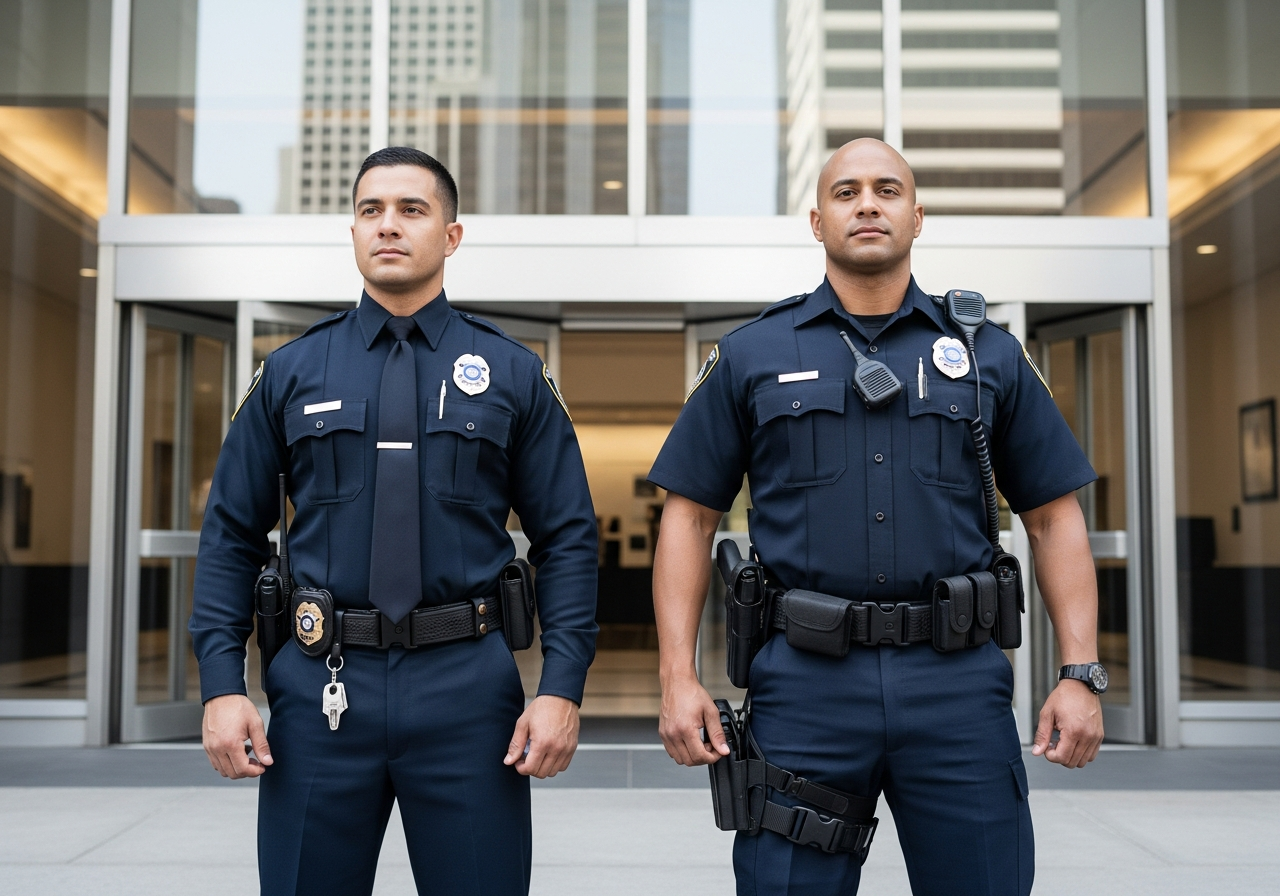
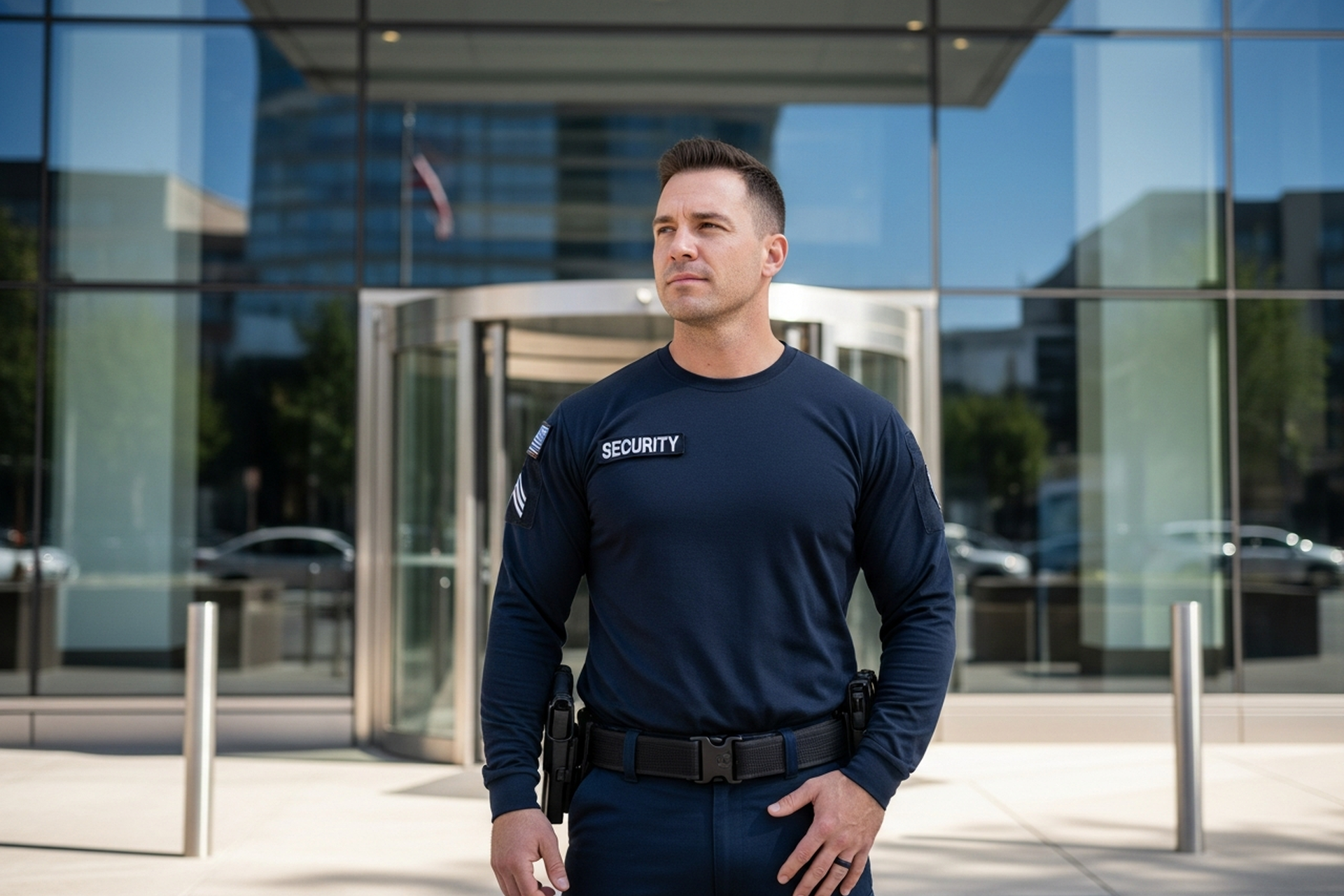
- A standing officer at the entrance during business hours, which addresses ID verification, loitering, and visible deterrence in one position.
- Armed transport coverage on cash and inventory moves between the store and the off-site processor or distributor.
- After-hours mobile patrol checks at multi-site operators, with documented stop times and exterior walkthroughs.
The same Washington licensing rules that apply to any private security officer apply here. Anyone working an armed post needs the firearms certificate from the Criminal Justice Training Commission on top of the base guard license through the Department of Licensing. A short overview of Washington security guard licensing requirements and process helps operators evaluate whether a provider's officers are properly credentialed before contracting.
ID verification, age checks, and the entrance
Every customer entering a Washington dispensary has to be at least 21, and every transaction has to be backed by a valid ID check. The rules also bar anyone under 21 from being on the licensed retail premises, which makes the entrance the single most regulated touchpoint in the store.
Operators handle that requirement in different ways. Some build the ID check into a vestibule with a budtender or receptionist scanning IDs before customers enter the retail area. Others post a uniformed officer at the door who handles ID verification, occupancy management, and loitering control as a combined responsibility.
The advantage of the staffed-entrance model is that one trained person owns the boundary. An officer who is comfortable with de-escalation, who can spot an altered ID, and who knows the LCB's age verification rule cold is significantly harder to social-engineer than a part-time greeter rotating between roles. It also removes a frequent point of friction from the budtender's job and lets the sales staff focus on the transaction.
Vendor compliance and contracted security
When a dispensary brings in a contracted security provider, the provider becomes part of the operator's compliance footprint. The LCB looks at security personnel through the same lens as any other person who has access to the licensed premises and the product.
A few areas operators should pin down in writing with any contracted security provider:
- Confirmation that every officer assigned to the post holds a current Washington security guard license, and a current firearms certificate if the post is armed.
- A documented background screening process for officers, plus a process for swapping out officers without breaking the credential chain.
- Incident reporting protocols that integrate with the dispensary's own logs and surveillance retention, so the operator can produce a complete record for any LCB or police inquiry.
- A clear line on what the officer does and does not do inside the store. Officers should not be handling product, ringing transactions, or carrying out duties reserved for licensed dispensary staff.
Industry resources like NCIA publish ongoing operator guidance on best practices that go beyond any single state's regulatory minimum, and operators looking to benchmark their program against the broader licensed market often pull from that material in addition to the WAC.
What this means for Washington dispensary operators
The state's framework gives operators a clear floor, and the real security work is what sits on top of it. A dispensary that treats WAC 314-55 as a checklist will pass an inspection. A dispensary that treats it as the starting point, layering on trained staff at the door, a properly engineered surveillance program, a tested cash-handling protocol, and a contracted security partner that understands the regulatory environment, is the one that does not show up in next year's robbery statistics.
Cascadia Global Security works with cannabis retailers across the Puget Sound region on staffed entrance coverage, cash-handling and transport security, and after-hours patrols that fit the WAC framework. To talk through what a compliant security program looks like for your store, get a quote or call us at (800) 939-1549.
Frequently Asked Questions
What does WAC 314-55 require for dispensary security in Washington?
WAC 314-55 sets the baseline for surveillance coverage, alarm monitoring, secure storage, access control, ID verification, and recordkeeping at any licensed Washington cannabis retailer. The chapter does not prescribe specific brands of equipment, but it does require operators to meet defined outcomes for camera coverage, video retention, and controlled access to inventory and cash.
How long does Washington require dispensary surveillance footage to be retained?
The LCB requires licensed cannabis retailers to retain surveillance video for a minimum window measured in weeks, and operators should design storage capacity with margin above that floor. The exact retention standard sits inside Chapter 314-55 and is what investigators rely on when a robbery, employee theft, or compliance question comes up after the fact.
Are armed guards required at Washington dispensaries?
No. Washington does not require armed coverage at every licensed dispensary. Whether a store deploys armed officers should be driven by a documented risk assessment that looks at cash volume, transport schedule, location, prior incident history, and operating hours. Many Washington operators use a mix of unarmed entrance coverage and armed transport rather than a fully armed model.
What licensing does a security officer at a Washington dispensary need?
Every private security officer in Washington must hold a current security guard license through the Department of Licensing. Officers working an armed post also need a firearms certificate issued by the Washington State Criminal Justice Training Commission, including annual requalification. A dispensary contracting with a provider should confirm both credentials in writing for every officer assigned to the post.
Can a dispensary security officer handle product or run transactions?
No. Contracted security officers should not be touching cannabis product, handling inventory transfers, or ringing transactions. Those activities are reserved for the dispensary's licensed staff under the LCB framework. The officer's role is access control, ID verification, deterrence, incident response, and documentation, which is where the operator gets the real value from a contracted post.