Fire Watch Security Services: When and Why They Are Required
Josh Harris | May 14, 2026
Fire watch security is one of those services facility managers rarely think about until a sprinkler technician closes a valve and says coverage starts in two hours. The conversation that follows is usually short on time and long on confusion. What is fire watch, exactly? Who decides when it is required? What does the officer actually do, and what happens if the documentation is wrong? This guide answers those questions in plain language for the property manager, facility director, or general contractor who just learned that the clock is already running.
The short version: fire watch is a code-compliance activity, not a firefighting one. It exists because building codes assume sprinklers, alarms, and fire-rated assemblies are working. When any of those protections go offline, a trained human has to fill the gap by walking the affected area, logging conditions, and escalating to the fire department if something looks wrong. The officer does not extinguish fires beyond an incipient stage. The officer does not make evacuation calls. The fire watch role is observe, log, and escalate, full stop.
What fire watch security is and what it is not
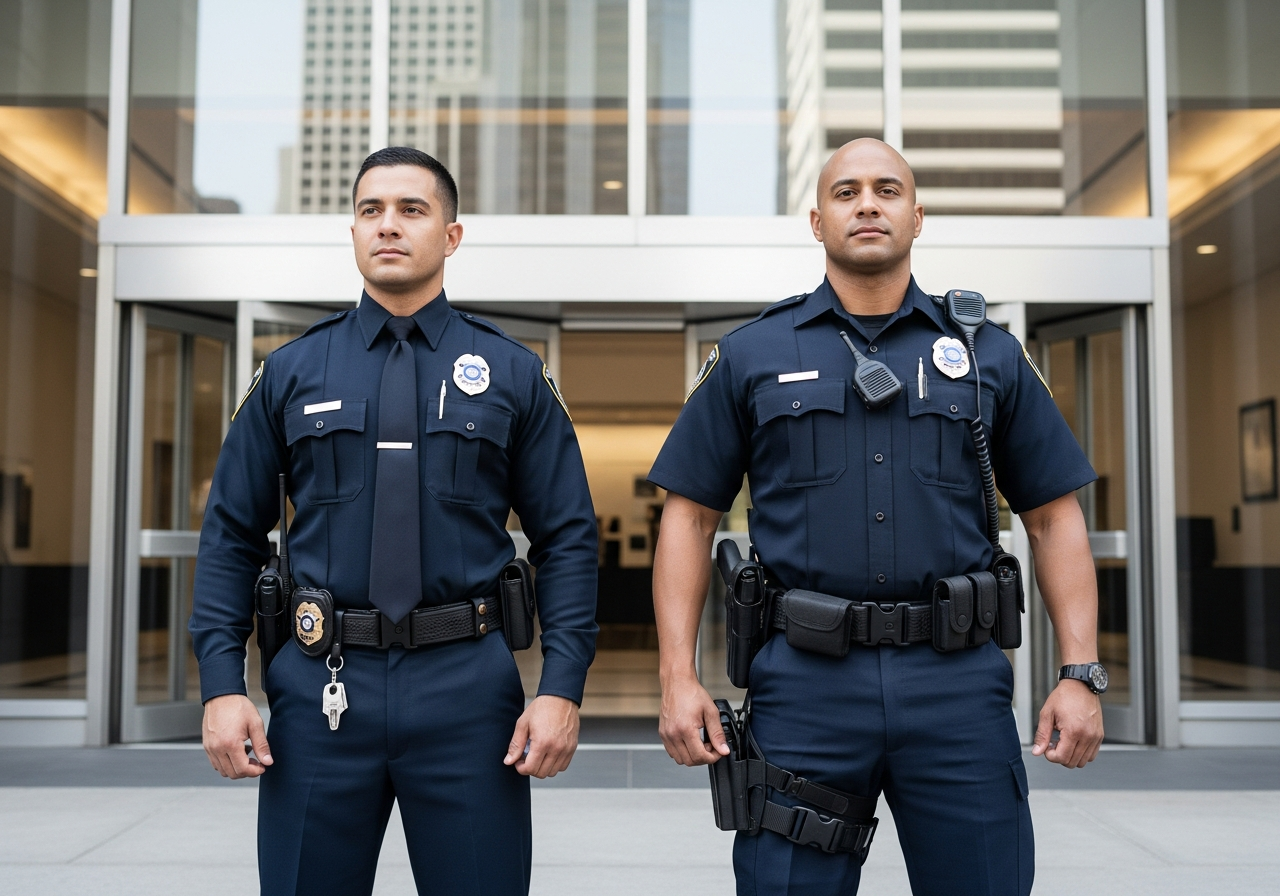
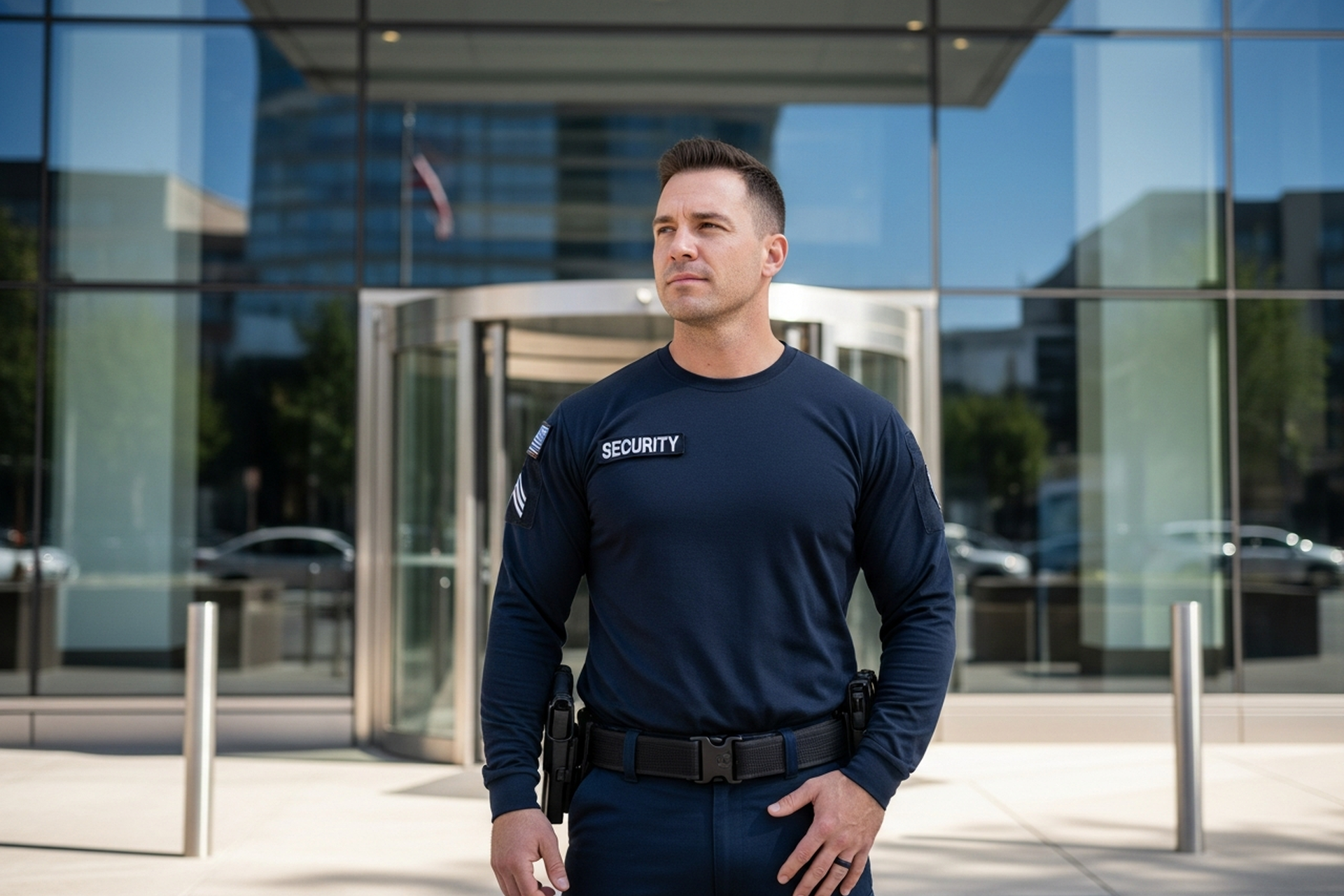
A fire watch officer is a trained person whose only job during the shift is to monitor a defined area for fire conditions while a building's normal fire protection is impaired or while temporary hazards are present. The officer walks rounds at a fixed interval, looks and listens for smoke, heat, unusual smells, or smoldering material, logs each pass with a time and signature, and calls 911 plus building management the moment anything looks off.
Officers are not part of the building's general security patrol. A standard guard tour focused on access control or theft deterrence does not satisfy code, even if the guard happens to pass the affected area. Code language requires the watch to be dedicated to fire detection, with no competing duties. The Authority Having Jurisdiction (AHJ) can and does cite buildings where the fire watch person was also working the front desk or doing rounds for an unrelated service.
Fire watch is also not active firefighting. The officer carries a radio or phone, sometimes a portable extinguisher for an incipient-stage fire, and a log. If a real fire develops, the officer's job is to call 911, notify building management, and follow the building's written emergency plan. The decision to evacuate, the alarm activation sequence, and any tactical firefighting belong to the AHJ and the building's documented procedures, not to the watch officer's judgment in the moment.
When fire watch is required by code
The triggers are scattered across several NFPA standards and the International Fire Code, but the situations that produce most fire watch deployments are predictable. The International Code Council, the body that develops the model codes most U.S. jurisdictions adopt, sets the framework that local AHJs then enforce with adjustments. The four common triggers below cover the large majority of real-world calls.
Impaired sprinkler systems (NFPA 25)
The most common trigger. NFPA 25, the standard for inspection, testing, and maintenance of water-based fire protection systems, treats a sprinkler system as impaired the moment it can no longer perform as designed. When the impairment is expected to last more than 10 hours in a 24-hour period, the system owner must implement an impairment program that includes fire watch in the affected area. Annual main drain tests, riser repairs, antifreeze loop replacements, and renovation tie-ins routinely cross the 10-hour line.
Fire alarm system outage (NFPA 1, NFPA 72)
When a fire alarm system is out of service for more than 4 hours in a 24-hour period, NFPA 1 requires either fire watch or building evacuation. Most owners choose fire watch. Alarm outages occur during panel replacements, retrofits, network upgrades, and after lightning strikes or surge events that take a panel offline unexpectedly.
Hot work operations (NFPA 1, NFPA 51B)
Welding, cutting, brazing, grinding, and torch-applied roofing all generate sparks and heat that can ignite combustibles well after the work stops. NFPA 51B requires a fire watch during the operation and for at least one hour after work ends, with additional monitoring of up to three more hours when the permit-authorizing individual determines it is warranted. Hot work permits are routine on construction sites, in industrial maintenance, and during roofing projects.
Construction-phase activity (NFPA 241, IFC Chapter 33)
NFPA 241 and Chapter 33 of the International Fire Code govern fire safety during construction, alteration, and demolition. They require fire watch any time hot work occurs on the site or fire protection systems are impaired during construction phases. Because active construction projects tend to have both conditions simultaneously, NFPA 241 fire watch can be near-continuous for stretches of the schedule.
Other situations that commonly trigger fire watch include hospital sprinkler maintenance windows, hotel renovation projects with combustible material on guest floors, occupancy of buildings during commissioning before full life-safety systems are accepted, and certain temporary heating or generator setups.
The Authority Having Jurisdiction (AHJ) decides
Codes set the floor. The AHJ sets the actual requirement at your property. The AHJ is the local fire marshal, fire department fire prevention division, or building official with code-enforcement authority. They can require fire watch above the code minimum and they can specify how it must be documented, staffed, and patrolled.
A few common AHJ-driven adjustments worth knowing about:
- Round frequency. Code language often allows up to a 60-minute interval. Many AHJs require 30 minutes or 15 minutes for higher-hazard impairments. Hospitals and high-rises commonly run shorter intervals than the code default.
- Coverage area. The AHJ may break a large building into zones and require multiple officers running parallel rounds. A single watch on a 400,000-square-foot warehouse does not satisfy most AHJs.
- Documentation format. Some AHJs accept a paper log. Others require digital logging with timestamped GPS, photo evidence at checkpoints, or daily emailed reports.
- Notification. Many AHJs require advance notice before the watch starts, and a closeout notification when the protection system returns to service.
The U.S. Fire Administration, under FEMA, publishes guidance that frames the AHJ's role in construction-phase and impairment-phase fire safety. When the AHJ asks for something above the code minimum, the right response is to deliver it, not to argue the code text.
What fire watch officers actually do on rounds
A round is a structured walk-through of the affected area with eyes, ears, and nose focused on early fire indicators. The officer is looking for visible smoke, the smell of smoke or burning insulation, unusual heat radiating from a surface, charring around hot work areas, blocked exits, missing extinguishers, and any condition that suggests the protection gap is being exploited or that an ignition source has been left active.
A clean round looks like this. The officer enters the affected area at the start of the interval, walks a predetermined route that touches every required checkpoint, pauses at each hot work area for a slower look, checks exits and corridors for obstructions, verifies portable extinguishers are in place, and ends the round by logging the time, location, observations, and any conditions noted. The log entry includes the officer's signature or digital ID.
Documentation is non-negotiable. The log is the compliance record. If the AHJ inspects during the watch or follows up after the protection system returns to service, the log is what proves the watch occurred. Missing entries, gaps in coverage, or signatures that look photocopied are treated the same as having no fire watch at all. Some AHJs treat documentation gaps more harshly than no watch, because they show intent to misrepresent.
The escalation protocol is also structured. If the officer detects a fire condition, the sequence is call 911, activate the nearest manual pull station if the alarm system is operational, notify building management, and follow the building's written fire plan from there. The officer does not make the evacuation call. The officer does not fight a fire beyond the incipient stage. Those decisions belong to the AHJ and the building's documented procedures.
How to hire fire watch security when the clock is running
When a sprinkler tech says coverage starts tonight, the procurement path is short. A few practical points speed it up:
- Confirm the trigger. Get the specific code citation from the technician or contractor causing the impairment. NFPA 25 for sprinkler impairment, NFPA 1 plus NFPA 72 for alarm outage, NFPA 51B for hot work, and NFPA 241 for construction-phase work. The trigger drives the AHJ's expectations.
- Call the AHJ. Many jurisdictions want advance notice that a fire watch is starting. The fire marshal's office will confirm round frequency, documentation format, and any site-specific requirements.
- Pick a provider that can deploy on the trigger timeline, not the procurement timeline. Same-day deployment is normal for sprinkler impairment and alarm outage calls. Confirm the provider can show up briefed on the scenario and the documentation format.
- Confirm officer training. Fire watch is not a generic guard role. Officers should arrive knowing the standard, the round protocol, the documentation format, and the escalation sequence. Ask the provider how they train and deploy fire watch officers specifically.
- Plan for handoff. If the impairment runs through multiple shifts, the log handoff between officers needs to be clean. Gaps in the log read as gaps in coverage to the AHJ.
Cascadia Global Security deploys fire watch coverage across multiple regions with same-day response. Officers arrive briefed on the specific scenario, the documentation format the local AHJ expects, and the patrol cadence the impairment requires. In Dallas, where fire watch deployments often pair with active jobsite work, the Dallas fire watch service line handles same-day calls for sprinkler impairments and hot work permits. In Chicago, the team supports both code-driven coverage for active sites through the Chicago fire watch service and overnight construction coverage through the Chicago construction fire watch and overnight guard coverage line. In Seattle, the local team works with Seattle and King County AHJ expectations through the Seattle fire watch service.
For situations where the protection gap stretches longer than a single shift, temporary and emergency coverage services handle the rapid scheduling, briefing, and documentation cycle. For ongoing construction projects, fire watch integrates with construction site security services so the same provider covers both the code requirement and the broader site security posture.
What this means for your facility
If you manage commercial property, hotels, hospitals, schools, multifamily housing, warehouses, or any construction project, fire watch will land on your desk at some point. Sprinkler maintenance windows, alarm panel upgrades, and hot work permits are routine, and code language makes no distinction between planned and emergency impairments. The watch is required either way.
The practical risk is not just regulatory. An undetected fire during an impairment, without trained fire watch, creates liability exposure well beyond a code citation. Insurance carriers look closely at fire watch protocols and documentation during claim review. The cost of an undocumented or missed watch can dwarf the cost of having qualified coverage in place from hour one.
The right preparation is a short list. Know which contractors at your facility routinely trigger fire watch and ask them for advance notice when they can give it. Have a fire watch provider already vetted so the first call after a trigger is to the provider, not to procurement. Confirm with your local AHJ what documentation format they expect so the first log entry is the right format. When the call comes, the runway is hours, not days.
Get fire watch coverage in place
Fire watch is a service where speed, training, and documentation all matter. Cascadia Global Security deploys trained officers across multiple regions for sprinkler impairments, alarm outages, hot work, and construction-phase coverage. Officers arrive briefed on the scenario, document every round to the format the local AHJ expects, and integrate cleanly with your facility's emergency plan.
For same-day fire watch deployment, request a quote at get a quote or call (800) 939-1549. Have the scenario type, the address, the start time, and the expected coverage duration ready and the deployment moves fast.
Frequently Asked Questions
What is fire watch security and who needs it?
Fire watch security is a temporary, code-driven service where a trained officer patrols a building or site at fixed intervals to detect fire conditions while normal protection systems are impaired or while temporary hazards are present. Property managers, facility directors, hospital operations leads, hotel general managers, general contractors, and warehouse operators all encounter the requirement when sprinklers go offline, fire alarms fail, hot work is permitted, or construction-phase activity exposes the building.
When does NFPA require fire watch coverage?
NFPA 25 requires fire watch when a water-based fire protection system is impaired for more than 10 hours in a 24-hour period. NFPA 1 plus NFPA 72 require fire watch or evacuation when a fire alarm system is out of service for more than 4 hours in a 24-hour period. NFPA 51B requires a fire watch during hot work and for at least one hour after work ends. NFPA 241 requires fire watch on construction sites whenever hot work occurs or fire protection systems are impaired.
Does a fire watch officer extinguish fires or order an evacuation?
No. The officer's role is to observe, log, and escalate. If a fire condition develops, the officer calls 911, activates the nearest manual pull station if the alarm is functional, notifies building management, and follows the building's written fire plan. The decision to evacuate belongs to the AHJ and the building's documented procedures. Active firefighting beyond the incipient stage belongs to the responding fire department, not the watch officer.
How quickly can a fire watch service start?
Same-day deployment is standard for sprinkler impairments, alarm outages, and emergency hot work permits. A qualified provider can have an officer briefed and on site within a few hours of the call. The information needed to start dispatch is the site address, the trigger type, the start time, the expected coverage duration, and the documentation format the local AHJ expects.
What documentation does the AHJ expect from a fire watch?
At minimum, a written log with timestamped entries for every round, the officer's signature or digital ID, the route walked, observations at each checkpoint, and any conditions noted. Many AHJs now accept or require digital logs with GPS-stamped checkpoints, photo evidence, and daily emailed reports. Gaps in the log are treated as gaps in coverage. Confirming the AHJ's preferred format before the watch starts avoids a documentation rejection after the impairment ends.