Fire Watch Services in Dallas: Compliance and Code Coverage
Josh Harris | May 21, 2026
Fire watch services in Dallas become a requirement faster than most facility managers expect. Businesses searching for fire watch services that Dallas facilities can deploy quickly are often doing so under code pressure rather than as part of a planned procurement. A sprinkler contractor takes a system offline Thursday afternoon, a hot work permit gets issued on an active job site, or your fire alarm panel trips offline and stays down through the weekend. In every one of those situations, Dallas Fire-Rescue and the applicable NFPA code require a trained fire watch officer on site, not a maintenance staffer with a radio, not a general security guard on normal patrol.
This guide covers what triggers a fire watch requirement, what a properly trained officer actually does on rounds, which NFPA standards apply, and how to get coverage in place when the situation is already urgent.
When Fire Watch Is Required by Code in Dallas and Texas
Fire watch requirements in Texas flow primarily from NFPA 1, the Fire Code, and NFPA 101, the Life Safety Code, both of which Dallas has adopted. When a fire alarm system is out of service for more than 4 hours in a 24-hour period, or a water-based fire protection system such as automatic sprinklers is out of service for more than 10 hours in a 24-hour period, fire watch is mandatory.
The four most common triggers are sprinkler system impairment, alarm system outage, hot work operations, and construction-phase activity with combustible materials present. Each of these creates a window of elevated risk that passive building systems can no longer cover. The code requires that the window be staffed with someone actively monitoring for fire conditions.
Construction Sites and AHJ Authority
Construction projects have their own layer of requirements. NFPA 241, the Standard for Safeguarding Construction, Alteration, and Demolition Operations, applies specifically to buildings under construction, renovation, or demolition. It requires fire watch any time hot work is performed or fire protection systems are impaired during construction phases. Because construction sites often have both conditions simultaneously, fire watch requirements on active job sites can be near-continuous for extended stretches of a project.
Dallas Fire-Rescue enforces these requirements through inspections and can issue stop-work orders or citations when fire watch protocols are not in place. The authority having jurisdiction (AHJ) in Dallas has the discretion to expand requirements beyond the NFPA minimums based on site conditions.
What a Fire Watch Officer Actually Does on Rounds
A fire watch officer is not a passive presence. The role has specific, documented duties that look nothing like standard security patrol work.
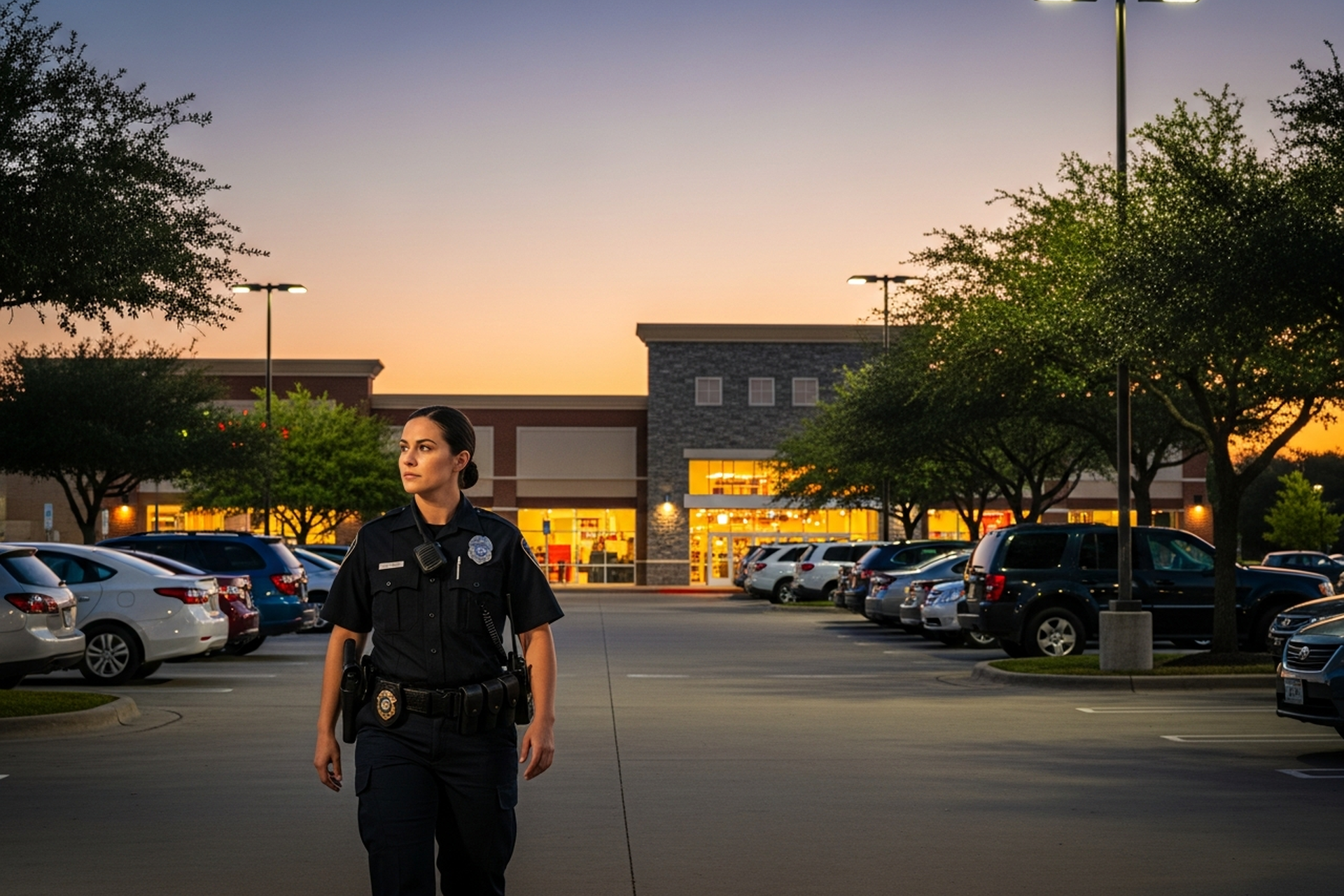
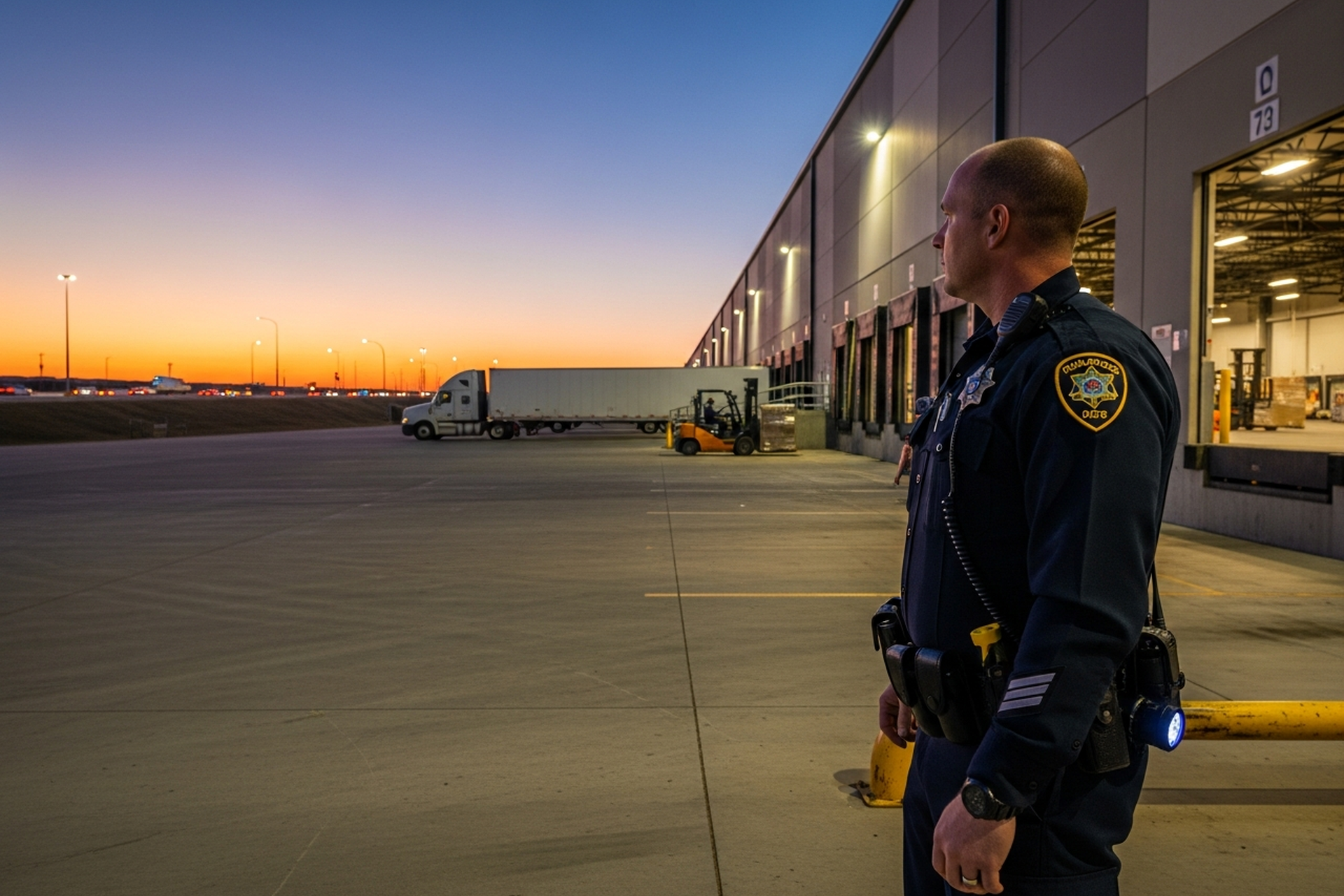
Rounds are conducted at intervals of 15 to 30 minutes. During each round, the officer walks the entire affected area, checking for smoke, heat, unusual odors, or smoldering materials. They verify exits remain clear, suppression equipment is in place, and hot work areas have cooled adequately between work periods.
Documentation, Communication, and Emergency Protocol
Documentation is non-negotiable. Every round is logged with the time, the officer's signature, and any observations or conditions noted. This log becomes the compliance record if Dallas Fire-Rescue responds or conducts a follow-up inspection. Missing or incomplete logs are treated the same as not having fire watch at all.
The officer must also maintain the ability to communicate throughout the shift. That means a working radio or mobile phone for direct contact with the fire department and building management. If a fire condition is detected, the protocol is immediate: activate the nearest pull station if available, call 911, and begin evacuation. Fire watch officers do not fight fires; the job is detection, documentation, and notification.
NFPA Standards and Dallas Fire-Rescue Rules
Two NFPA standards do most of the work in Dallas fire watch compliance.
NFPA 1 (Fire Code) covers general occupancy fire watch requirements. It establishes the trigger thresholds for system impairment, the minimum patrol frequency, and the documentation requirements. Most commercial, industrial, and institutional occupancies in Dallas fall under NFPA 1 for fire watch purposes.
NFPA 241 applies specifically to construction, alteration, and demolition operations. It requires the building owner or contractor to establish a fire prevention program, designate a program supervisor, and maintain fire watch during hot work and whenever automatic fire protection systems are impaired. NFPA 241 also addresses flammable storage, fire apparatus access, and temporary heating equipment on site.
Dallas Fire-Rescue Enforcement
The U.S. Fire Administration provides fire prevention guidance for construction settings that aligns with NFPA's framework. Dallas Fire-Rescue operates as the local AHJ and can apply additional requirements beyond adopted codes. Post-hot-work watch under NFPA 51B is required for at least 1 hour after welding or cutting stops, because smoldering materials can ignite well after the work ends.
Hot Work, Sprinkler Impairment, and Construction-Phase Fire Watch
These three scenarios each have distinct requirements, and conflating them is one of the most common compliance mistakes.
Hot work fire watch applies during and after any welding, cutting, grinding, brazing, or torch work. The fire watch must be present throughout the operation and remain on site after work stops until all potential ignition conditions are eliminated. The current NFPA 51B post-hot-work period is a minimum of 1 hour, with additional fire monitoring of up to 3 more hours when the permit authorizing individual determines it is warranted.
Sprinkler impairment fire watch is different in scope. When a sprinkler system is taken offline for maintenance or repair, fire watch must cover the entire unprotected area. On large buildings, that can mean multiple officers covering different zones simultaneously. The watch runs continuously from the moment the system goes offline until it is restored and tested back into service. There is no "working hours only" exception.
Construction-phase fire watch combines elements of both. Active construction sites with combustible framing, temporary roofing, or open building envelopes require fire watch whenever automatic protection systems are not yet in service. General contractors are responsible for coordinating fire watch with their construction schedule, and on larger DFW projects that coordination is part of the fire prevention plan required under NFPA 241.
How Quickly Fire Watch Coverage Can Start
When a sprinkler contractor calls at 4:00 p.m. to say the system will be down overnight, you do not have the luxury of a multi-day vendor selection process. Fire watch is one of the few security services where the timeline is dictated by code, not by procurement preference.
Cascadia deploys fire watch officers across the Dallas-Fort Worth metro area with same-day and overnight response capability. A site address, scope of coverage, and a start time are enough to get a qualified officer moving. For planned impairments, 24 to 48 hours of lead time allows for scheduling and briefing, but Cascadia's temporary and emergency coverage services are built specifically for situations where that lead time does not exist.
Officers arrive briefed on the specific scenario: the impaired system type, the coverage area, the required patrol frequency, and the documentation format that will satisfy Dallas Fire-Rescue. They are not learning the job on your site. Compliance starts from the first round.
What This Means for Your DFW Property
If you manage a commercial property, active construction site, or industrial facility in the Dallas area, fire watch requirements will eventually apply to you. Sprinkler maintenance windows, fire alarm panel replacements, and hot work permits are routine events, and code makes no distinction between planned impairments and emergency outages.
The practical risk is not just regulatory. An undetected fire during a system impairment without trained fire watch creates a liability exposure well beyond a code citation. Insurance carriers increasingly scrutinize fire watch protocols as part of loss prevention requirements.
Cascadia's construction site security services in Dallas already operate across the active project sites and commercial corridors of the DFW region. Fire watch coverage integrates directly with those deployments or can be stood up independently when that is the specific need. The coverage is continuous, documented, and compliant from hour one.
Frequently Asked Questions
How quickly can fire watch services start in Dallas?
Same-day deployment is available for urgent impairment situations. Cascadia can typically have an officer on site within a few hours of contact. Providing the site address, the area to be covered, and the reason for fire watch is enough to initiate dispatch.
How much do fire watch services cost?
Fire watch is billed at an hourly rate per officer, with total cost driven by coverage duration and the number of officers required. Rates vary based on shift timing (day, overnight, holiday) and patrol area complexity. Contact Cascadia for a site-specific quote.
What is the difference between hot work fire watch and sprinkler-impairment fire watch?
Hot work fire watch is tied to a specific activity. The officer is present during welding, cutting, or torch work and stays on site through the post-work period to monitor for delayed ignition. Sprinkler-impairment fire watch is continuous coverage for an entire area that has lost automatic suppression protection. The watch runs without interruption until the system is restored, and a single job site may require both types at the same time.
How often do fire watch officers conduct rounds?
NFPA 1 and NFPA 241 generally require rounds at intervals no greater than 30 minutes. Dallas Fire-Rescue as the AHJ may require patrols as frequent as every 15 minutes based on site conditions or impairment type. Every round is logged with the time and officer signature, creating the compliance record that satisfies fire department inspections.
Does Cascadia provide 24/7 fire watch coverage?
Yes. Fire watch obligations under NFPA 1 do not stop at the end of a business day, and Cascadia's coverage does not either. Overnight, weekend, and holiday shifts are available. For facilities that need ongoing fire watch across a multi-week repair or renovation timeline, Cascadia can assign consistent officers who know the site and maintain documentation continuity throughout the engagement.
Get Fire Watch Coverage in Place Today
When a fire protection system goes offline, the clock starts immediately. Every hour without trained fire watch is a code violation and an open liability gap. Cascadia Global Security deploys fire watch officers across Dallas and the DFW region, same-day when you need it, 24/7 when the job runs long.
Contact Cascadia for a rapid fire watch quote. Provide your site address, the affected area, and your start time, and Cascadia will confirm officer availability and deployment within the hour. For urgent overnight needs, call (800) 939-1549 directly.
For properties with ongoing construction or planned maintenance windows, Cascadia's construction site security services can fold fire watch into a broader site security program so compliance is never a last-minute scramble.