Large Worship Venue and Church Security in Chicagoland
Josh Harris | June 2, 2026
A congregation of 4,000 gathering for Sunday services presents security challenges that a standard guard deployment cannot address on its own. Large worship venue security in Chicago requires coordinated planning across entry points, childcare areas, parking lots, and holiday services that can triple normal attendance, all while maintaining an environment where visitors feel welcomed rather than screened. The congregations that get this right treat security as a hospitality function, not a law enforcement exercise.
Chicagoland is home to one of the most religiously diverse metropolitan areas in the country. Megachurches in South Barrington and the northern suburbs serve weekly crowds measured in the thousands. Historic Catholic parishes and Orthodox cathedrals draw concentrated attendance for major liturgical events. Synagogues across Lakeview, Lincoln Square, and the Loop maintain active Sabbath and High Holy Days programs. The Mosque Foundation in Bridgeview and other Islamic centers host Friday Jumu'ah gatherings that fill parking lots and overflow into adjacent streets. Hindu temples and Sikh gurdwaras in the northwest suburbs serve large weekend congregations. Each tradition, each building, and each attendance pattern creates a distinct security challenge.
Why Large Worship Venues Need Professional Security Programs
Worship venues have long operated under an assumption of sanctuary, an idea that the building itself provides a kind of protection. That assumption has been tested repeatedly, and professional security planners no longer treat it as a reasonable operational posture.
The threats facing large congregations fall into several categories. Hate-motivated violence targeting specific faith communities, particularly synagogues, mosques, and historically Black churches, has driven increased security investment across Chicagoland. Disgruntled former members or employees with unresolved grievances represent a different risk profile, one that existing congregants may be better positioned to notice than outside observers.
Theft of offering collections, equipment from childcare areas, and personal items left in pews or coat rooms is a persistent low-level concern at any facility that welcomes the public. Parking lot incidents, including vehicle break-ins and interpersonal disputes, are statistically likely during the high-concentration windows around service times. Domestic violence situations can follow members into worship spaces, requiring staff to recognize and respond to protective concerns without creating confrontation in a sanctuary setting.
Special events compound all of these risks. A Christmas Eve service that draws three times the usual attendance, a wedding with 500 guests from multiple social networks, or a community conference open to the general public each introduces variables that a standard Sunday staffing model cannot absorb.
The Anti-Defamation League tracks hate-motivated incidents against religious institutions and provides resources to help faith communities assess their vulnerability and develop security programs. Faith leaders across Chicago have used ADL guidance as a starting point for threat assessment, particularly for congregations that have experienced targeted harassment or vandalism.
Building a Layered Security Model for Houses of Worship
The most effective approach to large-venue worship security in Chicago combines formal security staffing with trained volunteers and technology, with each layer addressing different threats at varying distances from the sanctuary.
Greeters and Ushers as the First Line of Awareness
Greeters and ushers occupy the most strategic position in a worship security program because they are trusted congregants moving through spaces where a uniformed officer would be invisible or disruptive. A greeter trained to notice behavioral anomalies, an individual circling the lobby without making eye contact, or an unknown person asking detailed questions about the building, provides early warning that a professional officer can act on.
This soft intelligence layer works only when greeters receive structured training. Recognizing pre-attack behaviors, understanding how to communicate concerns without creating a scene, and knowing when to escalate to a security supervisor are skills that must be taught deliberately, not assumed.
Volunteer Safety Teams
Many congregations organize member safety teams, groups of trained volunteers who understand the building layout, know the congregation, and are positioned throughout the sanctuary during services. These teams typically operate unarmed and focus on de-escalation, medical response, and coordination with professional staff.
Volunteer teams work best when they have clear authority boundaries, a shared communication system, and regular training. Without structure, a well-intentioned volunteer can create liability by taking action outside the appropriate scope.
Professional Unarmed Officers at Entries
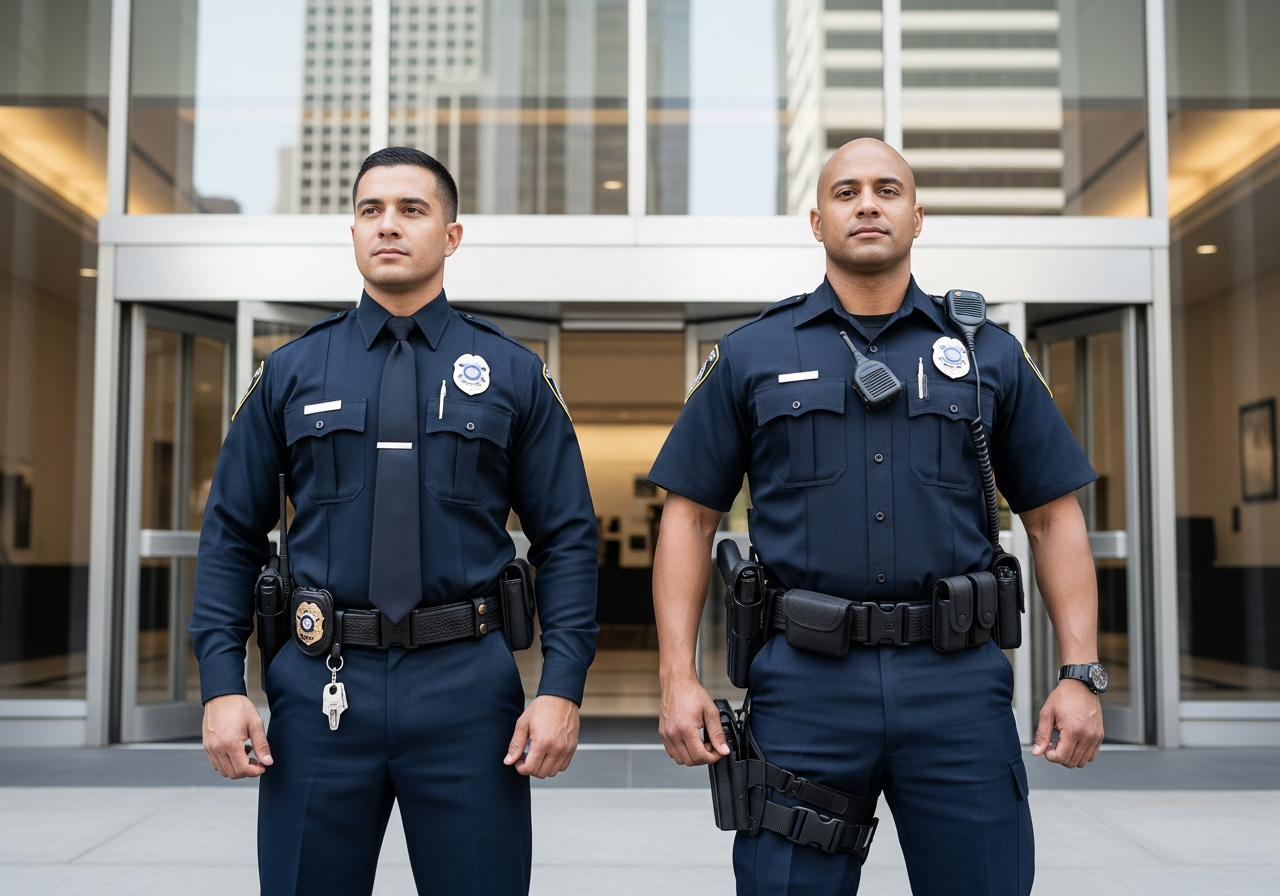
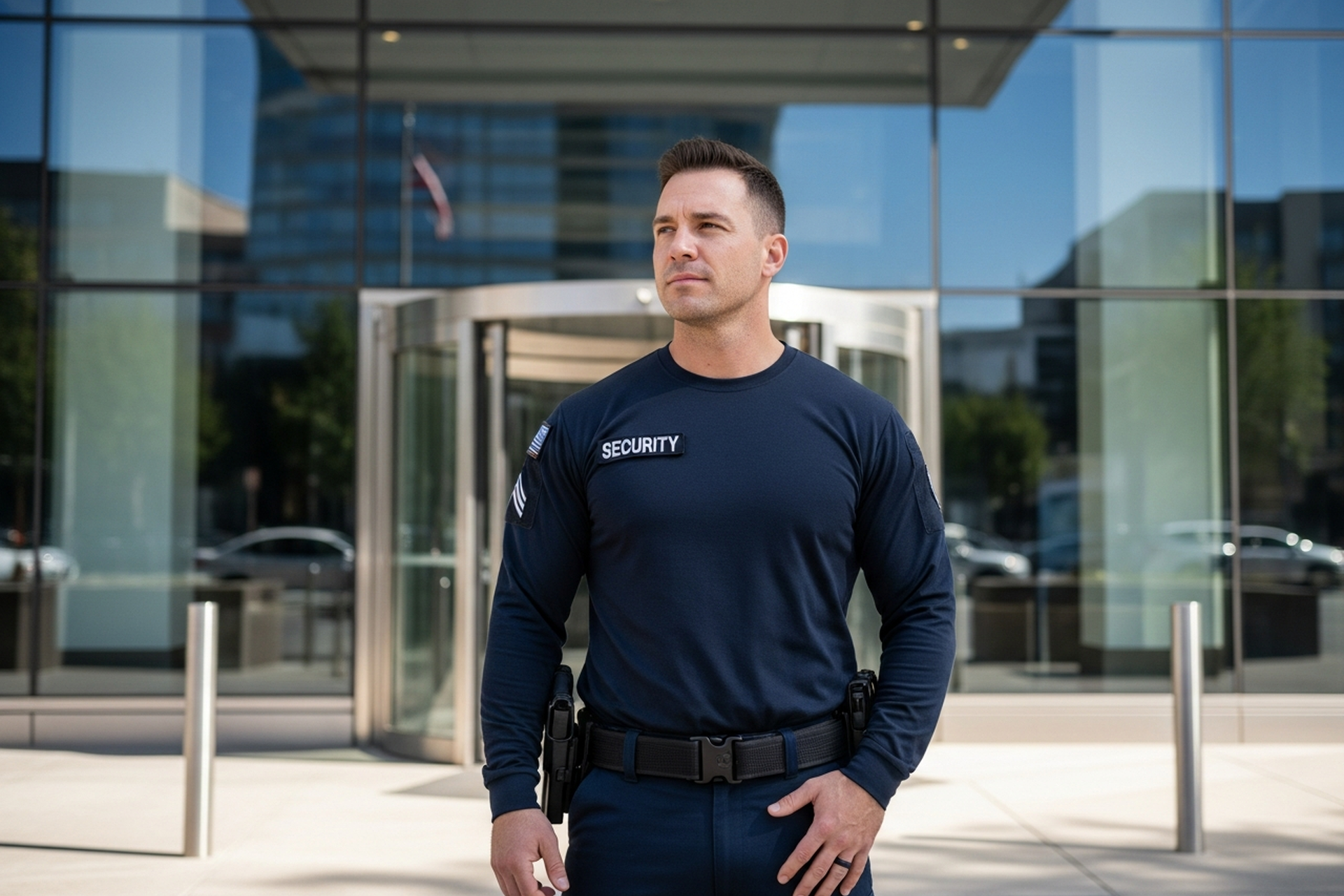
The most visible layer of a worship security program is the uniformed, unarmed guard stationed at main entries during service hours. This presence serves multiple functions simultaneously: it deters opportunistic threats, provides a controlled screening point for visitors unfamiliar to staff, and gives the congregation a recognizable contact for concerns.
For congregations that prefer a lower visual profile, plainclothes professional staff can fulfill the same function without the uniformed aesthetic. The tradeoff is reduced deterrent value; a visible uniform communicates that the organization takes security seriously.
Armed Coverage for Elevated Risk Situations
Some congregations, particularly those that have received specific threats or that operate in threat environments documented by law enforcement, choose to supplement unarmed officers with armed security or off-duty law enforcement. In Illinois, armed security officers must carry both a PERC card and a Firearm Control Card issued by the Illinois Department of Financial and Professional Regulation. Off-duty Chicago Police Department officers and suburban department officers bring law enforcement authority and training that exceeds private security minimums.
The decision to introduce armed coverage involves both security analysis and pastoral judgment. Many congregations find that armed officers in plainclothes meet their protection needs while preserving the welcoming atmosphere of the sanctuary.
Parking Lot and Perimeter Coverage
The parking lot is statistically the most active area for security incidents at large worship venues. Vehicle break-ins, disputes over parking spaces during overcrowded services, and stalking situations that follow members from home often originate in or adjacent to the lot. Mobile patrol coverage during peak service windows, with a visible vehicle circulating the perimeter, addresses this exposure without requiring a fixed-post officer at every entrance.
During High Holy Days, Eid prayers, Christmas and Easter services, or any event that pushes attendance significantly above baseline, temporary security staffing allows congregations to scale coverage without maintaining a year-round budget for peak headcount.
Childcare Ministry Security
Weekend childcare and children's ministry programs require specific security protocols separate from the main congregation model. Background checks for all volunteers working with children are a baseline requirement. Check-in and check-out matching systems, where a child is released only to the adult who checked them in or to a pre-authorized alternate, prevent custody disputes and unauthorized pickups. Childcare spaces should have limited access points, ideally controlled by staff rather than relying on parents to secure doors.
Technology and Access Control
CCTV coverage of all entries, parking areas, and childcare zones provides both deterrence and post-incident documentation. Cameras positioned to capture license plates in the lot and faces at the main entry provide investigators with actionable footage if an incident occurs. Weekday access control, keycard or fob-based systems on office and staff areas, protects against the distinct threat profile of a facility that is open to the public on weekends but operates administrative functions through the week.
Illinois Legal Context and Grant Funding
Houses of worship in Illinois are private property, which means security teams have the same authority to control access and remove disruptive individuals as any other private property operator. If armed personnel are used, Illinois FOID card and FCC requirements apply to both the individual officer and the contracting security company.
Faith-based organizations across Chicagoland should be aware of the federal Nonprofit Security Grant Program, administered by FEMA and DHS, which provides funding specifically for target hardening and security improvements for nonprofit organizations, including religious institutions. In FY 2025, the program made $274.5 million available nationally, with grants flowing through the Illinois Emergency Management Agency for state-level applicants. Eligible uses include physical security equipment, planning activities, and training. Faith communities that have not engaged their state's NSGP application process may be leaving meaningful resources on the table.
Choosing a Security Vendor for Your Congregation
Not every security company is equipped to serve a faith community. The right vendor brings familiarity with religious-space etiquette, experience working around active services, and staff trained to present a professional but approachable presence rather than a tactical one.
When evaluating providers, look for current PERC/FCC credentials for all assigned officers, insurance coverage specific to security operations, verifiable references from congregations of comparable size and tradition, and background-checked officers with documented training. Ask specifically whether the company has placed officers at worship venues before and how they train staff to handle the intersection of security and pastoral care.
Frequently Asked Questions
Do houses of worship in Illinois need a licensed security company?
Any security officer working in Illinois for compensation must hold a valid PERC card issued by the IDFPR. Congregations using paid security services should verify that the company and each assigned officer carry current credentials.
Can a congregation rely entirely on volunteer safety teams?
Volunteer teams are a valuable layer, but they carry liability risks if members take actions outside appropriate scope. Most congregations of 1,000 or more benefit from at least one licensed professional officer supervising volunteer activity and handling situations that require trained intervention.
What should a worship venue do to prepare for High Holy Days or large holiday services?
Start planning at least 60 days in advance. Assess the expected attendance, identify parking overflow areas, coordinate with local law enforcement for events that affect surrounding streets, and engage temporary staffing augmentation through a licensed security company with experience at faith venues.
Is it appropriate to have armed security at a house of worship?
This is a pastoral and operational decision that varies by congregation. Communities that have experienced specific threats, that are located in areas with elevated crime exposure, or that have members with active protective concerns may determine that armed coverage is appropriate. Illinois law permits it provided all licensing requirements are met.
What is the Nonprofit Security Grant Program and who qualifies?
The NSGP is a DHS/FEMA grant program that provides funding to nonprofit organizations, including religious institutions, for security improvements. Eligibility is based on documented threat levels and organizational nonprofit status. Illinois applications are coordinated through IEMA. Grant funds can cover physical security upgrades, planning, and staff training.
Protecting Your Congregation Across Chicagoland
Large worship venues face a security challenge that most commercial properties do not: the obligation to remain genuinely welcoming while managing real threats. The solution is not a fortress aesthetic or an adversarial entry experience. It is a layered program built around the congregation's values, staffed by professionals who understand that their role is to serve the community, not to police it.
Cascadia Global Security provides unarmed officers, armed coverage, off-duty law enforcement coordination, mobile patrol, and temporary event staffing for faith communities across Chicagoland. To discuss a security assessment for your congregation, call (800) 939-1549 or get a quote from our team.