Nightlife and Entertainment District Security in Dallas
Josh Harris | June 2, 2026
Nightlife entertainment security in Dallas runs on a different clock than the rest of the commercial security world. A retail center winds down at 9 p.m. A high-rise lobby empties by 7. A music venue in Deep Ellum is only just hitting peak capacity at midnight, and the operational pressure curve keeps climbing until last call.
Door staff, interior coverage, and parking lot watch all need to flex with that curve, and the people working those posts need to understand alcohol service dynamics as well as they understand crowd control.
The question from bar owners, club operators, and music venue GMs in Dallas-Fort Worth is almost always the same: what does a real security program look like for an alcohol-licensed venue in an entertainment district, and how does it differ from the generic guard coverage they may have used in the past?
Why nightlife security in Dallas has its own operational rhythm
Most Dallas entertainment district venues share a few traits that change how security needs to be staffed and deployed. Capacity is high relative to floor space. Alcohol is the primary product. Patrons arrive in waves, congregate near the bar, and exit in compressed surges around last call.
Lines spill onto public sidewalks. Adjacent venues share the same crowd, which means a fight at the bar next door becomes your problem when the crowd pushes onto your patio.
That operational rhythm drives staffing decisions in ways that commercial property security does not. A retail patrol can be measured in visits per shift. A nightlife post is measured by what happens in the 90-minute last-call window, when intoxicated patrons, rideshare congestion, and sidewalk overflow all converge.
Districts like Deep Ellum, Lower Greenville, Uptown, Bishop Arts, Knox-Henderson, and Trinity Groves each have their own variations of that pattern. Deep Ellum draws music-driven crowds that arrive late and stay later. Lower Greenville mixes restaurants and bars on a single corridor where pedestrian density on weekend nights creates its own challenge.
Uptown skews bar-and-club. Bishop Arts is more restaurant-forward but still runs late-night service. The plan for each district has to match the cadence of the surrounding block, not just the venue.
The four posts inside a nightlife security plan
When we talk to operators about nightlife coverage, the conversation usually breaks into four distinct posts, each with its own responsibilities and training requirements.
Door
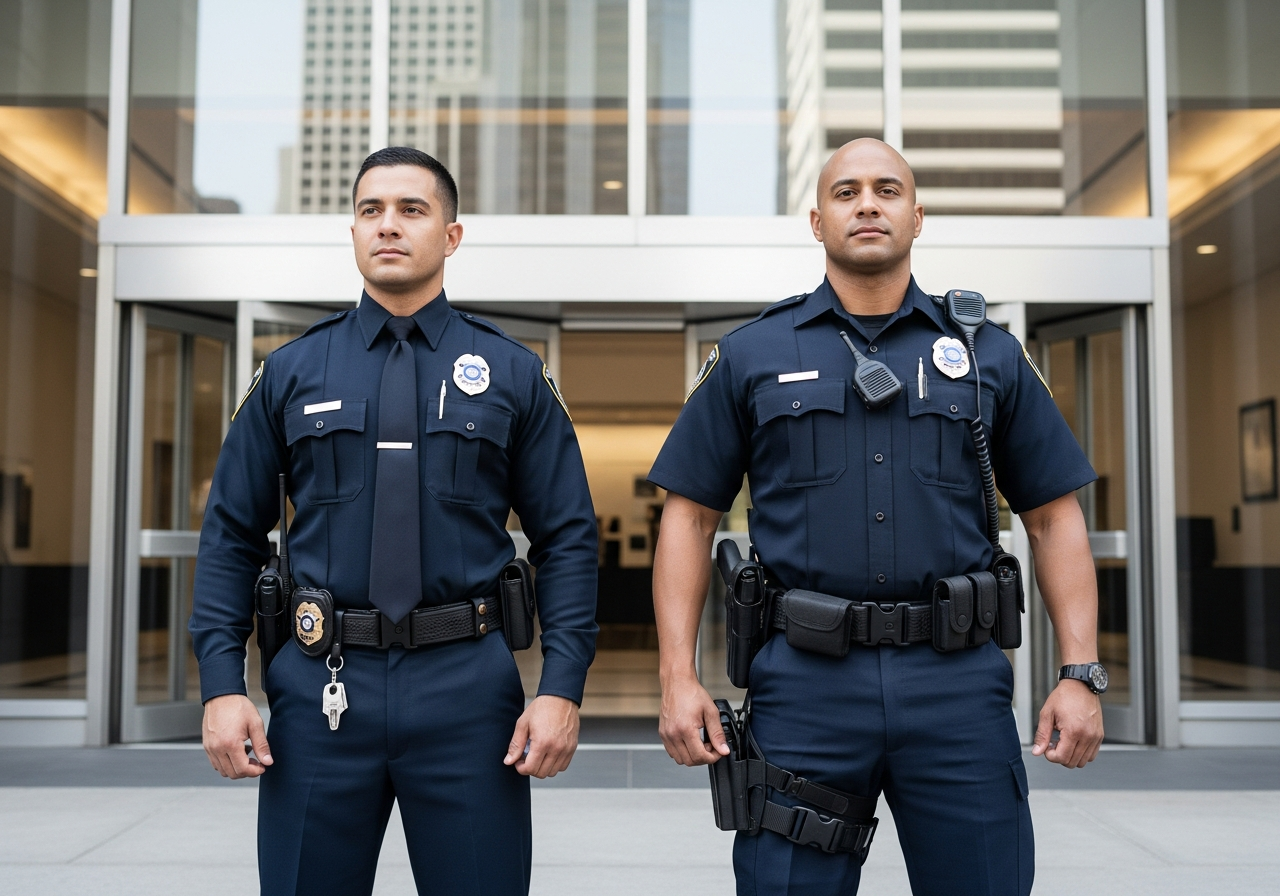
The door is where ID verification, capacity counting, and dress-code or house-policy enforcement happen. This is also the most common point of friction with patrons, which means the people working the door need de-escalation training and a clear protocol for when to refuse entry. A trained door officer reduces fake-ID admissions, prevents over-capacity violations, and creates the first visible signal that the venue is professionally managed.
Interior floor
Floor coverage is about visibility, early intervention, and intoxicated-patron management. Officers move through the room, watch the bar, the dance floor, and the restrooms, and step in before a verbal disagreement turns into a fight. Interior officers also work directly with bartenders when service needs to be cut off, which is one of the more sensitive interactions in nightlife operations and the moment most likely to escalate.
Sidewalk and parking lot
The transition zone between the venue and the street is where a lot of incidents actually occur. Officers stationed outside manage the smoking crowd, the line, the rideshare pickup area, and the parking lot. Parking facilities adjacent to entertainment districts get heavy turnover during peak hours, and operators with their own lots often bring in coordinated coverage through parking facility security staffing.
Back of house
Kitchen entrances, storage rooms, office areas, and cash-handling zones are where internal loss, unauthorized access, and inventory shrinkage tend to show up. Back-of-house posts are often lower-profile but matter for any operator who has dealt with theft of liquor, missing deposits, or unauthorized access during open hours.
TABC certification and what it means for the security plan
Any officer working at a Texas alcohol-licensed venue benefits from familiarity with TABC rules around service to minors and intoxicated patrons, even when their primary role is security rather than service. The Texas Alcoholic Beverage Commission runs a TABC certification program through approved schools that covers state laws, intervention techniques, and the operator's safe-harbor protections when staff and managers are certified within 30 days of hire.
For security operators specifically, familiarity with TABC matters in two ways. First, the officer who steps in when a bartender flags an overserved patron is operating within the same legal framework as the bartender. Second, when an officer makes a refusal-of-service call at the door for an obviously intoxicated patron arriving from another venue, that decision protects the operator's license. Cascadia staffs venues with officers who understand that framework, including TABC-certified personnel where the operator's program calls for it.
Off-duty Dallas PD for high-traffic and event nights
Many Dallas entertainment district venues run a hybrid coverage model: licensed private security on the regular weekly schedule, plus off-duty law enforcement on Friday and Saturday nights and during scheduled events. Off-duty Dallas PD officers carry the authority to make arrests, write citations, and coordinate with on-duty units already patrolling the district, which changes the response calculus on serious incidents.
The right mix is venue-specific. A smaller bar with predictable crowds may need only licensed private security. A larger club or music venue with regular touring acts often runs licensed officers on a baseline schedule and adds off-duty police for headlining nights, holiday weekends, and any event that draws an out-of-pattern crowd. Operators planning a one-off event night also draw on temporary and emergency staffing when their regular team needs reinforcement.
Texas DPS licensing as the baseline
Every private security officer working a Dallas venue must be licensed through the Texas Department of Public Safety Private Security Bureau. The two tiers operators encounter most often:
- Level II, non-commissioned (unarmed): 6-hour state curriculum. Required for unarmed officers.
- Level III, commissioned (armed): 45-hour state curriculum, including firearms qualification. Required for any armed officer.
The licensing structure is published by Texas DPS. When evaluating a security vendor, operators should be able to confirm that every officer assigned to their venue holds a current pocket card matching the role they are working. A bar that pays for armed coverage should not see Level II officers at the door.
For most Dallas nightlife venues, the standard configuration is a team of unarmed guards at the door and on the floor, with armed guards added in specific situations such as cash-heavy operations, late-night closing procedures, or venues with elevated risk profiles. The decision should be deliberate and tied to the operator's risk picture, not a default upsell.
Coordinating with venue management
A working security program is not a vendor relationship that runs on autopilot. The strongest programs we run in DFW have weekly or monthly touchpoints between the security supervisor, the venue GM, the bar manager, and (where applicable) the music or event director. The agenda is usually short: incidents from the prior week, staffing for the upcoming weekend, any scheduled acts or private buyouts, and adjustments to door policy or floor coverage.
That coordination also extends to neighboring venues. Entertainment districts function as ecosystems. A fight at one venue is rarely contained to that venue's footprint, and the security team that knows the supervisors at the two bars next door responds faster and more cleanly than a vendor running their account in isolation. This is one reason district-experienced staffing matters more than raw guard hours.
Mixed-use developments inside entertainment districts add another layer. A music venue inside a building with retail tenants and apartments above needs coverage that respects the operational footprint of retail security and the adjacent hotels and hospitality properties that share the block.
What this means for your Dallas nightlife venue
If you operate a bar, club, music venue, or restaurant with late-night service in a Dallas entertainment district, the security plan should reflect the specific operational realities of your space and your block. That includes:
- A staffing curve that flexes with peak hours and the last-call surge, not a flat headcount
- Door, floor, sidewalk, and back-of-house coverage that match your floor plan
- TABC familiarity for any officer working alongside alcohol service
- Texas DPS-licensed officers at the correct level for the role they are working
- Off-duty Dallas PD added on the nights where the crowd profile justifies it
- Coordination with venue management on a weekly cadence
Cascadia builds nightlife programs across the Dallas-Fort Worth market with this framework as the starting point. The execution details depend on your venue, your district, and your operating hours.
Frequently Asked Questions
Are house door staff the same as licensed security officers?
No. Many venues use a mix of in-house door staff who handle ID checks and dress-code enforcement, plus licensed security officers who handle interventions, ejections, and any incident that could escalate. House door staff are not a substitute for licensed officers on a busy nightlife floor, particularly when the venue's incident profile includes fights, intoxication, or arrests.
Should officers at a bar or club be armed or unarmed?
Most Dallas nightlife venues run unarmed coverage as the default. Armed coverage is appropriate in specific scenarios: cash-heavy operations, late-night closing procedures with deposits, venues with documented threats, or events where the risk profile clearly justifies it. The decision should be venue-specific and built into the post orders, not a blanket policy.
How much does nightlife security cost per hour in Dallas?
Hourly rates depend on officer type, license level, night of the week, and whether off-duty police are part of the mix. We provide a quote after a site walk and a review of operating hours and incident history.
Do my security officers need TABC certification?
TABC certification is not a state requirement for security officers, but it is increasingly common at well-run alcohol-licensed venues. Officers who understand the framework operate more confidently around service interventions and refusal-of-service calls.
When does it make sense to add off-duty Dallas PD?
Common triggers are high-traffic weekend nights, headlining or touring acts, holiday weekends, private buyouts that draw an out-of-pattern crowd, and venues with a recent uptick in serious incidents. Off-duty officers complement, rather than replace, the licensed private security team.
Working with Cascadia in Dallas
Nightlife venues are a core part of what we staff across the DFW metroplex. If you are evaluating a new security program or rebuilding one that has drifted out of alignment, we will walk the venue, review your incident history, and propose a staffing plan that matches your district and your hours.
Get a quote to start the conversation, or call (800) 939-1549 to speak with our DFW team.