OSHA Compliance and Security Training for Texas Employers
Josh Harris | May 21, 2026
OSHA compliance for Texas employers sounds straightforward until you try to map it. The rules are federal, the enforcement is federal, but the way Texas businesses experience OSHA, including how security training intersects with workplace safety, is shaped by a few state-specific realities. If you operate a facility anywhere in Texas, knowing how OSHA actually works saves you from preventable citations and helps you build a safer worksite.
This article walks through the structure of OSHA in Texas, where security exposure sits, and the training and recordkeeping basics every Texas employer should have in place.
How OSHA Operates in Texas
Texas is a federal-OSHA state. There is no Texas-run OSHA plan for private-sector workplaces. Private employers, from a single warehouse in Arlington to a multi-site manufacturer headquartered in Houston, answer directly to federal OSHA. Inspections, citations, and enforcement come out of OSHA's Region VI office, which covers Texas along with Arkansas, Louisiana, New Mexico, and Oklahoma.
There is one important nuance. Texas operates a free, voluntary on-site consultation program through the Texas Department of Insurance, Division of Workers' Compensation, known as OSHCON. It is open to private Texas employers that want a confidential safety and health review without the citation risk of an enforcement inspection. OSHCON consultations are separate from federal OSHA enforcement and do not replace it. State and local government employees in Texas sit outside federal OSHA jurisdiction altogether, since federal OSHA covers only private-sector workers in non-plan states.
A second Texas-specific wrinkle: Texas is the only state where private employers are not required to carry workers' compensation insurance. Many Texas businesses still elect to participate. OSHA compliance and workers' comp are separate questions, but they touch the same paperwork in practice.
The General Duty Clause and Workplace Violence
When most Texas employers think about OSHA, they think hard hats, fall protection, and forklifts. The less obvious exposure for many commercial operations is workplace violence, which sits under the General Duty Clause.
Section 5(a)(1) of the Occupational Safety and Health Act requires every employer to furnish a workplace "free from recognized hazards that are causing or are likely to cause death or serious physical harm." OSHA does not have a comprehensive federal standard specifically for workplace violence in general industry. Instead, when an employer has reason to know that violence is a foreseeable risk and fails to put reasonable controls in place, OSHA cites under the General Duty Clause.
What does "reason to know" look like? Prior incidents, documented threats, an industry with a known violence profile (healthcare, late-night retail, social services), or a facility in a high-crime area can all establish foreseeability. Once that threshold is crossed, OSHA expects the employer to implement a written workplace violence prevention program, train staff, and use feasible engineering and administrative controls. OSHA's workplace violence resource page lays out the agency's expectations, including its longstanding guidance for healthcare and social services employers.
For Texas commercial operators, workplace violence is not a niche concern. It is the most common security-related path to an OSHA citation, and the documentation bar is real.
Recordkeeping Basics
Most employers with more than ten employees are required to keep OSHA injury and illness records, though certain low-hazard industries are partially exempt. The core forms are well known by number rather than name:
- Form 300: a running log of work-related injuries and illnesses
- Form 301: the incident report for each recordable case
- Form 300A: the annual summary, posted from February through April each year
Some employers are also required to electronically submit injury and illness data to OSHA each year, with the thresholds tied to industry classification and employee count. Reporting cadence and exact applicability change periodically, so confirm current requirements at osha.gov or with a qualified safety consultant before assuming last year's process still applies.
Beyond the routine forms, certain events trigger immediate reporting. A workplace fatality must be reported to OSHA within eight hours. Any inpatient hospitalization, amputation, or loss of an eye must be reported within 24 hours. These reporting clocks apply regardless of whether the employer is otherwise required to keep Form 300 records.
Training Requirements: What OSHA Mandates and What Security Fills
OSHA's training requirements are spread across dozens of specific standards rather than collected in one place. Hazard communication, lockout/tagout, bloodborne pathogens, respiratory protection, powered industrial truck operation, and confined space entry each carry their own training mandates with their own frequency and documentation rules. If a standard applies to your operation, training is not optional.
OSHA does not explicitly mandate a workplace violence training program for general industry. That gap is exactly where security training fills in. Under the General Duty Clause framework, once workplace violence is a foreseeable hazard, training employees to recognize warning signs, de-escalate, report threats, and respond to active incidents becomes part of the "feasible means" OSHA expects you to implement.
For most Texas businesses, that translates to a layered approach:
- Documented workplace violence prevention policy with reporting procedures
- Annual training for all staff on threat recognition and incident response
- Specialized training for managers and front-line personnel in higher-risk roles
- Coordination with on-site security personnel, where applicable
The training documentation matters as much as the training itself. OSHA inspectors routinely ask for sign-in sheets, curriculum outlines, and dates of refresher sessions. A program that exists only as a binder on a shelf is not a defense.
Where Private Security Personnel Intersect With OSHA
Texas-licensed security officers, regulated through the Texas Department of Public Safety, frequently sit at the operational edge of OSHA compliance. The intersection shows up in three places.
First, post-incident documentation. When a guard responds to a workplace violence event, the contemporaneous incident report often becomes the most reliable record an employer has. That report can support an OSHA filing, a workers' compensation claim, and any subsequent legal proceedings. Trained security personnel produce far better documentation than ad hoc bystander statements.
Second, deterrence and reporting. Visible unarmed guards at access points, armed guards where the risk profile warrants, and off-duty law enforcement for high-exposure environments all reduce the foreseeability calculus OSHA evaluates. A facility that has implemented reasonable security controls is in a stronger position if an incident occurs.
Third, training overlap. Many Texas DPS licensure tracks include training on emergency response, use of force, and report writing that complements an employer's broader workplace violence program. When security personnel and facility staff are trained on the same protocols, response cohesion improves measurably.
Industries With Heightened OSHA Exposure
OSHA exposure is not evenly distributed. A few verticals show up in workplace violence and General Duty Clause cases more often than others.
Healthcare facilities, including hospitals, behavioral health programs, and outpatient clinics, face the highest documented rates of nonfatal workplace violence injuries. OSHA has issued specific guidance for healthcare and social service workers, and inspectors apply that guidance even outside dedicated standards.
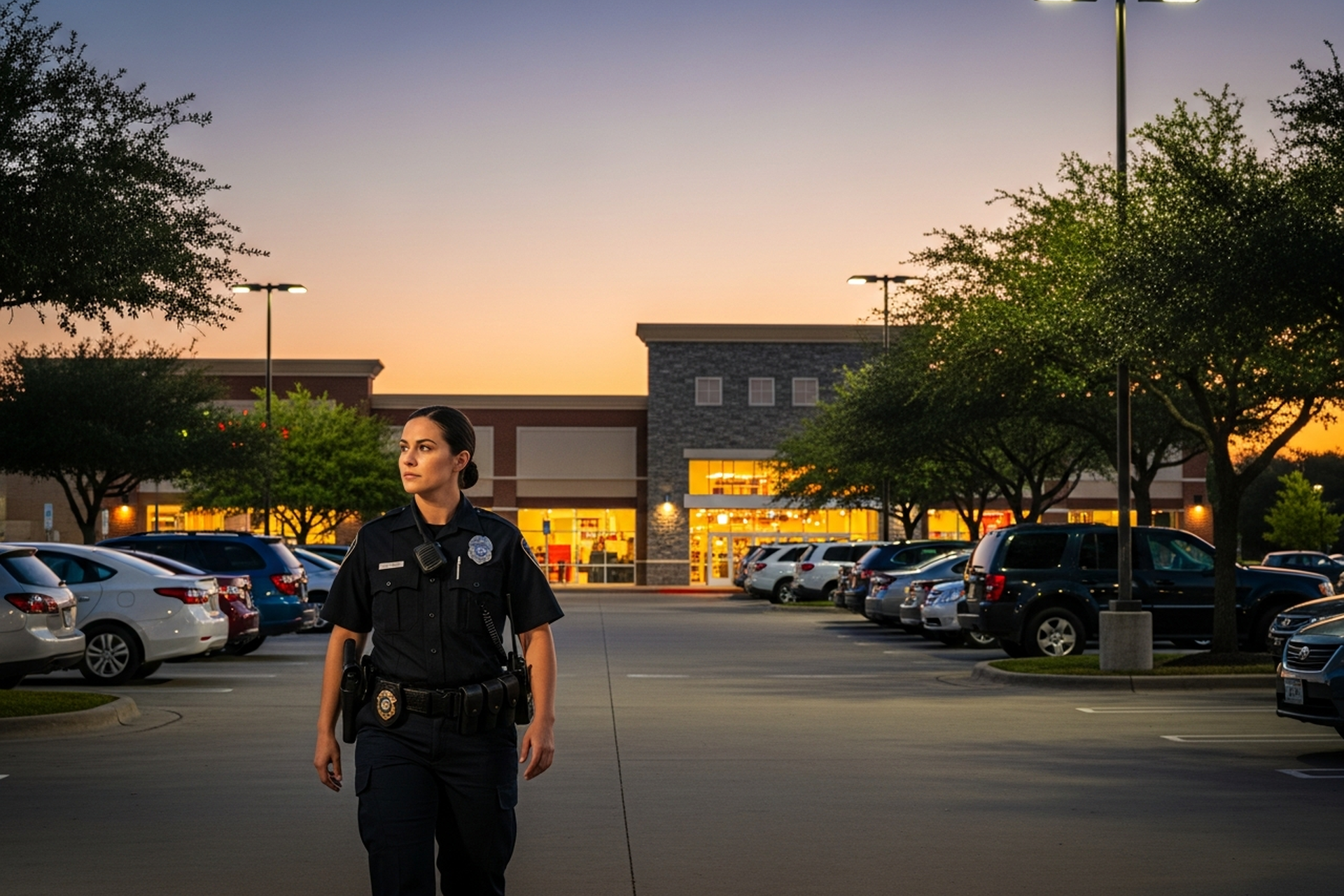
Retail security operations, particularly late-night convenience and pharmacy locations, draw OSHA attention after robbery or assault incidents. The standard expectation is documented controls including cash-handling protocols, lighting, sight lines, and trained personnel.
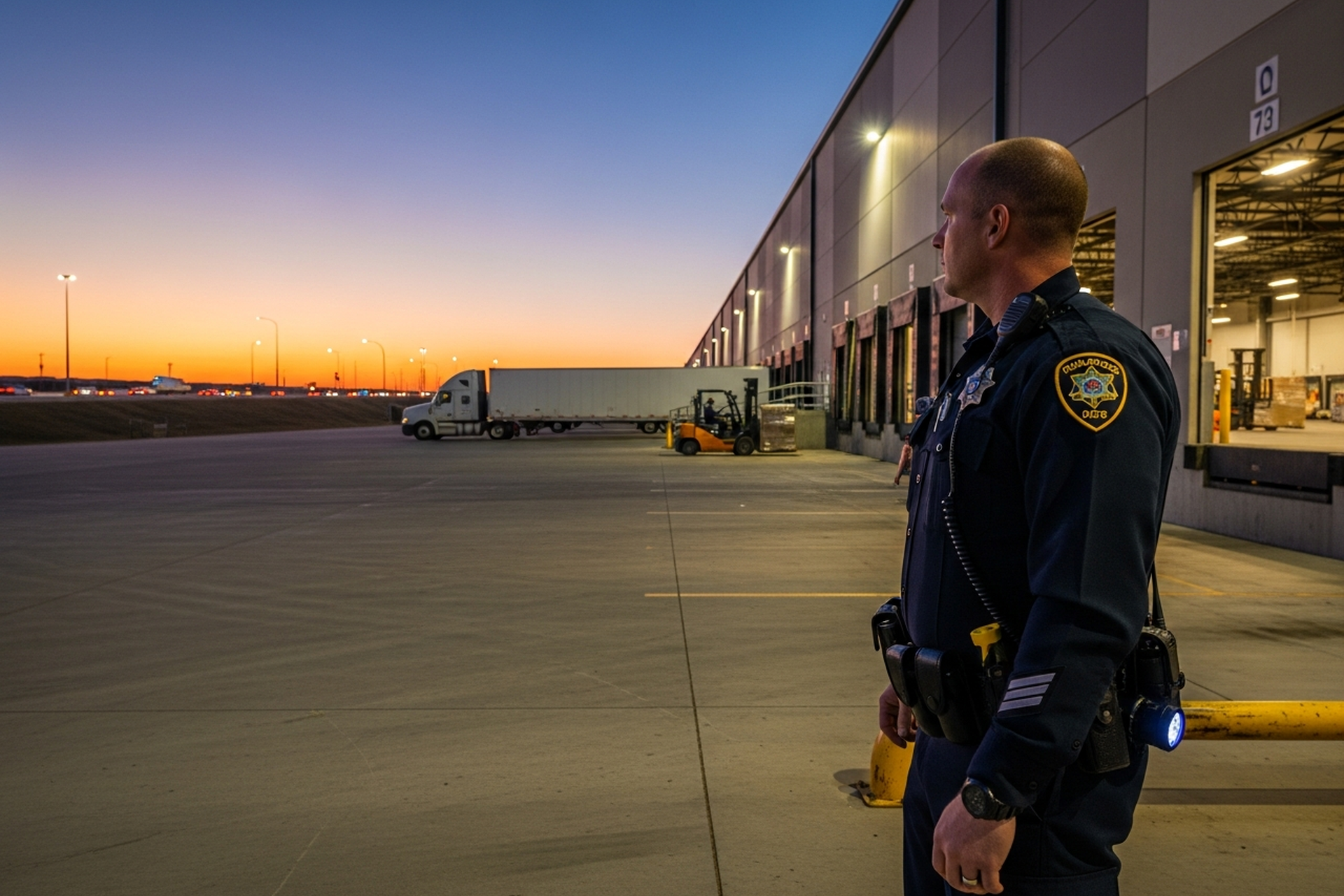
Warehouse and distribution facilities and industrial manufacturing sites combine the traditional OSHA hazards (forklifts, machine guarding, falls) with workplace violence exposure where access control is loose or after-hours operations are unstaffed.
Corporate and commercial properties, including multi-tenant office buildings, sit lower on the violence-frequency curve but face General Duty Clause scrutiny when a foreseeable incident occurs and controls were thin.
Building a Security-Aware Compliance Program
A defensible OSHA program does not start with a binder. It starts with an honest hazard assessment, which then drives policy, training, controls, and documentation. For most Texas employers, that assessment is worth doing in partnership with two outside parties: a qualified safety consultant who knows current federal standards, and a security provider who can evaluate physical controls and staffing.
The deliverables that matter to OSHA in an audit are usually the same:
- Written hazard assessments with dates
- Workplace violence prevention policy signed by leadership
- Training records by employee and topic
- Incident logs, including near-misses
- Documentation of controls implemented in response to identified risks
For employers operating across the Dallas-Fort Worth metroplex and beyond, security-specific elements such as guard tour logs, access control records, and CCTV retention policies become part of that documentation set.
What This Means for Your Texas Business
OSHA compliance in Texas is shaped by three facts: enforcement is federal, the General Duty Clause is the main lever for workplace-violence exposure, and security controls are part of how employers meet that obligation. A program that exists only on paper is not protective. A program that integrates training, documented controls, and capable on-site personnel is.
The right approach is to treat OSHA as one input into a broader operational risk picture. Workers' compensation posture, insurance underwriting, and civil liability all share evidence with OSHA compliance. Investing once in good documentation pays in several directions.
Frequently Asked Questions
Does Texas have its own OSHA? No. Texas is under federal OSHA jurisdiction through the Region VI Dallas office and has no OSHA-approved state plan. The Texas Department of Insurance, Division of Workers' Compensation runs OSHCON, a voluntary on-site consultation program for private employers, but that is consultation only and is separate from federal OSHA enforcement.
What is the General Duty Clause? Section 5(a)(1) of the Occupational Safety and Health Act requires employers to provide a workplace free from recognized hazards likely to cause death or serious harm. OSHA uses it to cite hazards, including workplace violence, where no specific standard exists.
Are security guards covered by OSHA? Yes. Security personnel, whether directly employed or contracted, are workers protected by OSHA. The contracting employer and the host employer can both have obligations depending on the arrangement.
Do Texas employers have to train staff on workplace violence? OSHA does not have a general-industry workplace violence training mandate, but the General Duty Clause effectively requires training once violence is a foreseeable hazard. Most employers in higher-risk industries should treat it as required.
What are typical OSHA penalty ranges? Federal OSHA penalty maximums are adjusted annually for inflation. Serious and other-than-serious violations fall into one tier and willful or repeated violations fall into a much higher tier. Always confirm current maximums at osha.gov before quoting figures, because the numbers move each year.
Building the Right Foundation
OSHA compliance is not a single project. It is a posture maintained over time through training, documentation, and the right people on site. Cascadia Global Security partners with Texas employers across Dallas-Fort Worth and statewide to integrate licensed security operations with broader workplace safety programs. To evaluate where your current program sits, request a quote or call (800) 939-1549. This article is general information, not legal advice; consult qualified counsel and a credentialed safety consultant for your specific situation.