Overnight Construction Security in the DFW Metroplex
Josh Harris | May 21, 2026
Overnight construction security in DFW is not a luxury add-on. More than 70% of construction theft and vandalism occurs between 6 PM and 6 AM, when sites go dark and crews go home. In a metro area running hundreds of active construction sites from Fort Worth to Frisco, that window is when unattended equipment, copper wiring, and building materials become easy targets. General contractors and project managers who leave overnight protection to chance are absorbing losses that compound fast, whether through stolen tools, delayed deliveries, or insurance claims that drive up future premiums.
Hiring a qualified overnight security provider means the gap between the last worker out and the first worker in is covered by trained eyes and documented activity, not just a fence and a padlock.
Why Overnight Is the Highest-Risk Window for DFW Construction Sites
Construction sites are attractive after-hours targets for straightforward reasons: they hold concentrated value, have multiple entry points, and are rarely monitored in real time. Generators, skid steers, copper wiring, and power tools all hold resale value on informal markets. When a job site goes unguarded overnight, thieves have hours to work undetected.
The DFW metroplex compounds the problem. With major corridors of development running through North Dallas, Plano, McKinney, and the medical and mixed-use builds near Fort Worth, there is no shortage of active sites. Criminal networks in the region are aware of construction schedules and will revisit sites repeatedly if the first visit goes unchallenged.
Fire Risk Compounds the Overnight Threat
Beyond theft, the overnight window carries fire risk. Welding debris, flammable materials, and incomplete utility connections can ignite without warning. Without someone on site to detect and report early, a small fire becomes a structural loss.
Construction industry trade groups like AGC treat job-site safety and health as a top priority, and after-hours coverage is one of the practical ways general contractors extend that priority into the unoccupied window. Overnight security directly supports both theft prevention and early hazard detection.
What an Overnight Construction Security Officer Actually Does
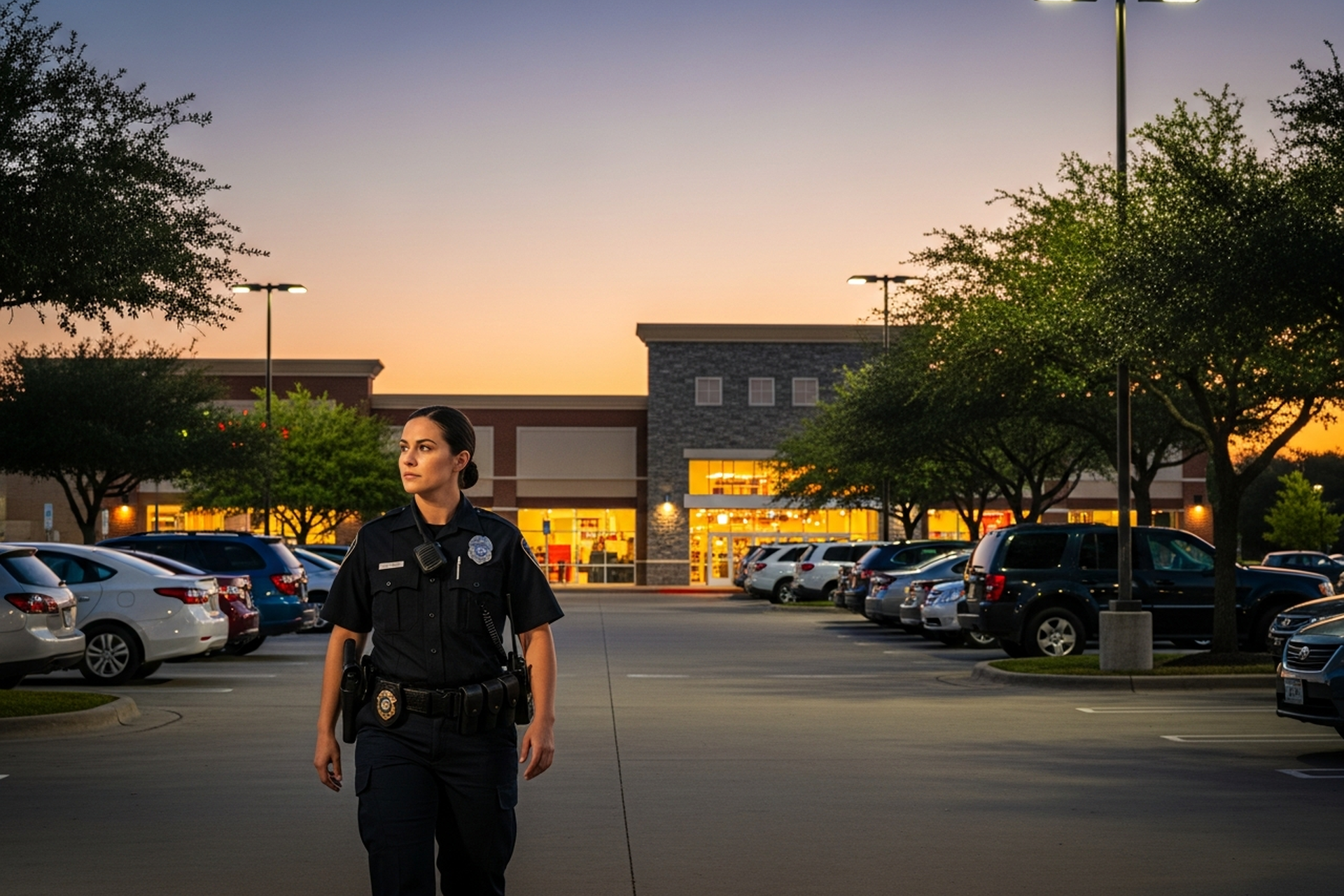
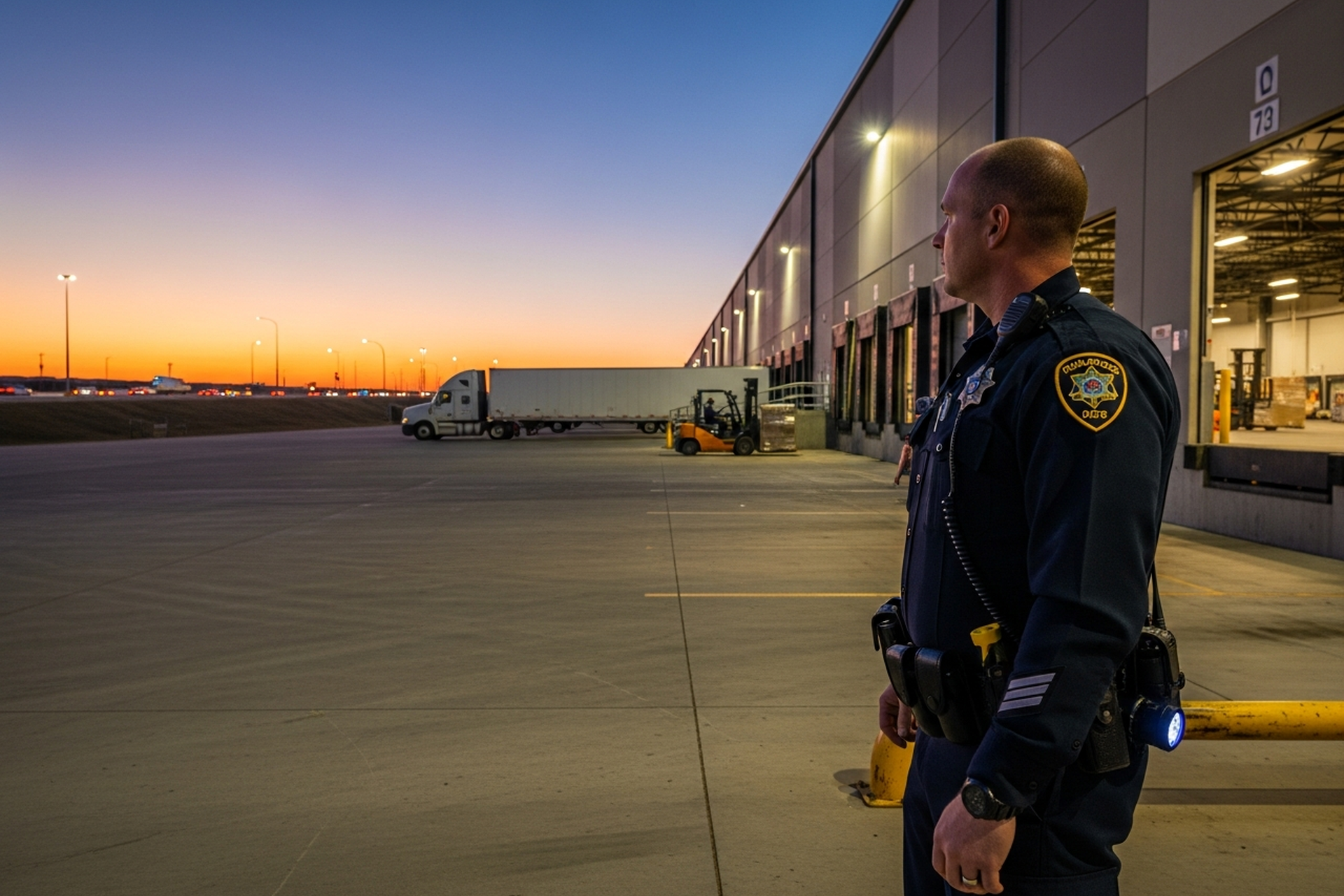
An overnight officer on a construction site is not simply someone sitting in a truck. Effective overnight coverage involves structured activity throughout the shift.
Perimeter checks occur at regular intervals to document fence line integrity, gate status, and any signs of forced entry or tampering. Officers log ingress and egress, noting any vehicles or personnel entering outside of approved schedules. Equipment monitoring means walking the yard to check that high-value assets are where they should be and that no cables or connections have been disturbed.
Many sites also require fire watch coverage, frequently integrated into overnight shifts. When hot work has been performed during the day, applicable fire watch protocols require monitoring for a defined period after work stops. An overnight officer who is trained in fire watch duties can fulfill this requirement, eliminating the need for a separate crew. All activity is logged with timestamps, creating an incident record that is available to project managers and insurers.
Static Post vs Mobile Patrol Overnight: When Each Fits
The right overnight configuration depends on site size, layout, and risk profile.
A static unarmed guard posted at the primary access point works well for mid-size sites with a single controlled entry and high-value equipment concentrated in one area. The officer is visible, logged, and immediately present if a gate alarm trips or an unauthorized vehicle approaches. The limitation is that a static post covers one fixed location and may not have line of sight to all areas of a larger site.
Mobile Patrols and Off-Duty Officers
For large, sprawling sites where perimeter spans are long and multiple access points exist, mobile patrols are the better fit. A patrol officer in a marked vehicle makes timed passes through the site, varying the route to prevent predictability. This is also a cost-effective option when a site is in an early phase and does not yet justify a full-time static post. Some DFW projects run both: a static officer at the main gate and a mobile unit sweeping the perimeter on a schedule.
For high-value pours, high-crime corridors, or situations where a sworn officer's authority is a meaningful deterrent, off-duty law enforcement is worth considering.
Lighting, Surveillance, and How Tech Complements an Overnight Officer
An overnight officer working a site with poor lighting is significantly less effective. Adequate site lighting is the contractor's responsibility, but a good security provider will flag dark zones during the initial site walk and recommend placement before coverage starts.
Temporary surveillance cameras, particularly units with cellular connectivity and motion-triggered recording, extend an officer's situational awareness beyond what foot patrol alone can cover. Some providers offer drone patrol and robotic security solutions that complement ground-level officers on very large sites. These tools do not replace a human officer, but they do create redundancy and expand the area that can be monitored in a single shift.
Communication protocols matter too. An overnight officer should have a clear chain of contact for incident escalation: site superintendent, local law enforcement, and the security company's operations center. Delays in notification after a theft or fire can compound the damage significantly.
What to Ask a DFW Provider About Overnight Coverage and Supervision
Not all overnight security coverage is equal. Before signing a contract, GCs and project managers should ask specific questions.
Ask how overnight officers are supervised. A provider with no check-in system or supervisory rounds leaves the door open for officers to become inattentive during long shifts. Ask whether supervisors conduct unannounced site visits during overnight hours, and how those visits are documented.
Training, Licensing, and Reporting
Ask about officer training specific to construction environments. General security licensing is not the same as understanding site hazards, fire watch protocols, or equipment identification. In Texas, all security officers must hold a valid license issued by the Texas Department of Public Safety Private Security Bureau , which regulates training requirements and background checks. Confirm that every officer assigned to your site is currently licensed.
Ask what the incident reporting process looks like. You want written logs available to you within a defined window after each shift, not verbal summaries.
What This Means for Your DFW Project
The overnight window is where construction budget losses quietly accumulate. A single theft of a skid steer or generator can cost more than months of security coverage. A fire caused by unmonitored hot-work debris can shut a project down for weeks.
For GCs and developers across the DFW metroplex , the question is not whether overnight security is worth the cost. It is whether the provider you choose has the training, supervision structure, and site-specific knowledge to actually deliver.
What a Well-Run Overnight Program Looks Like
The right overnight security program is documented, supervised, and matched to your site's specific layout and risk profile. It integrates with your existing fire watch requirements, adapts as the project progresses through phases, and gives you a written record of every shift. That paper trail matters when a claim goes to your insurer or when a subcontractor disputes a loss.
Overnight coverage done right means your crew arrives in the morning to a site that looks exactly as they left it.
Frequently Asked Questions
How much does overnight construction security cost in DFW?
Overnight construction security in DFW typically runs between $25 and $45 per hour for a licensed unarmed officer, depending on site complexity, shift length, and the provider's supervision model. Armed officers and off-duty law enforcement carry higher rates. Mobile patrol packages are often priced per vehicle pass rather than per hour. Request an itemized quote so you can compare providers on equal terms.
What time window does "overnight" coverage usually cover?
Most overnight construction security contracts cover a 12-hour window from 6 PM to 6 AM, which aligns with the period when sites are fully unoccupied and theft risk is highest. Some projects extend that window depending on early-morning crew arrival times or late-evening work schedules. Coverage can be customized by shift start and end times.
Can overnight officers handle fire watch duties?
Yes, provided the officer has been trained in fire watch protocols. When hot work is performed during daytime operations, applicable standards require monitoring for a defined period after work stops. An overnight officer trained in these requirements can fulfill fire watch duties as part of the shift, eliminating the need for a separate dedicated crew. Confirm during the quoting process that the provider's officers carry fire watch training.
How are overnight officers supervised?
Reputable providers use a combination of check-in systems, GPS-tracked patrol logs, and unannounced supervisory visits during overnight hours. Ask any prospective provider how often a supervisor visits overnight posts, how those visits are recorded, and what happens if an officer misses a check-in. Shift logs and incident reports should be available to the client within a defined window after each shift ends.
How quickly can overnight coverage start at a new DFW site?
Many established DFW security providers can mobilize an overnight post within 24 to 72 hours of a signed agreement, depending on officer availability and site onboarding requirements. For urgent situations, some providers offer temporary and emergency security deployment on shorter notice. Discuss your project timeline during the initial consultation so the provider can confirm availability before your go-live date.
Ready to Cover Your DFW Site After Hours?
Cascadia Global Security provides overnight construction site security across the Dallas-Fort Worth metroplex, with licensed officers, documented shift logs, and supervisory oversight built into every engagement. Whether you need a static post at the main gate, rotating mobile patrols across a large site, or integrated fire watch coverage, we build a program around your project's actual layout and risk profile.
Call us at (800) 939-1549 or get a quote to discuss overnight coverage for your DFW site. We'll walk through your project schedule, identify the right coverage model, and have officers in place when your crew goes home.