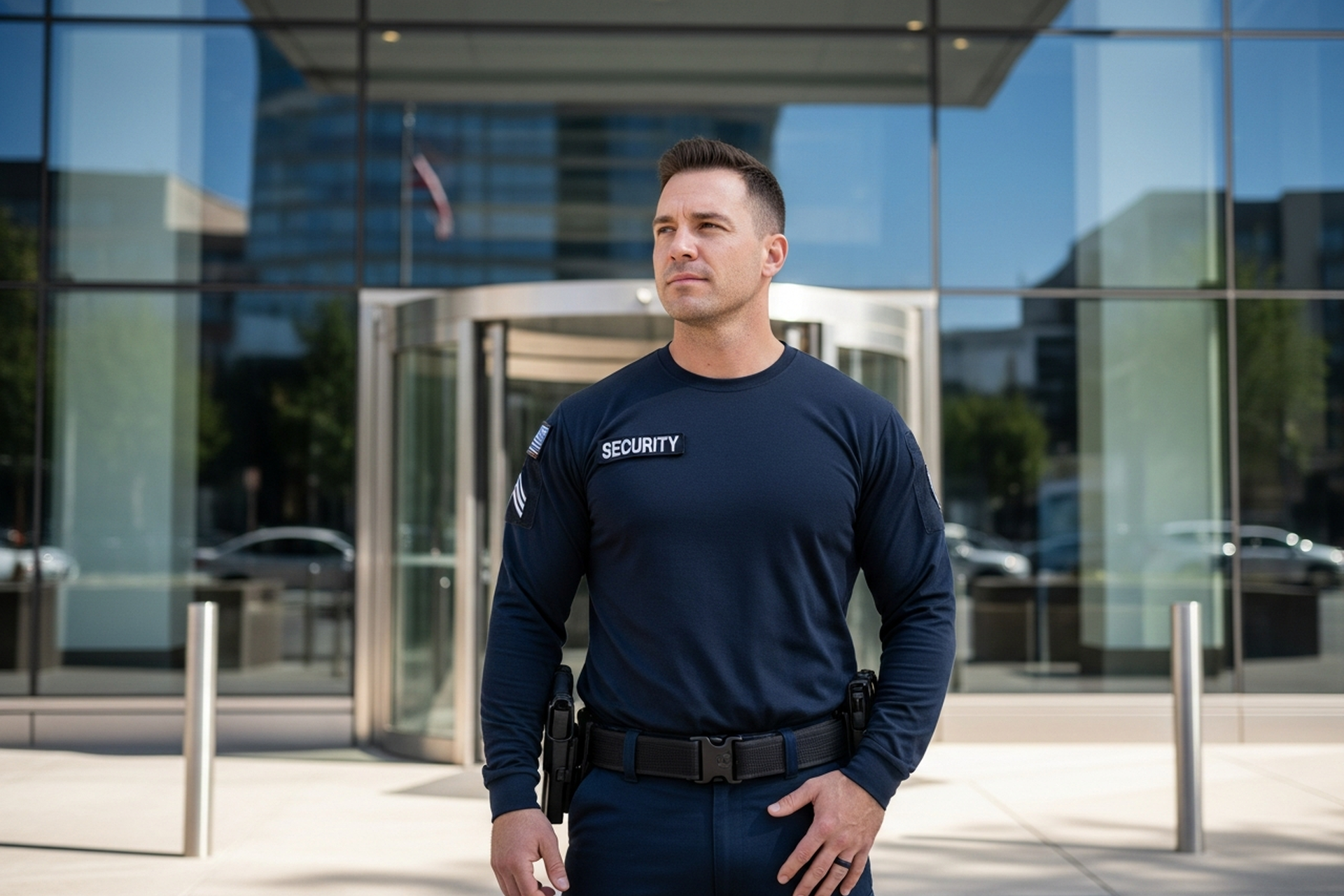
Overnight Mobile Patrol for Dallas-Area Industrial Parks
Josh Harris | May 30, 2026
A 60-acre industrial park off LBJ Freeway has 14 tenant buildings, a shared loop road, three unmanned gates, and zero dedicated security staff after 6 p.m. Posting a guard at every building is unworkable on the math. That gap is where overnight mobile patrol DFW industrial coverage earns its place: a marked vehicle that runs a documented route, hits every building on a randomized cadence, and turns the park's shared roads into the patrol's beat. Here is how that model actually works, who it fits, and how to think about cost and coverage when you manage a Dallas-area industrial park.
Why industrial parks need a different patrol model
A single-tenant warehouse with one dock face and a fenced lot is one problem. An industrial park is a different problem. You have multiple owners or tenants under one address, shared roads with no controlled entry, mixed uses (light manufacturing next to logistics next to office-warehouse flex), and after-hours quiet that makes the property attractive for copper theft, trailer break-ins, and squatting in unleased buildings.
The DFW industrial footprint, tracked by groups like NAIOP, is heavy on multi-tenant flex and logistics product that was not built with after-hours staffing in mind. The patrol model fills that gap.
Two things make the park-wide setup distinct: no central lobby where posting a guard would give meaningful coverage, and no single point of contact at night because each building has its own tenant, alarm vendor, and emergency contact list. A roving vehicle on a documented overnight route covers the entire park at a cost per stop that scales with the number of buildings, not guards. That economic shift is the reason the mobile patrol model exists for industrial manufacturing and flex-park properties.
How an overnight industrial patrol route is built
The route is the product. Before any vehicle rolls, the route plan answers a handful of operational questions for the property.
Visit cadence per building
Most overnight programs run 2 to 6 visits per building per night. Vacant buildings and tenants with high-value materials (copper wiring, palletized electronics, equipment yards) get a higher cadence. A leased office-warehouse with little after-hours activity may justify fewer touches.
Randomized timing, documented arrival
Patrol stops cannot run on a fixed schedule a watcher could time. Officers hit every building, but the order and the within-window arrival vary night to night. What does not vary is the documentation: every stop generates a timestamped record with coordinates, photographs, and incident notes. The owner gets a verifiable log that the route happened.
Perimeter vs interior
Patrol stays exterior unless an alarm or anomaly pulls officers inside. Each stop is a slow perimeter drive, a walk of the dock face, a check of pedestrian and overhead doors, and a sweep of the yard. Interior checks happen when a tenant has contracted for them or when an event (open door, sounding alarm, broken glass) requires it. The route is anchored to the park footprint and does not free-roam adjacent properties.
Per-stop mechanics
Each stop on the route follows a consistent script. The script is what makes mobile patrol different from a guard "driving around."
- Vehicle check-in via the patrol app, which captures GPS, time, and stop ID.
- Slow exterior pass at a speed low enough to see ground-level damage, broken glass, propped doors, and unfamiliar vehicles.
- Walk of the dock face and pedestrian doors. The officer is on foot at the building's most vulnerable points.
- Visual check of overhead doors and posted alarm signage. Anomalies are routed to the tenant contact list.
- Photograph documentation of anything off (a propped door, fresh tire tracks in an empty yard, a person on foot at a vacant building).
- Departure log, then move to the next stop.
If an alarm is sounding at arrival, the route pauses. The officer becomes the on-scene responder, coordinates with the tenant's alarm vendor and law enforcement if needed, and documents the incident before the route resumes.
Coordinating across multiple property managers and tenants
The hardest part of running patrol for an industrial park is not the patrol. It is the contact list. A 14-building park can have 14 different tenant emergency contacts, three different alarm companies, and two different property management firms across the buildings.
A workable program collapses this into a single operating document for the patrol: a master contact sheet per building (after-hours phone, alarm vendor, escalation order), building-specific notes (vacant unit, overnight staff, hazardous storage, dog on property), and standing orders for the park (gates locked by 7 p.m., no tenant vehicles after 10 p.m. unless dispatched). The end-of-shift report fans out to the right stakeholders: the owner gets the park-wide summary, and each tenant only sees incidents at their building.
Pricing models for park-wide overnight coverage
Three common structures show up in proposals.
- Flat route fee — One nightly fee covers the whole park, regardless of stop count. Best fit: single owner, predictable footprint.
- Per-stop billing — Property pays per documented building visit. Best fit: multi-tenant parks that split costs by building.
- Hybrid — Base nightly fee plus per-stop overage above a set visit count. Best fit: properties with seasonal swings.
A few factors push pricing in either direction: total acreage and drive time between stops, number of stops per night, time-on-property per stop (a 90-second drive-by costs less than a 6-minute walked check), armed versus unarmed officers on the route, and whether the patrol vehicle is dedicated to one park or shared across a regional route. For peak risk seasons (extended holiday shutdowns, weather events that empty the park, vacant buildings staging materials on site), cadence steps up, then drops back to baseline.
Texas DPS licensing baseline
Every patrol officer working an industrial park in Texas is licensed through the Texas Department of Public Safety Private Security Bureau. Two officer types show up on patrol routes:
- Level II non-commissioned (unarmed) officers complete 6 hours of state-mandated training before being eligible to work
- Level III commissioned (armed) officers complete 45 hours of training, including firearms qualification, before they can carry on duty
A patrol provider should be able to produce current pocket cards for every officer assigned to your property. Vetting that paperwork is part of the procurement process, not an afterthought.
Officer fitness for overnight industrial work
Overnight patrol is not the same job as a day-shift lobby post. The officer is driving for long stretches, exiting the vehicle in low light, walking dock faces alone, and making consequential calls at 2 a.m. when fatigue is real, and dispatch is the only backup. Operators who take this seriously cap shift length and enforce breaks, run two-officer dispatch on armed routes with clear comms back to a 24/7 dispatch desk, maintain escalation discipline, and maintain vehicle-condition standards (working lights, marked exterior, and dash and body camera coverage). When you tour a candidate provider, ask to see the patrol vehicle and ask how the officer is supported between stops.
Service mix: when to layer in armed coverage or off-duty law enforcement
Most industrial park routes work fine with unarmed officers handling the visible-deterrence and documentation role. A few situations move the dial toward heavier coverage: a park with a recent string of forced entries or violent encounters justifies armed guards on the route; a property hosting a high-value temporary operation (logistics surge, product launch staged on site) warrants armed coverage during the surge window, and incidents that need arrest authority can be supplemented with off-duty law enforcement for a defined period. These are layered options. The base overnight route stays the same, and heavier coverage stacks on top.
What this means for your Dallas-area industrial park
If you manage a multi-tenant park anywhere in Dallas-Fort Worth (Plano, Irving, Garland, Grand Prairie, Arlington, the I-20 industrial belt), the question is not whether you need overnight coverage. It is what cadence, officer mix, and reporting give you defensible after-hours coverage at a cost that fits the property's NOI.
A good provider will walk the park with you in daylight, draft a route plan with proposed cadence and per-stop time, show what their reporting tooling produces, and put pricing on paper in more than one structure so the math works for an owner-operated park or a tenant-split arrangement. Industrial parks share enough operating DNA with warehouse and distribution properties that the same provider can layer in dedicated coverage for a tenant without changing the park-wide route.
Frequently Asked Questions
How many visits per night should an industrial park route include?
Most park-wide programs run 2 to 6 documented visits per building per night. Vacant buildings, buildings with high-value content, and buildings with prior incidents get higher cadence. The right number is the one a written route plan justifies.
How is pricing different for a single-tenant building versus a park-wide route?
A park-wide route spreads costs across all buildings, so per-stop costs drop as the number of stops rises. A single-tenant building paying for its own dedicated coverage pays for the route as if it were one stop. If you manage the whole park, the park-wide model is usually cheaper per building than each tenant contracting separately.
Should the route use armed or unarmed officers?
Unarmed officers handle the standard visible-deterrence and documentation role at most parks. Armed officers come in when the property has had recent forced entry or violent incidents, or when a tenant is staging high-value materials. Many programs run unarmed as a baseline and layer armed coverage onto specific buildings or periods.
What is the response time if an alarm trips during a patrol shift?
When the vehicle is already on the property, response is whatever it takes to drive to the building (typically 2 to 5 minutes). When the vehicle is between properties on a regional route, response depends on distance. Park-wide programs usually contract for on-property dwell time that keeps the vehicle in the park for a defined share of the shift.
What happens when the officer finds an open door or evidence of forced entry?
The officer documents the scene, calls dispatch, contacts the tenant's emergency contact, and calls 911 if warranted. They do not enter a building alone in a likely-active-intruder scenario. Interior clearing is law enforcement's job. The officer holds the perimeter and documents until uniformed response arrives.
Working with Cascadia Global Security
Cascadia Global Security runs overnight patrol routes for industrial parks across the DFW metroplex: marked vehicles, licensed Texas DPS officers, time-and-GPS-stamped reporting, and pricing models that work for single-owner parks and multi-tenant arrangements. To walk the property and put a route plan on paper, request a quote, or call (800) 939-1549.