Lobby and Visitor Screening for Dallas Office Buildings
Josh Harris | June 5, 2026
A Dallas office tower can have every camera, turnstile, and access-control reader on the market and still fail at the one point where almost every threat actually arrives: the front door. Lobby visitor screening in Dallas office buildings is the seam where reputation, life-safety, and tenant satisfaction meet, and the officer behind that desk often decides whether the rest of the security program works at all. The first 90 seconds of a visit tell the guest how seriously the building treats access control.
This is the operational guide to running that lobby post inside a Dallas-Fort Worth Class A or Class B office building, focused on the reception desk itself rather than broader building security.
Why the Lobby Is the Most Consequential Post
The lobby is simultaneously the perimeter and the public face of the building. Unlike a loading dock, it is where strangers are supposed to be, which makes intent harder to read. A lobby officer sees several hundred faces a day, most for the first time, and has to sort tenants, expected guests, deliveries, contractors, vendors, and the occasional person who has no business in the building at all.
It is also where tenant experience is decided. Asset managers and leasing teams in Dallas-Fort Worth know that a hostile or disengaged front desk shows up in satisfaction surveys and lease renewals. A polite, efficient officer who remembers the tenant's name is a competitive advantage in a market where tenants have options.
The lobby is the identity verification point as well. Everything downstream, from elevator dispatch to floor access readers, assumes the officer at the desk verified the visitor's identity correctly.
The Visitor Management Workflow
A working lobby program runs the same sequence every time, regardless of who is on shift.
Pre-arrival
Tenant contacts pre-register guests through the visitor management system, which pushes the visit into a queue the officer sees on the desk monitor. The record captures the visitor's name, host, floor, and arrival window, so when the guest walks in the officer is confirming a record rather than creating one. Pre-registration also lets the system flag a name against a watchlist before the person arrives, whether a former employee on a do-not-admit list or a vendor whose access was revoked.
Sign-in and identity check
The officer confirms the host, captures a government-issued ID, and prints a badge. In Texas, a driver's license is the most common ID presented. For walk-ins, the officer calls the host or messages through the platform, and the visitor waits until the host confirms. No host, no badge, no upstairs access, and that rule holds on a Tuesday morning the same as on a Friday afternoon.
Badge issuance
The printed badge shows the visitor's name, photo, host, destination floor, expiration time, and a visible expiration indicator that changes color after a set period. A vendor badge, a tenant guest badge, and a contractor badge should look different and carry different access privileges.
Escort and check-out
Tenant policy drives the escort decision, and the lobby officer applies it. Law firms, financial services tenants, and certain healthcare tenants typically require mandatory escort; general office tenants often allow self-navigation. The visitor management system should display the host's preference on the badge issuance screen.
Check-out is the step most lobbies handle badly. A guest who never checks out remains "in the building" according to the records, which corrupts every count the security team relies on in an emergency. A turnstile reader on exit, a drop-box near the door, or a quick officer scan closes the loop.
Officer Fitness for Lobby Work
Lobby officers are a specific skill set, not just any officer rotated through the post. The role is hospitality first, security second.
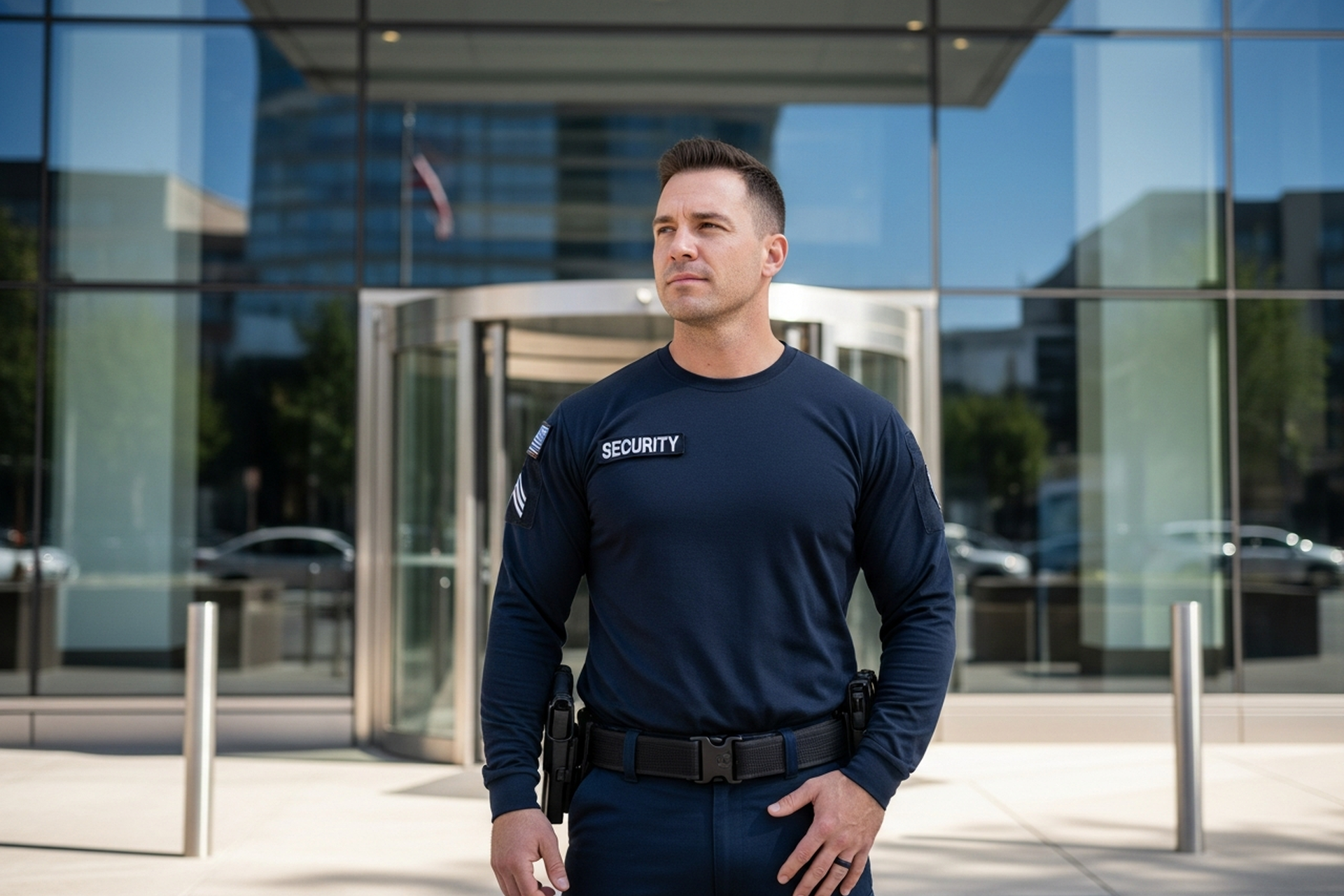
The officer needs presentable appearance and a calm, friendly demeanor; most of the day is conversation, confirming names, paging hosts, explaining policy to a visitor who did not expect to be screened. Judgment under pressure separates a good lobby officer from an adequate one, and the hard moments are usually ambiguous: a contractor whose work order does not match the system, a former employee claiming to pick up personal items, a person asking for a tenant by name without an appointment. The officer has to hold policy without escalating.
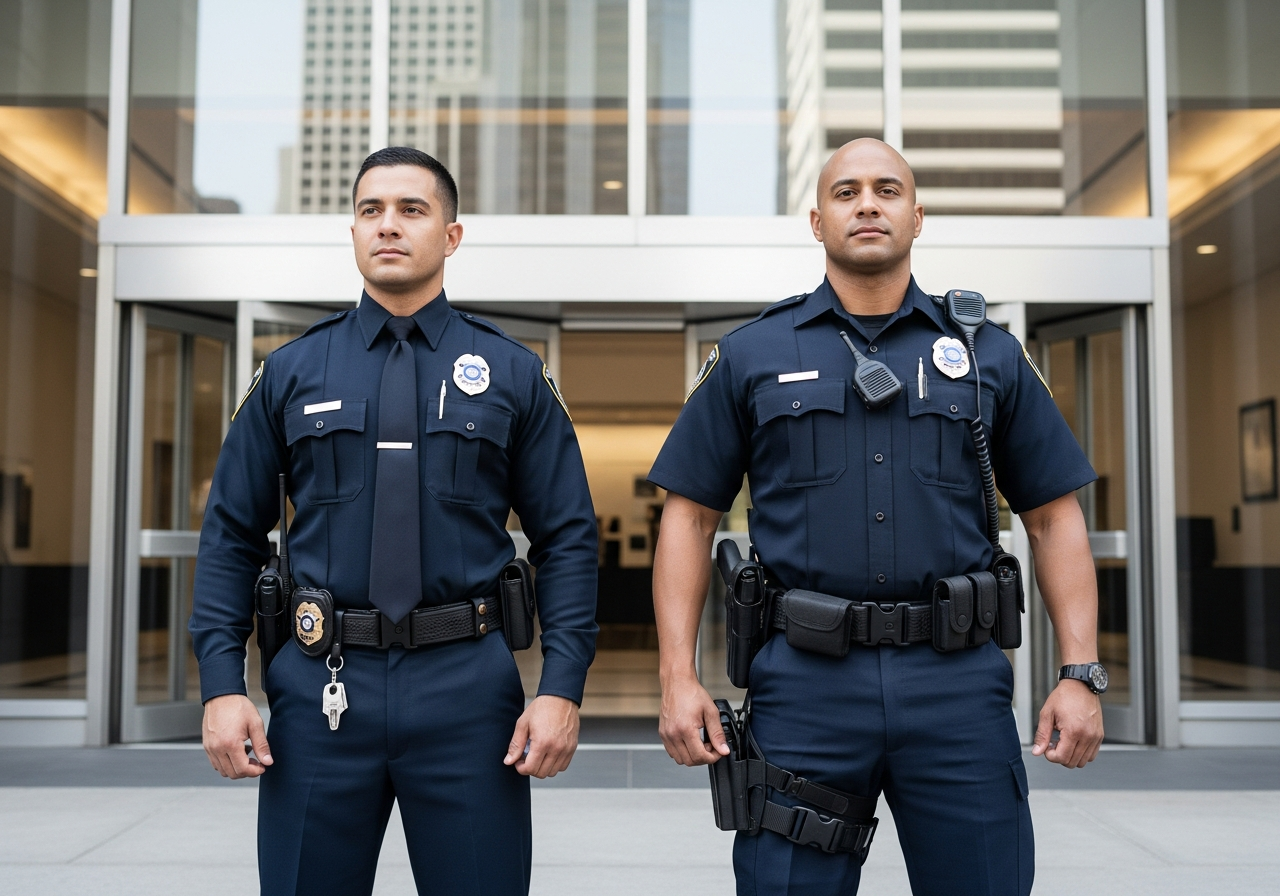
This is why unarmed concierge-style officers are usually the right fit in a corporate office setting. The role is closer to a hotel front desk with a security backbone than to a patrol post. Cascadia's unarmed guards staff this position across corporate and commercial buildings in Dallas-Fort Worth. Where threat assessment justifies a visible armed presence at the tier-1 entry, armed guards or off-duty law enforcement can replace or supplement the unarmed officer.
The Technology Layer
The lobby runs on a stack of tools, and the officer keeps it honest. A modern visitor management system handles pre-registration, host notification, ID scanning, badge printing, and watchlist screening. The right product is the one that integrates cleanly with the access control system and with tenants' own workflows.
Badge printers are the workhorse of the lobby, so a backup printer or manual fallback is part of any serious setup. Watchlist screening sits inside the system, built from tenant input (terminated employees, persons of concern, prior trespassers), building management, and any law-enforcement notifications. The officer never sees the underlying content; they see only that a name has flagged and follow the documented response, usually a call to the supervisor and a hold on the badge.
Tailgating prevention is the most-asked question. Optical turnstiles, speed gates, and full-height revolving doors all reduce tailgating, but none eliminate it. The officer at the desk catches the cases technology misses. The lobby also executes the early phase of any active-assailant response plan, and federal guidance from CISA frames preparedness materials for that scenario, from emergency action plans to officer-level recognition of pre-incident indicators.
The After-Hours Pivot
The lobby does not look the same at 7:30 a.m. and 9:30 p.m. Daytime is high-volume and customer-facing; after tenant hours, traffic drops, but the risk profile changes. The lobby becomes a controlled entry point where every person who walks in is either a tenant returning after hours, a cleaning crew member, a contractor on after-hours work, or someone who does not belong.
After-hours protocols typically include a stricter check-in, a log of who is in the building and on which floor, a call to building management for any unexpected visitors, and a documented handoff if shifts change overnight. Some buildings pair the lobby officer with mobile patrols of the perimeter and parking structure. Weekend and holiday coverage follows the same logic: tenants who come in on a Saturday expect a staffed lobby, and the officer there is often the only building employee on site.
Texas DPS Licensing Baseline
Every officer working a Dallas lobby post is regulated by the Texas DPS. The Private Security Bureau registers non-commissioned (unarmed) officers, who complete a 6-hour Level II training program. Commissioned (armed) officers complete 45-hour Level III training, including a course of fire, before they are authorized to carry on duty. Both require fingerprint-based background checks and are renewed every two years.
For lobby work, Level II is the baseline; most Dallas-Fort Worth office buildings do not need an armed officer at the reception desk. When risk assessment, tenant mix, or incident history says otherwise, the upgrade to Level III runs through the same regulator. The contract with a security partner should require current registrations for every officer and produce that documentation on request.
Tenant Coordination in a Multi-Tenant Building
A single-tenant headquarters can write one visitor policy and apply it everywhere. A multi-tenant Dallas building has to coordinate across tenants with different requirements: a law firm on floor 12 may demand mandatory escort and ID retention, a creative agency on floor 8 may want frictionless guest access, and a financial services tenant on floor 20 may have its own visitor list managed by an executive assistant.
The fix is documented tenant profiles inside the visitor management system. Each profile defines escort rules, allowed visitor types, after-hours access, watchlist entries, and host contact methods. The officer follows the profile, not their memory. Buildings with a medical office or clinical tenant need to coordinate with healthcare visitor-handling requirements, and buildings with a bank branch should align with financial institutions' expectations on ID retention and panic-button response.
What This Means for Your Dallas Office Building
The diagnostic questions are concrete. Does the lobby have a documented workflow that every officer follows consistently? Is the visitor management system integrated with tenant directories and access control? Do tenants pre-register visitors? Is there a watchlist process and a documented response when a flag fires? Does coverage change appropriately for after-hours, weekends, and holidays? Are officers trained for hospitality first, security second?
If the honest answer to several of those is "not really," the lobby is a soft point, and tenants notice before management does. Tightening the lobby is among the highest-leverage operational changes a building can make.
Frequently Asked Questions
Should the lobby officer be armed or unarmed?
For a typical Dallas Class A or Class B office building, unarmed concierge-style officers are the right fit. Armed coverage is appropriate when threat assessment, tenant mix (banking, government, executive-target tenants), or incident history justifies it. The decision should follow the risk assessment, not a default.
How does technology balance against the human officer?
Technology removes friction and catches the obvious cases. The officer catches the rest. A visitor management system speeds up sign-in, prints badges, runs the watchlist, and notifies hosts. None of that replaces the officer who reads body language, recognizes returning visitors, and escalates when something feels wrong.
How is after-hours coverage different from daytime?
Daytime is high-volume and customer-facing. After-hours is low-volume and gatekeeping. Check-in tightens; every entry is logged; unexpected visitors get a call to building management; and the lobby officer often coordinates with mobile patrol.
What about weekend and holiday staffing?
Tenants who come in expect a staffed lobby, and the officer there is frequently the only building employee on site. Coverage should match the building's actual weekend usage, not a generic template.
Does Cascadia integrate with our existing visitor management software?
Yes. Assigned officers learn the building's platform during onboarding and operate it the way building management and the tenants expect.
Working with Cascadia Global Security
Cascadia Global Security staffs lobby and reception posts across Dallas-Fort Worth office buildings, from downtown high-rises to suburban Class B properties. Officers are licensed through Texas DPS, trained on the hospitality-meets-security tone the lobby requires, and assigned with continuity in mind so tenants see the same faces. To talk through your visitor screening program, request a free quote or call (800) 939-1549.