Loss Prevention Staffing for DFW Shopping Centers and Malls
Josh Harris | June 4, 2026
Shopping center loss prevention DFW staffing is a different exercise than staffing a single big-box store. A regional mall is a small downtown with one landlord, dozens of tenants, multiple anchors, and a parking field that can hold thousands of cars at peak. The staffing math has to account for every layer of that environment, not just the doors.
Property managers across Dallas-Fort Worth tell us the same thing on assessment calls: the headcount they inherited was built around shift coverage, not around how the property actually moves. The result is officers stacked in the wrong places at the wrong times, gaps during shift changes, and parking patrols that show up after the incidents have already happened.
Why mall and shopping center staffing math is different
A typical inline retail tenant runs a small loss prevention footprint inside its own four walls. The landlord's program sits on top of that and covers everything the tenants do not: common-area corridors, food courts, restrooms, parking decks, surface lots, service drives, loading docks, and the property's outer perimeter. Every one of those spaces produces incidents.
Three property characteristics drive the staffing model:
- Common-area square footage. Interior corridors, atriums, and food courts at a regional mall can easily exceed 200,000 square feet of public space. That is the patrol surface before you count any exterior.
- Parking depth. A regional center with 6,000 to 8,000 parking stalls cannot be patrolled from a fixed post. Vehicle and bike coverage drives a meaningful share of the headcount.
- Foot-traffic curve. Weekday afternoons might run flat. Saturdays in November can triple. A template that does not flex will either burn payroll on slow shifts or break on peak ones.
Anchor tenants add a fourth variable. They typically run their own LP teams, and the landlord program has to coexist with them, share information, and avoid duplicating work inside their leaseholds.
Property type changes the staffing template
Not every DFW center needs the same program. The category of property drives a different deployment.
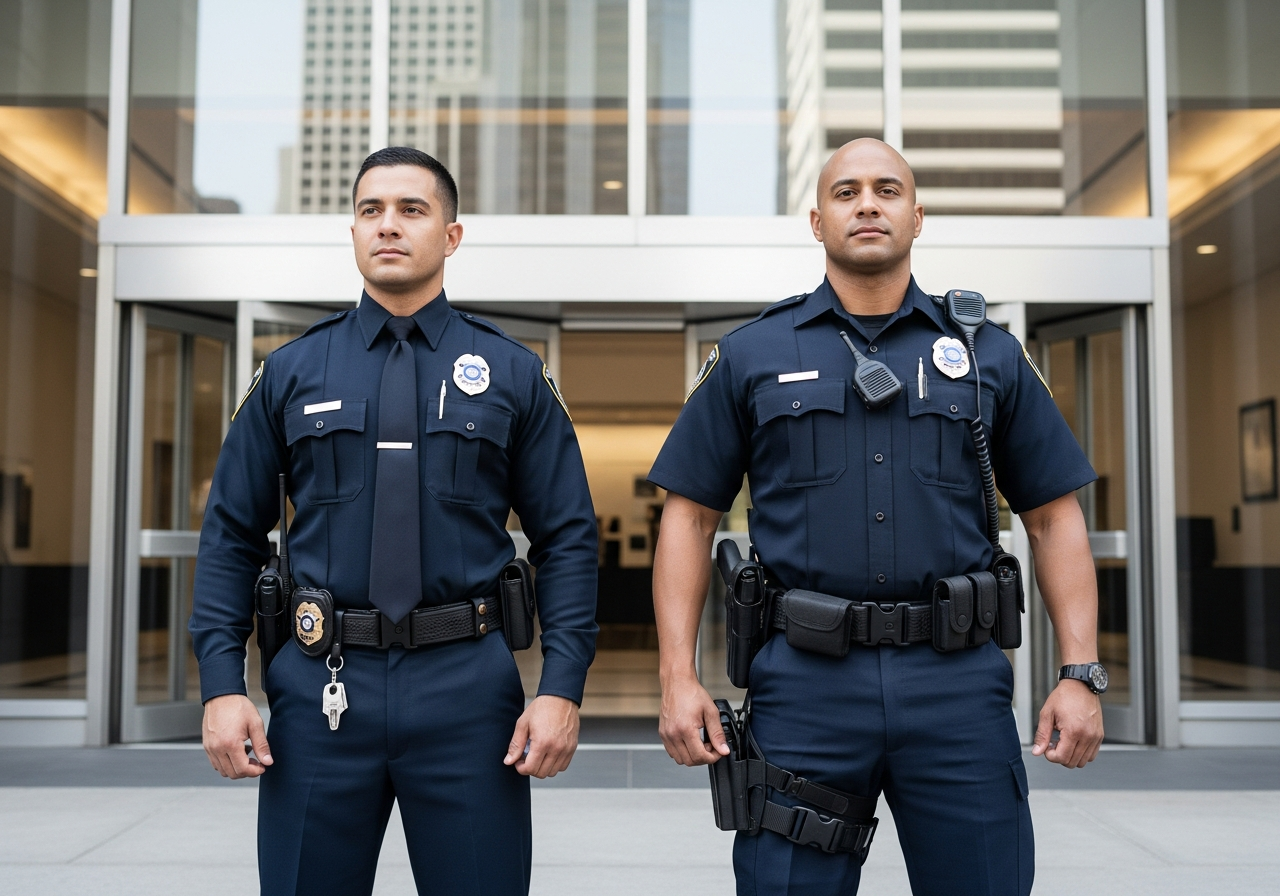
Regional malls. Indoor, enclosed centers like NorthPark Center in Dallas or Stonebriar Centre in Frisco. Coverage spans interior common areas, multiple anchor entrances, a food court, parking garages, and surface lots. These properties carry the deepest officer rosters, supervisor coverage on every shift, and dedicated CCTV staffing.
Outlet and value centers. Grapevine Mills is the regional example: enclosed, very large footprint, weekend-heavy traffic. Staffing leans toward interior mobile coverage and aggressive parking patrol during peak weekends.
Lifestyle centers. Open-air, mixed-use properties where customers move between exterior pathways, valet areas, and tenant frontage. Highland Park Village in Dallas operates in this category. Coverage handles vehicle approaches, sidewalks, and tenant-facing common areas as one continuous environment.
Power centers. Large-format, surface-parked centers anchored by big-box retailers. The common-area patrol surface is smaller than a mall, but the parking lot is the entire program. Mobile vehicle patrol carries most of the load.
Neighborhood strip centers. A row of inline tenants on a surface lot. Many are covered by mobile patrol contracts rather than dedicated posts, with response patrols cycling through several centers across a manager's portfolio.
The same officer count looks generous on a power center and thin on a regional mall. The template has to follow the property, not the other way around.
Officer roles inside a shopping-center program
A well-built program is not a single uniform doing everything. It splits into roles that line up with how the property is used.
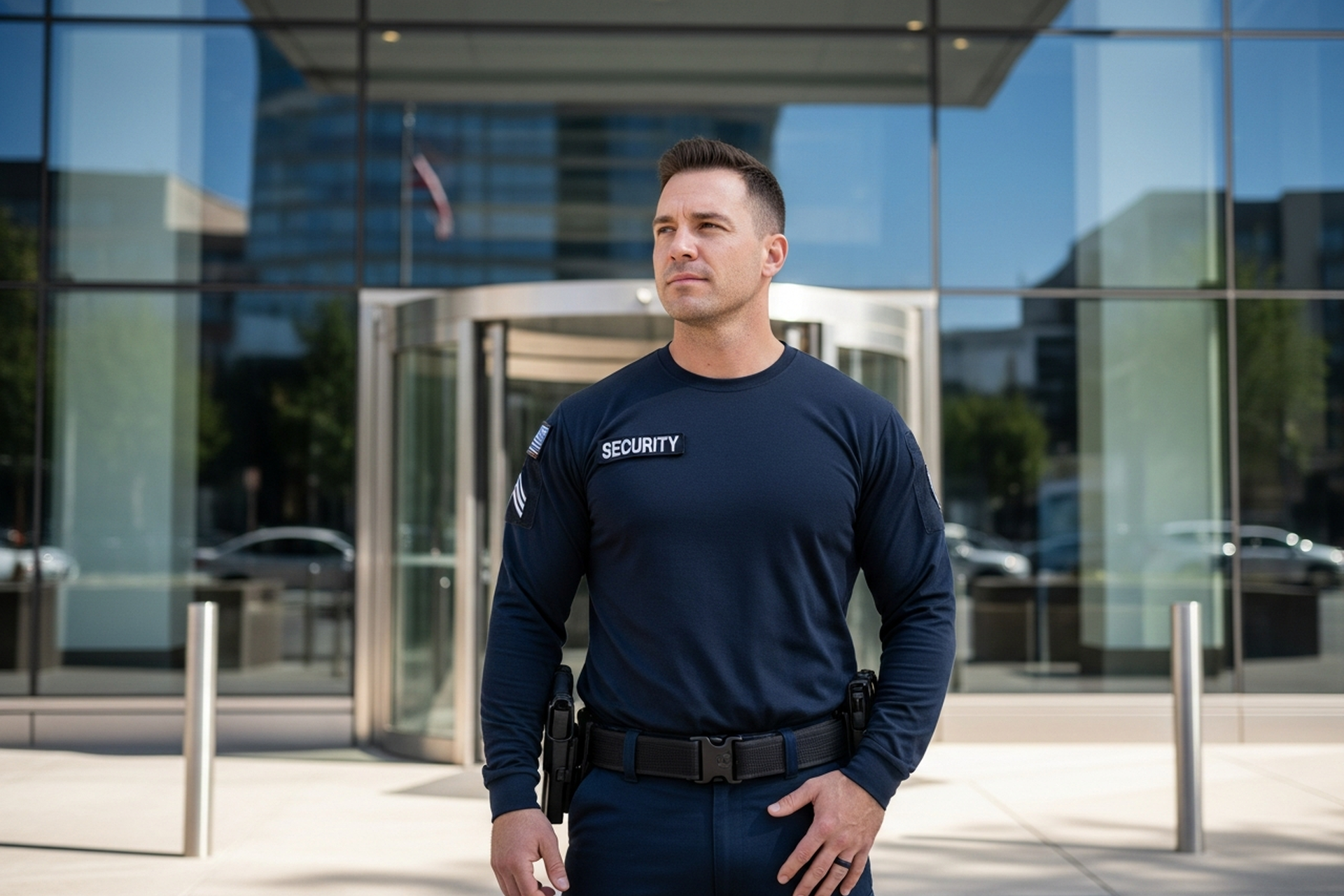
- Deterrence posts. Fixed presence at main entrances, food courts, and anchor junctions. The job is visibility, customer assistance, and being the first point of contact for tenants.
- Interior mobile patrol. Officers walking the corridors on a rotating route. Most incident detection happens here, from shoplifting tips relayed by tenants to medical calls in restrooms.
- Parking and exterior patrol. Vehicle or bike units covering decks, surface lots, and the perimeter. At a regional mall, this is often the single largest role bucket by hours.
- CCTV and command. An operator watching the camera array, dispatching field officers, and logging incidents. Larger properties staff this continuously; smaller centers fold it into a supervisor function.
- Supervisor and shift lead. Quality control on the floor, briefings at shift change, escalation point for tenants and police. Programs that skip weekend and evening supervisor coverage drift fast.
- Customer service overlap. At lifestyle centers, the deterrence post often doubles as concierge. The officer answers questions, helps with lost children, and walks shoppers to their cars after dark.
The mix changes by property, but the role categories stay the same across retail security programs in DFW.
Peak-shift planning across the year
Shopping centers have predictable traffic curves, and the staffing plan has to ride them.
- Holiday season (Black Friday through New Year). The biggest staffing lift of the year. Regional malls and outlet centers typically add 30 to 60 percent more officer hours. Parking patrol scales first because the lots fill earliest. Interior coverage scales next.
- Weekend evenings. Friday and Saturday nights run a different program than weekday afternoons. Larger lifestyle centers often add late-evening parking patrol and a supervisor on the floor through close.
- School holidays and breaks. Spring break and summer afternoons bring spikes in teen traffic that change the loitering profile in common areas, pushing the mix toward more visible deterrence.
- Mid-week steady state. The lightest shifts. This is the right time for training, audits, and equipment checks, not for staffing thin and hoping nothing happens.
- Special on-property events. Tenant grand openings, tree lightings, and seasonal promotions create localized traffic that has to be staffed on top of the baseline.
The biggest staffing mistake at DFW centers is running the holiday template through January. Hours have to come back down.
Tenant coordination is part of the staffing plan
Landlord LP does not operate in a vacuum. Every anchor and most major inline retailers run their own teams. The landlord program succeeds or fails based on how well it coordinates with them.
That coordination is staffed two ways. The property's LP supervisor maintains a working relationship with each anchor's LP lead, exchanges incident information, and aligns on suspect descriptions during active events. The floor officers know which tenants have their own LP and route in-store reports to those teams rather than handling tenant-side events themselves.
The ICSC maintains industry security training resources that help property managers and tenant LP teams operate from a shared playbook. Staffing rosters at our DFW clients include time for joint briefings, monthly tenant security meetings, and after-action reviews on serious incidents.
Texas DPS licensing baseline
Every officer working a shopping center post in Texas operates under the Department of Public Safety Private Security Bureau. The licensing baseline is worth getting right at the contract stage.
- Level II (non-commissioned). Unarmed officers complete a 6-hour board-approved course. This is the standard credential for most landlord LP posts at malls, lifestyle centers, and power centers.
- Level III (commissioned). Armed officers complete a 45-hour board-approved course before they can carry on duty.
- Continuing requirements. Both levels carry renewal and continuing-education requirements set by Texas DPS.
Most DFW programs run unarmed coverage for deterrence and mobile patrol roles, with a smaller armed guards component when the property profile calls for it. Some centers also layer in off-duty law enforcement on peak weekends and during the holiday season for visibility and arrest authority on property.
What separates a good shopping-center LP program
Two centers with the same officer count can produce very different outcomes. The difference shows up in the operational details around the headcount.
- Supervisor coverage on every shift, including weekends and evenings. Programs that run supervisors only Monday through Friday lose quality fast.
- Clean shift transitions. Briefings, written pass-downs, and a 15-minute overlap so nothing falls through the cracks at change of shift.
- Incident reporting that gets read. Reports written the day of the incident, reviewed by the supervisor, and summarized weekly for the property manager. Reports nobody opens are payroll going to waste.
- Retention. Officer turnover is the silent killer of shopping-center LP. New officers do not know the tenants, the regulars, or which corner of the parking deck has bad lighting. Programs that pay above market and promote from within hold officers longer.
- Mobile and post integration. Vehicle patrol, foot patrol, and CCTV working from the same radio channel and the same incident log, not three separate workflows.
Cascadia builds programs around those standards, including dedicated mobile patrols at properties where parking depth justifies it and unarmed guards on most deterrence and interior posts.
What this means for your DFW shopping center
If you manage a center in Dallas-Fort Worth , the right next step is a property-specific staffing review, not a headcount benchmark borrowed from another center. The template should follow your common-area footprint, your parking depth, your tenant mix, and your traffic curve, with supervisor coverage and shift transition discipline layered in.
For mixed-use lifestyle centers with hotel components or significant valet operations, the program may also touch hotels and hospitality and parking facilities coverage models. The right vendor looks at all of those layers together rather than dropping in a generic mall template.
Frequently Asked Questions
How many officers does a DFW regional mall typically need?
There is no single number. Coverage depends on common-area square footage, parking stall count, hours of operation, anchor mix, and traffic curve. A regional mall with multiple anchors, a food court, and several thousand stalls will run a meaningfully deeper roster than a power center with the same gross leasable area.
Should mall officers be armed or unarmed?
Most landlord LP posts in DFW run unarmed with Texas DPS Level II credentials. Armed coverage at Level III may be appropriate for specific posts or peak windows. The mix depends on the property's risk profile and tenant requirements, not on a default preference.
How do landlord LP teams coordinate with tenant LP teams?
Through a property-side supervisor or director who maintains relationships with anchor LP leads, holds joint briefings on a regular cadence, and shares incident information during active events. Floor officers route in-store reports to the tenant teams that own them.
What changes during the holiday season?
Officer hours scale by 30 to 60 percent in the holiday window, with parking patrol scaling first. Supervisor coverage and CCTV staffing also expand so the program can absorb the higher traffic without quality slipping.
What is the most common staffing mistake at DFW shopping centers?
Carrying the holiday template into the first quarter. The second most common is running supervisor coverage only on weekdays, which lets weekend and evening shifts drift.
Build a staffing plan that fits your property
Generic mall security templates do not survive contact with a real DFW property. The right program starts with your footprint, parking depth, tenant mix, and traffic curve, then builds the roster, roles, and supervisor coverage around those facts.
Cascadia Global Security builds property-specific loss prevention programs for shopping centers and malls across Dallas-Fort Worth. To start a staffing review, request a quote or call (800) 939-1549.