Night-Shift Security for DFW Warehouse and Fulfillment Ops
Josh Harris | May 21, 2026
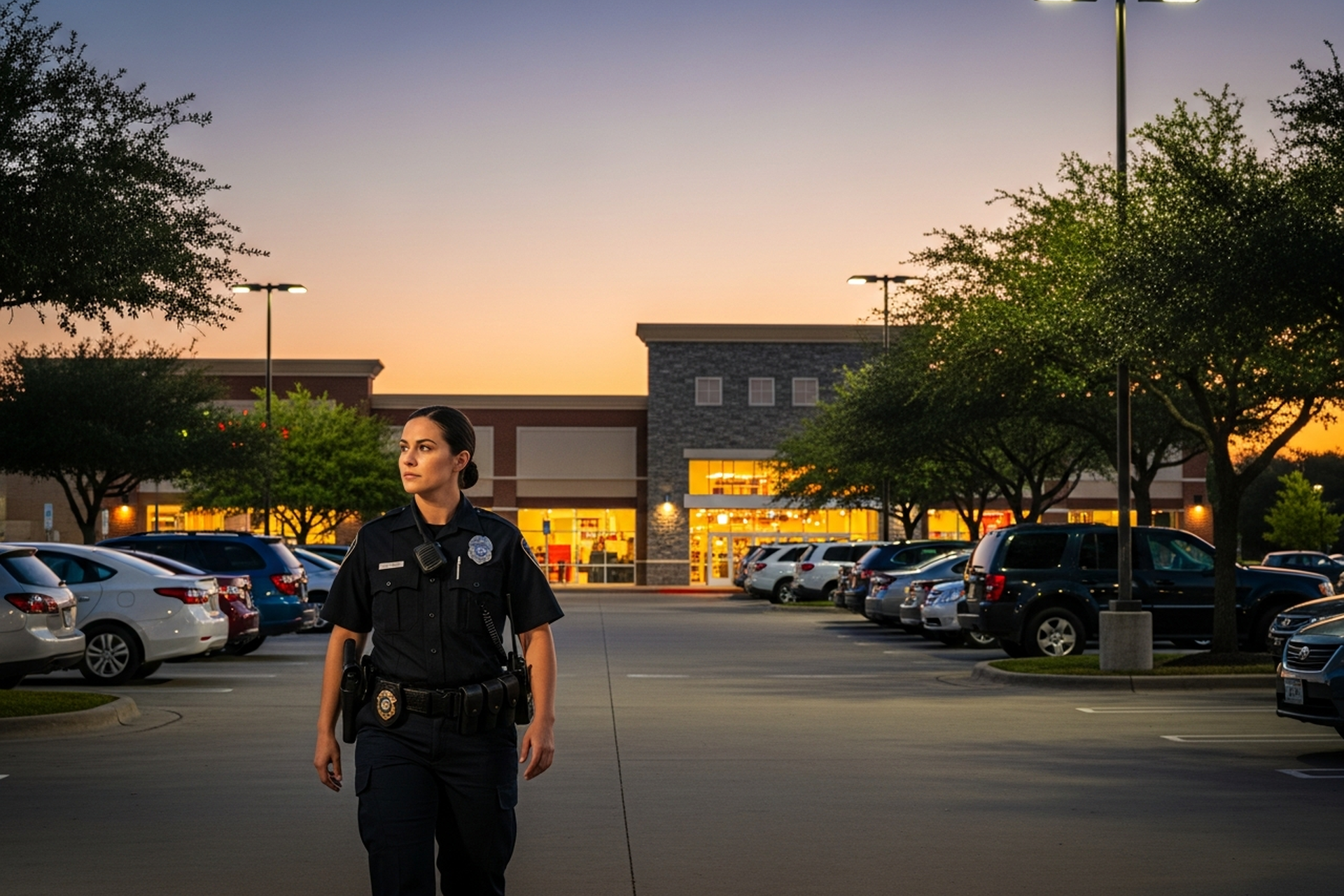
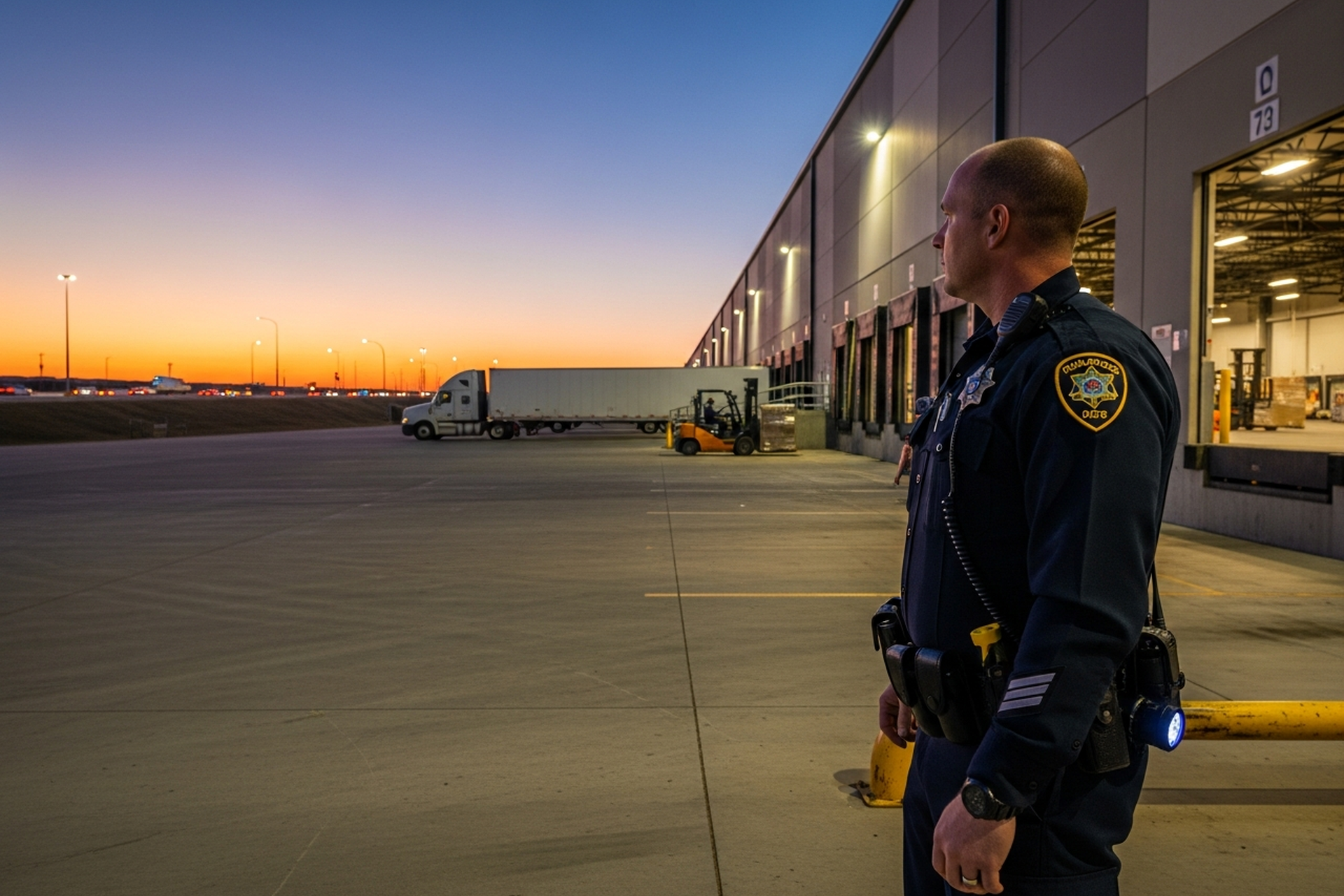
The hours between dusk and dawn are when a DFW warehouse is most exposed. Trailer yards sit fuller, gates cycle less, and the people on site are a fraction of what daytime looks like. Night shift warehouse security in DFW is not a watered-down version of the day program. It is a different operational problem, with its own threat profile, staffing math, and failure modes that need to be designed around, not inherited from the day plan.
Why Overnight Is the Highest-Risk Window for DFW Warehouses
A typical Class A fulfillment facility around Mesquite, Wilmer, Hutchins, or Alliance loses most of its ambient activity after the second shift wraps. The lot empties, office staff leave, and truck flow drops to scheduled overnight drops. That drop in activity is what makes the window attractive to people who want to move cargo or get inside unnoticed.
Three things compound the risk:
- Reduced eyes on the site. Fewer associates means fewer accidental witnesses. A trailer sitting at the wrong door for ten minutes at 2 p.m. gets noticed. The same trailer at 2 a.m. often does not.
- Isolated approaches. Many DFW warehouse parks sit on the edge of industrial corridors with limited street traffic after midnight, so an approach by foot or vehicle can go unobserved until it reaches the fence line.
- Fatigue across the workforce. Overnight associates, drivers, and even responding police are operating against their biological clock. Reaction times slow, attention narrows, and small inconsistencies are easier to miss.
NIOSH research summarized in the Plain Language About Shiftwork publication describes the cluster of fatigue, attention, and judgment issues that follow night work. Those effects apply to your floor staff and security team equally, which is why an overnight program needs to be designed around them.
The Night-Shift Threat Profile
The threat mix on the overnight is not the same as during business hours, and a program built only around daytime patterns will leave gaps.
Cargo theft and trailer pulls
Dallas-Fort Worth is one of the country's most active cargo theft regions. Loaded trailers awaiting a morning pickup are the single most attractive target. The pattern is consistent: surveillance during daylight, a coordinated approach after midnight, and a tractor on site long enough to hook a trailer and roll.
Internal shrinkage
Overnight shifts run with fewer supervisors per associate. Picker errors, dock door mistakes, and outright internal theft all become harder to catch when the ratio of eyes to activity drops. Officers walking dock zones and documenting anomalies are a meaningful deterrent.
Perimeter intrusion and unauthorized access
Fence breaches, gate tailgating behind a legitimate late driver, and approach by foot from adjacent industrial lots are the most common overnight intrusion patterns. Layered on top, former employees, contractors with expired badges, and people who simply test doors show up regularly. A program that verifies and logs every person who enters after a defined cutoff eliminates most of this category outright.
Operational Mechanics After the Main Shift Goes Home
The handoff from second shift to overnight is where most night programs succeed or fail. The Dallas-Fort Worth fulfillment operations that run well treat the overnight as its own posted operation, with a defined start time, a written post order, and clear authority for the officer on the floor.
A few realities to design around:
- Dock control after the main shift. Trailer drops continue all night. The officer at the gate needs a live appointment list, authority to refuse an unscheduled driver, and a fast way to escalate.
- Gate access for late drivers. Legitimate overnight drivers arrive tired, hours off schedule, and often without paperwork. Officers need a process that protects the site without grinding traffic to a halt.
- Employee escort to vehicles. Overnight associates leaving at shift change are walking through a dark, mostly empty lot. A standing escort policy is one of the cheapest, most appreciated parts of a night program.
- Lighting and dark zones. A property walk with a flashlight in the first week of any new contract will surface every burned-out fixture, blind corner, and gap in the fence line.
Sites that need armed presence at the gate (high-value freight, pharmaceuticals, electronics, controlled substances) should staff that post with armed guards rather than expecting an unarmed officer to handle a coordinated theft attempt. Sites with lower freight risk and more focus on access control are typically fine with unarmed guards on the overnight, supported by mobile coverage.
Officer Fitness for Overnight Work
A guard who is excellent on day shift is not automatically the right fit at 3 a.m. The Texas DPS Private Security Bureau licenses non-commissioned (Level II, 6 hours of board-approved training) and commissioned (Level III, 45 hours including firearms) officers, setting the floor for who can stand a post. Night work changes what we look for:
- Demonstrated tolerance for overnight schedules. Officers who have worked nights before adapt faster than those rotating off day shift.
- Supervision cadence. A field supervisor who actually arrives between 11 p.m. and 5 a.m. is the strongest predictor of whether the team upholds standards.
- Shift handoff documentation. A written pass-down between outgoing and incoming officers prevents the most common overnight failure: the next shift not knowing what happened.
- Health and fatigue support. Reasonable break rotations and a culture that does not penalize an officer for swapping with a teammate when they are not fit to drive home reduce incident risk.
For elevated threat profiles, supplementing the regular team with off-duty law enforcement during peak-risk windows (Friday nights, holiday weekends, after a known incident nearby) buys real capability without committing to a full-time armed post.
The Technology Layer
Hardware does not replace officers, but it multiplies what a small overnight team can cover. A few elements pull their weight every night:
- GPS-tracked patrol. Officers carrying a tour device generate a verifiable log of where they were and when. For mobile patrols that visit multiple times per night, the same tracking shows the client exactly when each visit happened.
- Video review on the overnight. Cameras only matter if someone watches them. The overnight officer pulling live video during gate entries, dock activity, and alarm trips is far more useful than recorded video reviewed the next morning.
- Alarm response coordination. When a perimeter alarm trips at 2 a.m., the question is who arrives, in what order, and what they are authorized to do. A written response plan keeps a 90-second event from becoming a 45-minute one.
- Drone and robotic patrol. On larger trailer yards, drone patrols and robotic security extend visual coverage to places officers cannot reach quickly on foot.
Worker Safety on the Night Shift
Security is not the only overnight concern. The same NIOSH guidance that informs how we train officers applies to your warehouse associates. Adequate lighting, schedule rotations that do not pile consecutive nights on the same associates, and visible supervision all reduce both accident risk and crime opportunity.
Security officers play a role here too. An officer who can call for medical response, identify an associate who looks unwell, or shut down a forklift area when something is off is part of the overnight safety stack. This shows up in warehouse and distribution programs and in industrial manufacturing sites that run continuous operations.
Building a Night-Shift Security Program
A workable overnight program for a DFW fulfillment site usually combines a few elements:
- A posted officer on site for the duration of the overnight, with the post sized to the freight risk and footprint.
- A scheduled mobile patrol visiting the property multiple times per night, with arrival times documented and randomized within windows.
- A field supervisor who actually moves between sites during the overnight, spot-checks officer alertness, and handles escalations the on-site officer cannot.
- A written post order specific to the site, the freight, and the access rules, updated whenever the operation changes.
- An escalation path that names exactly who the officer calls when something goes wrong, with after-hours numbers that have been tested.
The operations that hold up best are not the ones with the most exotic technology. They are the ones where the basics are tight: officers on post, supervisors on the road, video that gets watched, and a phone tree that works at 3 a.m.
What This Means for Your DFW Fulfillment Operation
If your overnight currently runs on a single unarmed officer at the gate with no supervision and no documented post order, the fastest improvements usually come from three changes: a documented post order specific to the overnight, a real field supervisor scheduled for the window, and alarm response routed through a named human rather than a generic monitoring center.
If those basics are already in place, the next layer is usually freight-specific. High-value loads, pharmaceuticals, and electronics warrant armed coverage or off-duty law enforcement on the highest-risk nights. Larger trailer yards benefit from drone or robotic patrol layered onto the existing officer footprint.
Frequently Asked Questions
What hours count as the night shift at a DFW warehouse?
Most fulfillment operations in DFW define the overnight as roughly 10 p.m. to 6 a.m. The risk window often begins earlier (around the time office staff leave) and ends after sunrise.
How many security officers does a DFW fulfillment site need overnight?
It depends on the footprint and the freight. A 250,000-square-foot facility with standard freight can often run with one posted officer and a mobile patrol visiting two or three times per night. A 1M square foot regional fulfillment center with high-value cargo will need multiple posts, a dedicated field supervisor, and routine drone or vehicle patrol.
Should overnight officers be armed?
That depends on the threat profile of the freight and the history of the site. Most general fulfillment sites do not require armed coverage. Pharmaceutical, electronics, and high-value freight sites typically do, at least at the gate. The licensing distinction between Texas DPS Level II and Level III officers determines who can stand the post.
How do we keep overnight officers alert?
Realistic schedules, reasonable break rotations, supervisor visits inside the overnight window, and varied patrol tasking all help. Officers stuck in a single chair watching a single monitor for eight hours will lose attention regardless of how good they are.
What is the difference between a posted overnight officer and a mobile patrol?
A posted officer is on site the entire shift, working from a fixed location with defined responsibilities. A mobile patrol visits the property several times per night and rolls to the next site. Most overnight programs use both: a posted officer for continuous coverage and a mobile unit for additional sweeps and backup.
Working with Cascadia Global Security
Cascadia Global Security builds overnight programs for DFW fulfillment operations across Mesquite, Wilmer, Hutchins, Coppell, Alliance, and the broader Metroplex. We staff posted officers, run scheduled mobile patrols, layer in off-duty law enforcement where the freight profile calls for it, and build the post orders and supervision cadence that hold the overnight together.
To talk through your site's overnight footprint, get a quote or call (800) 939-1549.