Package Theft Prevention for DFW Apartments and Leasing Offices
Josh Harris | May 21, 2026
Package theft prevention for DFW apartments has moved from a holiday-season problem to a year-round operational concern. A typical 250-unit community in Dallas-Fort Worth can see hundreds of parcels arrive in a single day from three or four carriers, dropped at three or four locations. When that volume hits a property designed before daily package delivery existed, things go missing, and the fallout shows up in resident complaints, online reviews, and renewal conversations long before it shows up in a police report.
Why Package Theft Is a Structural Problem at DFW Multifamily
Package theft at apartment communities is rarely a single dramatic incident. It is a slow leak driven by structural conditions: high delivery volume, mailroom layouts designed for a pre-Amazon world, leasing offices that close at 6 p.m., and lobbies where carriers leave parcels in plain sight because they have nowhere else to put them.
DFW makes this worse. The metro's surge of garden-style and mid-rise development means many properties have multiple entry points, surface parking, and amenity buildings spread across several acres. A single delivery driver may make 30 stops at one community, dropping packages at unit doors, the leasing office, a parcel locker, and the amenity lobby in one afternoon. Each handoff is a potential failure point, and many DFW communities sit along high-traffic roads where a bad actor can walk a breezeway and disappear in under five minutes.
Where Packages Actually Go Missing
Loss patterns at DFW apartment communities cluster in four places, and the right response is different for each.
- Unit doors and porches: carriers default to leaving packages at the front door when no controlled drop-off exists, and these are the most exposed.
- Lobby piles: when a leasing office is closed, drivers stack parcels in the nearest lobby. An unsecured stack of 40 packages is an invitation.
- Mailrooms: older communities combine traditional mailboxes with open-shelf parcel areas. Without cameras and access control, anyone with a mail key can browse.
- Leasing office holding desk: during open hours, staff accept packages on behalf of residents, but after hours, those parcels sit in a back office where access discipline varies.
Mapping loss to one of these four locations is the first useful diagnostic step. A property losing parcels off unit doors needs a different fix than a property losing them from a packed lobby.
The Texas Legal Framework: Mail vs Package Theft
Texas treats package theft as a serious property crime, not a nuisance. Section 31.20 of the Texas Penal Code defines mail theft to include the appropriation of a piece of mail, including packages delivered by a common carrier, addressed to someone other than the actor. House Bill 37, which created the standalone mail theft statute, took effect in 2019 and has been refined since.
For property managers, a theft of packages at your community is prosecutable as a felony in many situations, with severity tied to the number of items and victim characteristics. That changes how you involve law enforcement and what evidence you retain. Charging decisions belong to prosecutors and counsel, but your security program should be built to support a prosecutable case when one is needed.
Physical Infrastructure: Where the Real Reduction Happens
Hardware delivers the largest, most durable reduction in package theft. Staffing and policy multiply the value of good hardware, but they cannot fix a bad layout.
Secured Package Rooms
A locked package room with controlled resident access removes the lobby pile problem. Carriers drop parcels through a secure intake, and residents retrieve them on their own schedule with a mobile credential or PIN. The best versions sit adjacent to the leasing office so staff can spot anomalies during business hours.
Smart Locker Systems
Smart lockers add one-package-one-recipient discipline. Each parcel is scanned in, assigned to a resident, and held in a dedicated compartment until retrieval. The National Apartment Association has published guidance on package management that walks through the tradeoffs of locker programs, hold-at-office models, and direct-to-door delivery.
Concierge or Staffed Handoff
For larger or premium properties, a staffed handoff at a leasing counter or concierge desk gives residents human accountability for their parcels. The model works at properties that already have the floor plan to support a staffed counter.
Access-Controlled Delivery Zones
For communities without budget for a full locker system, an access-controlled delivery vestibule (carriers drop through a one-way intake, credentialed residents and staff retrieve) is a meaningful upgrade over an open lobby.
Staffing, Hours, and the Leasing-Office Gap
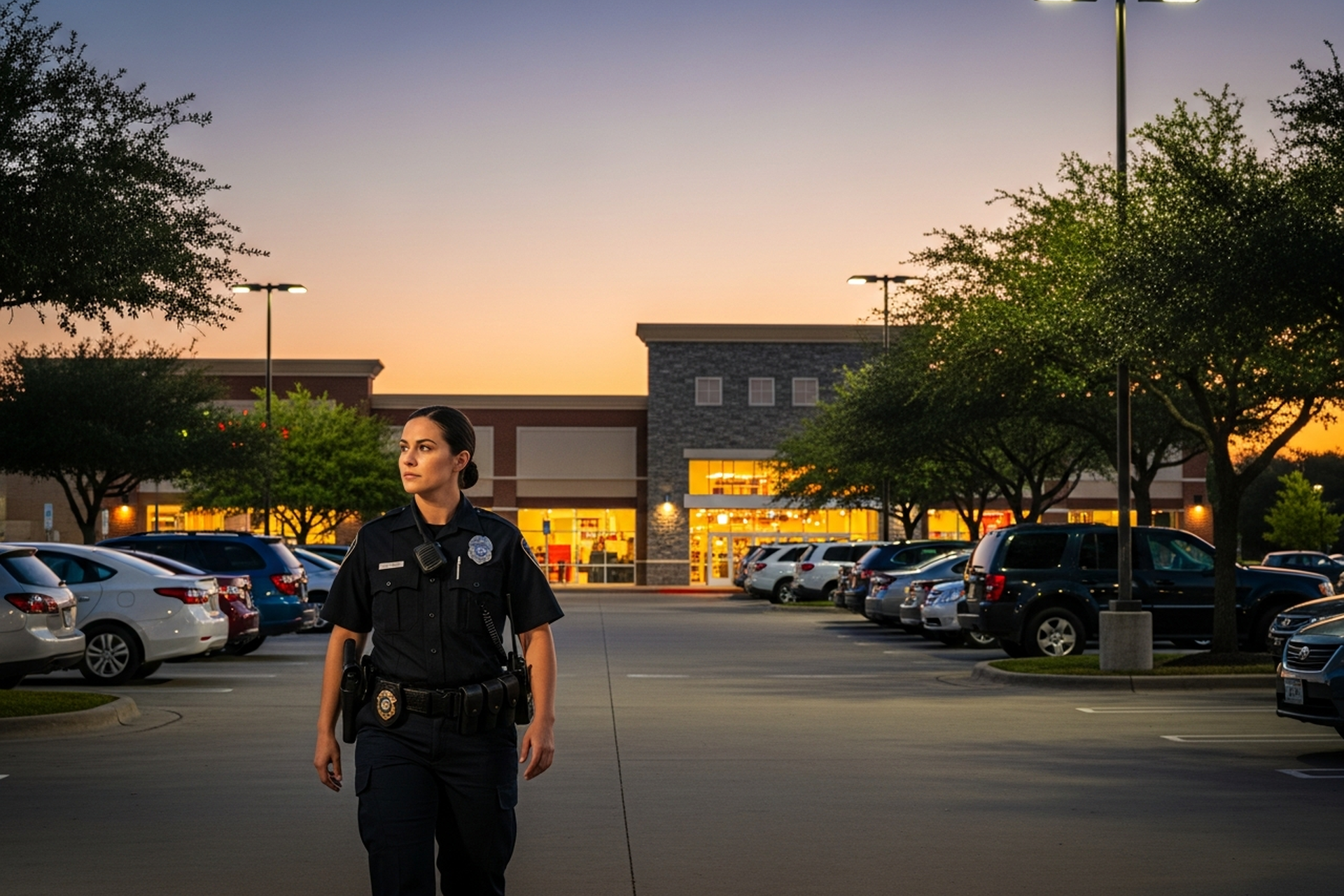
Most package thefts occur when the leasing office is closed, and that is the gap your security program must cover. Practical levers include extending leasing-office package-acceptance hours during peak delivery seasons, training unarmed officers to log and verify parcels during after-hours rounds, and pairing patrol coverage with documented mailroom checks. A mobile patrol route that includes the package room, mailroom, and breezeway intake during evening and overnight passes adds a visible deterrent and a documented record of coverage.
Resident communication is the other half. Properties that publish their package policy (where parcels are accepted, what hours staff are present, how lockers are accessed, and what to do if a package is reported missing) see fewer disputes and faster reporting when something does go wrong.
Camera and Access Control as the Evidence Layer
Cameras and access control do not stop theft on their own, but they give you the evidence you need when prevention fails. The lobby, mailroom, and package room intake are the three camera zones that justify the cost at DFW multifamily properties. Field of view should cover the carrier drop and the resident retrieval with enough resolution to identify a person at retrieval distance. Retention windows also matter: 7 days is too short for a resident who travels and discovers a theft on return, and 30 days is a more common standard at mature programs.
Access control should be tied to the same credential residents use for the building, with logs that can be pulled if an incident is reported. Officers on patrol can verify that intake areas, locker rooms, and mailroom doors close behind the last user, a recurring failure mode at busy properties. The U.S. Postal Inspection Service publishes prevention guidance on mailbox design, secure delivery options, and reporting procedures that property managers can fold into resident education materials.
Building a Package-Theft-Aware Multifamily Program
A program that actually reduces theft is built in layers.
- Map loss patterns by location. Pull 90 days of incident reports and resident complaints to identify where parcels are disappearing.
- Fix the highest-loss location first. If unit doors are the problem, push delivery to a centralized intake. If the lobby is the problem, install controlled-access infrastructure.
- Set staffing hours against the gap. Cover the windows when deliveries arrive, but staff is absent for patrol rounds, locker systems, or extended leasing office hours.
- Publish the policy. Residents who know the rules cooperate with them.
- Document everything. Patrol logs, camera footage, locker access records, and incident reports form the file you need when a case goes to law enforcement, an insurer, or a resident dispute.
Cascadia's multifamily housing services are built around this layered approach. For mixed-use properties, the same discipline extends to the parking facilities and ground-floor commercial elements that share entry points with residential.
What This Means for Your DFW Apartment Community
Package theft is the rare resident complaint that affects leasing, marketing, operations, and legal simultaneously. A property that handles it well preserves renewal rates and online reputation. A property that handles it poorly accumulates Google reviews mentioning package theft by name, which prospective residents read before they tour.
The playbook is well established: secured intake, controlled access, documented patrol coverage, and a published policy. A patrol team that includes package-area rounds in their nightly routes, with GPS-logged coverage and incident-ready documentation, is one of the lowest-cost upgrades a property can make to a building that is already losing parcels.
Frequently Asked Questions
How much does package theft really cost a DFW apartment community?
The visible cost is replacing parcels (residents usually absorb or recover from carriers) and staff time per incident. The harder cost is lease impact: residents who feel unsafe receiving deliveries do not renew. At a 250-unit community, a renewal rate that slips a few points because of perceived package security usually exceeds the cost of fixing the underlying problem.
Who is legally responsible for a stolen package: the property or the carrier?
That depends on where the package was when it was taken, how the carrier's terms of service define delivery, and the language in your lease and posted policies. Most carriers consider their delivery complete at the point of drop, and specific liability questions should go to your own legal counsel. From a security standpoint, the goal is to reduce incidents so the legal question rarely surfaces.
Do smart lockers actually work?
Smart lockers significantly reduce theft when residents use them. The failure mode is residents who instruct carriers to bypass the locker, or carriers who skip the locker because the system is unfamiliar. A locker rollout is a process change, not a product install, and the properties that see the largest reduction pair the rollout with resident education, staff training, and patrol coverage of the locker area itself.
When should a community add a staffed handoff?
When delivery volume exceeds what a single locker bank or package room can absorb, and when the property has both the floor plan and the budget to support staffing during delivery-heavy hours. High-rise and premium communities in DFW often justify concierge handoff on resident experience alone, with package handling as a side benefit.
What are the penalties for package theft in Texas?
Package and mail theft under Texas Penal Code Section 31.20 is charged as a felony in many situations, with severity tied to the number of items and victim characteristics. Penalties have been refined by the Legislature over recent sessions, and prosecutors set the charge based on facts. Property managers should focus on documentation that supports a prosecutable case (timestamped video, access logs, incident reports) and let counsel and law enforcement handle the legal side.
Strengthen Package Security at Your DFW Apartment Community
Cascadia Global Security builds package-aware patrol coverage into multifamily programs across the DFW metroplex, with documented rounds at intake points, mailrooms, and locker areas, plus the incident documentation property managers need when something goes wrong. For larger or higher-risk communities, our team can also scope off-duty law enforcement coverage for elevated response during peak delivery seasons. Call (800) 939-1549 or request a quote and a DFW-based account manager will walk through a program scoped to your property's footprint, delivery volume, and current loss pattern.