Parking Garage Security for DFW Office and Retail Complexes
Josh Harris | May 28, 2026
A retail customer who finishes dinner at 9:45 PM and walks alone to level three of a mixed-use garage is making a calculation, whether they realize it or not. The same calculation runs through an office tenant heading to their car after a late close. Parking garage security in DFW determines how that calculation lands, and for mixed-use complexes across Dallas-Fort Worth, the garage is often the last touchpoint a person experiences before leaving the property. Get it wrong and tenants quietly relocate, retail visitors stop coming after dark, and incident reports stack up.
Structured vertical parking carries its own risk profile, separate from open surface lots. Multi-level decks introduce blind corners, isolated stairwells, elevator vestibules, and pockets of dim light that an open lot does not have.
Why Structured Garages Change the Parking Garage Security Profile
A surface lot has one big advantage: open sightlines. From the curb, you can usually see across most of the asphalt, and so can passing traffic, building staff, and other patrons. A structured garage strips that out. Concrete columns, low ceilings, parked vehicles, and a series of half-levels create natural concealment in dozens of places per floor. Add stairwells and elevators that funnel pedestrians into tight, semi-private spaces, and the threat geometry changes completely.
DFW complexes feel this in a few specific ways:
- Multi-tenant garages serve office workers during the day and retail visitors into the evening, with foot traffic patterns shifting hour by hour
- Upper levels and rooftop decks empty out faster than ground-floor levels, leaving late returners visibly alone
- Stairwell and elevator vestibules are often shared between office and retail tenants, so no single tenant owns the responsibility
- Vehicle break-ins and catalytic converter theft sometimes hit an entire row of cars during a single quiet weeknight
Garage security planning has to address pedestrian safety, vehicle protection, and property-level liability in one coordinated program.
The Threat Profile You Are Defending Against
Most garage incidents at office and retail complexes fall into a handful of categories:
- Vehicle break-ins targeting visible bags, electronics, or firearms left in cabins
- Catalytic converter theft, a frequent target for organized crews working garages with predictable traffic patterns
- Assault or robbery in stairwells, elevators, and the walk from a parked vehicle to a tenant entrance
- Loitering and trespassing by non-patrons who use the garage as a shortcut or staging area
- Hit-and-run damage to parked vehicles, especially during shift changes
- Retrieval anxiety, the soft cost of tenants and visitors who do not feel safe walking back to their car after dark
Retrieval anxiety does not show up in police reports, but it shows up in lease renewals and retail foot traffic data.
Layered Design: Lighting, CCTV, and Sightlines
Effective garage security starts with the physical environment, not with officers. The principles of Crime Prevention Through Environmental Design (CPTED) apply directly to parking structures, with visibility, lighting, and maintenance as foundational design elements. Property teams looking for industry guidance and design references can pull from the resources published by the International Parking and Mobility Institute , the professional association for the parking industry.
Design priorities a DFW property team should pressure-test:
- Uniform illumination across every level, including ramps and corner stalls, with no dark pockets
- Light-colored ceilings and walls that bounce illumination and feel less cave-like at night
- Glass-backed elevators and open stairwell designs where feasible
- CCTV coverage that captures license plates at entry and exit, pedestrian movement on every level, and the full interior of stairwells and elevator vestibules
- Clear sightlines down each parking aisle, with mirrors at blind corners
- Wayfinding signage that gets a stranger back to the elevator they came from
Lighting standards are set generally by the Illuminating Engineering Society, and a property team retrofitting an older garage should pull a current footcandle survey rather than trust the original design spec. LED retrofits often pay for themselves in energy savings while delivering better security outcomes.
Where Officers Earn Their Keep
Cameras record. Lighting deters. Officers intervene. A camera that captures a stairwell assault is evidence; an officer walking that stairwell at the right moment is prevention.
For office and retail complexes, the patrol model usually combines a few approaches:
- Static post at the entry kiosk during peak hours, which controls vehicle access and provides a visible presence
- Vertical foot patrols that work each level, including the rooftop, on a randomized cadence
- Stairwell and elevator sweeps tied to retail closing times and office shift changes
- Mobile patrols that include the garage as a stop on a broader property route
- Escort programs available on request, where an officer walks a tenant or visitor to their car after hours
Patrol cadence matters more than total hours. A garage that sees an officer once every 90 minutes on a fixed schedule trains opportunistic offenders on the timing. The same hours randomized across the shift, with documented sweep logs, perform measurably better.
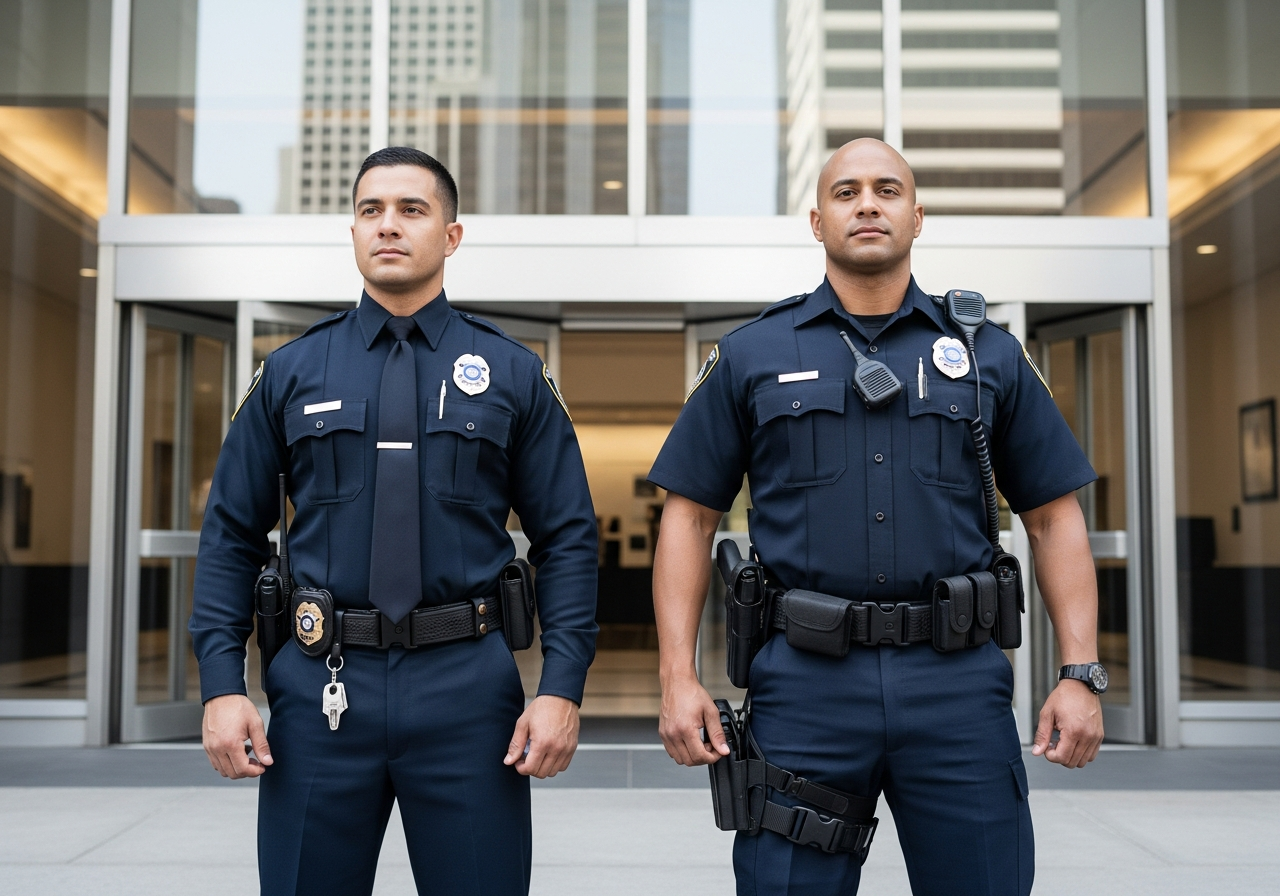
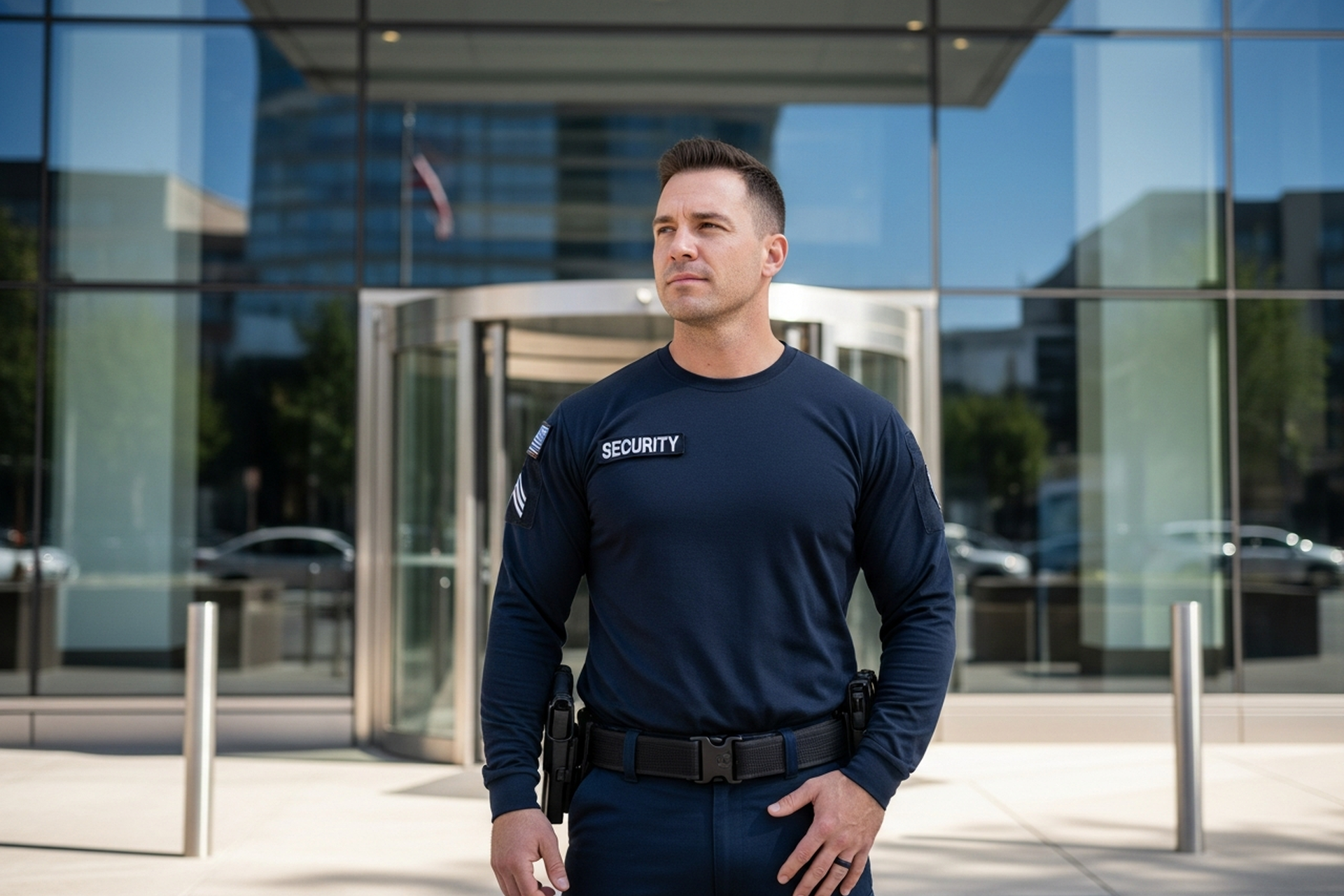
Most office and retail garage staff the bulk of their coverage with unarmed guards. An unarmed officer in a clearly marked uniform is often the right answer for tenant-facing environments. For complexes with elevated risk profiles or a history of armed incidents, sworn authority from off-duty law enforcement adds another layer for high-stakes situations.
After-Hours and the Last-Touchpoint Problem
The garage is usually the last security touchpoint at a mixed-use complex. Retail tenants close at staggered times, with restaurants and bars often running the latest. Office tenants who work late leave individually. By 10 PM, the garage is no longer the bustling environment it was at 6 PM, and that transition is when most pedestrian incidents happen.
Practices that matter for late-evening coverage:
- Officer presence sustained through the latest retail close, not stepped down at 9 PM
- Stairwell and elevator camera review at shift handoff
- Coordination with tenant security teams so the garage is not orphaned between jurisdictions
- Restricted access to upper levels after a defined hour
Tenant and Visitor Communication
Security infrastructure that nobody knows about does not change behavior. Tenants and retail visitors should know what is available:
- Visible signage at elevators and stairwells that explains the patrol program in plain language
- Panic stations or call boxes at predictable locations on every level
- A published phone number or app-based request for escort service, visible at retail entrances
- Regular property-management updates on garage incidents, response, and what changed as a result
Transparency builds trust. A property that hides incidents loses tenant confidence; a property that addresses them openly retains it.
Texas DPS Licensing Baseline
Every contracted officer working a DFW garage operates under Texas Department of Public Safety Private Security Bureau oversight. Two credentials matter for garage coverage:
- Level II non-commissioned officer, 6 hours of state-mandated training, authorized for unarmed posts
- Level III commissioned officer, a minimum of 45 hours of training plus firearms proficiency, authorized for armed posts
For most office and retail garage assignments, Level II unarmed officers are appropriate. Level III armed coverage is reserved for sites with elevated, documented risk. A property manager evaluating a vendor should ask to see current licensing for assigned officers, training documentation, and proof of insurance.
What This Means for Your DFW Office or Retail Complex
If you operate or manage a mixed-use garage in the metroplex, the practical work is auditing what you have against the layered model above. Walk the garage at 10 PM and ask: Can I see every corner? Are the cameras pointed where incidents actually happen, or where the original installer put them in 2014? Is there a uniformed presence during the hours that matter?
Most DFW complexes find one or two gaps that account for the bulk of their risk. A stairwell with broken lighting. A rooftop deck with no patrol coverage after 9 PM. A camera position that misses the elevator vestibule. Closing those gaps is usually faster and less expensive than a full security overhaul. Cascadia Global Security partners with parking facility, retail, and corporate and commercial property teams across DFW to build coverage programs that fit the specific structure, tenant mix, and after-hours pattern of each complex.
Frequently Asked Questions
Do parking garages at office and retail complexes need armed officers?
In most cases, no. Unarmed Level II officers handle observation, deterrence, patrol, and tenant interaction effectively for typical garage environments. Armed Level III coverage is appropriate where there is a documented history of armed incidents at the property or in the immediate area. A vendor should recommend a posture based on a site walk and incident history, not a default to armed.
Should we use mobile patrols or dedicated static officers?
It depends on incident frequency and property scale. Larger complexes with sustained foot traffic and a history of incidents usually justify dedicated on-site coverage during operating hours. Smaller properties are well served by mobile patrols that include the garage on a documented route. Many DFW complexes use a hybrid: dedicated coverage during peak hours, mobile checks overnight.
How do cameras and human officers fit together?
CCTV is a force multiplier, not a replacement. Cameras provide recorded evidence and extend the eyes of an officer who cannot be on every level at once. Officers provide the deterrence and intervention a camera cannot. The right balance for a mid-size garage is comprehensive camera coverage paired with officers patrolling on a randomized cadence, with a monitoring point that ties the two together.
What is an escort program and how does it work?
An escort program lets a tenant or retail visitor request a uniformed officer to walk them from the building entrance to their vehicle. The request usually comes through a posted phone number, a security desk, or an app. Escort programs are inexpensive to implement and have an outsized effect on perceived safety, particularly for late-shift workers.
How does garage security pricing compare to surface lot coverage?
Garage assignments typically require more officer hours per square foot than open lots, because vertical structures need patrol coverage on every level rather than a single perimeter sweep. Pricing also reflects the mix of static post versus patrol, the hours of coverage required, and whether camera monitoring is bundled.
Next Steps
A garage that feels safe is a garage tenants and visitors actually use after dark. CPTED-informed design, layered camera coverage, and a properly cadenced patrol program close the gap between a structure that looks secure and one that performs that way under real conditions. Cascadia Global Security works with DFW property managers to assess existing garage programs, identify the gaps that account for the most risk, and build coverage that fits the complex. Reach out for a property walk and a written scope at Get a Quote , or call (800) 939-1549.