Lobby Security & Front-Desk Protocols in Chicago
Josh Harris | June 17, 2026
The lobby of a commercial building in Chicago is not just the first thing a visitor sees. It is the single point where every security program either holds or collapses. Every unauthorized entry, every package theft, every vendor who shouldn't have been waved through, and every incident that escalated because no one caught the early warning signs can be traced back to a gap at the front desk. For property managers, building owners, and facility directors, getting the lobby right is not optional.
This guide covers the staffing roles, core protocols, technology tools, and operational standards that define an effective lobby security program for corporate and commercial properties across the Chicago market, from Class A towers in the Loop and River North to suburban office parks in Naperville and Schaumburg, medical campus buildings in Streeterville, and convention-adjacent properties near McCormick Place.
The Lobby as a Security Touchpoint
Most security incidents in commercial buildings are not random. They concentrate at entry and exit points, with the main lobby absorbing the vast majority. Tailgating, social engineering at the front desk, package interception, unauthorized visitor access, and the early behavioral indicators of more serious threats all surface at or near the lobby first.
That concentration makes the lobby officer's role fundamentally different from a patrol officer working the interior of a building. A patrol officer responds. A lobby officer prevents. The distinction shapes every element of how the position should be staffed, trained, and supported.
Staffing Roles: Understanding the Differences
Buildings deploy lobby personnel under several different titles, and the operational difference between them is real.
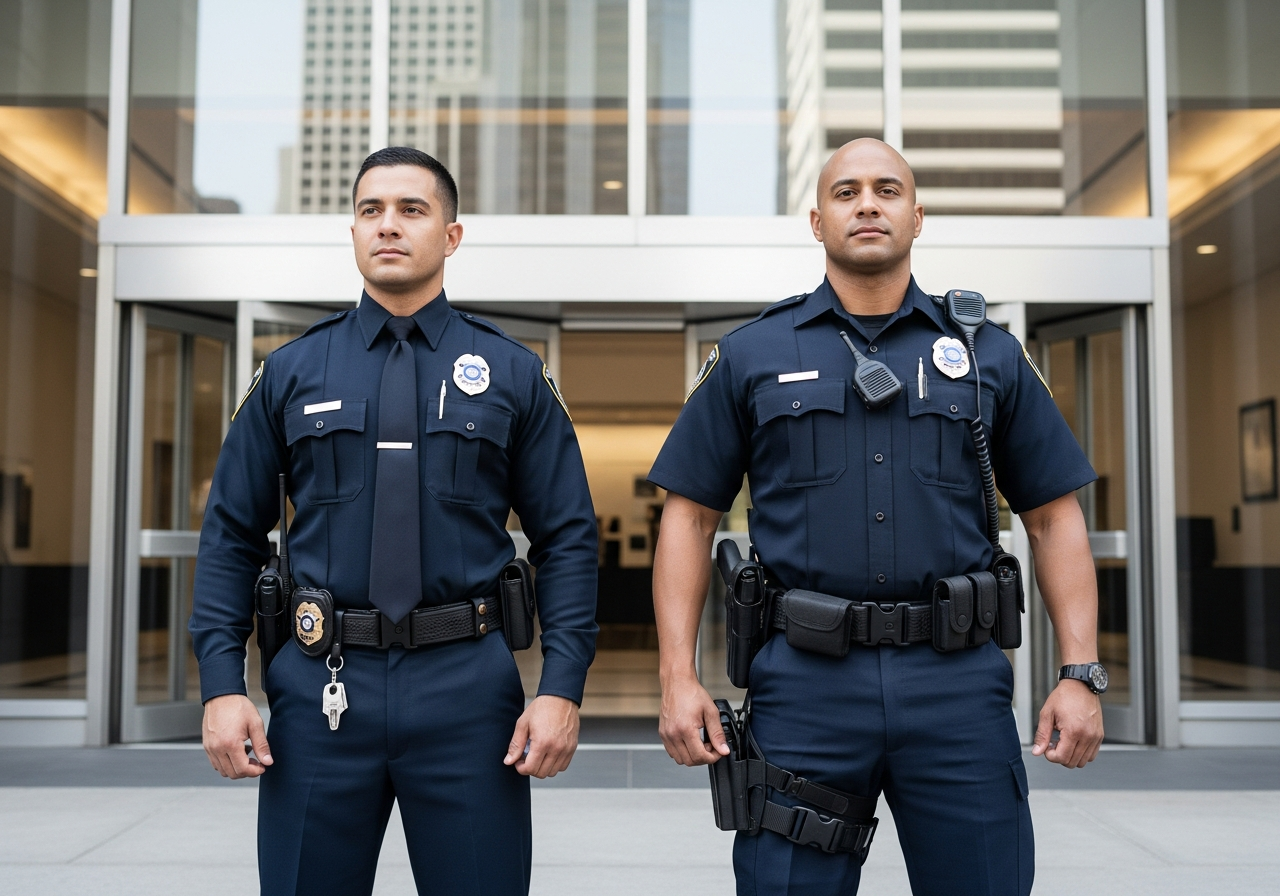
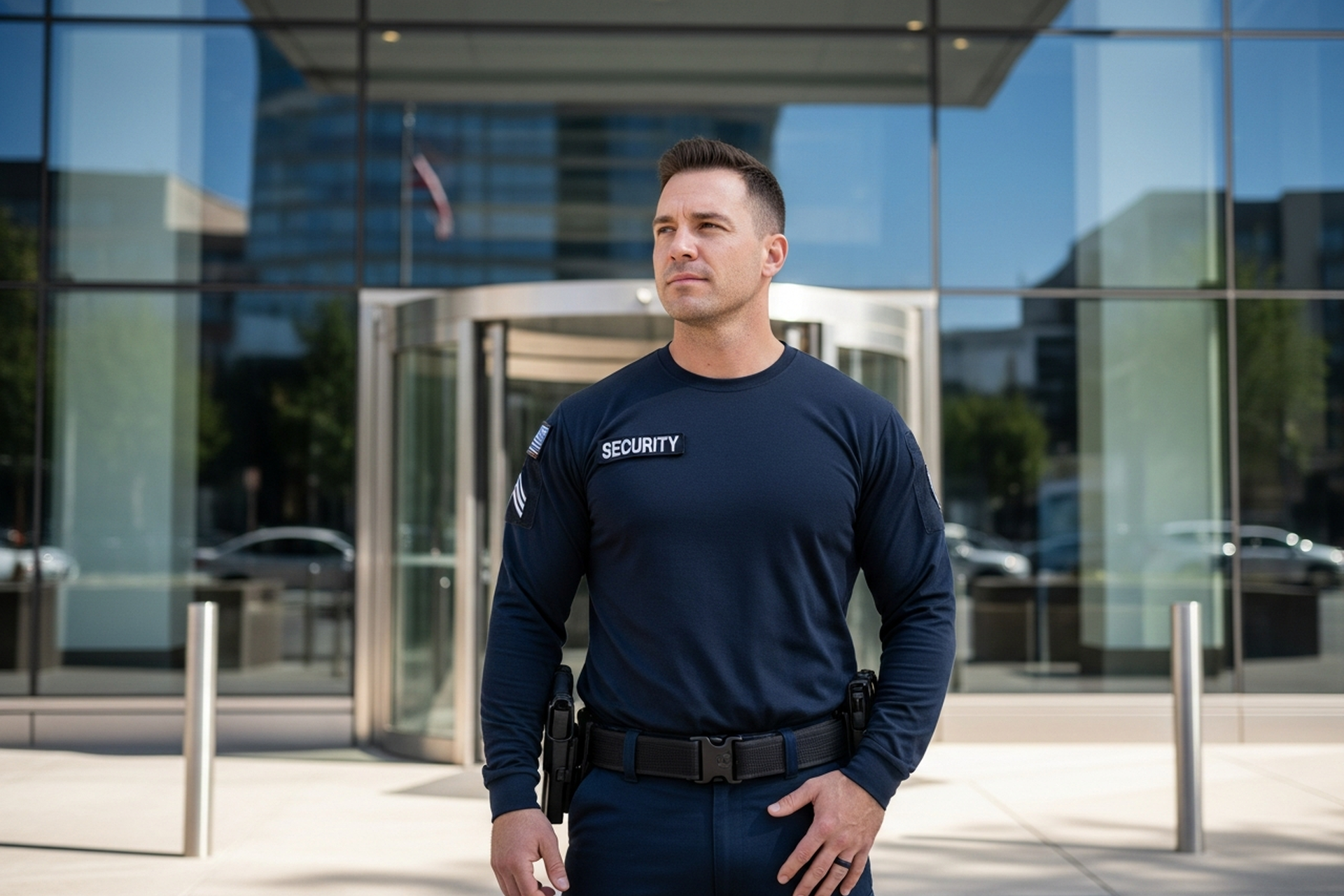
Lobby Security Officer. This is a security-forward role. The officer's primary function is access control: screening visitors, verifying credentials, monitoring the turnstile area for tailgating, and enforcing building policy. Customer service is present but secondary. Most Class A office buildings in the Loop, as well as those with documented incident histories, operate with a lobby security officer rather than a pure concierge.
Concierge Security Officer. The concierge model leads with hospitality and embeds the security function within a service-forward presentation. The officer is typically in business attire rather than a guard uniform, greets tenants and visitors by name, manages package intake and guest announcements, and handles the front-desk functions that keep the building running smoothly. The security function, including access control and tailgating awareness, is fully present but expressed through a service lens. Luxury residential towers in Streeterville and Gold Coast typically prefer this profile. Multifamily housing operators have widely adopted it because resident satisfaction and security effectiveness are not mutually exclusive.
Combined Concierge and Security. Many mid-size buildings use a hybrid model, one officer managing both hospitality and security functions. Selecting and training for both skill sets is the critical variable; an officer who delivers warm guest service and still recognizes behavioral threats requires targeted hiring criteria.
Unarmed Deterrent or Greeter. Some lower-traffic properties post an unarmed officer primarily for visible deterrence without a full visitor management workflow. This works for smaller suburban office buildings where the primary risk is opportunistic.
The vast majority of commercial lobby positions are filled by unarmed guards. The work is access management, customer service, documentation, and de-escalation, not enforcement. Armed lobby officers are rare in commercial environments and most commonly found in financial institutions, courthouses, and buildings with specific threat profiles.
Core Front-Desk Protocols
Effective lobby operations run on consistent, documented procedures. The following protocols form the foundation of any professional commercial lobby program.
Visitor management. Every visitor who enters beyond the lobby threshold should be logged. A complete visitor management workflow includes sign-in, ID verification, temporary badge issuance with floor-level authorization, tenant notification, and sign-out at departure. Modern visitor management software handles this digitally through photo capture, tenant pre-registration, and time-stamped records. The front-desk officer's job is to enforce the workflow, not to bypass it because a line is forming.
Tailgating prevention. Turnstile systems and single-entry configurations mechanically reduce tailgating, but they do not eliminate it. The lobby officer's role is to monitor the threshold continuously and intercept individuals who attempt to follow authorized badge holders through without presenting credentials. This requires positioning, attention discipline, and a willingness to make direct contact with someone who appears to be testing the entry.
Package and mail handling. High-volume commercial buildings receive dozens to hundreds of deliveries daily. A documented chain-of-custody protocol defines where packages are staged, how receipts are logged, how tenants are notified, and how high-value items are handled differently from standard mail. A lobby officer who accepts packages without logging them creates a gap that is difficult to close after a theft.
Vendor and contractor management. Every vendor or technician who enters should be pre-authorized, verified at the front desk, logged in with a time-stamp, directed to a specific destination, and logged out. Buildings that skip this process are the ones that find an unfamiliar face on the 18th floor with no record of how they got there.
Tenant key card and fob issuance. The front desk manages access credential issuance, temporary fob provisioning, and lost-credential replacements. A regular audit cycle closes the gap that accumulates when departed employees still carry building access.
Emergency response role. The lobby officer is typically the first building staff member to know when something is wrong. That requires advance training on the building's emergency action plan: alarm panel identification, evacuation procedures, shelter-in-place protocols, medical incident response (AED location and basic first aid), active threat response, and the specific escalation path for each scenario. A lobby officer who has to read a binder to find the fire alarm code is a gap in the program.
Incident documentation. Every notable event during a shift should be captured in a daily log: visitor issues, access control anomalies, package incidents, behavioral observations, and maintenance concerns reported by tenants. Incidents that rise above the routine level require a formal incident report. This documentation creates the record that property managers, insurers, and legal teams need.
After-hours protocols. When the building transitions to after-hours operation, the lobby protocols change. Walk-in access stops; badge-only entry takes over. Remaining occupants who need to exit late require an escort to the parking structure or street-level exit in high-risk environments. A sign-in book or digital log for after-hours access provides an audit trail. The lobby officer or overnight patrol team maintains this access control standard through the end of the occupancy period.
Soft Skills That Define Effective Lobby Officers
The best lobby officers combine security awareness with interpersonal ability. De-escalation is the highest-value skill: the ability to manage an agitated visitor or confrontational individual without making the situation worse is what separates a professional officer from a liability. Most lobby incidents that end badly could have been resolved differently in the first thirty seconds.
Customer service orientation matters because the lobby officer represents the building to every person who walks through the door. ADA awareness and cultural competency are operational requirements in Chicago's diverse commercial tenant market. Communication and documentation skills shape the quality of every log entry and incident report; officers who write clearly create records that are useful when they matter most.
Technology Integration at the Front Desk
Visitor management software automates pre-registration, ID capture, badge printing, tenant notification, and audit-trail generation. It reduces check-in friction during peak periods and maintains records that no paper sign-in book can match. Access control systems (turnstiles and key card infrastructure) enable the lobby officer's enforcement; officers need to review access logs and identify credential anomalies. Video surveillance at the lobby and back doors provides real-time monitoring and post-incident review. A lobby panic button tied to a monitoring center or CPD dispatch is a standard life-safety element; every officer on post should know exactly what activates it and what follows.
Chicago-Specific Environments
The protocols above apply across the commercial property spectrum, but several Chicago-specific contexts shape how they are implemented.
Loop and River North Class A office buildings run high visitor volumes during peak hours and require lobby management workflows optimized for throughput without sacrificing verification discipline. Suburban office parks in Naperville and Schaumburg typically run lower visitor volumes but face different after-hours risk profiles.
Medical campus buildings in Streeterville, adjacent to Northwestern Memorial Hospital, and in Hyde Park, near the University of Chicago Medical Center, add the patient and visitor population to the commercial tenant mix. Healthcare lobbies require additional ADA sensitivity training, protocols for distressed visitors, and coordination with the hospital's own security team. IAHSS , the International Association for Healthcare Security and Safety, publishes lobby and entry-point guidance specifically for healthcare facilities that applies directly to medical office buildings on these campuses.
Convention-adjacent properties near McCormick Place and hotels and hospitality buildings manage a transient visitor population that changes entirely between events, requiring lobby protocols that account for higher unknown-visitor volume and lower baseline tenant familiarity. CoreNet Global , the professional association for corporate real estate and facility management, addresses building operations standards that complement lobby security programs, including access management frameworks for multi-tenant commercial environments.
Training Requirements for Lobby Officers
A lobby officer assigned to a building without building-specific orientation is only partially effective. Site-specific training should cover the tenant directory and key contact list; building system familiarity (intercom, alarm panel, elevator controls, and life safety equipment); visitor management software operation; active-threat and evacuation procedures; and after-hours shift hand-off standards. Officers who receive this preparation perform measurably better on post than those placed without it.
Frequently Asked Questions
What is the difference between a lobby security officer and a building concierge?
A lobby security officer prioritizes access control and threat awareness. A building concierge prioritizes resident and visitor service. In practice, most commercial lobby programs need both capabilities in the same person. The title varies by building type and presentation standard, but the functional requirements overlap significantly.
How do you prevent tailgating without making the lobby feel unwelcoming?
Consistent turnstile discipline and an officer who makes polite but direct contact with anyone who bypasses credential presentation. The tone is professional and courteous rather than confrontational. Buildings that train for this specifically find that a respectful "Let me get you signed in" approach stops most tailgating attempts without friction.
What should a lobby officer do if a visitor becomes aggressive?
De-escalate verbally, use distance and positioning to avoid physical contact, activate the panic button or call for support if the situation escalates, and document everything afterward. Most situations resolve before reaching a confrontation if the officer stays calm and does not mirror the aggression. Physical intervention by an unarmed officer is a last resort.
How often should lobby security protocols be reviewed?
At a minimum, annually, and any time there is a significant incident, a change in tenant mix, or a building renovation that affects entry points or access control infrastructure. Protocols written for a 10-tenant building with one entry point need to be updated when the building adds a second access door or signs a large new tenant with a different visitor volume.
Do lobby security officers need Illinois PERC certification?
Yes. Any officer performing compensated security functions in Illinois must hold a current Permanent Employee Registration Card issued by IDFPR. Property managers should request documentation before any officer begins a post and verify that the agency itself holds a valid Private Security Contractor license.
Building a Professional Lobby Program
The lobby is where a building's security either establishes itself or fails. A professional lobby program requires the right staffing role for the building type, documented protocols for every foreseeable scenario, officers trained for both the security function and the service environment, and a technology infrastructure that supports, rather than replaces, human judgment.
Cascadia Global Security provides unarmed guard staffing for commercial lobbies across the Chicago market, from concierge officers in Class A office buildings and luxury residential towers to front-desk security programs for medical campus buildings and suburban office parks. Every officer holds a current Illinois PERC card and receives building-specific orientation before their first shift. To discuss a lobby security program for your property, Get a Quote or call (800) 939-1549.