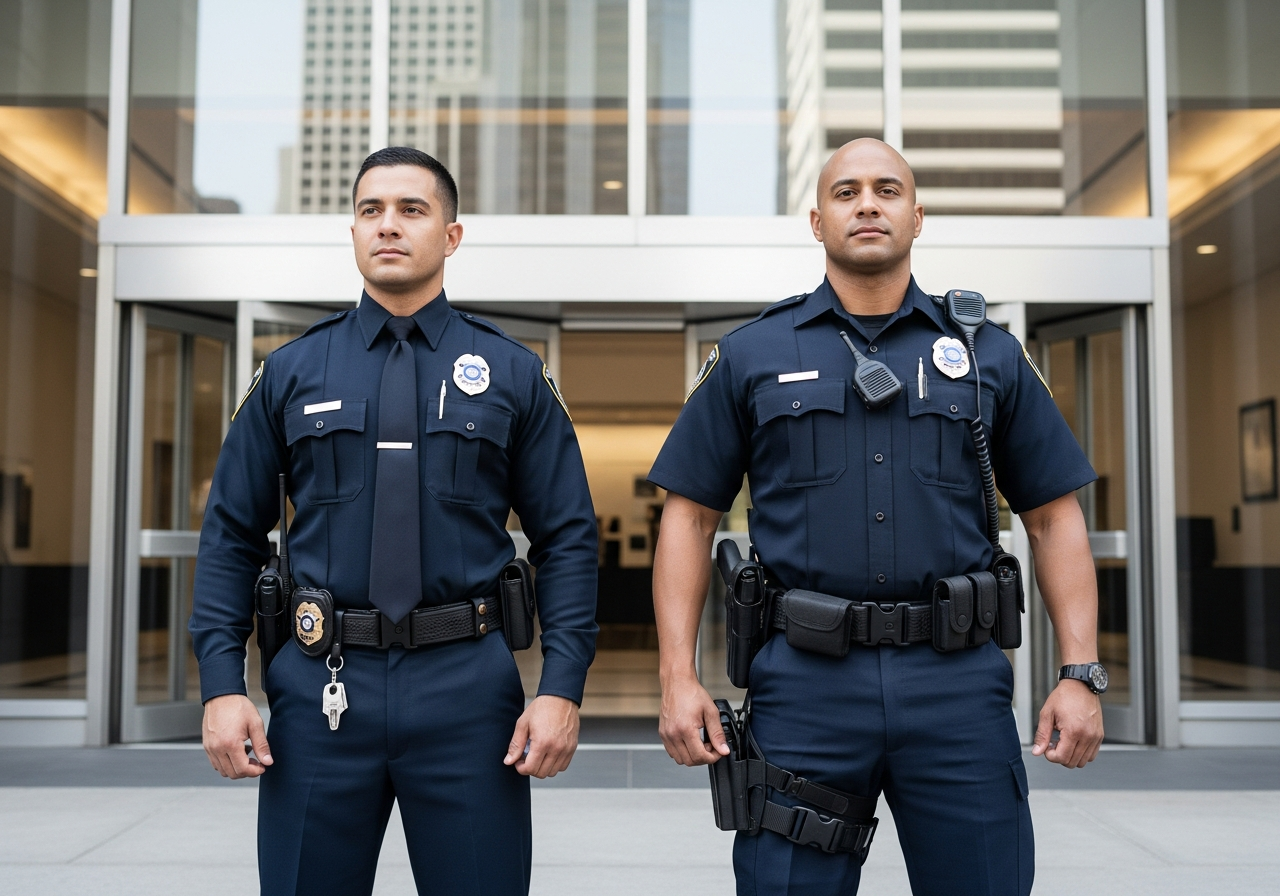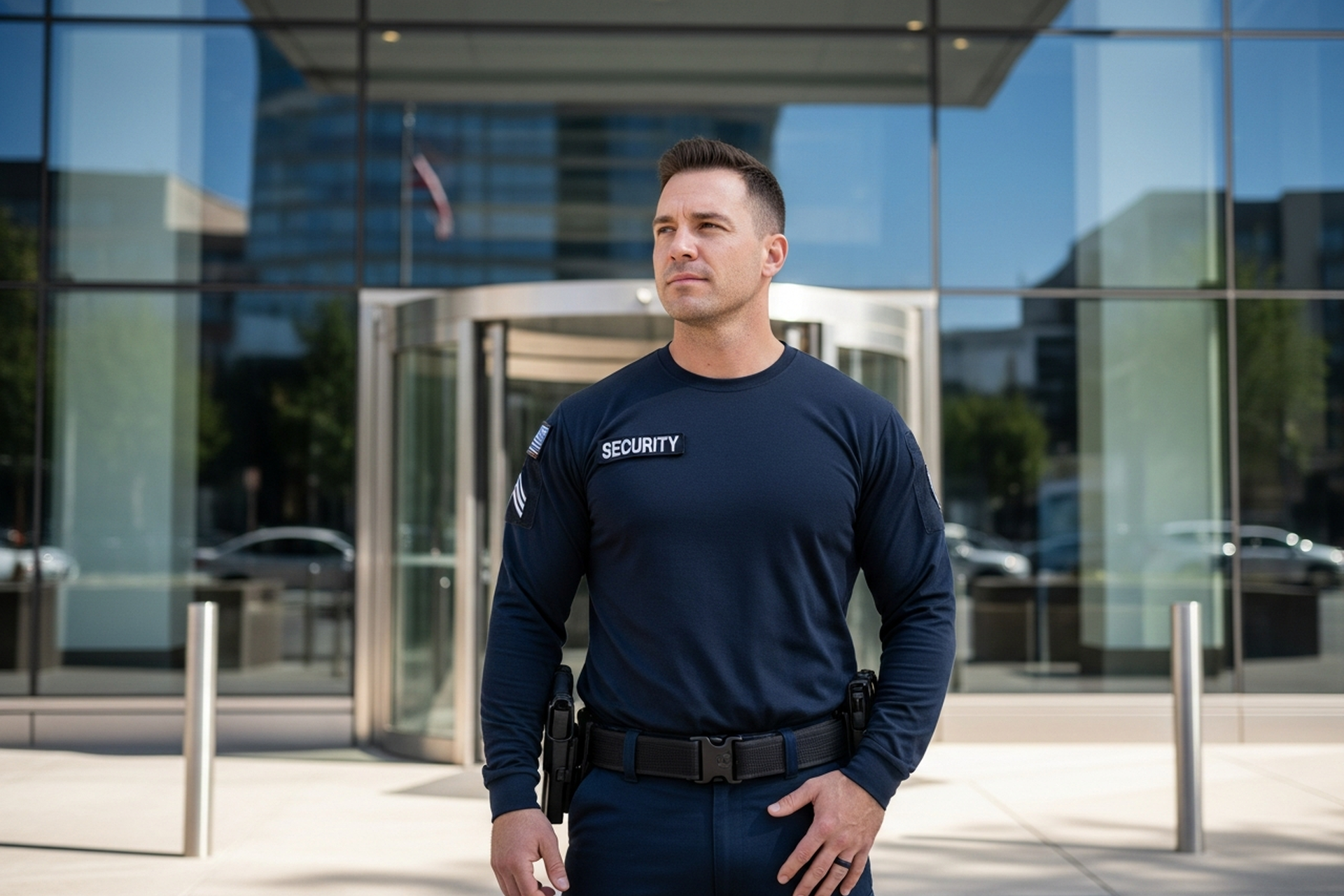
Rapid-Response Security Services for DFW Businesses in Crisis
Josh Harris | May 25, 2026
A pipe bursts in a high-rise lobby at 11 p.m., the fire suppression system trips, and the building loses access control across three floors. The general manager calls the incumbent guard vendor and gets voicemail. By 2 a.m., the property still has no officer on site. Rapid response security in DFW exists for exactly this kind of night, when a Dallas-Fort Worth business needs licensed officers on the ground in hours, not the next billing cycle. Here is how emergency deployments actually work and what information speeds up the call from "we have a problem" to "officers are en route."
When DFW businesses need rapid-response security
Most crisis calls fall into a small number of recognizable patterns, and most happen on nights, weekends, or during a regional weather event when the incumbent vendor's bench is already thin.
- An incumbent guard company walks off a contract or fails to show for a shift.
- A sudden incident (workplace violence threat, trespass, vandalism spree) requires elevated coverage at a property that previously had none.
- A fire system, sprinkler riser, or alarm panel goes into impairment, triggering a code-driven fire watch requirement.
- A severe storm damages the building envelope and leaves doors, windows, or perimeter fencing compromised.
- A tenant-facing incident attracts media attention, and the owner wants visible security before opening hours.
- A scheduled event suddenly grows beyond its planned staffing.
The common thread is time pressure. The business does not have weeks to RFP a new provider. It needs officers on site before the next shift change, or before insurance and life-safety obligations start compounding.
What rapid-response actually means
Rapid response is not marketing language for "we will return your call quickly." A real rapid-response capability means a firm can move from intake to boots-on-site inside a few hours for most DFW addresses. Three commitments distinguish a genuine emergency program from a sales promise.
- A 24/7 dispatcher who can stand up an account, dispatch officers, and route a supervisor without waiting for business hours.
- A documented intake-to-deploy timeline, usually measured in hours for an unarmed posted-guard request and slightly longer for armed or commissioned coverage.
- A local supervisor who can meet on site, walk the property, and brief the first shift so officers arrive with post orders, not just an address.
Federal preparedness guidance from Ready.gov, a Department of Homeland Security preparedness program, makes the same point in broader terms: continuity planning fails when the response phase has not been thought through in advance. A vendor that has not pre-thought scaling, dispatch, and supervision will not invent those capabilities the night you need them.
How a security firm scales fast
The capacity to put officers on a DFW property in hours comes from depth built before the phone rings. There are four ingredients, and a firm either has them in place or it does not.
- Officer roster depth across the metroplex, including off-rotation officers, float guards, and standby personnel already cleared on onboarding and licensing.
- Local supervisory presence, so a field supervisor can be on the property the same night as the first officer.
- Vehicle and equipment readiness, including marked patrol vehicles, radios, body cameras where contracted, and stocked uniform inventory.
- A dispatch and reporting platform that can generate post orders, time-and-attendance, and incident reports immediately.
When any of those four are missing, rapid response becomes a scramble and the client ends up managing the vendor instead of the incident.
Common DFW crisis scenarios
The same playbook adapts to a handful of recurring DFW situations. Each one has its own tempo, but the deployment shape is similar.
Severe weather and storm aftermath
DFW's spring storm season brings tornado watches, hail, and straight-line wind damage. Winter ice events are less frequent, though the Winter Storm Uri event in February 2021 is a reminder that they can knock out power and access control for days. After major weather, properties often need temporary perimeter coverage while doors, fences, or rolling gates are repaired. Cascadia's temporary and emergency security program is built for this window.
Incumbent vendor walk-off
A vendor that loses its license, runs out of officers, or simply stops returning calls leaves the client exposed overnight. Replacement coverage is usually the fastest scenario to deploy because the post orders, access points, and patrol routes already exist. The new provider's job is to absorb them quickly and stand up unarmed guard coverage or armed guard coverage without a learning curve that the client has to pay for.
Sudden incident requiring elevated coverage
A threat against a tenant, a public-facing dispute, or a recent break-in can push a property from "monthly mobile patrol" to "24/7 posted officer" overnight. The right response is rarely the maximum response. A supervisor walks the property, assesses the risk, and recommends an interim coverage profile, often a posted unarmed officer plus increased mobile patrol passes that can scale up or down as the situation evolves.
Fire-system impairment requiring fire watch
When a fire alarm, sprinkler, or suppression system is offline, code and insurance carriers typically require a continuous fire watch until the system is restored. This is one of the clearest "must deploy now" scenarios because the building's certificate of occupancy and insurance coverage may both depend on it. Officers performing the watch need fire watch logs and a supervisor who has done the rounds on a similar property before.
Communication during a crisis
The deployment is only half of the job. The other half is information flow back to the client during the first 24 to 72 hours, when most decisions about extending or scaling down coverage get made.
A workable communication pattern usually includes:
- A 24/7 dispatch line that facilities and operations leads can call without going through a sales contact.
- An assigned operations director reachable on personal cell during the first 72 hours.
- Shift-by-shift reporting with officer arrival times, patrol passes, incident notes, and photos where appropriate.
- A short morning brief during the first week so the client's leadership has the same picture as the supervisor.
When that loop is in place, the client makes staffing and budget decisions on real information instead of guesswork.
Texas DPS licensing still applies in a crisis
Speed does not change licensing. Every officer working in Texas, including officers deployed inside an emergency window, must hold the appropriate Texas DPS Private Security credential. Unarmed officers complete the Level II course (six hours of non-commissioned training) and hold a valid registration. Armed officers complete the Level III course (45 hours of commissioned training) and hold a current commissioned security officer card. The Texas DPS Private Security Bureau publishes current course and registration requirements.
A firm that deploys a posted unarmed officer in three hours does it by drawing from already-licensed officers on its standby roster, not by rushing someone through onboarding. Off-duty officer programs operate under a different legal framework and can be useful when a client wants the visible presence of a sworn officer, which is when Cascadia's off-duty law enforcement program comes into play.
Bridging from crisis coverage to a longer-term plan
The cleanest emergency deployments end with a planning conversation. Once the crisis stabilizes, the property and the security firm review what coverage actually fit the risk. The result is one of three outcomes.
- Temporary coverage rolls into a permanent contract at a lower, sustainable level (a posted officer becomes mobile patrol, for example).
- Temporary coverage ends and the property returns to its prior baseline, with the incident documented for insurance and future planning.
- The incident reveals a structural gap that justifies a different program design, such as adding access control hardware or building a standing relationship with a vendor that can scale during the next event.
A property that has been through one rapid deployment already has post orders, a vetted vendor relationship, and a dispatch line on file. That preparation is itself part of business continuity.
What this means for your DFW business
If a Dallas-Fort Worth business loses security coverage tonight, the right question is not "how fast can we get a quote." It is "how fast can we get a supervisor on the property and an officer at the post?" A vendor that cannot answer the second question in hours, with names and license numbers, is not equipped for an emergency. Building that relationship before the crisis is what turns rapid response from a marketing claim into something a facility can actually rely on. For corporate and commercial properties, multifamily communities, and retail centers, the difference shows up in the first overnight shift.
Frequently Asked Questions
What is a typical deployment window for rapid-response security in DFW?
For most addresses inside the Dallas-Fort Worth metroplex, an unarmed posted officer can usually be on site within a few hours of a confirmed dispatch, with a supervisor in the same window. Armed or commissioned coverage may take longer because of the smaller pool of licensed officers.
How does pricing for emergency deployment differ from a planned contract?
Emergency coverage typically prices higher than a planned long-term contract because the firm is pulling from standby rosters, paying premium shift rates, and absorbing the overhead of standing up an account in hours. Rates depend on coverage hours, armed versus unarmed posting, supervisor needs, and engagement length.
What information does Cascadia need to deploy officers fast?
The fastest intakes share four things up front: the property address and on-site contact, the reason for the deployment (vendor failure, fire watch, post-incident, weather, other), the coverage profile requested (armed or unarmed, posted or patrol, number of officers, shift hours), and any access notes (keys, codes, after-hours entry points).
How should a DFW property prepare for severe weather security needs?
A practical pre-storm checklist includes confirming the vendor's 24/7 dispatch number, identifying backup access points if the primary entrance is damaged, knowing where alarm and fire panels are located, and pre-authorizing a supervisor to walk the property without a building contact present if access is safe.
How fast can a new vendor replace an incumbent that has walked off a DFW property?
Vendor replacement is one of the faster rapid-response scenarios because existing post orders and access details can usually be transferred quickly. A capable firm can often have a supervisor on site the same day, an officer at the post within hours, and a written post-order revision within 24 to 72 hours.
Working with Cascadia Global Security
Cascadia Global Security operates a 24/7 dispatch with licensed officers across the DFW metroplex, supporting properties through vendor transitions, severe-weather events, fire-system impairments, and short-notice elevated coverage. To get a same-day estimate or stand up emergency coverage, request a quote or call (800) 939-1549.