Bellevue Security Services: Eastside Protection You Can Trust
Josh Harris | May 9, 2026
Bellevue security services differ from those designed for downtown Seattle in ways that matter. Businesses here operate in one of the most commercially active corridors in the Pacific Northwest, where Class A office towers, destination retail, corporate campuses, and high-density multifamily development create a layered security profile. Whether you manage a building in Bellevue Downtown, run a retail operation near Bellevue Square, or oversee a corporate campus that spans multiple Eastside cities, selecting the right security partner starts with understanding what makes this market distinct.
What Makes Bellevue's Security Needs Different
Bellevue is not a satellite community of Seattle. It is a fully built-out urban center with its own daytime workforce, its own retail and hospitality district, its own corporate and commercial tenant base, and its own dedicated police department serving a population of roughly 155,000 residents. The security decisions property managers and facility directors make here are shaped by a different mix of factors than those driving decisions in Pioneer Square or Capitol Hill.
The commercial real estate footprint is the starting point. Downtown Bellevue supports millions of square feet of Class A and Class B office space, with significant new construction in the pipeline as the area continues to attract corporate tenants. Those buildings require a security posture calibrated for high-value tenants, executive-level occupants, and vendor management at sophisticated lobby environments. The retail environment adds another dimension: Bellevue Square and Lincoln Square together make up one of the largest retail concentrations on the Eastside, bringing significant foot traffic and the loss prevention challenges that accompany it.
The geography of the broader Eastside corridor matters too. Companies with campuses in Redmond, Kirkland, Bothell, Issaquah, and Sammamish often have overlapping security needs and shared vendor relationships. A provider that covers only a narrow zone within Bellevue proper leaves Eastside clients without continuity when operations extend across the corridor.
Common Security Services for Eastside Businesses
Lobby and concierge security for Class A buildings
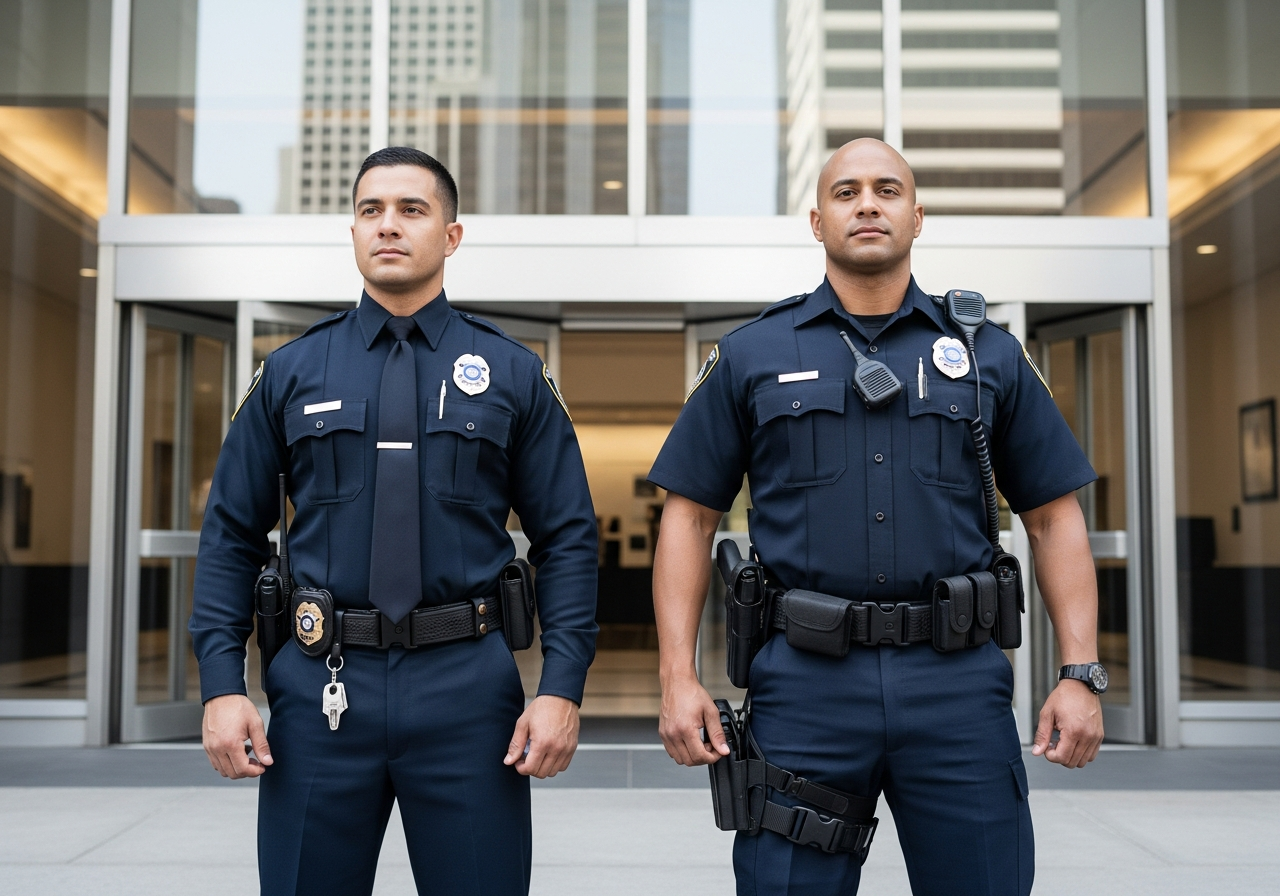
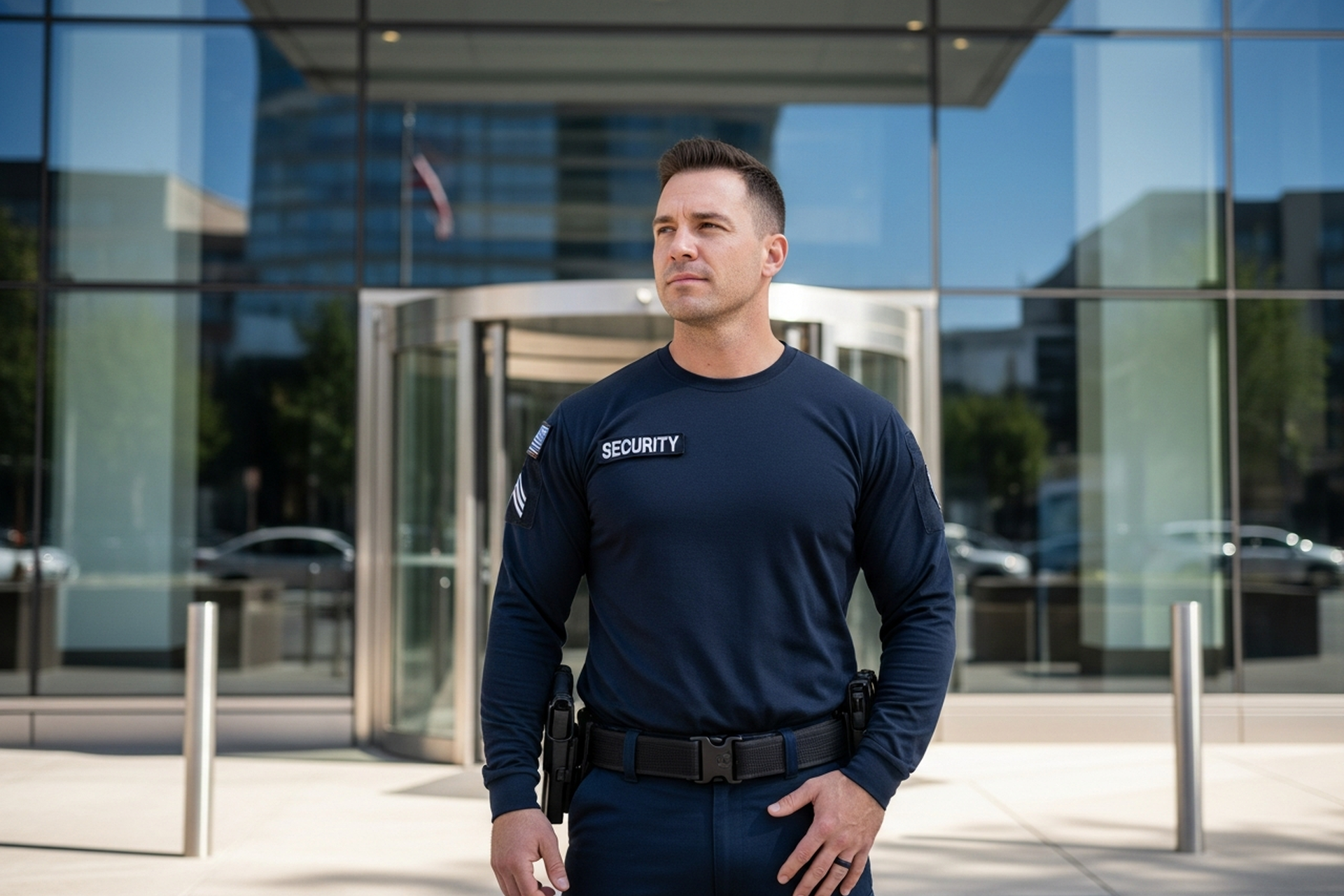
Office towers in downtown Bellevue commonly use professional lobby officers or security concierge personnel to manage building access, greet tenants and visitors, and coordinate with building management. This role requires more than a visible presence: the officer must be trained in access control systems, understand visitor credentialing procedures, and be capable of de-escalating situations without disrupting the professional environment. For Class A buildings competing on tenant experience, the lobby officer often represents the first impression. The quality of that personnel reflects directly on the property.
Mobile patrol for office parks and campuses
Not every Eastside property justifies a stationary guard post around the clock. Office parks in north Bellevue, Factoria, and the suburban Eastside cities often use mobile patrol services to cover multiple access points, check parking structures, and maintain a visible presence across a larger footprint. A well-structured patrol program delivers documented check-ins at defined intervals, trained officers who can respond to incidents as they arise, and supervisor coverage to ensure accountability when the night shift is thinned out. For facilities that need coverage without the cost of a fixed post, mobile patrol is often the practical center of the program.
Retail loss prevention for upscale retail environments
The retail corridors in Bellevue, including the concentration of luxury and specialty retailers around Bellevue Square, face organized retail crime as well as opportunistic theft. Retail security strategies for these environments go beyond placing a uniformed officer at the door. Effective loss prevention programs incorporate plainclothes observation, floor coverage protocols, and coordination with store management to identify patterns before they escalate. The NRF's retail safety and security resources document how retailers are responding to increased theft pressure across high-traffic shopping environments, and the Eastside is not insulated from those trends.
Access control for corporate campuses and R&D facilities
Many of the technology employers concentrated across the Eastside operate facilities where access control is both a security requirement and a legal one. Protecting intellectual property, managing badge systems, and controlling physical access to server rooms, labs, and executive floors requires security personnel trained in access control protocol, not just personnel who can operate a sign-in sheet. For those facilities, unarmed security officers with access control training are the backbone of the program, often supplemented by mobile patrols or dedicated post coverage during off-hours.
The Eastside Operational Reality
A security provider's ability to serve Bellevue well depends on more than having officers registered in Washington State. The Eastside corridor poses genuine operational challenges that separate providers with real infrastructure from those who stretch their coverage maps to claim the market.
The geography alone spans a significant area. From downtown Bellevue to Bothell to Issaquah, the Eastside contains dozens of office parks, retail centers, multifamily communities, and healthcare facilities. A provider without supervisors positioned across this corridor will struggle to maintain accountability, respond to incidents promptly, and fill shift gaps without leaving posts uncovered.
Coordination with local law enforcement is another factor worth evaluating. The Bellevue Police Department operates independently from Seattle PD and maintains its own dispatch protocols, non-emergency reporting procedures, and crime data transparency tools. A security provider who knows how Bellevue PD operates, including how to file non-emergency reports and when to request a patrol assist, will support their clients more effectively than one who approaches every Eastside city as an extension of their Seattle operation.
For properties that span multiple cities, this means coordinating with Redmond PD, Kirkland PD, and Bothell PD in addition to BPD. Providers with established relationships across those departments, and dispatch protocols that account for jurisdictional differences, deliver a meaningfully better outcome when incidents occur.
Choosing Bellevue Security Services with Genuine Eastside Presence
When evaluating Bellevue security services providers, the questions that separate capable local operators from national vendors stretching their footprint tend to be operational and logistical.
Ask where the provider's nearest field supervisor is stationed on a typical weeknight. Ask how they fill a shift gap at 2 a.m. on a Tuesday. Ask whether they have experience staffing Class A lobby posts, and whether those officers have worked in professional settings with tenant-experience requirements. Ask specifically about experience coordinating with Bellevue PD on incident reports.
National security companies often list the Eastside as part of their Pacific Northwest or Seattle coverage area, but coverage on paper and reliable boots-on-the-ground coverage are different things. A provider with genuine Eastside infrastructure, local supervisors, and officers who know the geography and the law enforcement landscape will serve Bellevue businesses at a different standard than one managing the region remotely.
Licensing matters as well. All security guards operating in Washington must hold a license issued through the state's private security regulatory process. That requirement applies uniformly across the Eastside, regardless of which city your property sits in. Confirming that every officer assigned to your site holds a current Washington license is a basic due-diligence step that no contract should skip.
What This Means for Your Security Program
If you're evaluating security vendors for a Bellevue location, the right provider is not necessarily the one with the largest national footprint or the lowest per-hour rate. It is the one that has demonstrated, documented experience operating in this specific corridor, with the infrastructure to support your property reliably.
That means officers trained for your property type. It means field supervisors who can respond on short notice. It means a provider who coordinates with local law enforcement and understands the operational standards that Eastside tenants, property owners, and guests expect.
Cascadia Global Security operates across the full Eastside corridor, providing guard services, mobile patrols, and specialized programs for Class A office, retail, corporate campus, and multifamily clients throughout Bellevue, Redmond, Kirkland, Bothell, Issaquah, and Sammamish. Our officers hold current Washington State licenses and our field supervisors are positioned to cover the Eastside effectively.
To discuss your property's specific needs, get a quote or call our team directly at (800) 939-1549.
Frequently Asked Questions
What types of businesses in Bellevue typically need professional security services?
Class A office buildings, retail centers, corporate campuses, hotels, medical office buildings, and multifamily communities all commonly retain professional security providers in Bellevue. The mix of high-value commercial tenants, upscale retail, and dense residential development across the Eastside creates demand for a range of services, from lobby and concierge coverage to mobile patrol and access control programs.
How does Bellevue security differ from security in downtown Seattle?
Bellevue has its own Police Department separate from Seattle PD, its own commercial real estate profile centered on Class A office and upscale retail, and a geographic spread across the broader Eastside corridor. Security providers serving Bellevue need familiarity with Bellevue PD dispatch protocols, local ordinances, and the operational demands of the Eastside market, which extends to Redmond, Kirkland, Bothell, Issaquah, and Sammamish.
Are security guards in Bellevue required to be licensed in Washington State?
Yes. Every security guard working in Bellevue or anywhere else in Washington must hold a current license issued through the state's private security licensing process. Property managers and facility directors should confirm that any officer assigned to their site holds a valid Washington license before the assignment begins.
What questions should I ask when evaluating a Bellevue security services provider?
Ask about the provider's field supervisor coverage on the Eastside, how they handle emergency shift coverage, whether their officers have experience in your specific property type, and how they coordinate with Bellevue PD on non-emergency reports and incident documentation. Experience working in Class A office environments, retail settings, and corporate campuses is especially relevant on the Eastside.
Does the Eastside geography affect security program costs and coverage?
It can. The distance across the Eastside corridor from downtown Bellevue to Bothell or Issaquah means that providers without local supervisor infrastructure may struggle to cover shift gaps or respond to incidents efficiently. Providers with field supervisors stationed across the corridor can deliver more reliable coverage without the response-time gaps that come with centralized dispatch from Seattle.